

Ken Robertson, Paddy Power’s former head of mischief, was watching in a London pub when Nicklas Bendtner scored against Portugal at Euro 2012. The bookmaker had struck a deal with the cocky Danish striker to wear a pair of Paddy Power “lucky underpants”, and if he scored, he was contractually obliged to drop his shorts and reveal the company’s logo. In his delirium, Bendtner forgot.
As luck would have it, Bendtner scored again and this time the lemons lined up on the slot machine. Wheeling away in celebration, Bendtner pulled up his jersey and lowered his shorts just enough to reveal Paddy Power branding on the waistband of his jocks. “Of course,” says Robertson now, “there was absolute murder.”
Bendtner was fined €100,000 by Uefa and suspended for the first game of Denmark’s World Cup qualifying campaign. Paddy Power picked up the tab for the fine and dined out on the laughter and pearl-clutching. As a side sauce, Ladbrokes, one of Paddy Power’s biggest rivals, were a sponsor of the Danish FA. By their reckoning, the exposure had been cheap and priceless.

At the height of Paddy Power’s guerrilla advertising campaigns, the only goal was attention. Industry norms or rules of decency and good taste were only useful as reference points for their deviance. It was their intention to be bold, in all senses.
READ MORE


They mastered the practice of “newsjacking” and maybe they invented it. With snappy, irreverent slogans they insinuated themselves into the big story of the day, whether that was to do with sport or not. Nothing was off-limits. They stood a bookie’s pitch outside the Papal Conclave in 2005, shouting the odds on the next Pope, and did so again eight years later. If that was some kind of sin, they weren’t in the market for absolution.
On the second occasion they recruited Dennis Rodman, the mould-breaking and eccentric former NBA player, to be the star of their stunt in the Vatican. He arrived in a white stretch limo, briefed with three key messages by his Paddy Power handler. Two of the front runners for the papacy were African cardinals and Robertson had come up with the slogan, “Money back if the Pope is black.”
Rodman was primed to peddle this line in his interviews, but he couldn’t hold the brief. It didn’t matter. His pantomime presence in the Vatican was devoured by the media pack like red meat. On his back, the Paddy Power brand circumvented the news cycle.

Notoriety was their shtick. “That playbook often strayed into political incorrectness,” says Robertson. “I was probably on Joe Duffy more times than I had hot dinners. That was a win for us. We’d be celebrating that. You’d purposely go out and court a bit of controversy. We knew there were certain buttons we could push to piss off a small minority of people and that would get you on Joe Duffy. All of a sudden, everyone is saying, ‘Have you heard this Paddy Power thing, it’s outrageous.’ And that was the play book.”
There were times, too, when Paddy Power got it spectacularly wrong. By trying to turn a trick from the Oscar Pistorius murder trial, for example, they were accused of trivialising violence against women. More than 5,000 complaints were lodged with the British Advertising Standards Authority, an all-time record. Jean Hatchet, a domestic abuse survivor, wrote a scathing open letter to the CEO of Paddy Power and within four days a companion petition had attracted 125,000 signatures. Paddy Power were hammered by politicians on both sides of the Irish Sea and, eventually, they apologised.
But in the game they played that was the risk. They kept putting their hand in the fire. “Over the years deliberately controversial ads led to the company being accused of being racist, blasphemous, ageist, transphobic, classist, ableist and making light of animal abuse,” wrote Aaron Rogan in Punters, his superb book on Paddy Power.
In the round, Paddy Power’s reputation was roguish rather than toxic. Though they characterised themselves as being part of the “entertainment business”, sport was their arena and everything else was in the realm of the carnival barker.
But the company has many faces now. On Wall Street, Paddy’s Power parent company, Flutter Entertainment, is a rising star. Over the last 12 months it reported revenue of $15.44 billion (€13.17), representing growth of nearly 14 per cent. Sally Susman, a veteran of the corporate sector, has recently been appointed to the board, after years of executive experience with blue chip companies such as Pfizer, American Express and Estée Lauder.
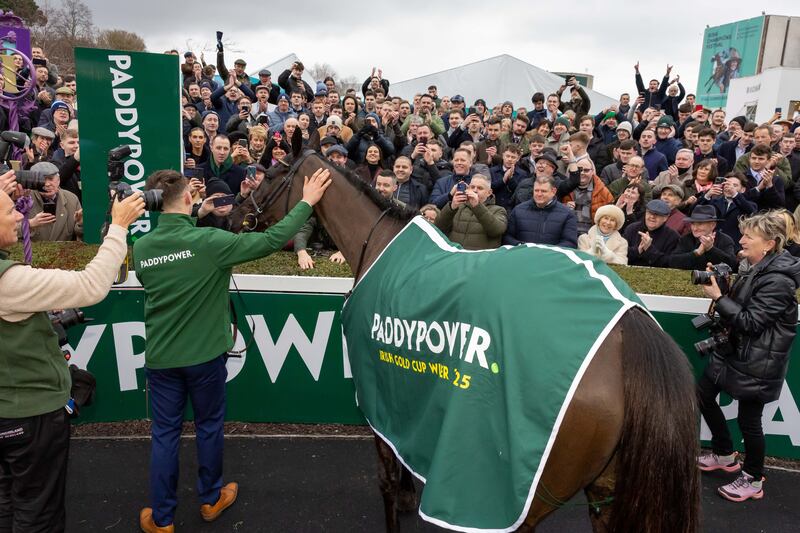
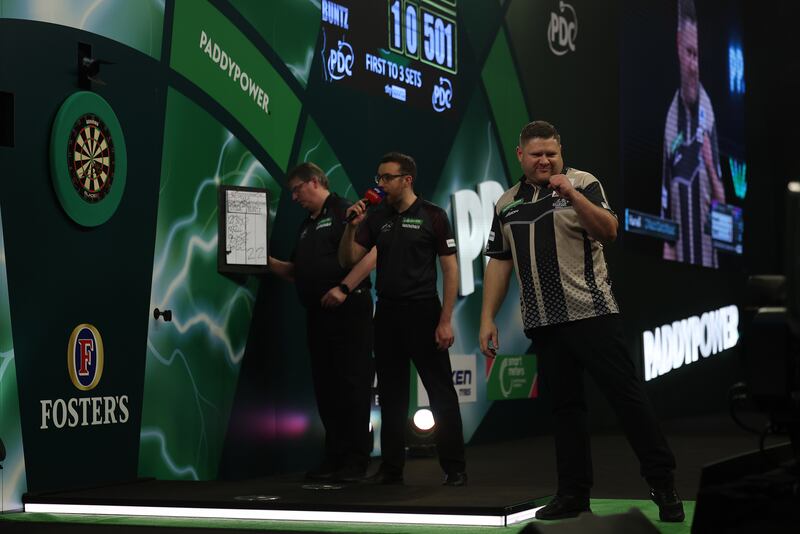
On the ground, Paddy Power is still deeply entangled with sports sponsorship. The second day of Leopardstown’s Christmas meeting is dominated by their brand, and their two-year-old sponsorship of the World Darts Championship has been a resounding success. Darts recorded the highest peak audience for a non-football sport on Sky Sports during last year’s world final; Paddy Power has always backed more winners than its customers.
But amid all that, the company was fined £2 million (€2.3 million) by the UK Gambling Commission during the week after an investigation found they hadn’t identified problem gambling quickly enough or made timely interventions. Among a litany of cases cited, one punter staked £86,000 over a 16-day period, another deposited £25,000 within 25 days while one customer placed more than 300 bets amounting to £20,000 in a binge that lasted seven hours and 46 minutes.
“Our controls have evolved significantly, and we recently introduced a next-generation customer safety platform, with the vast majority of checks now happening in real-time,” said a spokesperson for Flutter.
But this issue has stalked Paddy Power, and its peers, since the explosion in online gambling and the advent of online casinos. Stewart Kenny, one of the co-founders of Paddy Power in the late 1980s, resigned from the board in 2016 over what he perceived to be the company’s failings on addiction.
“As you know, I have raised gambling addiction and underage gambling at every board meeting since you joined the board; it is the biggest issue facing us and we seem to be like ‘the frog in the boiling water’,” wrote Kenny, in his resignation letter.
Around that time, Sportsbet, a company Paddy Power had bought in Australia, were running TV ads about safer gambling. But its effectiveness prompted the company to cease the campaign.
“I resigned from the board because they wouldn’t do anything about addiction,” says Kenny now. “Those ads in Australia – that you can still see on YouTube – were called Take A Break. They were so successful people were closing their accounts down. And I was thrilled. And they said, ‘No, we’re withdrawing them.’ I said, ‘What?’ ‘We’re withdrawing them because they’re too successful.’ Then I realised I couldn’t cod myself any longer. I resigned a week later.
“They didn’t give a damn about gambling addiction they just want to be seen to be looking good about gambling addiction. What has improved is their PR. They’re much better at telling people how good they are but in fact they are doing very little. I have huge regrets that I didn’t do more. I should have seen how addictive online was.
“What bookmakers are doing is that they are using the sport as a shopfront to suck people into the online casino. When young people open an account, within 24 hours they are immediately sucked in with free bets for the casino. I love betting and I think it has a place in society, but the online casino has no place. The British Health Survey [published last month] said that online slot machines had the same addiction level as cocaine.”
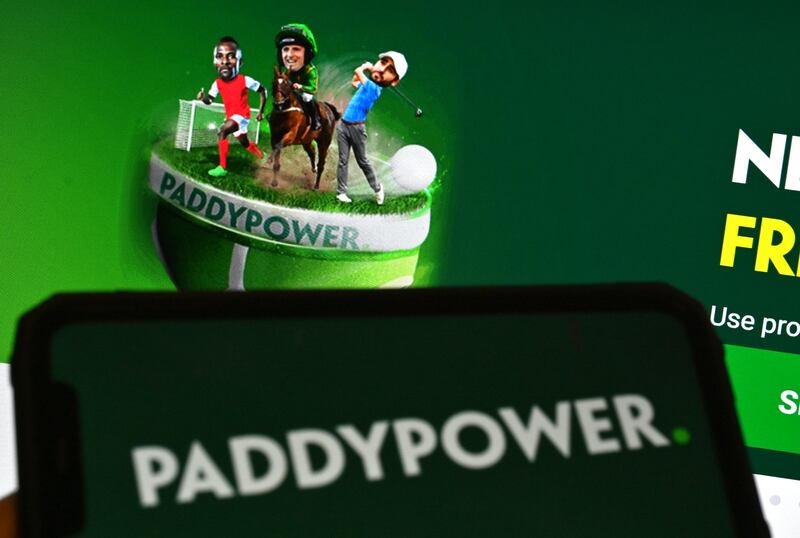
Online casinos are the neon-lit gutter of the betting industry. In Punters, Rogan wrote about Project Vanguard, an internal audit of its customers that tested their betting activity against Paddy Power’s metrics for problematic or addictive behaviour.
“What they found,” says Rogan, “is that a lot of their profits were generated by those customers. They should probably be commended for doing Project Vanguard. But what did they do to address that? They led the way on cooling-off periods, but that’s an industry norm now.
“It is accepted now that online casino games are more addictive than betting in a shop or at a racetrack, or even on betting on sports on the app. They make a lot of money from them because, by design, they can’t lose. They will only pay out a percentage of what’s put into them across the board. An individual customer can win but you can’t beat the bookies on them.
“They’re in that quandary of who is our first loyalty to? Our shareholders and ourselves or to protecting these people? It comes back to the free market idea of who is responsible for everyone’s behaviour. Ultimately, it’s the individual. But if the individual is being led a certain way, then when does the regulator step in or where does a company have a social responsibility to step in?”
As the first bookmakers to have a website, Paddy Power were pioneers in this space. Fintan Drury was chair of the board for six years until 2008, just when that side of the business was about to take off.
“I remember distinctly a meeting where the genius who was our head of IT made a presentation with a couple of members of his team and showed us what we were doing online. And we were going, ‘F**k, that’s incredible.’ And he said, if you think that’s incredible, wait till you see what we’re going to able to do when a thing called a smartphone comes in.
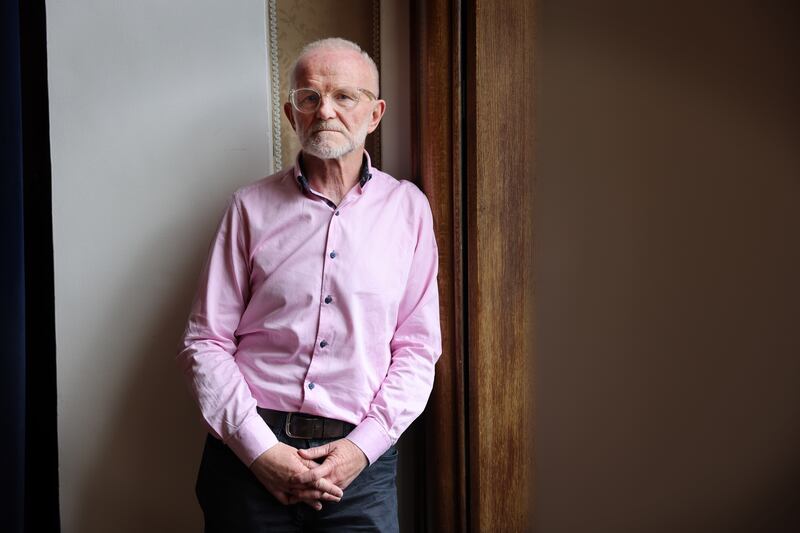
“It was almost impossible to conceive the gambling industry becoming as gargantuan as it is now. What nobody could have imagined I think is the extent to which technology would transform many businesses but the transformation it made to gambling as an industry, but also as a threat to people’s wellbeing, has been phenomenal.”
In its public image Paddy Power had not abandoned its capacity for cheekiness and beguiling Ad campaigns, though it is not the punk it once was. While Flutter’s headquarters remain in Dublin, its corporate sensibilities have moved to Manhattan.
It pays more attention to appearances now. In the last 10 years only 11 complaints have been made about Paddy Power to Ireland’s Advertising Standards Agency [ASA]. According to ASA, 229 companies have had 10 or more complaints made against them in that period. Paddy Power returned to the herd and started to mind its manners.
But behind the brightness of Paddy Power’s face there is a menacing darkness. It is the inescapable nature of the business.


