
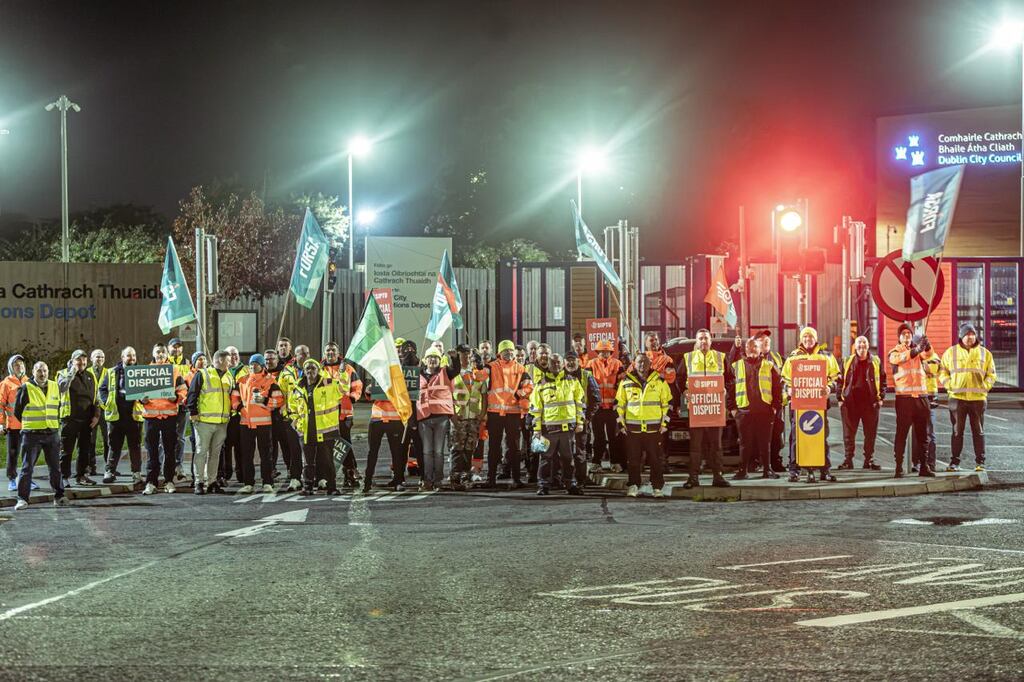
Seventeen years after the last public sector shutdown, Wednesday’s strike was a reminder to anyone who might have forgotten how central public services are to our lives and what happens when the people staffing them walk off the job.
Tens of thousands of workers stopped at their workplace gates and joined the action at schools, hospitals, courts, council offices and hundreds of other public buildings. As expected, there was huge disruption, including in the private sector, with many parents having to stay at home to mind children, thousands of hospital appointments cancelled, and court cases adjourned, as well as driving test centres and many other Government services closed for the day.
The background to this strike is different from the one in November 2009, when the government was reeling after the financial crash and workers were protesting over severe cuts, some already made and others being flagged for the budget to come.
This time, the public finances are in good shape, even if they are unhealthily reliant on corporation taxes, and unions say their members have some catching up to do, due to spikes in inflation and substantial increases to the cost of daily basics like housing, food and fuel.
READ MORE


Acrimony has also been building behind the scenes. The unions contend the Government is still doing business as if the country is in a financial crisis, with the Department of Public Expenditure and Reform, only established at the time of the crash, regularly curtailing their ability to negotiate locally with line departments and agencies, or vetoing deals they think are over the line.
There is also the issue of local bargaining, a component of the last pay deal, which was due to be worth 1 per cent of pay with a further 2 per cent to come.
The unions felt they should have wide-ranging latitude to address outstanding issues in their own areas but even where their departments agreed, the department intervened to stop the payments being processed. More than a year after the money was supposed to be due, thousands of staff have yet to receive it. For others, it has been processed on the eve of the current industrial action.
[ Unions urge Taoiseach to intervene in bid to avert public sector strikeOpens in new window ]
That seems to explain some of the union side’s reluctance to attend the Workplace Relations Commission (WRC) in recent days, while there is a frustration among the unions’ leadership with the failure of Minister for Public Expenditure Jack Chambers to address their position directly before the last deal expired, or in the almost four months since.
There is lingering anger too over the Government’s decision to proceed with a VAT cut for hospitality that the unions argued was unjustified and its reaction to the fuel protests.
The ballots held by unions suggested very high levels of support for action, although there is an element of members wanting to give their negotiators the strongest possible hand. With some of the unions not paying any strike pay, and others paying only very modest amounts or waiting for the dispute to progress before doing so, the strikers will feel the impact of their own action in their pockets.
Public opinion, supportive to a substantial degree if the picket lines are anything to go by, may also shift if next Wednesday’s second strike and further actions proceed.
Moreover, the apparent move by Chambers on the issue of when pay can be discussed has made it harder for those driving strategy to continue refusing invitations to get around a table and discuss their grievances.
That the unions will have to compromise on some of their demands as part of that process seems inevitable, but the Government did not help itself by setting aside €1.2 billion for pay increases next year, a figure that is hard to reconcile with what appears to be required to address the situation.
Obviously, the Government, already the target of criticism for its increased spending, could not reveal how much it is prepared to devote to addressing the dispute. Chambers, however, acknowledged this evening that this too should now be regarded as no more than a starting point for negotiations.
Getting those started remains the first challenge, but Chambers repeatedly hinted on Wednesday night that work is going on behind the scenes. And he sounded hopeful, almost confident, that some sort of framework will be announced soon, whether it involves the WRC or mediation by a different third party.
The Government had been hoping it would become easier to move things forward once the unions had made their point about the anger of their members.
After what was a good day for those unions, the feeling might well now be that it is a good time to get down to business.


