National Hurling League Division 1A: Cork 0-29 Tipperary 0-22
In the great tradition of the league, nothing much was gained and nothing much was lost. For reasons that hardly need to be declared, Cork’s intolerance for losing this game was higher than Tipperary’s, and anyway, at this time of year, motivation is never shared equally. In front of a massive crowd of 30,910 Cork’s focus was sharper and their need was greater and the difference between the teams may have been as simple as that.
Both teams were reduced to 14 men just before half-time after a melee that ultimately involved every player on the field, even if a few of them were little more than rubberneckers. Until then, there had been bits and pieces of niggle and crankiness but nothing that was unseasonably hot.
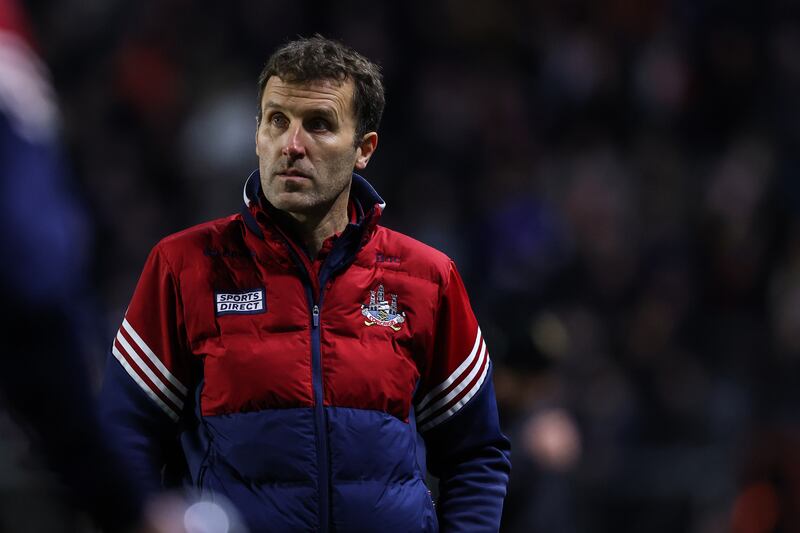
Naturally, the melee and its fallout dominated the post-match chat and the Cork manager, Ben O’Connor, returned to themes he had raised out of the blue in Galway a week earlier. In brief, he is still unhappy about the rainbow of disciplinary cards in hurling and what he perceives as the pressure on referees to please “the assessors up in the stand”, rather than honour the “manliness” of the game.
[ Cork v Tipperary As it HappenedOpens in new window ]
In passing, he also had a pop at RTÉ’s League Sunday programme for allegedly “twisting and turning” his words last weekend.
READ MORE


He repeated his assertion that “GAA officials” are trying to “cleanse the game”, and even suggested that a hurley making contact with a helmet shouldn’t result in a booking.
“They shouldn’t be a yellow card,” he said. “Some of them aren’t even a free, not to mind a yellow card. There’s no fella getting slapped down on the head.
“We’d two fellas sent off outside [Shane Barrett from Cork and Jason Forde from Tipperary], we’re after seeing it below on the screen. Two of them below are pulling jerseys. Two fellas that are training for the last six months, and that’s the way they’re treated.”
It was indicated afterwards that Barrett and Forde were sent off for “contributing to a melee” which was a perfectly reasonable action for Liam Gordon to take. In this case, that offence could have applied to the full complement of players, but after a pop-up tribunal of enquiry that lasted two or three minutes, Barrett and Forde took the rap for the other 28.
Even though there was a minute of normal time left in the first half, plus stoppage time, Gordon decided to blow the half-time whistle, presumably so that everybody could cool their jets in the changing rooms. O’Connor engaged with Gordon as he left the field at the break and said afterwards that he challenged him about why he had blown up early (Cork were playing with the breeze). He didn’t elaborate on Gordon’s reply.
With 14-a-side, both teams had a spare man at the back in the second half, and the pleasing tempo of the first half dissipated. Cork scored the last four points, all of them in stoppage-time, recovering the seven-point advantage they had established early in the second half.
In an unexpected departure from a familiar script, though, Cork failed to score a goal for the first time since the 2024 All-Ireland quarter-final – a sequence of 18 games. The two goal chances they created both fell to Declan Dalton in the first half – one after a sumptuous mid-range pass from the outstanding Darragh Fitzgibbon, and one from a penalty, which Rhys Shelly batted away.
Cork’s attack, though, bristled with menace. For the second week in a row, their half forwards produced a double-digit return from play, led once more by Fitzgibbon. The Cork captain scored seven times from 12 shots, six of them from play. Inside him, Alan Connolly produced his most productive performance of the season so far, finishing with eight points, half of which were from play; he also had an involvement in three other scores.
Around them, two of Cork’s youngest players, Diarmuid Healy and William Buckley, were full of liveliness and pace and cuteness.
In contrast, Tipp’s attack never really clicked. Andrew Ormond and Óisín O’Donoghue both faded after bright starts, while Jake Morris reached a performance level that was just about acceptable for February.
To pick up the slack, Tipp’s rustled up 11 points from their centrefielders and defenders. Eoghan Connolly’s prodigious striking was a feature of Tipp’s glorious run to the All-Ireland last summer and though he was only on the field for about 25 minutes, he landed four frees from five long shots.
Tipp made a burst in the final quarter to reduce Cork’s lead to three points after 66 minutes. By then, some of Cork’s finishing had become sloppy and they ended the game with 10 wides to Tipp’s five. They steadied themselves just enough to see the game out.
CORK: P Collins; G Millerick, D O’Leary, S O’Donoghue; E Downey (0-2), R Downey, M Coleman (0-2); M Mullins, E Twomey; D Fitzgibbon (0-7, 1f), S Barrett (0-2), D Healy (0-3); W Buckley (0-3), D Dalton, A Connolly (0-8, 4f).
Subs: C O’Brien for Coleman (h-t); T O’Mahony (0-1) for Mullins, B Hayes (0-1) for Dalton (both 44 mins); H O’Connor for Twomey (51); R O’Flynn for Buckley (64).
TIPPERARY: R Shelly; C O’Reilly (0-1), B O’Mara, J Ryan; S O’Farrell (0-1), C Morgan (0-1), S Kennedy (0-1); W Connors (0-2), C Stakelum (0-1); J Morris (0-3, 1f), A Ormond (0-2), J Keller; D Stakelum, O O’Donoghue (0-1), J Forde (0-2, 2f).
Subs: J McGrath for D Stakelum (h-t); E Connolly (0-4, 4f) for Kennedy (44 mins); N McGrath (0-1) for Keller (49); D McCarthy (0-2, 2f) for O’Donoghue (55); P McCormack for Ormond (61).
Referee: Liam Gordon (Galway).