The pace of events in Irish politics of over the past chaotic week has been dizzying to say the least.
Last weekend saw the winding down – in part through some Garda operations – of the fuel protests and blockades that almost crippled the country as farmers and hauliers vented their fury at increased prices brought on by war in the Middle East.
Sunday saw a Cabinet meeting that saw the Government raid the exchequer surplus and sign off on an extra €505 million fuel support package to help households and businesses in the hope of offsetting further protest.
This of course has implications for the upcoming Budget with Political Editor Pat Leahy detailing how income tax reductions are still expected but there are fears within Government that: “The budget numbers are meaningless now.”
READ MORE


Sinn Féin announced plans for a Dáil motion of no confidence in the Government over its handling of the fuel protests. The Government countered with a motion of confidence in itself – which it won comfortably by 92 votes to 78.
However, the Coalition lost the support of Kerry Independents the Healy-Rae brothers. Michael resigned as a junior agriculture minister accusing he Government of having “let the people down” and along with Danny voting against the Coalition on the confidence motion.
Leahy assesses the impact of Michael Healy-Rae’s departure and whether it poses a threat to the Coalition.
Colm Keena reports from Kerry and found a Kingdom divided with mixed views on the Healy-Raes jumping ship.
There was further turbulence as the events of the past week saw growing unrest within Fianna Fáil. On Wednesday its youngest TDs James O’Connor, Albert Dolan, Ryan O’Meara – indicated “real and deep concern” with the Government’s response to the fuel protests.
They stopped short of explicitly challenging Taoiseach Micheál Martin’s leadership of Fianna Fáil but their statement criticised “senior colleagues” and added that reforming the party’s approach was “a task that has been long neglected”.
Their intervention was supported by party veterans Seán Ó Fearghaíl and Willie O’Dea while privately some members of the parliamentary party raised renewed questions about how long Martin will continue to lead Fianna Fáil.
Miriam Lord wrote that after the departure of the Healy-Raes Martin probably was not anticipating a surprise attack from within his own ranks: “This time from a creche of baby sharks circling the Fianna Fáil waters beneath him.”
If there was any possibility of an imminent heave against Martin it appeared to be fizzling by Thursday.
A survey of all Fianna Fáil TDs by The Irish Times found that 22 – including his Ministers – backed Martin to stay on as leader, and when his own vote is added, he would be within touching distance of the 25 votes he would need to survive a no-confidence vote within his party.
No TD responded to say they would vote against the Taoiseach should a motion of no confidence be tabled at a parliamentary party meeting.
Carlow-Kilkenny TD John McGuinness, a long-time critic of Martin, did not respond to the survey but told Newstalk radio on Thursday: “We need new leadership, quite frankly.”
Twenty-five, mostly rural, TDs – who have been under the most pressure from the fuel protests – did not respond to attempts to contact them for the survey, an indication that Martin may not be out of the woods yet.
For his part, Martin, speaking in Berlin, where he was meeting German chancellor Friedrich Merz, said he did not feel his position was under threat “in any shape or form”.
The last time Martin was defending his continued leadership of Fianna Fáil was in the wake of the party’s disastrous presidential election campaign.
Incidentally its candidate in that election, former Dublin GAA boss Jim Gavin, gave his first interview since his ill-fated run for Áras an Uachtaráin.
As Vivienne Clark reports he told Newstalk Radio “I’d never do it again, but I have no regrets.”
Anything happening elsewhere in the world?
Still on the theme of the energy crisis Mark Weiss reports that the head of the International Energy Agency has said that European airlines have “maybe six weeks or so” of remaining jet fuel supplies and warned of possible flight cancellations “soon” if oil supplies remain blocked by the Iran war.
The agency’s executive director Fatih Birol told the Associated Press that the world was facing “the largest energy crisis we have ever faced”, stemming from efforts to choke the supply of oil, gas and other vital supplies through the Strait of Hormuz.
Could a summer of travel disruption be looming?
Elsewhere, US president Donald Trump – unusually for him – has been in the headlines whether it is the ongoing efforts to bring about a resolution to the conflict in the Middle East or his spat with Pope Leo XIV.
Sally Hayden reports from Beirut that Trump has announced a 10-day ceasefire in Lebanon to be followed next week by a meeting between the Israeli and Lebanese leaders, in a deal that it is hoped will bring progress towards a peace agreement between the US and Iran.
In posts on Truth Social, Trump claimed credit, saying “Both sides want to see PEACE, and I believe that will happen, quickly!”
It wasn’t Trumps only post on his social media platform this week.
A posted on Wednesday depicted himself being embraced by Jesus with the US flag as a backdrop.
A previous AI-generated post portraying the Trump as a Christ-like healer of the sick was deleted after a backlash from supporters including many on the religious right.
But separate from all that, there something of an ongoing war of words between Washington and the Vatican.
On Thursday Pope Leo XIV said the world is being “ravaged by a handful of tyrants” who spend billions on war, in comments that will be seen as another sharp escalation in his almost weeklong feud with the White House over the US-Israel war on Iran.
The pontiff did not mention Trump by name, but used a speech in Cameroon to denounce world leaders that invoke religion to justify violence against other nations.
Earlier in the week our Washington Correspondent Keith Duggan has a good piece on how there is no rest for US vice-president JD Vance with Trump getting cross with the Pope again.
Right-wing populist Viktor Orbán’s 16-year stint in office as Hungary’s prime minister came to an end after last weekend’s election. We are carrying a long-read Financial Times piece by Marton Dunai headlined: “Hungary after Orbán: the daunting work of dismantling a captured state”.
You can find analysis on the implications of the Hungarian election result for Europe more broadly from our own correspondents Naomi O’Leary and Jack Power.
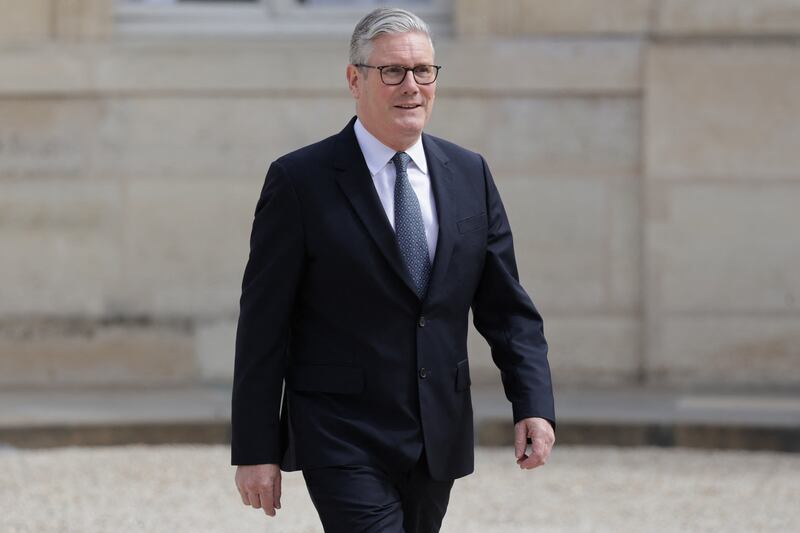
Meanwhile, there is fresh political crisis for the Labour Government across the Irish Sea.
It was revealed that Britain’s former ambassador to the US, Peter Mandelson failed his security vetting before taking up the role.
UK prime minister Keir Starmer was unaware officials had overruled the recommendation, the British government said on Thursday.
The disclosure of the vetting failure increases pressure on Starmer over his appointment of Mandelson, who is under police investigation for allegedly leaking government documents to the sex offender Jeffrey Epstein, and led to renewed calls for him to resign.