

Anne O’Connor recently replaced Bernard Gloster as chief executive of the Health Service Executive and Robert Watt will shortly be replaced as secretary general at the Department of Health. Moving the deck chairs on the Titanic is an outdated metaphor, however. Health is no longer the Angola it once was.
We are about halfway through a 10-year programme of reform in a health system that enjoys unprecedented resources and acute deficits in capacity. This is the moment Minister for Health Jennifer Carroll MacNeill should take full responsibility. Her predecessors could complain about inheriting an insoluble mess; she cannot. Carroll MacNeill has momentum, and if it falters, it is her fault.
Gloster may have been an appointed official, but he was unquestionably the most successful health politician of his time. His relationship with the Minister was the nexus in the system. He was a master of the political game with a forensic focus on issues that mattered to them, and in particular on the issues that matter to Carroll MacNeill.
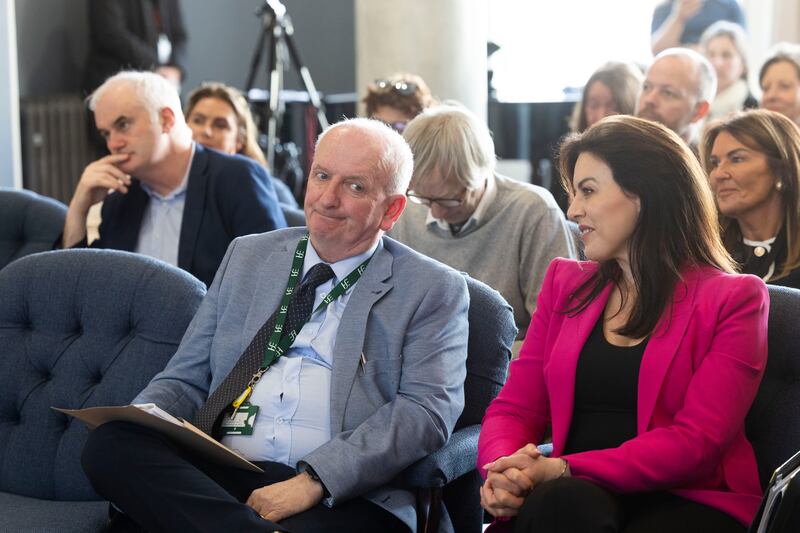
It is less clear if he successfully institutionalised change, or changed culture, in the HSE. The focus on numbers on trolleys – which the Minister shared – moved the dial politically. It also displaced inactivity from overcrowded emergency departments to elective activity elsewhere in hospitals. Less visible, and harder to count, are elective cancellations – and many are urgent. When elective procedures are not even scheduled, they cannot be counted at all. There has been real progress in health. But there is also a presentational game of smoke and mirrors that works politically, but doesn’t change anything fundamentally.
READ MORE


What changes things fundamentally is culture, systems and structures. Covid-19 was the best thing that ever happened for the Irish health system. It is worth recalling that the health portfolio – then in full-blown dysfunction – was the pretext, if not the primary cause, for the 2020 general election. Regardless of an underlying lack of capacity for a growing and ageing population, increased resources were not translating effectively into better care. Productivity was poor, management was worse and cynicism was rife. Sláintecare, agreed on an all-party basis in 2017, was nearer to being a dead letter than a live plan.
Covid-19 brought intense government focus on the health system. It also delivered resources and capacity. Shysterism within the system sharply diminished and the public mood changed. So did key personnel. Stephen Donnelly became minister for health in 2020, and a year later, Robert Watt became secretary general. Both were atypical of their respective castes. Donnelly knew that the brief was probably his first and last Cabinet post. Watt, associated with endless rows, shares the credit for taking the contention out of health.
Sharing an appetite for change and an unusually high disregard for its consequences, they were also lucky generals. Without Covid-19 and its attendant state of emergency, far less would have happened. But Donnelly had a big picture view that is increasingly unusual. In the conventional sense, he was an unsuccessful politician, but he was a successful minister. Health, by dint of not being a big problem, probably helped Fianna Fáil and Fine Gael to be re-elected in 2024.
The irony is that the Department of Health has been a nursery for future taoisigh, but Donnelly, the minister with no ambition to become taoiseach, was the most successful for years.
This ongoing change of leadership is the most significant in five years. More than a year into her term, Carroll MacNeill has decided her priorities and she wears that ambition on her sleeve. She has considerable personal capacity and force of personality. She is so far a successful politician, but it is not yet clear if she has the makings of a successful Minister for Health.
The progress made to date depends on more following rapidly. There is a constant clamour for more capacity in beds, diagnostics and much else. But the underlying capacity in e-health is not there. Delivering productivity based on the new consultants’ contracts has barely begun. The orientation of a system centred on hospitals is unsustainable.
As Anne O’Connor must know, the HSE is underproductive. Below the level of appearing at Oireachtas committees, where there is a gameshow level of accountability, the HSE lacks transparency in its dealings with the client organisations to which much of the health service is subcontracted.
There is a plan and a potential fix for e-health. But there is no recognition of a problem, and therefore no plan to fix the malaise in the HSE, which was arguably masked by, rather than addressed by, Gloster and his predecessor, Paul Reid. The emergency is long over, and the élan it generated has subsided. The incline in the future is steeper. The reset at the top will either be channelled into political management – or, politics be damned, deliver on further fundamental change.
Health reform is a race against time, when we will not have the money or personnel to deliver an endless expansion of the system as configured. This is a society which is being fundamentally rearranged and will in the future be based on far more older people, requiring healthcare paid for by proportionately far fewer working people. Our health system and economic model will buckle. We must move from a hospital-based system that takes care of you when sick to a community-based system that keeps you well. Economically, there is endemic dishonesty in the public debate about what can be sustainably afforded and who should pay.
The challenge for Carroll MacNeill is to articulate the scale of change required. The alternative – which would be easier and possibly more successful – is for her to manage through to the next job, or the next election. But the true test of authority is what remains when you leave the room.
- Gerard Howlin is a public affairs consultant who does not work with any politician or political party