The number of babies born to women over 40 in Ireland has risen by more than 21 per cent in the last decade alone. Here, five Irish women share their stories of the joys and challenges of pregnancy and motherhood after 40.
‘I knew if I didn’t try, I would have regrets’
Kerry White became a mother at 49

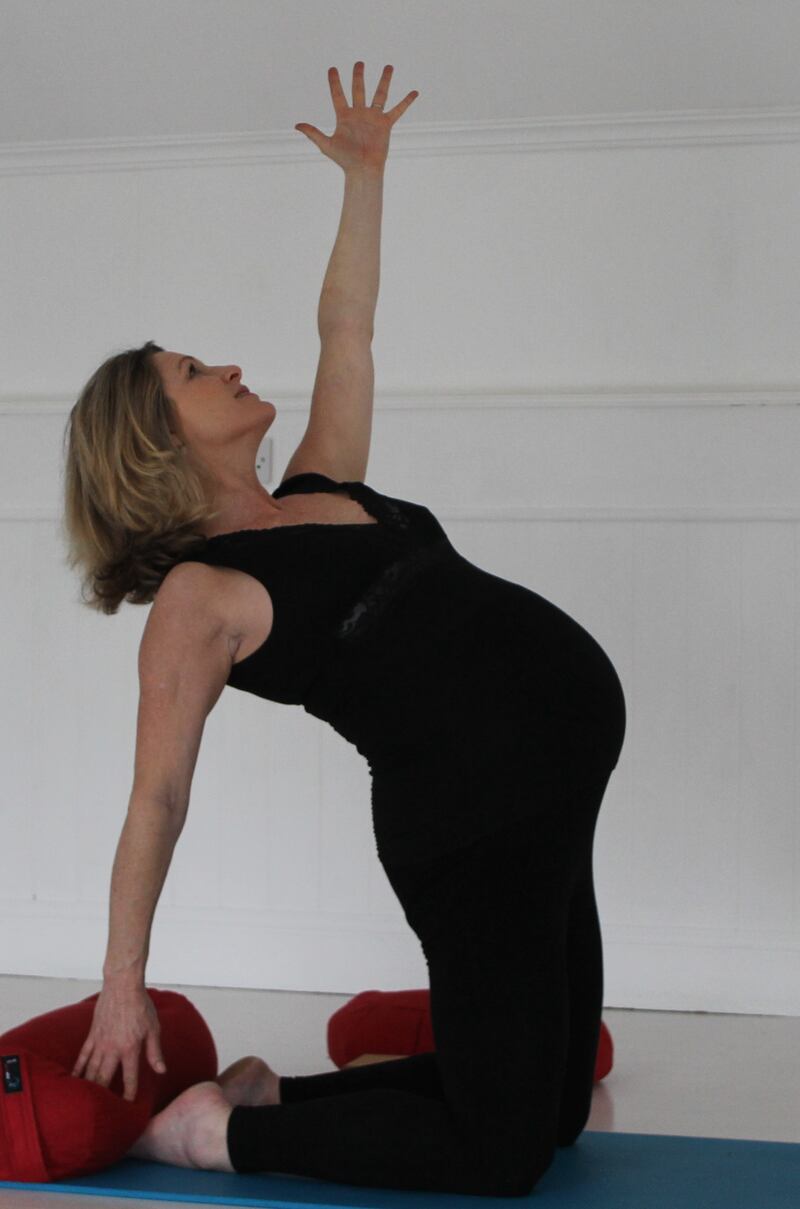
Kerry White is a yoga teacher living in Co Wicklow. She was 49 when her daughter Freya, now six, was born. Freya was conceived through double donation after White decided to have a baby on her own.
“I was hoping it would all just happen in the ‘normal way’, in that I would meet my life partner, get married. I had my head buried about my fertility.” White moved to back to Ireland when she was 42, having lived abroad for a number of years.
“I was getting really panicked and quite depressed about it. I started doing therapy and coaching ... soul searching trying to figure out, ‘what am I going to do? My life is not where I thought I would be’.” Her “grief and sadness” over not being a mother was constant.
READ MORE


White was 48 when she decided to have a baby alone. “I spoke with this clinic who specialised in helping women get pregnant who didn’t have a partner through double donation.” Rigorous testing was required before the clinic would accept her. She didn’t presume it would work, “but I knew if I didn’t try, I would have regrets”.
Following her second round of IVF, White became pregnant with Freya. Very few people knew she was trying to have a baby, and reactions to her pregnancy were mixed. “There was a shock and there was laughter and people just couldn’t believe it. But outside of that people were really positive.”
White’s hospital experience was also very positive. “I went semi-private and it was textbook. They were very nice, very non-judgemental ... I had a very healthy, happy, wonderful pregnancy. I don’t think I’ve ever felt as well.” She opted to have an elective Caesarean section and her recovery was straightforward.
She tries not to obsess about the fact that she’s an older mother. “We never know in life, and all I can do is try and be as healthy as I can. I have both my parents alive and relatively well into their 80s.” White points to how active she is running around in nature with her six-year-old. “I hope I’ll be a young 60-something-year-old when she’s a teenager, because she’s really going to need me then too,” she says.
“What will people think” is one of the biggest fears women in Ireland have, White says. “I lived in Switzerland. People don’t think like that in Europe so much. In Ireland it’s ingrained – what will people think. It’s the sense of belonging. It’s so strong here. ‘What will people think if I try and have a baby on my own? What will my parents think? What will my community think?’ There’s that fear of being judged ... It was a big struggle for me to get over all of that stuff.”
She doesn’t believe “men are subject to judgment at all in the same way women are. And they don’t judge themselves,” she says. “When a woman hits 40 she’s over the hill. Her childbearing days are over. You’re a ‘geriatric mother’ at 35. You don’t hear those terms being attached to men.”
Her experiences led her to give a TED talk called “The Road Less Travelled to Motherhood”, and she has also been a guest on the Irish Times Women’s Podcast. “Another reason I did the TED X talk is for Freya, for me to stand up there openly and say how much she was wanted,” White says.
Freya knows her story “as much as she can understand”. “I show her where I went. I tell her about the seed from this man, and the egg from another woman who helped me make her.”
Motherhood after 40: Why are women having children at an older age, and why does it matter?
Read the full article here
‘I had such a lovely pregnancy. I never loved my body as much’
Bernie Murphy became a mother at 42
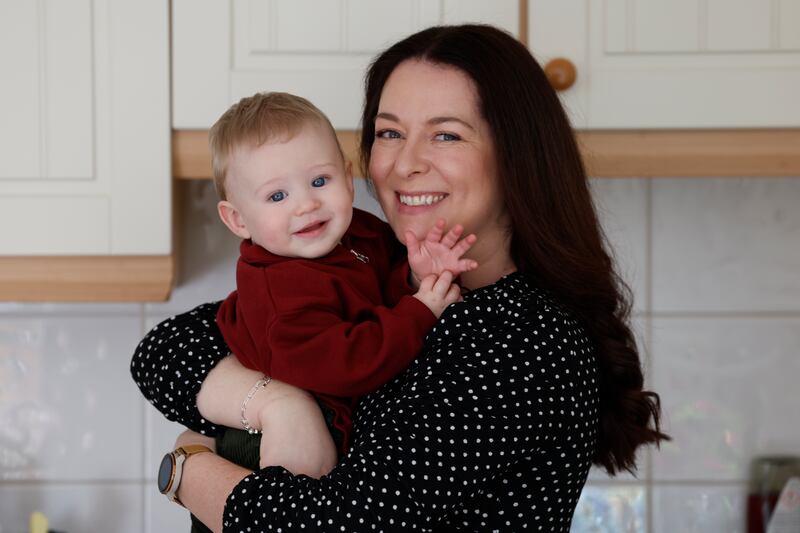
Bernie Murphy works in social care, and lives in Co Carlow. She had her first child, nine-month-old Jacob, when she was 42.
She says she was waiting to meet the right person before starting a family. She never considered that she might not have a child. “I thought maybe I’d go alone. I always assumed I would [become a mother].”
She met her partner Andy when she was in her late-30s. She had three miscarriages. “They kept telling me it was because I was older,” she says. The couple had been approved for free IVF under the HSE’s assisted human reproduction scheme, but after her third miscarriage, Murphy was no longer eligible as she had turned 41. “We were on the cusp of going to Prague [for IVF] when we conceived Jacob,” she says.
People reacted very positively to Murphy’s pregnancy. “Physically, I had such a lovely pregnancy. I never loved my body as much,” she says. The care she received in Kilkenny hospital was “exceptional” and Jacob’s birth “was a dream”. “I was just so grateful for everything. I was very calm throughout the whole thing.”
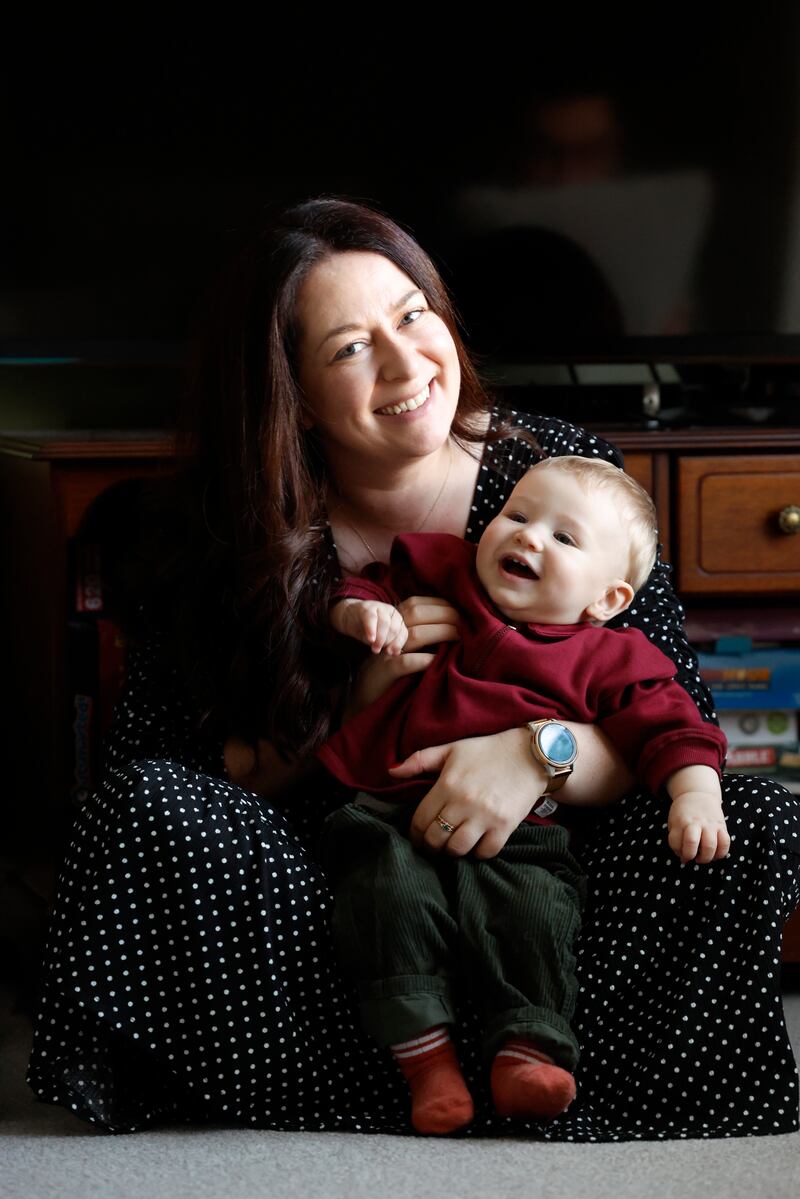
The adjustment to parenthood at 42 has been “a bit of a mix”, she explains. “We wanted it so bad that even in the tough times, sometimes in your head, you’re like ‘this is what we wanted, so it’s okay’. There is obviously the exhaustion and the tiredness and we’re both looking at each other going ‘we’re so old doing this’.
“But it’s actually a really lovely time in life to have a baby. We’re just loving being at home. We have a good social circle ... We don’t feel under any pressure to be out. I know some of my younger friends find it lonely sometimes.”
She doesn’t worry about what age she’ll be when Jacob is older, but her partner does. “He’d worry about being an older dad on the football pitch. My mum was a little bit older having us – she was in her 30s when she had her first, her last in her 40s. It was something I grew up with.
“The only thing is I would love to have more [children], but I don’t know if I have the time. We had a rough enough journey to get Jacob. We’re very blessed, so if it happens it happens.”
‘There were a few comments from well-meaning people’
Laura Grant had her third child at 41
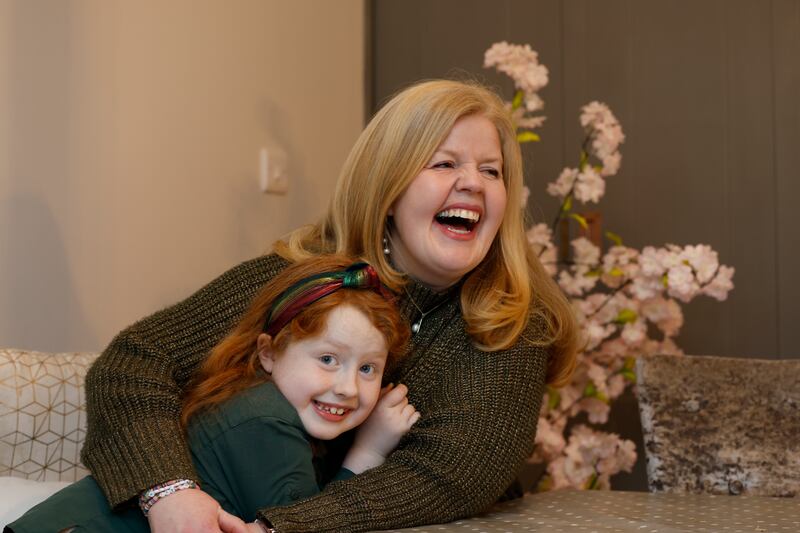
Laura Grant, who owns Lovely Things shop in Deansgrange in Dublin, had her first two children at 32 and 34, and her third, Grace, at 41.
“I was already a mum to two boys, they were six and eight. James, who was born in 2011, is profoundly deaf with cochlear implants and had a lot of medical challenges, a lot of stays in hospital. Our experience of parenting James, as any parents of a child with a physical disability or medical needs ... there’s loads of early interventions. There’s loads of appointments. There’s loads of emotional labour. There’s a lot of advocacy. So I didn’t decide to have a third baby in my 40s, it was just the way life panned out,” she says.
“Life had settled, thankfully, and the boys were older. I thought maybe the baby chapter might be closed, but my husband had always envisaged that we’d have three kids ... and I said okay, I was open to the idea. Within six weeks I was pregnant at 41.”
People’s reactions were a “mixed bag”, she says. “Friends were most supportive. There was definitely more surprise. It was a different type of reaction to the first two pregnancies. There were a few comments from well-meaning people, particularly having a child with significant needs. I remember one person said, ‘do you have the bandwidth for another child?’ It took my breath away ... There’s a lot of judgment in that statement, you feel very vulnerable. And you’re already a little worried because you’re more medically challenged at that age. There are more things to consider. There are more dangers for you and the baby.”
[ ‘I was classed as a geriatric pregnancy which didn’t sit right with me’Opens in new window ]
Grant found the hospital very supportive. “I had the same obstetrician with the other two kids. She knew my medical history, and the boys’.” She had a number of tests. “James was born with a condition called congenital cytomegalovirus, so I was screened for that at my booking bloods.”
“We elected to undertake the harmony scan,” she continues. “That was just for information purposes. We wanted to be well prepared, if this very much wanted baby was going to have any medical needs.”
She felt “fantastic” during her third pregnancy. “I think it was my easiest pregnancy. I’d had two emergency sections, so from the get go, it was a planned section. Emotionally I was really calm, because I knew this was the last time ... And when everything [on the tests] came back positive and typical, it was really joyful, because we’d had other experiences.”
As an older mother she says she is “less anxious, less rushed. I enjoy everything a lot more. I savour the small things. And I am so much less concerned with what anyone thinks. I feel more confident and I don’t worry about the small stuff. I’ve had moments where I’ve thought about the future and my age, but I try and stay rooted in the now. Time is promised to nobody. My little girl, who is now eight, she needs me, not a younger version of me.”
‘We decided to have genetic testing done. For us, this baby was happening’
Ciara Reid had her second child at 41

Ciara Reid, who lives in Glasnevin in Dublin, gave birth to her second daughter, Réiltín, a month before her 42nd birthday. She was almost 40 having her first daughter Dearbhla. They are now aged 10 and 13.
“I spent my 20s and the vast majority of my 30s making sure I didn’t get pregnant,” she says. “But it just took me a while to meet the right man [to start a family]. Maybe I spent too much time investing in my career.” Reid is a vet. “In my mid-30s I made a very concerted effort to meet the right man. I did the websites, I did dating agencies, and ended up meeting my husband on Facebook.”
They were “very much aligned that family was what we wanted. We were conscious that we were that bit older. We didn’t want to spend massive money on a wedding because we wanted to make sure there was money in the bank in case we needed fertility treatment.”
Reid’s first pregnancy was ectopic. Her next pregnancy was straightforward and Dearbhla was born. But when she tried to conceive again, she found it more difficult. “Pat was pushing 50. I was into my 40s. We went for fertility treatment. We did one round and it took an awful lot out of me.” The couple decided not to try IVF again.
They planned a holiday and a big 50th birthday party for her husband, “and then I fell pregnant ... For Pat’s 50th we had a baby.”
Nobody passed any comment on her age, she says; several friends also had babies around the same time. “The only place I came across it was in the hospital. My file had a big note on the front – ‘geriatric mother’ – for both pregnancies.”
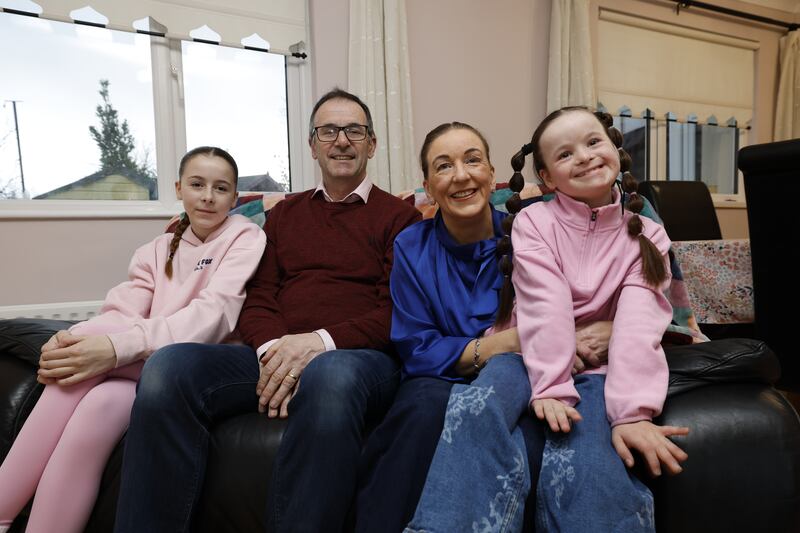
At 11 weeks, a scan revealed a marker for a chromosomal abnormality. “The stats we were given at that stage were grim. There was a significant chance of Edward’s [syndrome], of Patau syndrome ... and Down syndrome.
“We decided to have genetic testing done. For us, this baby was happening. It didn’t matter. We were delighted to be pregnant, even though we were asked in the hospital, did we want to continue? We most definitely did, but we wanted to know what we would be facing. If we were having a baby with a fatal foetal abnormality, we’d face it and we’d deal with it. I went home and prayed that our daughter would have Down syndrome, because that was the baby that was going to have the best outcome.”
The test results were positive for Down syndrome. “We were shocked and sad, but we took it on the chin because it could have been so much worse. We were going to have a baby who survived.”
Reid doesn’t worry about being an older mother, but she does lament the fact that her children have missed out on having “active grandparents”.
“My mother was 78 when I was having Réiltín, and at that stage she had dementia,” she says. “I did get a little jealous of the families that had grandparents. The granny to make the dinner, to look after the other children.”
Réiltín was diagnosed with cancer when she was two years old. “They talk about St John’s ward [in Crumlin hospital] being in Drimnagh it’s so far down the hospital. My father physically never came to see us because it was too much of a walk for him.”
Reid describes herself as part of the “sandwich generation”. “By the time my children came along, my parents [needed] care themselves. After my mam passed away, every night [I was] up to Dad ... Of course you do it, but it is hard.”
‘This time, I’m just trying to soak up every second’
Deirdre Rooney had her fourth child at 40
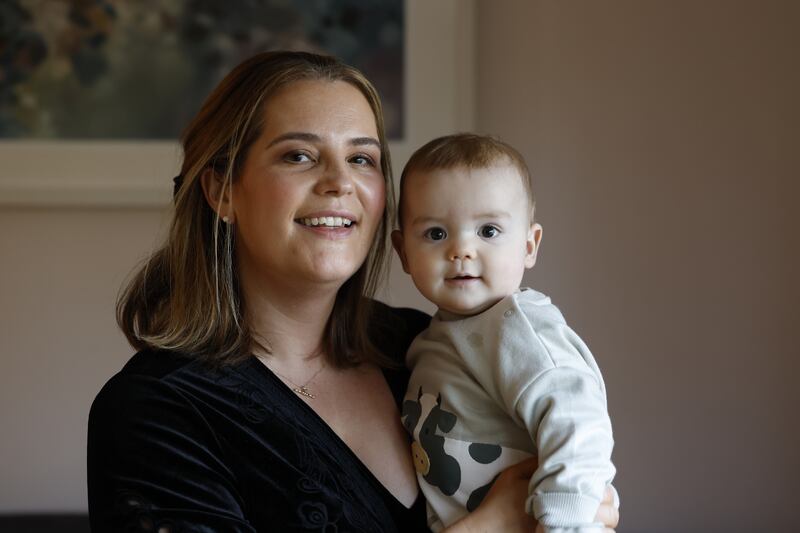
Deirdre Rooney is a teacher and lives in Co Longford. She was 40 when her youngest son Daire, who is now seven months old, was born. She has three other children, the eldest is six.
“I was conscious of 40 because I had my first three with the midwife-led unit in Cavan. If you are 40 you can’t have your baby with the midwife-led unit.” This was her only concern, but she was “really annoyed” by it.
“I felt I wasn’t a high risk. Thankfully and very gratefully, I have been happy and healthy throughout my pregnancies. I had good births. I would not have been worried about myself physically. But I feel like the State and the HSE were worried about me physically.”
The care she received in the hospital with Daire was different. “There are more questions, there are more tests because of your maternal age.” She doesn’t consider herself an older mum. “Nowadays people are having kids later. At school now I see a lot of the mams are around my age.” But, she admits, “there are a couple that I taught”.
She has thought about the fact that she’ll be in her mid to late 50s rearing a teenager, but it doesn’t worry her. “When I’m 50 I’ll still be running the roads like a mad yoke.” Her biggest concern is the amount of food she’ll need when she has four teenage sons at once.
She feels there are some advantages to having a child in her 40s. “Life experience” is one. “And also your ability to slow down. This time, knowing the newborn phase goes so quickly, [I’m] just trying to soak up every second.”


