
For decades our colonial story of big houses has been interpreted through the preservation and reopening of many grand drawingrooms and salons.
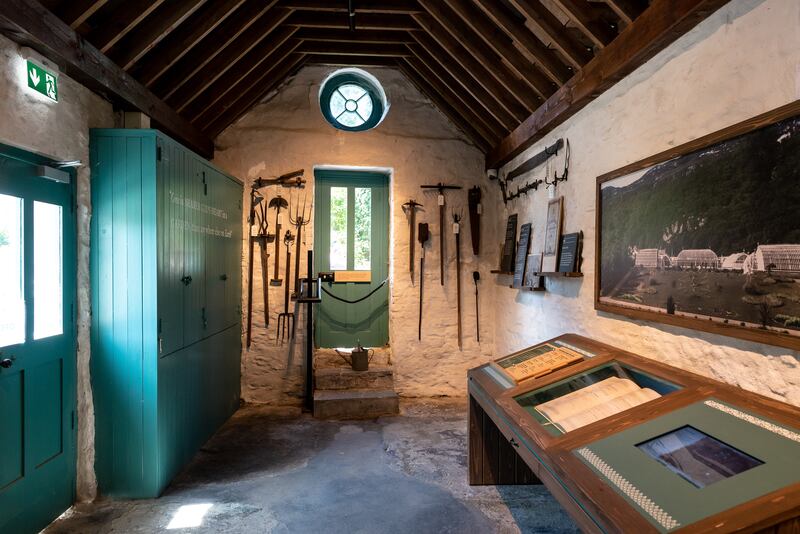
Now, the conservation of a bothy and tool shed at Kylemore Abbey, Connemara, confirms a new trend enhancing the upstairs-downstairs narrative of these ascendancy houses and estates.
It could be called the Downton Abbey effect – making class divisions at heritage sites more visible.
The restoration of the bothy (bothán, as Gaeilge) has been led by Benedictine nuns who bought the abbey in 1920, having fled as refugees from Ypres, Belgium, during the first World War.
READ MORE


With their order’s motto of “ora et labora” (pray and work), their commitment to the restoration of these living quarters – situated on the edge of the recently restored six-acre Victorian garden where these young men from all over Connemara toiled – has been a long-time goal.
Overlooking Pollacappul lake, Kylemore Castle, the original building, was built by Mitchell Henry in 1868 as a gift for his wife, Margaret. He was a wealthy businessman, a liberal MP for west Galway and strong supporter of Home Rule and a doctor.
At the opening ceremony on Friday, President Catherine Connolly said that during the restoration of the walled garden – often compared to Kew Gardens – many of the original tools and artefacts used by the gardeners had been recovered.
“In the labourers’ bothy we see first-hand the living quarters of the young, unmarried garden labourers. These were workers who were relatively well-paid at the time, despite the surrounding poverty in Connemara,” she said.
“Indeed, the Henrys brought many progressive ideas with them to this remote area. In a country still reeling from An Gorta Mór, the Henrys helped local workers to learn trades when constructing Kylemore Castle and also to train as gardeners. They opened a school in Lettergesh for tenants’ children and encouraged tenants to turn bogland into productive farmland.”

She said the Kylemore estate was “in a sense, both a commercial and political experiment, and the result brought material and social benefits to the entire region and left a lasting impression on the landscape and on the memory of the local people”.
The abbey’s chief executive, Conor Coyne, said: “The abbey is, first and foremost, a monastic community – one with deep roots in this place and a profound connection to the locality and the wider region.
“These buildings [the bothy and tool shed] are modest in scale, but they carry real significance. They speak to the lives and labour of those who worked this land – men and women whose skill, effort, and daily commitment sustained this garden over generations. In restoring them, we are not just preserving structures – we are honouring that legacy.”
This legacy now supports more than 160 jobs directly and contributes €100 million to the local economy each year. Kylemore welcomes about 600,000 visitors annually from 80 countries.

The abbess, Mother Karol O’Connell, said the core values of work and prayer along with “stewardship, moderation and beauty” were central to how they live their spiritual lives.
“These Benedictine precepts are manifest in these gardens through its original restoration, the preservation of the labourer’s bothy and tool shed and the ongoing joyful work of caring for nature and this place,” she said.


