Obviously, people with intellectual disabilities can work, “because I can work”, says Kildare woman Samantha Duggan (37).
She “loves” working on tills and on the floor in discount retailer Mr Price. The joy she clearly takes in her work is a testament to the transformational impact employment can have for a person who has faced barriers because of their disability.
And for Mr Price, where 18 per cent of employees have disabilities, the benefit those like Ms Duggan brings “is beyond question” says head of operations Edel McSorley.
“From the bit of additional time and investment we put into training and supporting staff with disabilities, it pays off in the long run. Productivity has increased overall, and we get incredible employees who add so much to the culture.”
READ MORE


Ms Duggan recounts how she attended a special school from age four to 19, progressing to a day service operated by the KARE charity which supports intellectually disabled adults.
“When I was 30 I wanted a change. That’s when Project Search came in,” she says, referring to a programme jointly operated by KARE and Naas hospital providing mentoring and work experience to intellectually disabled people.
In 2018, she secured an administrative position at an equestrian centre. After Covid-19, she worked there as a cleaner, which she disliked. “My skills weren’t being used. I wanted a change.”
With KARE’s support, she applied for numerous positions and faced many disappointments before getting her job in the retailer’s Naas branch earlier this year [2025].


“I love working here,” she says. “I am working as a team I get to see my friends and I get to talk to customers.”
Showing The Irish Times around her workplace, she says a task no one else liked doing, that she has excelled at, is organising the greeting cards display. “If they get into a big mess, it can take a whole hour organising [them] into their age numbers. I like organising like a messy shelf.”
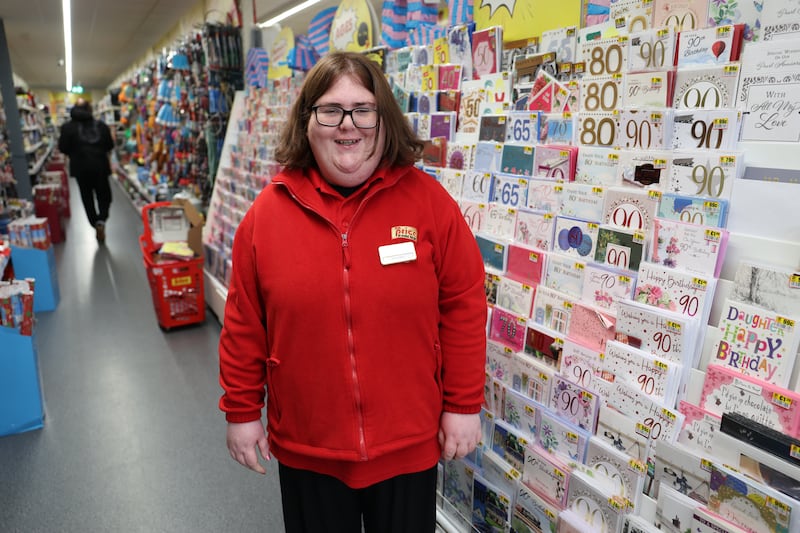

She prefers the tills. “I am very good at maths and I like talking to customers.” As we speak, local man Ollie Deegan approaches. “Good morning,” he greets her. “Do you have fire logs?”
“We don’t do fire logs, but we do lighters,” she replies. “The lighters are here.” He decides against them, opting to buy what he has in his hands.
Asked as he leaves if he was happy with the service, Mr Deegan says he likes that Mr Price employs Ms Duggan. “Everybody should be given an opportunity, and she’s well able to do the job, as you can see.”
The Department of Social Protection supports Mr Price through its wage subsidy scheme to employ people with disabilities. It subsidises wages and any necessary accommodations.
If she had not found her job, Ms Duggan “would be sitting at home doing nothing, or sitting in day services doing nothing. I would lose it.”
Asked what she thinks when people suggest intellectually disabled people can’t manage a job, she replies: “Obviously, they can work because I can work.
“[Employers] need to, like, open their eyes ... people with intellectual disabilities can work. And they can do the job very well.”


