Main Points
- A nationwide high temperature warning for the Republic has been extended into Saturday
- An orange thunderstorm warning was issued for Cork, Kerry and Waterford. It expired at 7pm.
- A separate status yellow thunderstorm warning for Connacht and Donegal is in effect until 6pm tomorrow. Further warnings were issued for tomorrow.
- A yellow thunderstorm warning has been issued for Northern Ireland tomorrow
- The highest temperature recorded in the Republic so far today is 32.1 degrees in Athenry, Co Galway
Key Reads
- Heatwave due to climate change with worse to come, says UN
- Why is it so hot and when will Ireland’s ‘exceptionally warm weather’ end?
- From sunscreen to staying cool: how to keep yourself and your family safe in the heat
- ‘Bathers should take care’: Swimmers advised to avoid some spots in Dublin due to rainfall
- In pictures: Ireland swelters in heat
That is all for this evening, good night.
11 weather stations record temperatures of 30 degrees or more
Temperatures reach higher than 32 degrees in Ireland
The highest provisional temperature recorded on Thursday is 32.1 degrees at Athenry, Co Galway.
However, this temperature was not enough to break Ireland’s long-standing record from 1877 when the dial reached 33.3 degrees in Kilkenny.
Paris to ban drinking alcohol in public in bid to curb health issues arising from heatwave
Parisians will be banned from drinking alcohol in public from midday onwards on Friday in order to try and curb the health issues arising from the heatwave gripping France and much of Europe, the head of the Paris police said on Thursday.
“I will publish an edict this evening which will ban the consumption of alcohol in public from tomorrow midday onwards. As you know, drinking alcohol with the sun beating down can have a devastating effect,” Paris police chief Patrice Faure told BFM TV. - Reuters
Three hospitals in UK declare critical incidents
At least three hospitals have declared critical incidents amid a rare red warning for extreme heat and record-breaking temperatures in the UK.
Queen Alexandra Hospital in Portsmouth, and Norfolk and Norwich University hospitals both declared critical incidents on Wednesday.
University Hospital Southampton declared a critical incident on Thursday afternoon because of the ongoing extreme heat, “which is placing significant pressure on our services”, it said.
It comes as a new record high temperature has been set for June on Thursday, for the second day in a row, as the UK swelters in a heatwave.
Critical incidents can be declared when health and care services are so busy that special measures are needed to restore normal operations and keep patients safe. - PA
Thursday is the warmest day of the year in Northern Ireland
Northern Ireland has seen the previous record high for June matched after a temperature of 30.8 degrees was reached in Castlederg, the Met Office said in a post on social media.
Dublin Fire Brigade reports increased demand for ambulance service
Dublin Fire Brigade said it has noticed an increase in demand for the ambulance service but only had one fire related incident so far this week.
Irish Coast Guard urges public to plan and prepare ahead of any water-based activities
The Irish Coast Guard said sea and inland water temperatures remain low despite the warmer air temperatures which can lead to a serious risk of cold-water shock and hypothermia to anyone entering or unexpectedly falling into the water.
It advises people to remember to enter the water slowly to acclimatise and to stay within your depth.
If you are travelling to the coast during this warm spell, familiarise yourself with water safety advice.
If you are planning an activity in or on the water, remember:
- Swim at a lifeguarded waterway if possible, between the red and yellow flags.
- Swim where you can be seen within your depth and stay within your depth.
- Avoid entering the water in locks, marinas and harbours where hidden hazards may be present.
- Never use pool inflatables on sea, rivers or lakes
- Supervise children: never leave them unattended near water.
- Avoid alcohol before swimming, operating watercraft or being near water, as it impairs judgment, coordination, and reaction time.
- Be aware that cold water temperatures can also cause cold water shock, increasing the risk of drowning.
- Pay attention to all water safety signs and warnings and carry a means of calling for help
- Check tides and updated weather warnings.
- Always wear a correctly fitting serviced lifejacket or buoyancy aid when boating or participating in water sports.
- Let others know where you are going and when you expect to return.
Highest temperature on Thursday hits 31.7 degrees
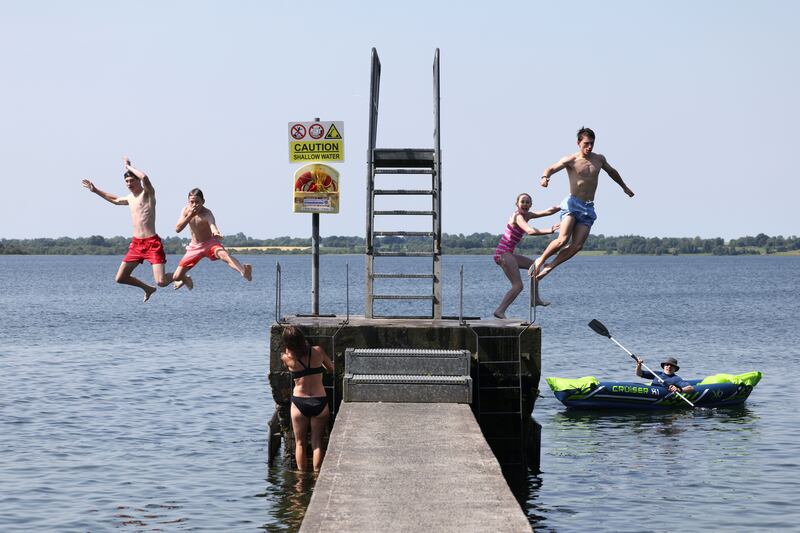
The highest provisional temperature recorded on Thursday so far is 31.7 degrees at Athenry, Co Galway.
Met Éireann said it is not likely to be broken elsewhere today.
However, this temperature was not enough to break Ireland’s long-standing record from 1877 when the dial reached 33.3 degrees in Kilkenny.
On Wednesday, the highest temperature was 27.9 degrees at Moore Park in Co Cork.
UK sets new record for hottest June day

A new record temperature of 36.7 degrees for June has been recorded at Merryfield in Somerset, the Met Office said, provisionally making it the hottest June day since records began.
This temperature broke the previous record that had also been set on Thursday of 36.4 degrees at Yeovilton in Somerset.
The previous record – 36.1 degrees – was only set yesterday in Hampshire, which broke a longstanding record of 35.9 degrees from 1976.
Thunderstorm warnings to continue on Friday
Met Éireann has extended the yellow thunderstorm warning in force in Donegal and Connacht until 9am on Friday.
A status yellow thunderstorm warning has also been issued for counties Cavan, Donegal, Monaghan, Clare, Tipperary, Connacht, Kildare, Laois, Longford, Meath, Offaly and Westmeath.
This warning will be in effect from 9am to 6pm on Friday.
Met Éireann said possible impacts include localised flash flooding, hail damage, difficult travelling conditions, damage to utilities including power, water, gas, telecommunications and very gusty winds.
A status yellow high temperature warning will remain in place until 9am on Saturday.
Met Éireann warns of ‘extreme thunderstorm activity’
Met Éireann warned of “torrential downpours” leading to flooding in places, lightning damage, large hail, hazardous driving conditions and very gusty winds.
It said that if the necessary thunderstorm triggers of moisture, instability and a lifting mechanism are met, it is “likely that parts of the northwest and west will experience extreme thunderstorm activity” on Thursday, and other areas will have less severe activity on Friday.
An orange-level thunderstorm warning was announced for between 4pm and 7pm in Cork, Kerry and Waterford.
A separate yellow-level thunderstorm warning for Donegal, Galway, Leitrim, Mayo, Roscommon and Sligo applies to between 3pm on Thursday and 6pm on Friday.
A separate thunderstorm warning was announced for all of Northern Ireland on Friday.
Some Irish holidaymakers are looking to cooler destinations this summer – are you?
Catherine Clancy, a primary schoolteacher from Carrigaline, Co Cork, has long been an advocate for a “coolcation”, writes Niamh Browne.
“I wouldn’t like anything above 30 degrees anyway. I suppose since Covid people are more aware of it, but now I just would not go to the south of France or the Mediterranean for July or August,” Clancy says.
As a teacher, she cannot choose when she goes on holidays, but she can choose where she goes, and this year Clancy has booked a mountain holiday in the French Alps for the first week in August with her partner and two of her adult children.
Read the full article here.
Heneghan calls for period of lifeguards on duty to be extended

Independent TD Barry Heneghan has called for lifeguard duty at Irish beaches to be extended beyond the current June to September period that operates in most local authority areas, reports Parliamentary Correspondent Marie O’Halloran.
He said last month of a teenager on Burrow Beach in Howth: “There was no lifeguard on duty as they are not funded to do so. We need to have more reactive lifeguards across Ireland and to be better prepared.”
The Dublin Bay North TD said in the Dáil “when we know the weather is going to be good, we need to have lifeguards on the beach”.
He pointed to the 80 drownings in Ireland last year with 33 already this year.
He called for real-time monitoring of water quality, which is “standard across Europe”, while “we are relying on water testing that is days old”.
Tánaiste Simon Harris said there is a “legitimate issue around lifeguard numbers” and “I will certainly talk with Government colleagues in relation to that”.
Acknowledging the seriousness of the issue he said the amended bathing water quality regulations were published “to allow local authorities to define the bathing season in their own area, which was meant to be an important step forward”.
The Tánaiste also said the Dublin Bay taskforce, chaired by Dublin City Council, is working to improving bathing water quality.
The Department of Housing, Uisce Éireann and local authorities are funding a UCD project to identify and target pollution pressures as well, he added.
Yellow thunderstorm warning issued for Northern Ireland
The UK Met Office has put a yellow thunderstorm warning in place for the six counties in Northern Ireland: Antrim, Armagh, Derry, Down, Fermanagh and Tyrone.
The warning will be valid from 12am to 10am on Friday.
Heavy showers and thunderstorms may bring disruption in places on Friday morning.
Red alert issued for The Netherlands
The Dutch meteorological institute KNMI issued a rare red alert for extreme heat across almost the entire Netherlands for Friday.
The KNMI said temperatures could soar to up to 40 degrees in certain places. - Reuters
Man died in Wales after entering water on Wednesday
A 50-year-old man died after entering the water at a Welsh beach as record temperatures hit the UK on Wednesday, police said.
South Wales Police said they were called to Aberavon beach at around 4.25pm to reports of a man needing medical assistance in the water.
Coastguard officers performed CPR until the arrival of the air ambulance and paramedics.
The man, from Cilfrew, Neath Port Talbot, was pronounced dead at the scene at 4.50pm.
His death is not being treated as suspicious and his next of kin has been informed, the force said. - PA
Wednesday was fifth busiest day in London Ambulance Service’s history
London Ambulance Service responded to 642 category one calls on Wednesday – the highest number of life-threatening emergencies in its history.
Category one calls include the most serious, life-threatening injuries and illnesses such as cardiac arrests and patients who are not breathing.
Chief executive Jason Killens KAM said: “We have seen the highest number of life-threatening emergencies in our history, driven by the extreme heat across London.
“Our crews are working very hard in challenging conditions to care for patients and I would like to take this opportunity to thank all our people for their incredible hard work.
“Please help them to help you by taking care of yourself and others – stay out of the sun and keep hydrated.”
It was the fifth busiest day in the service’s history, with 7,900 calls in total and ambulance crews responding to nearly 3,600 patients in a single day. - PA
Thunderstorm warning issued for Cork, Kerry and Waterford
Met Éireann has issued a status orange thunderstorm warning for Cork, Kerry and Waterford. The warning will be in place from 4pm to 7pm today.
A separate status yellow thunderstorm warning for Connacht and Donegal will be in effect from 3pm today until 6pm tomorrow.
Possible impacts include a risk of torrential downpours, localised flooding, lightning damage, hail, hazardous driving conditions and gusty winds.
UK sets new record for hottest June day
The UK Met Office has confirmed that a temperature of 36.4 degrees has been recorded at Yeovilton in Somerset, provisionally making it the hottest June day since records began.
The previous record – 36.1 degrees – was only set yesterday in Hampshire, which broke a longstanding record of 35.9 degrees from 1976.
Our photographers have been out and about capturing images of the heatwave across the country. See a selection of their work here.

Temperatures hitting 40 degrees in Europe
The Guardian has gathered the temperature readings from across Europe at 3pm continental time (2pm Irish time):
- Paris: 40
- Nantes: 40
- Brussels: 36
- Barcelona: 35
- Frankfurt: 35
- Geneva: 35
- Berlin: 34
- Prague: 34
- Budapest: 33
- Vienna: 33
- London: 32
Here’s how some people in Europe are coping (or trying to) with the heat.



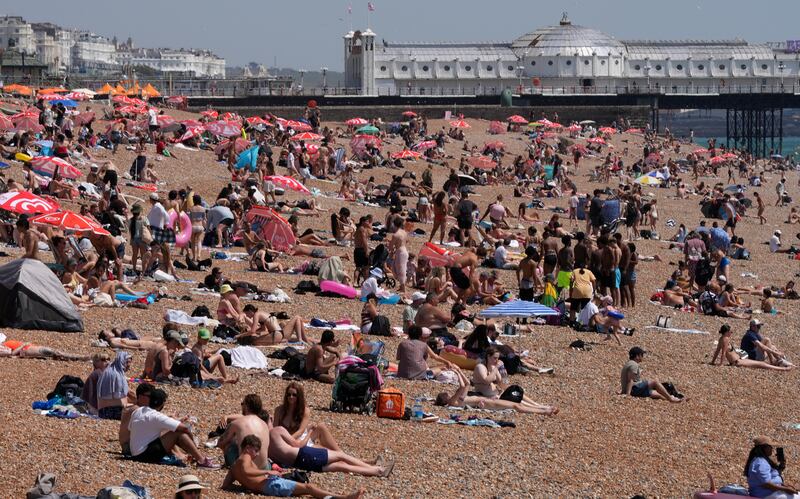

Parks and bathing spots around the country are particularly busy today.
Remember to take extra care if swimming and wear plenty of sun cream.


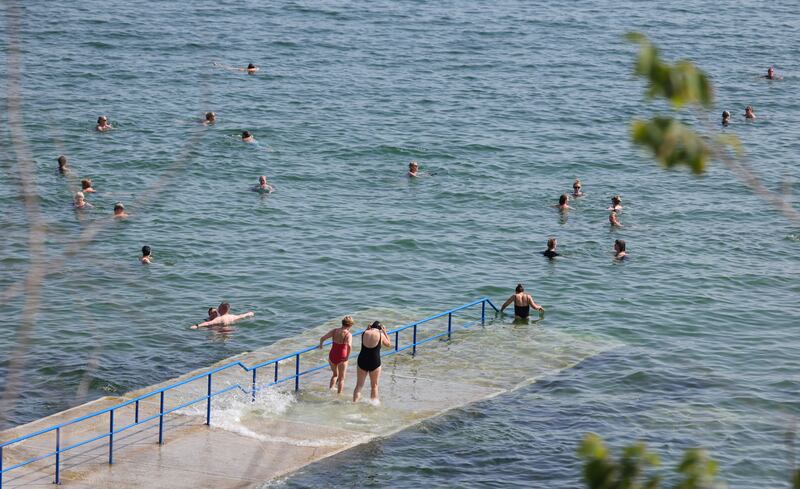

As many of us take shelter from the heat, please enjoy the dulcet tones of this guitarist at Greystones beach in Co Wicklow.
29 degrees highest temperature recorded in Ireland so far today

The highest temperature recorded in the Republic so far today is 29 degrees at Shannon Airport in Co Clare, according to provisional figures from Met Éireann.
Earlier, a temperature of 28.5 degrees was recorded at Valentia Observatory in Co Kerry.
Meteorologist Gerry Murphy said: “It’s a very hot day everywhere, and it’s going to continue very hot for the rest of the day.”
Speaking on RTÉ’s News at One, he said that overall temperatures will be in the high 20s and perhaps reach the low 30s this afternoon, “especially in parts of the midlands and Connacht”.
The definition of a heatwave is five consecutive days of temperatures at 25 degrees or more. Murphy said parts of the midlands and east will meet “heatwave conditions” tomorrow.
Water restrictions in several areas
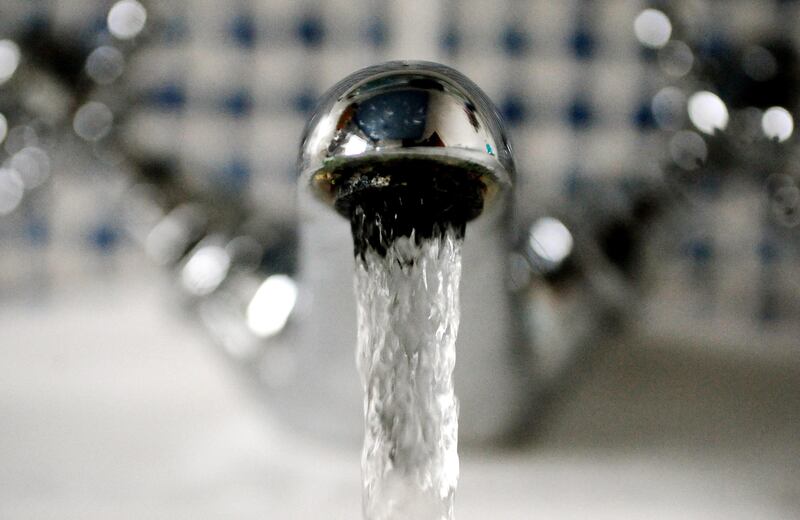
Uisce Éireann is postponing non-essential works in some areas to conserve water, a spokeswoman has said.
Mairéad Conlon told RTÉ radio’s News at One the company will continue works where there are water quality issues “to protect public health” or in order to fix “a burst in a water main”.
Nighttime water restrictions are in place in several areas including west Cork, Ironmills in Co Tipperary and Rosenallis in Co Laois.
“We recognise it’s quite frustrating for customers when there’s issues with water supply during warm weather,” Conlon said.
“The issue is the volume of water that we treat ... We need our water treatment plants to treat that water, so it’s safe for public consumption, and we need our network distribution systems then to get it to our customers.”
Conlon asked people to conserve water as much as they can in the coming days.
“We’d ask our customers to avoid the general stuff, to avoid any running taps ... fix any leaks that they might have on their properties, and during this period to avoid using a hose.
“The use of a hose for an hour can use the equivalent [water] of an entire family of four for a day, so it is quite significant ...
“There is going to be rain forecast for next week, so your lawns will recover.”
Thunderstorms and flash foods may ‘catch people out’
Keith Leonard of the National Directorate for Fire and Emergency Management has warned that thunderstorms and possible flooding in some areas could catch people by surprise.
Met Éireann has issued a status yellow thunderstorm warning for Connacht and Donegal. The warning will be in effect from 3pm on Thursday until 6pm on Friday.
Speaking on RTÉ Radio’s News at One, Leonard said the “sudden change” in weather may “really catch people out”.
He said summer flash floods “can hit in minutes, and they’re probably the most hazardous type of flooding in terms of loss of life”.
Leonard advised any motorists to not drive down flooded roads, saying: “Turn around and find an alternative route.”
If a lightning storm hits, people should “shelter in place” and remain inside for the duration of the storm.
“In terms of public health, I think the key piece is just to keep an eye on people who are vulnerable, particularly elderly people,” he said, advising people to call in on elderly neighbours to make sure they are comfortable.
Leonard said if parents have “any doubts or any worries” about infants and children or if they perceive “any changes” to “take a precautionary approach, go to your GP or go to A&E, in the worst case scenario”.
Europe’s extreme heat ‘a warning world cannot ignore’

ActionAid Ireland has warned that the extreme temperatures currently sweeping across Europe are a stark reminder that climate change is no longer a distant threat, but a present-day emergency that is already costing lives and livelihoods around the world.
The NGO, which focuses on the rights of women and girls, said the current heat emergency is “a clear signal that governments must move beyond rhetoric and deliver the climate finance needed to help vulnerable countries and communities adapt to a rapidly changing world”.
ActionAid Ireland CEO Karol Balfe said: “Europe’s extreme heat should serve as a wake-up call that climate change is no longer a problem we face in the future, and that will affect someone else. It is here and is affecting communities across the world, including in Ireland.
“This week millions of people in Europe, including Ireland, are experiencing serious discomfort and disruption because of the heatwave. It is dominating news headlines everywhere.”
Beyond this, Balfe said millions of people in lower-income countries are “experiencing prolonged drought, failed harvests, catastrophic flooding, displacement and hunger”, but “we rarely hear about their suffering”.
She said these communities are “least responsible for causing the climate crisis, but they are paying the highest price”.
Young boy found dead in car in France
A three-year-old boy has died after becoming trapped in a car in the Paris region in extreme heat, AFP is reporting.
The boy had gone into the family car while his father thought he was napping, then found himself unable to get out as the child lock was activated, a prosecutor said.
The tragic incident happened in the town of Saint-Gratien.
The mother was having a nap with the couple’s second child, an 18-month-old, while the father was working in a shed in the garden, according to the report. - The Guardian
Road users urged to slow down amid thunderstorm warning
The Road Safety Authority (RSA) is advising road users to take extra care, as Met Éireann has issued a status yellow warning for thunderstorms, with the risk of torrential downpours and localised flooding.
The warning will be in place for Donegal, Galway, Leitrim, Mayo, Roscommon and Sligo from 3pm today until 6pm tomorrow.
The RSA has issued the following advice to motorists:
- Slow down and allow a greater braking distance between you and the vehicle in front in wet weather conditions; this is especially important on high-speed roads such as dual carriageways and motorways
- Take special care when driving behind goods vehicles as they generate a considerable amount of spray, reducing visibility
- If the road ahead is flooded, choose another route; do not attempt to drive through it
- After driving through water, drive slowly with your foot lightly on the brake pedal for a short distance to help dry the brakes
- Drive with dipped headlights at all times
Advice for pedestrians, cyclists, motorcyclists and e-scooter users:
- Walk on the right-hand side of the road, facing traffic, if there are no footpaths
- Cyclists should ensure that they and their bikes are visible by using front and rear lights (white at the front, red at the back) and wearing bright or high-visibility clothing
‘Significant disruption’ expected in UK as extreme heat warning extended
The UK Met Office has extended a red extreme heat warning until 9pm on Friday, with temperatures of up to 38 degrees expected in the east and southeast of the country.
“The exceptional spell of hot and humid weather will continue across this region, with impacts to the general population highly likely,” the Met Office said.
“The heat will be accompanied by high humidity, exacerbating the potential for discomfort and health impacts, with very warm and humid night times also reducing the ability for people to recover overnight.
“Significant disruption to daily life is likely and the public should take every effort to make precautions and adapt their daily routines where possible to cope with these levels of heat, which up to now have been extremely rare for the UK.”
Water conservation tips
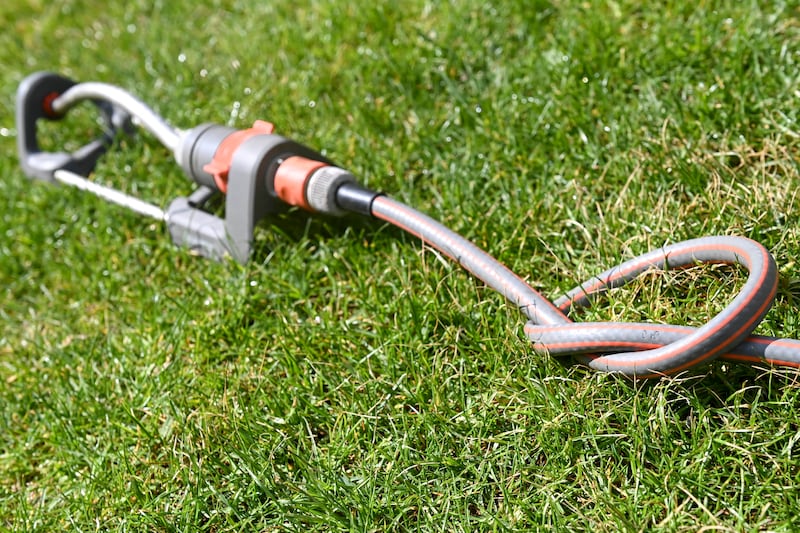
Uisce Éireann has issued water-conservation tips for people.
Here are some ways you can conserve water as the hot spell continues:
- Drop the hose: Use a rose-head watering can instead of a hose or sprinkler; aim for the roots; water plants early or late in the day to limit evaporation
- Take short showers instead of a bath: Reducing your shower time can save up to 10 litres of water per minute - a typical bath uses 80 litres
- Turn off the tap: Not running water while brushing your teeth or shaving can save up to six litres a minute; keep a jug of water in the fridge for drinks
- Fill up your appliances: Only run your washing machine and dishwasher when they have a full load
More conservation tips can be read here.
Soldiers died at the Curragh during heatwave 139 years ago
Ireland is bracing for the hottest day of 2026, possibly smashing an almost 140-year record.
The highest temperature recorded in the Republic was in Kilkenny in 1887 when the dial reached 33.3 degrees.
While we wait to see if that record is broken, let’s take a look at some of our coverage from 139 years ago.
A report from The Irish Times on July 4th, 1887 said soldiers at the Curragh in Co Kildare died from sunstroke.

“For want of rain every kind of crop appears to have its growth arrested,” the article noted.
“Hay and oats are extremely stunted, and as for pasture it seems to have disappeared from all but the low-lying districts. Cattle are half-mad from the scarcity of water.
“At the Camp the soldiers, too, suffer dreadfully in weather like this.”
To read the full article, click here.
Thunderstorm warning issued for Connacht and Donegal
Met Éireann has issued a status yellow thunderstorm warning for Connacht and Donegal.
The warning will be in effect from 3pm on Thursday until 6pm on Friday. It applies to Donegal, Sligo, Galway, Leitrim, Mayo and Roscommon.
Possible impacts include a risk of torrential downpours, localised flooding, lightning damage, hail, hazardous driving conditions and gusty winds.
France breaks hottest temperature record *again*
France recorded its hottest day on Wednesday, surpassing a record set only the day before.
The national temperature indicator, which averages day and night temperatures, reached 30 degrees, exceeding previous peaks set in July 2019 and August 2023.
“We are in the midst of a historic heatwave,” Benoît Thomé, director of institutional relations at Météo-France, told Le Monde.
The severity of this hot spell, significantly worsened by human-driven climate change, is “exceptional”, he said, and “at least equivalent to that of 2003”, when 15,000 people died in France.
‘This is what climate crisis looks like, and it’s just getting started’

Simon Stiell, the UN climate chief, warned that “Europe’s savage heatwave has the fingerprints of the climate crisis all over it” and is “the latest price to pay for fossil fuel pollution baking our planet”.
“Schools closing, the vulnerable dying, economies sweating: this is what the climate crisis looks like in practice, and it’s just getting started,” Stiell said.
“Until humanity stops burning colossal amounts of coal, oil and gas, extreme heat will keep getting worse, and other climate impacts – from mega-droughts, floods, wildfires and storms – will keep hammering every economy and population harder each year.
“With billions of households, businesses and all economies still feeling the heat of the latest fossil fuel cost chaos, and thousands dying in a single day in some regions as temperatures soar, stronger climate actions can’t wait.
“The solutions are equally clear: a faster shift to renewables – which are now much cheaper than fossil fuels – as well as protecting forests and boosting climate resilience. Many countries need support to embrace clean energy and protect their peoples. There’s no time to lose.” - The Guardian
Met Éireann has warned there will be “very high concentrations of grass pollen” today and in the coming days.
Event on impacts of extreme heat cancelled ... due to extreme heat
An event dedicated to discussing the impacts of extreme heat was cancelled at the London School of Economics on Wednesday because the venue was too hot.
The meeting was organised as part of London Climate Action Week.
The event was due to have been held in a near-100-year-old building that, like many in Britain, relies on natural ventilation and fans to cool visitors rather than air conditioning. The organisers said they called it off due to a risk to public health.
Chris Anderson, a climate expert at non-profit Practical Action, said the cancellation was a stark reminder that the dangers of a warming planet would impact everyone.
“There’s a real irony that an event designed to help vulnerable people adapt to extreme heat in a temperate, wealthy country had to be cancelled,” Anderson said. - Reuters
Heat hazard declared for Austrian Grand Prix weekend

Formula One’s governing body declared a heat hazard for the Austrian Grand Prix at Spielberg’s Red Bull Ring this weekend, the first time this season the designation has been used.
Race director Rui Marques said the official weather service forecast temperatures in excess of 31 degrees.
Declaring a heat hazard requires teams to fit a driver cooling system, such as a liquid-cooled vest, though drivers are not obliged to use them and can take a ballast penalty instead.
The car’s minimum weight is increased to accommodate the hardware.
Last October’s Singapore Grand Prix was the first time the heat hazard designation was applied after it was added to the rules in 2025, followed by the US Grand Prix in Austin, Texas, the same month.
Sunday’s race will be the eighth round of the championship, with 19-year-old Mercedes driver Kimi Antonelli at the top of the standings. - Reuters
Heatwave linked to 212 deaths in Spain
The heatwave is linked to 212 deaths in Spain between Sunday and Wednesday, according to estimates from a public institute, AFP is reporting.
The MoMo monitoring system compiles daily death statistics in Spain and calculates the difference in mortality by comparing them with the levels foreseeable based on historical records.
Air conditioner sales spike in Europe

As Europe sweats through record-breaking temperatures, Asian makers of air conditioners, such as South Korea’s Samsung Electronics, China’s Midea and Japan’s Mitsubishi Electric, are enjoying a boom in sales.
Air conditioning is common throughout buildings, transport and homes in major cities across Asia, but it is rare in Europe and people are struggling to stay cool as searing heat claims lives, disrupts power supplies and shuts schools.
Seeking respite from the sizzling weather, people and companies across Europe are snapping up portable and fixed air conditioners as some countries warn the heatwave could intensify.
“With temperatures expected to rise further from June onward, we expect sustained demand through the peak cooling season,” Samsung Electronics said in a statement.
Key markets, including Italy, Spain and France, generated double-digit sales growth in the first half of this year, it added. - Reuters
Public warned of dangers of swimming in reservoirs
As high temperatures continue, ESB has issued a warning about the dangers of swimming in reservoirs and watercourses.
Henry Bouchier, ESB’s manager of hydro operations, said: “It is important that people take note of the safety warnings which are visible on signs posted around ESB reservoirs.
“These areas are unsafe for swimming due to deep, fast-flowing waters, fluctuating water levels, and uneven terrain, which present significant hazards to the public.”
These waters include ESB reservoirs at the following locations:
- Poulaphouca in Co Wicklow
- Golden Falls and Leixlip in Co Kildare
- Inniscarra and Carrigadrohid in Co Cork
- The Ardnacrusha headrace and tailrace canal in Co Clare
- Assaroe, Lough Nacung and Lough Dunlewey in Co Donegal
High temperature warning extended into Saturday
A nationwide high temperature warning for the Republic has been extended into Saturday.
The status yellow warning came into effect at noon on Tuesday and was originally due to expire at 9am on Friday.
Met Éireann has now extended the warning until 9am on Saturday.
72 departments in France are under red heat alerts

The intense heatwave is hitting Europe earlier than usual, underscoring how climate change is reshaping summers.
France has been the epicentre of the heatwave for more than a week, with daytime highs reaching 43.8 in Palluau in the west on Wednesday.
Paris mayor Emmanuel Grégoire said hundreds of air conditioners are being delivered to schools in the French capital. The heat is also becoming a critical issue for nursing homes, as not all rooms have air conditioning, Zaynab Riet, executive director of the French Hospital Federation, told France Inter radio station on Thursday.
The heatwave, driven by a high-pressure heat dome and atmospheric shifts from a developing El Niño, has led to widespread public health warnings. A record 72 departments in France are under red heat alerts, with similar warnings in effect in the UK, Germany, and Switzerland.
Temperatures in Paris are forecast to reach 41 degrees on Thursday, with 36 degrees possible in London on Friday, according to forecasters. Daytime highs in Frankfurt are set to top 40 degrees on Friday, according to weather models from the European Centre for Medium-Range Weather Forecasts.
The extreme heat is forecast to ease this weekend, but unusually warm temperatures are likely to linger throughout next week. - Bloomberg
London unveils first ‘heat plan’

The mayor of London has unveiled the city’s first heat plan to keep Londoners safe during increasingly frequent heatwaves.
Expanding access to public drinking water and blue spaces – outdoor environments that prominently feature water – are among the priority areas of focus set out in the plan, entitled Heat Ready London.
Sadiq Khan said he hopes it will help tackle the “huge obstacles” the city faces with rising temperatures.
It comes as the UK swelters in exceptional heat as the hottest June day was recorded, with provisional temperatures reaching 36.1 degrees in Hampshire on Wednesday.
Heat Ready London focuses on six key sectors: the built environment, business and economy, emergency preparedness, resilience and response, health and care, green space and nature, and infrastructure.
The plan sets out a series of objectives, which includes protecting Londoners from the health impacts of rising temperatures and prioritising vulnerable people in high-risk areas. – PA
Check in on elderly neighbours
Holly O’Neill, a meteorologist with Met Éireann, said the current high temperatures are being caused by “a plume of hot air coming in off the Continent”.
Speaking on Newstalk Breakfast, O’Neill said it would be difficult to pinpoint where exactly would experience the highest temperatures today but that it was likely to be in the midlands or Connacht, Vivienne Clarke reports.
Keith Leonard, chairperson of the National Emergency Coordination Group, told the same programme about the “common sense measures” people could use to help themselves and each other.
He said high temperatures can be “very enjoyable” but have “a disproportionately difficult effect for elderly people, infants and young people”.
Leonard encouraged people to check in on elderly neighbours or people living alone.
“Call in, check that they’re comfortable, that they’ve accessed cold drinks. A short visit could make a huge difference to the wellbeing of an elderly neighbour today.”
How to work (or get out of work) during the heatwave today
Many people will be stuck in the office today as temperatures are set to top 30 degrees.
In case you’re wondering if you have a legal right to stay home amid a heatwave, we have bad news.
“There’s no specific law” that mandates workplaces to close when temperatures reach a certain point, “but there is a legal obligation on employers to ensure the health and safety of their employees”, said Michael Doherty, a law professor at Maynooth University.
Working conditions during extreme weather events (a more common example in Ireland would be a storm) “are usually the subject of contracts or employee policies”, Doherty said, “so it’s difficult to find a law for these things as they’re so context specific”.
Read Stephen Conneely’s report here.
Are you Irish and in Europe? If so, how are you coping with the heat?
We would like to hear from people from Ireland living or travelling in parts of Europe impacted by extreme heat.
You can share your experiences by using the form here.
More high temperatures and thunderstorms expected on Friday
Meteorologist Gerry Murphy said even though the high temperature warning is due to end at 9am on Friday, tomorrow will be “very warm”.
He told Morning Ireland temperatures in the Dublin region could reach up to 31 degrees, Vivienne Clarke reports.
“So we’re looking at potential records today but it may turn out that in the east of the country we have near record temperatures tomorrow.”
Murphy said more widespread thunderstorms, especially across the west and north of the country, are expected tomorrow.
Why is it so hot and when will Ireland’s very warm weather end?
This is the second time this summer a prolonged heatwave has seized Europe. But behind this spike in temperatures is a “heat dome” hovering above the land mass, Stephen Conneely reports.
The phrase heat dome has only come into use relatively recently and “isn’t a traditional meteorological term”, according to Matthew Martin, a forecasting meteorologist at Met Éireann. He said it was commonly used “to refer to a slow moving area of high pressure” that “usually develops above large, continental areas”.
Martin explained that this high pressure builds over several days and restricts air from rising higher in the atmosphere, trapping and condensing heat closer to Earth’s surface. This is a double-edged sword, as air this close to the ground is unable to form clouds, allowing prolonged and direct sunlight to further heat the landscape.
Read the full explanation here.
Thunder and hail storms possible in the west
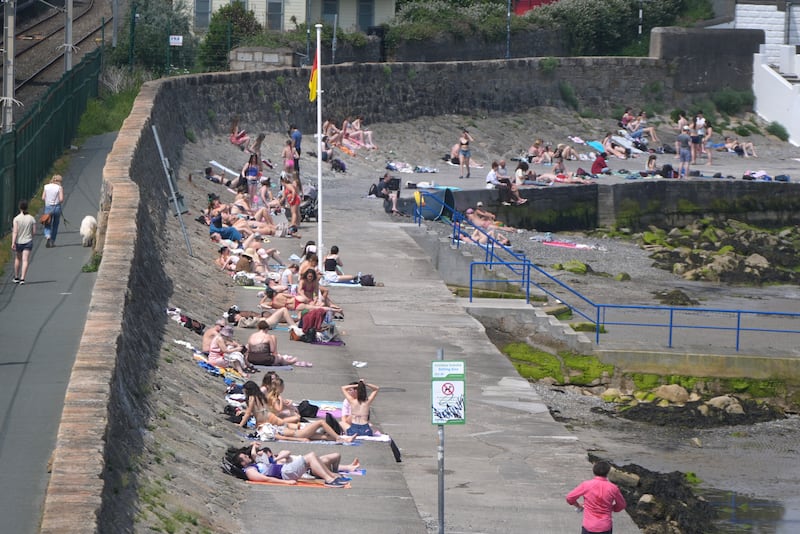
Meteorologist Gerry Murphy has warned there could be thunder and hail storms in the west as temperatures are set to be in the high 20s and over 30 degrees in parts of the midlands and Connacht, Vivienne Clarke reports.
There is the potential for the record high temperature to be challenged but it’s not certain to be broken, he told RTÉ Radio’s Morning Ireland.
“Temperatures yesterday in the west didn’t get up as high because there was a fair amount of clouds. So that means today is not starting from quite as high a base as it might be.
“And secondly, as we go through the day there are actually thunderstorms off the west coast at the moment and if the cloud moves in a bit more, further inland, and those thunderstorms begin to develop later that may keep a cap on the temperature.”
Murphy said thunderstorms in Connacht and Ulster may turn “significant ... because there is so much heat in the atmosphere”.
The Met Éireann meteorologist said it will be “a very hot day everywhere” and the cloud cover “will make temperatures feel more intense and humid”.
He advised people to be “very careful”, make sure they stay hydrated, wear sun cream and take care near bodies of water.
Soaring temperatures across Europe

Soaring temperatures in France, Italy, Spain and England and other countries in western Europe have put significant strain on tens of millions of people. One analysis estimated that close to 100 million people in Europe are facing temperatures of more than 35 degrees.
Temperatures climbed to 41 degrees in Nantes and surrounding areas in western France on Wednesday, with Paris experiencing similar highs. That left one-third of France’s administrative regions on notice for an elevated risk of forest fires due to the spiking temperatures, low humidity, winds and dry ground conditions.
Spain’s forecasting agency Aemet warned that parts of the country faced “significant danger” from the extraordinarily high temperatures, which surpassed 40 degrees in some northern regions.
High temperature warning still in place
A status yellow high temperature warning remains in place for Ireland. It came into effect at midday on Tuesday and will remain in place until 9am on Friday.
Met Éireann has said there will be maximum temperatures in excess of 27 degrees combined with night-time minima in excess of 15 degrees.
The potential impacts include water safety issues due to increased use of lakes and beaches; uncomfortable sleeping conditions; heat stress; and possible forest fires.
Ireland bracing for hottest day of 2026, possibly smashing 140-year record
The punishing heatwave that has swept across Europe, during which temperatures have climbed to unprecedented highs, is set to continue on Thursday.
Moreover, Ireland is bracing for the hottest day of 2026, possibly smashing a near 140-year record, Conor Pope and Jack Power report.
The highest temperature in Ireland yesterday was 27.9 degrees at Moore Park in Co Cork, followed by 27.7 degrees at Oak Park in Co Carlow. But Met Éireann’s Holly O’Neill warned a new heat record was possible today.
The highest temperature recorded in Ireland was in Kilkenny in 1877 when the dial reached 33.3 degrees. While Met Éireann’s predicted value range for today is between 25 and 31 degrees, it could go higher in the west and midlands.
“It is possible that we could see that temperature record being broken today,” said O’Neill. “It’s just a case of seeing how it develops throughout the day and whether or not we see those temperatures climb.”


