
Hospitals are so hot right now. While few of us would willingly go near one in the real world, on television they’re back with a bang.
Soon to come to Irish screens, US medical drama The Pitt is the most acclaimed new series in years. Meanwhile, Grey’s Anatomy rumbles ever on while annoying medical comedy Scrubs is set for a reboot. You can’t chuck a stethoscope without hitting a new show set in a world of doctors, nurses and patients with interesting ailments.
So it’s a good moment for RTÉ to roll out a new fly-on-the-wall medical documentary, Any Given Day: Cork University Hospital (RTÉ One, 9.35pm). Made with HSE co-operation, it’s a spiffy puff piece that tries to tweak the narrative around Irish healthcare.
Typically, when we encounter the Irish health service on our screens, it has to do with one crisis or another: not enough beds, crowded A&E, striking nurses, carping consultants ... the specifics change, but the story remains the same.
READ MORE


Any Given Day is different in that it attempts to put a positive spin on our health service. How accurate a picture it paints is hard to say – it is presumably a work of fiction to the extent that no A&E logjams or patients propped on trolleys feature.
Yet, to its credit, it doesn’t belabour the melodrama, as these sorts of documentaries often do, and instead honestly tells the stories of patients at what is, by certain metrics, Ireland’s largest hospital.
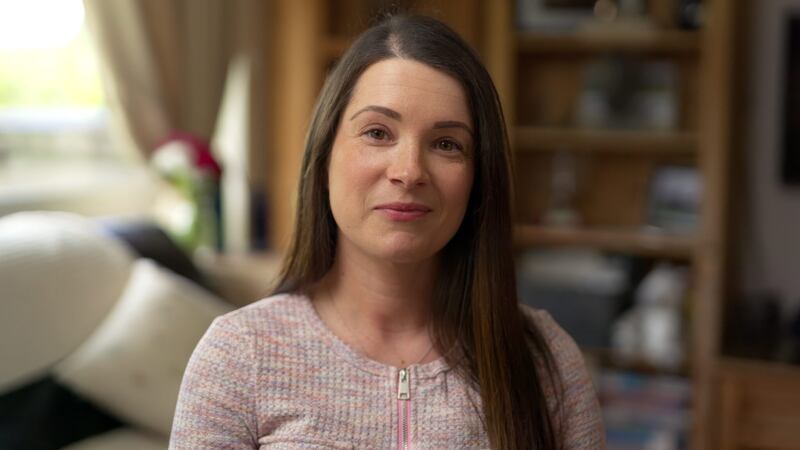
In episode two, we meet Howard, who has motor neuron disease (MND) and his wife, Yvonne. Howard has lost the power of speech and communicates with a device. He faces his condition with courage but is under few illusions about the challenges ahead.
He describes MND as “a thief taking from you the whole time ... a gradual chipping away of the person you are. [There are] a lot of negative emotions ... anger, fear, sadness, worry – it’s a head-wrecker”. What is there to say but wish him the best?
The episode also introduces four-year-old Madison, admitted after undergoing a seizure. Her mother, Shannon, talks about raising a daughter who has a super-rare condition, DYRK1A syndrome: she’s the only person in Ireland with it, and there are just a handful of confirmed cases worldwide.
If her story is heartbreaking, then that of 49-year-old Fermoy native James is wince-inducing. Kicked by a horse, he struggles to breathe as he is taken away in an ambulance. His partner, Niamh, is eight months pregnant and doesn’t know how to respond when he is given ketamine to help with the pain and he then blurts out a marriage proposal as he is being whizzed off to CUH.
Several of CUH’s many hundreds of doctors and nurses are given screen time, but the focus is on the patients, and the filmmakers don’t go overboard in portraying the staff as super-heroic figures.
They’re just ordinary people getting through their day, and while RTÉ perhaps puts too positive a spin on what we all understand to be a dysfunctional health service, it is careful not to lay on the propaganda with a trowel. Nobody wants to spend too long in a hospital.
The quietly impressive achievement of this show is that, despite a chunky 60-minute run time, it never wears out its welcome.