We all have rituals, even the most spontaneous among us, although practically minded people prefer to call them habits. Some of these are good, others less so; it is frequently a balance between how we use them and whether they begin to control us.
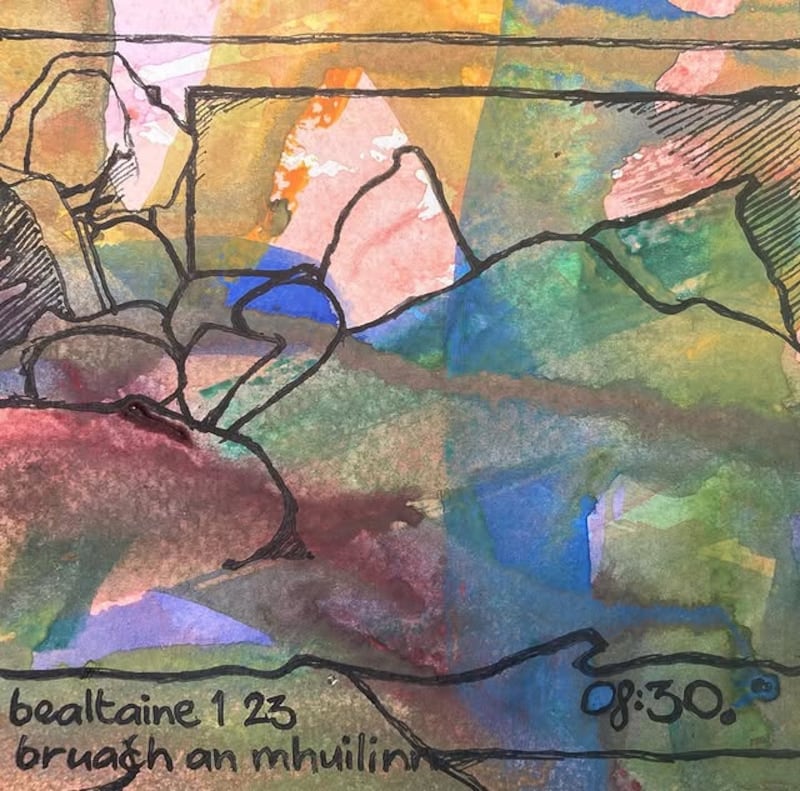
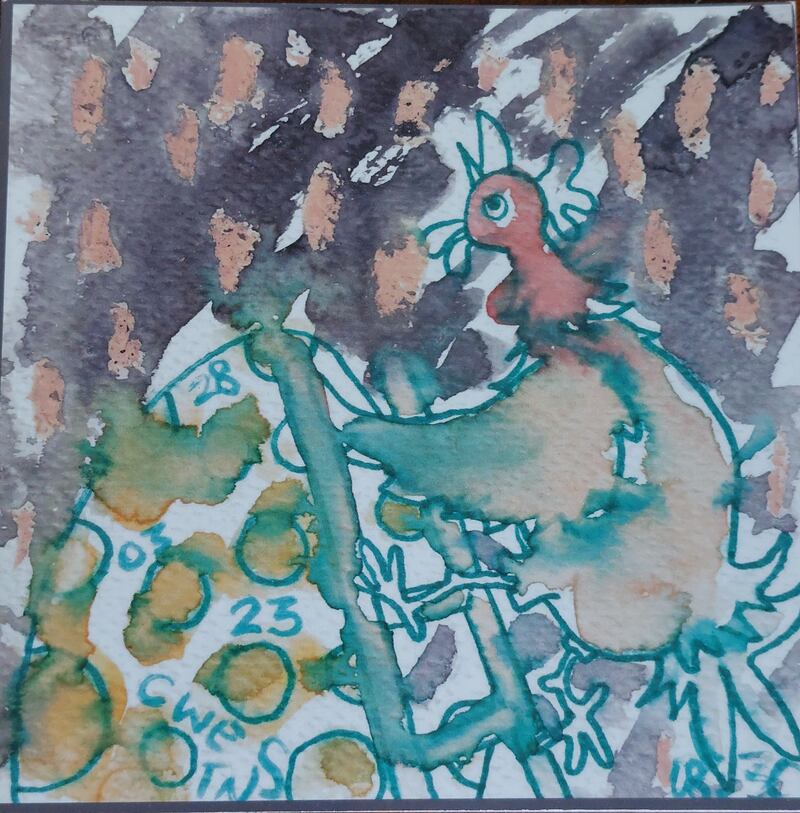
Each morning since October 13th, 1997, artist Siobhán Rea has made a drawing, at 8.30am precisely. Each 10cm by 10cm sketch is marked with the date and time and, drawing done, Rea, who also works as a primary schoolteacher, gets on with her day.
Many artists will be familiar with the habit of a daily drawing practice: the sketching or writing that loosens you up and gets the imagination flowing, before your sterner inner critic is awake enough to impose its limitations. Although it was published more than three decades ago, millions of people around the world continue to take up the ritual of writing “morning pages”, courtesy of Julia Cameron’s self-help book The Artist’s Way.
Certain habits – yoga, a cup of hot water with lemon, journaling, sit-ups, a run, a daily drawing – can be grounding, or intention-setting, but when do they tip over into something less healthy? When does ritual become obsession?
READ MORE


Author Danielle McLaughlin had been fascinated by Rea’s morning drawings for a while, and the pair are long-term friends. In 2023, she decided to collaborate with Rea as the inspiration for a book. The result is Rituals, a gentle yet powerful novel in which the central character, Joan, is both comforted and trapped by her rigorous self-imposed daily habits.
“I had been captivated by them for a long time,” McLaughlin says, of the drawings, posted daily to Rea’s Instagram. “And I had it in my head and heart that I would love to do something with Siobhán, but it kind of rested there as an idea, until a couple of years ago.”
“I think it was the process and the ritual that was the trigger,” says Rea, taking up the story. “Danielle emailed me, and suggested I send her three specific months: January, February and March 2023.”
The drawings are, quite literally, a slice of life. Some are sketched, some painted. There is a lampshade, a chair, trees in a park, a grave, a snippet of text – “Rick says no”, a bathroom sink, flowers, red roofs, a toilet, a clock. Most are on paper cut to size for the purpose, but when needs must, the artist will use anything. An aeroplane sick bag has had its creative uses, she says. Each drawing gets filed, in order, in a binder. According to Rea, the ritual can be very banal. “I don’t get to reflect on them, because life is so busy.” Being a personal project, they have never been shown as an exhibition in their entirety. They should be; they are wonderful.


Once the folder arrived, McLaughlin, a writer whose short stories and novel The Art of Falling have been garlanded with highly deserved praise, began to rearrange them. “Siobhán gave me complete freedom, so I took them out and spread them around, and looked at what they were saying to each other.” Patterns and connections appeared. McLaughlin created a first draft, and sent it to Rea, who responded with more drawings. Serendipities began to emerge.
“At that point,” Rea recalls, “I had a residency in the Tyrone Guthrie Centre, and they had this gorgeous parlour, and up on the bookshelves, beside this fabulous mantelpiece was a conch shell. I thought: wow, it’s inevitable that has to go into a drawing.” A conch shell features prominently in Rituals, as does a plastic rabbit. “I had bought a whole set of matching notebooks, because I handwrite everything,” adds McLaughlin, “and I knew I’d need lots for the project. Look,” she smiles, holding a notebook up to the Zoom camera, “there’s all these conch shells on the cover.”
[ Roe McDermott: How to create rituals that add meaning to our livesOpens in new window ]
Coincidence? Perhaps, but another way of looking at it is to realise that, when we are paying attention, connections and inspirations are everywhere. The main impulse behind Rea’s own daily drawings came originally from teaching in London to finance her time at art college. “I was working with a severely autistic little girl, and she needed a lot of routines to give her a hook into her day and give her a sense of comfort. And I thought, what if I were to construct a very specific, rigid set of rules for myself?”
When it’s healthy, a ritual can be about claiming space for yourself, and committing to showing up for it every day. But Rituals explores what happens when it becomes something else. “I’m very drawn to obsessions,” says McLaughlin. “And obsessions can be a great thing for writing, because it’s by going into our obsessions, sometimes, that’s where we find the real core of our stories. But,” she continues, “obsession has had a dark side for me since I was a kid. As a child I attended briefly a child psychiatrist for obsessive compulsive disorder. And in adulthood I was diagnosed as being on the autism spectrum, so I’m really interested in that idea of rituals, as [to] whether we’re using them, or they’re using us.”
Given that darker side, exploring the world of rituals through the book Rituals is a surprisingly warm and joyful experience. Objectively, all the characters, save possibly one, are trapped by routines, beliefs and circumstance, but the humanity with which McLaughlin tells the story makes spending time with them something to savour. There is humour too, and many of her observations are beautifully, gently, spot on. Reading it could well be a tonic for everyone who ever felt at odds with the world, or maybe wondered why everyone else seems to be able to be happily normal, as we attempt to quiet the mutterings (and sometimes shriekings) going on inside our own minds. It is also a reminder of the rich and often unknowable inner lives and fantasies, lived out secretly by family, friends and strangers; unremarked and unremarkable unless they make their presence felt in disruptive ways.
“It seems strange to me,” concurs McLaughlin, “that Joan might be regarded as the one having the problem [in the book], because she does something with her conch in her own house, which is perfectly harmless. But other people are staying in rituals, and are locked into ways of going through their days and their lives that are terrible and harmful. Sometimes people don’t see those as being the dark rituals, like the dark rituals of our relationships, and the dark rituals of how we approach what we’re worth and what we deserve in life.”


And what about the character of Rosie, that one “normal” person in the book? Just like Garrison Keillor’s wry take on exceptionalism at Lake Woebegon, in his A Prairie Home Companion, where “all the children are above average”; can anyone really be said to be normal?
“She’s the person who has got her act together the best,” says McLaughlin. “But if the book was about Rosie, it might turn out to be a very different story. When we got to know Rosie better, would it turn out that Rosie had just as many challenges, and was just as odd in her own ways?”
Rae’s own daily drawing has stayed on the healthier side of habit. “I thought over time it would become a compulsion,” she says. “It hasn’t really, but it definitely feels off if I don’t do it, that’s for sure. Just not in a very catastrophic way.” Perhaps, as Joan discovers in the book, it is in that lack of catastrophe that there is, at the very least, hope.
Rituals by Danielle McLaughlin is published by Stinging Fly Press on April 23rd. The prepublication Cork launch includes a selection of Siobhán Rea’s works together with a booklet created by Rea, and will be at the Cork World Book Festival, City Library, on April 21st at 7pm. A separate exhibition of Rea’s works, held in aid of Rainbow Club Cork Centre for Autism, will be at JRAP O’Meara Solicitors, Thompson House, MacCurtain Street, Cork on May 7th, 4.30pm-6pm. The Dublin launch is in Books Upstairs at 6.30pm on April 29th. See Rea’s daily posts of her morning drawings at Instagram@0830ritual