

Neil Tully

Set in June 1963, at the time of John F Kennedy’s visit to New Ross, Neil Tully’s debut novel The Visit was written while he was working as a dentist in Cork. Repped by Simon Trewin, Ballina-born Tully, who is 36, studied creative writing at the University of Limerick. The Visit will be published in March by Eriu.
You did a masters in creative writing at the University of Limerick. How did you make that work with your life in Cork?
I commuted up and down and I was working as well, so it was a lot. But the good thing about dentistry is, because I’m self-employed I was able to be flexible with my hours.
What’s harder: a root canal or a plot twist?
The dentistry will always be harder. Dentistry is very much a profession and you have to be clinical and methodical. Writing is driven by love. Like, I’m trying to write something at the moment and I don’t know if it’s going to get anywhere, but I enjoy that.
How did you approach researching The Visit?
The research is crucial. I’d research books on embroidery and the architecture of New Ross; you’d read all this stuff and maybe only a drop goes into it. But it’s so important. If it doesn’t feel authentic on page one, most people will probably put it down.
READ MORE



What are your expectations for the book?
I don’t have loads. I’m mostly just grateful that someone thought it worth publishing. I can’t control whether people like it or not, or how well it does. The writing itself is all I can control.
Ana Kinsella
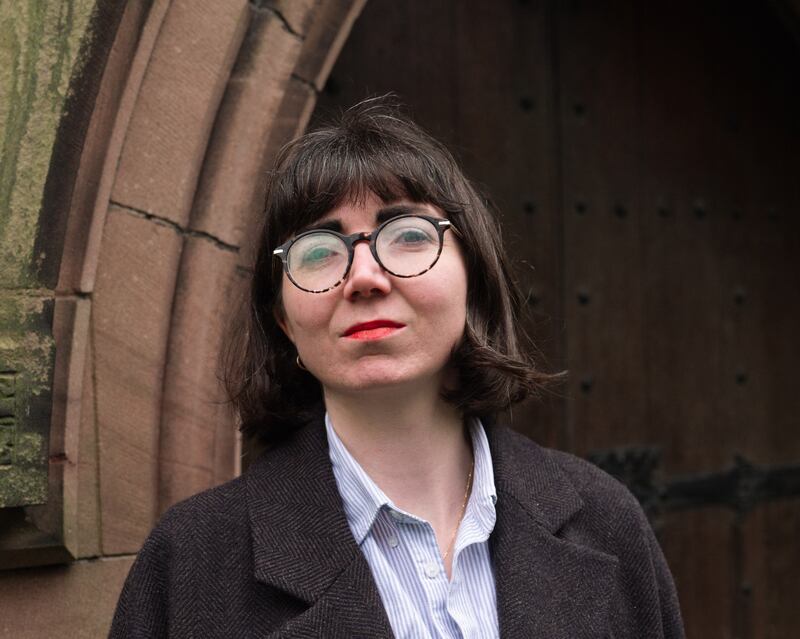
Dubliner Ana Kinsella’s first non-fiction book, Look Here: On the Pleasures of Observing the City, was published in 2022. Her debut novel, Frida Slattery as Herself, which tells the story of a couple’s relationship over decades, will be published by Scribner in May.
Was fiction always what you wanted to do?
Fiction wasn’t on my radar to begin with. I’d studied English literature at university and loved books, but I was very keen on working in fashion magazines from a young age and so that was why I moved to London. However, the longer I worked in the fashion industry, the more limiting I found it, particularly as a writer. What I was really interested in was people. In my late 20s, I became curious about whether I could write a decent novel. I ended up moving into advertising and discovered that working as a copywriter was a useful way of earning money that also allowed me to switch off and write in my spare time.
Is it easier to observe Dublin after you’ve lived abroad?
I think it might be. Both of the main characters return to Dublin after some time abroad and that’s the only part of the novel that felt drawn from my own experiences. I’d been living in London for 12 years when I moved home in 2023. There’s a cognitive dissonance in coming back to your hometown when it has changed – and when you have changed. You walk down a street and you’re flooded with memories of who you were once, and then you’re trying to make sense of who you are now. That felt like a rich seam for fiction.
[ Christine Falls by John Banville is One Dublin One Book choice for 2026Opens in new window ]
The book was acquired in a six-publisher auction: what was that like?
It was exciting. I met all the publishers on Zoom over the course of about 14 hours, then I immediately went on holiday to Greece. I was walking around Athens with my husband looking for somewhere to have dinner when the auction ended. My agent sent me a text that said ‘Can you call me asap please?’ It was a hot night, the streets were packed, every restaurant had a queue, and we ended up through sheer necessity in a tourist trap. I found a quiet corner to call. By the time I got back to the table, my husband had ordered enough wine and dolmades to feed an army. I told him what happened, which is always the best part of getting good news, and we ended up having a surprisingly delicious meal.
Colin Morgan

Born in 1986 in Armagh, actor-turned-author Colin Morgan’s screen credits include Merlin (2008-2012) and Belfast (2021), directed by Kenneth Branagh. Morgan’s first novel, The Ballad of Ronan McCoy, due in June from HQ, is a coming-of-age tale about friendship and first love.
You’ve been an actor for most of your career: what has acting taught you about writing?
Acting has a more singular quality in that it’s one character’s journey I’m invested in. Writing is more expansive and encompassing, occupying multiple strands and finding the most interesting path through them. One helps the other but at the end of the day I’m simply telling a story.
What’s the background to the title?
Titles are hard. I have my agent Zoe Ross to thank for finalising this one. We knew we wanted Ronan’s full name in the title because of his impact in the story. Then I was made aware that there was something balladic in the quality of how Brendan, the narrator, tells his story, so The Ballad of Ronan McCoy it became.
How did you go about getting published?
It’s vulnerable sharing a story with others. But you’ve written it to be read and so I took that first step to get it to an agent. We worked on several drafts to whip it into shape and then sent it out to publishers to see if anyone connected to it in the way that felt most aligned with me. I was lucky enough to have the experience of feeling the true passion of my editor Clare Gordon for my story when we met. So the thing in my head began to become a reality.
Patrick Freyne

A feature writer with The Irish Times and former member of indie group National Prayer Breakfast, Patrick Freyne’s essay collection OK, Let’s Do Your Stupid Idea was published in 2020. His debut novel Experts in a Dying Field arrives in June from Sandycove.
What’s the plot of Experts in a Dying Field?
It’s a story about a bunch of middle-aged musicians and other artists and scenesters grappling with an old tragedy. It’s about grief and failure and ageing and what it means to make art. It was first inspired by my real-life experiences as a musician and then it got away from me and also became a sort of portrait of Dublin. I stole the title from an excellent song by the Australian band the Beths. I consider the “dying field” to be music or being in any art scene or anything you did when you were young. It’s about being shaped by and for a world that’s disappeared and how you cope with that.
[ Books of the year 2025: Authors and critics pick their favouritesOpens in new window ]
Do the experiences of making music and writing a novel have much in common?
The collaborative editing process with my brilliant editor Brendan Barrington was very like being in a band. Also, putting the chapters in the right order reminded me of arranging track listings for albums.
Your wife Anna Carey is also a novelist. Is there a full and frank exchange of views when it comes to springing pages on each other?
We are bitter rivals. Do not on any account order her excellent, moving and romantic books Our Song and Love Scene. I will regard it as a cutting insult.
You’ve won acclaim for your essay collection. Do you feel more or less vulnerable bringing a debut novel into the world?
It’s scarier in a way. OK, Let’s Do Your Stupid Idea is just about my stupid real life. Experts in a Dying Field probably represents a more unrestrained dream life. Kevin Barry once told me that fiction often reveals more of the writer than they intend.
Djamel White
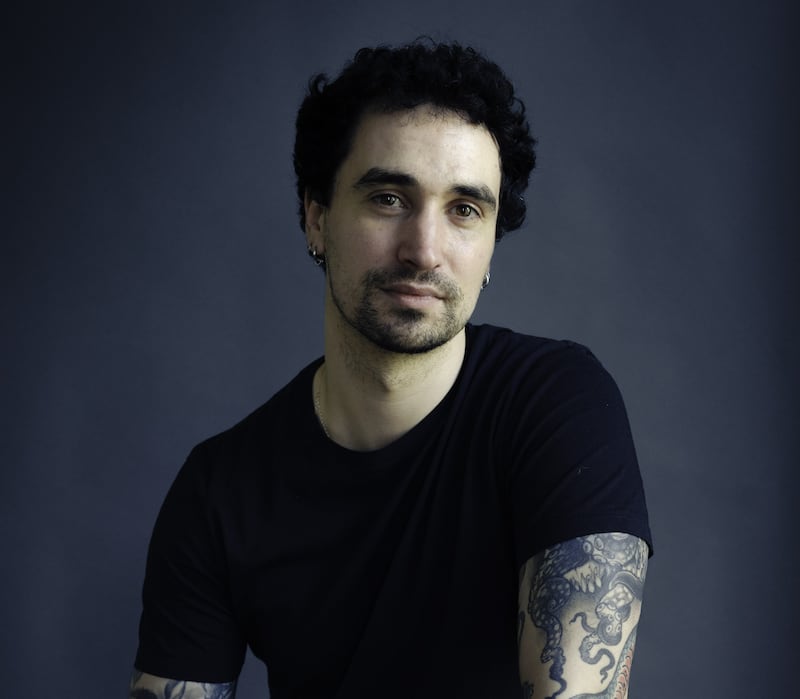
Raised between Lucan in Dublin and Virginia in Co Cavan, Djamel White left school before his Leaving Cert at 17, but found his way back into education at UCD, where he studied English literature and creative writing. His debut novel All Them Dogs, a gritty gangland drama, arrives in March, published by John Murray Press.
Where does the name Djamel come from?
My mother was an au pair in France when she became pregnant with me. My father is Algerian-French. She told me recently that my name was chosen while my godparents read from a list of Arabic names to her over the phone. I actually believed I was half-French for the longest time, because I suppose that was easier to explain to a child. I was 14 when I found out I was half-Algerian, around the end of that relationship between my mother and her ex-partner. I don’t speak French or Arabic, since I’ve grown up only with my Irish side. It was a bit othering in school, to have this name that was so often mispronounced, to have a vague sense of my own foreignness but to have no connection to it.
As an early school leaver, what did it mean to you to snag a position at Roddy Doyle’s Fighting Words initiative?
It was huge. I’d been informed about the volunteering opportunities at Kylemore Community Training Centre, where I was enrolled in an employment skills course for early school leavers. In that course there was a linked work experience module. So I was able to spend every weekday volunteering at Fighting Words as if it were a full-time job. Fighting Words made me feel like I was making a valuable contribution with my time. They emboldened me and gave me confidence.
[ Book club: Sturgeon and O’Hagan to pick 2026 Irish Novel of the YearOpens in new window ]
What inspired your debut novel, All Them Dogs?
I had tried to write a crime-fiction-adjacent short story, called Blue Opel, in the early days of lockdown. The story was about a man who uses his mother’s old Opel Corsa to run errands for a local gang. A couple of years later, when I decided to take another look at it, I switched it into the first person and almost immediately this character of Tony Ward was fully formed. The novel follows Tony, a young gang member who has returned to Dublin from the UK following the murder of his old mentor, hoping to reinstate himself as a player in the gangland scene. To get a leg up, he falls in with a drug lord called Aengus Lavelle, and becomes a right-hand man to his enforcer, a man called Darren “Flute” Walsh.
Comparisons have been made to The Wire. Is a TV adaptation on the horizon?
And it’s a welcome comparison! I’m happy to say that rights have been optioned, and a TV adaptation is in the early stages of development.
Jen Bray

A former political correspondent with The Irish Times, Jen Bray is political editor with the Sunday Times Ireland and in February Sandycove will publish her debut novel The Lies Between Us. Rights have been sold to Germany, Poland and the US.
How did you approach getting published?
It almost happened by accident. On The Irish Times Inside Politics podcast, a listener sent in a question asking which book each of us on the panel would like to write. I was feeling brave and said I was finishing a crime and mystery novel. Patricia Deevy from Penguin Sandycove heard the comment and emailed me asking about it, which lit a fire. I went into a feverish state of finishing the book and submitted it to agents. I had three offers of representation, which, after 15 years of rejection on previous novels, was a pinch-me moment. I signed with Florence Rees of AM Heath and we edited the novel before going on submission. Three publishers offered and I was thrilled to sign with Penguin Sandycove.
What drew you to the crime fiction genre?
When I was about 14, I read a book called The Empty Chair by Jeffery Deaver, which is the third book in the Lincoln Rhyme series. I’ll never forget the sense of awe I felt as I finished it. I remember thinking: how did he do that? From that point on I was hooked on crime fiction.
What’s the plot of The Lies Between Us?
It’s about three warring sisters – Susannah, a novelist; Lucy, an ex-garda; and Tara, a hotel manager – each haunted by their own past. Just before a dinner in their mother’s idyllic cottage in Dunmore East, Waterford, Susannah disappears. Hours later, a woman is found dead on a nearby beach. Amid the confusion the next morning, Lucy finds a link between her older sister and the victim. She finds herself drawn into a murder investigation.
What’s a good piece of writing advice?
In Stephen King’s brilliant book, On Writing, he advises authors to “write with the door closed, rewrite with the door open”. Basically, don’t self-censor and fear what other people might think of what you are writing. Secondly, a piece of advice I picked up from the Irish female crime writers: just get it written. You can edit bad words, you can’t edit nothing. And finally: write the book you’d love to read.
Edie May Hand
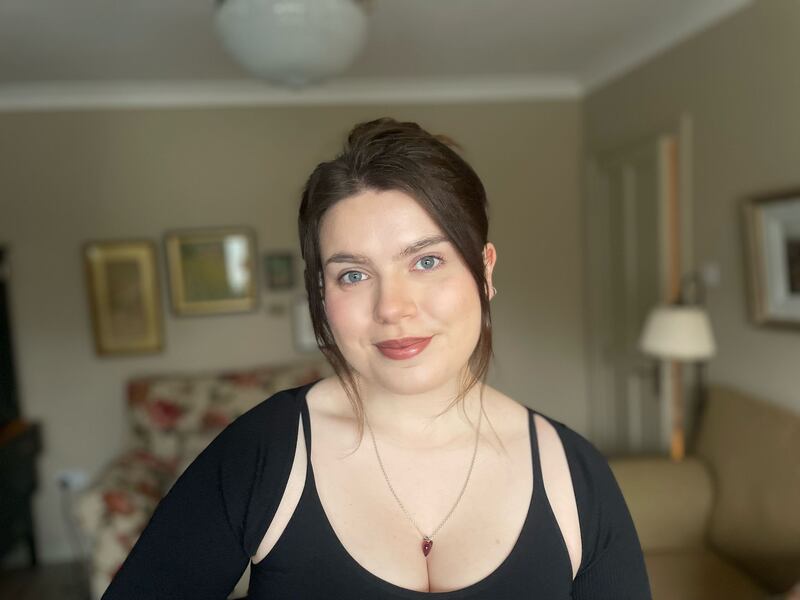
From Navan, Edie May Hand graduated with a masters in creative writing from Maynooth University in 2024, where author Belinda McKeon was one of her lecturers. A winner of the Irish Writers Centre Novel Fair in 2024, Dirtpickers, which tells of a man, woman and three children who flee a silver mine in a remote Idaho valley in 1981, will be published in May by Manilla Press.
You started writing at 15. Who were you reading back then?
My mam took us to the library every week or two after school, and I’d just pick whatever looked good: Donna Tartt, Kazuo Ishiguro, Suzanne Collins. I was a better reader back then, but had a tendency to choose books that upset me. Figuring out how writers made those feelings happen was a challenge for me – one that kept my teenage mind occupied – and also a form of escapism.
What was the inspiration for the book’s title?
Initially it was just something I called it in my head. I had this visual of dirty hands, muck crusted under fingernails, and thought about how we tend to pick away at the things that hurt us instead of letting them scab and scar and heal. I used Dirtpickers as the title when submitting it as my MA dissertation, and it stuck after that.
Was Belinda McKeon an important champion of your work?
This book wouldn’t exist without Belinda McKeon. Meeting her was the beginning of it all for me – the moment I began to take myself seriously as a writer. I am so grateful that I got the chance to meet and study under someone so talented and encouraging. Beyond all that, she is deeply kind and practical, and someone I admire greatly.
What are your hopes for the future?
To finish my second book, and start on the third. I have so many ideas running around in my head, it’s just a matter of pinning them down.
Séamas O’Reilly

Already well known for his 2021 memoir Did Ye Hear Mammy Died, Derry-born author and journalist Séamas O’Reilly delivers his debut novel in May. Prestige Drama (Fleet) is the story of what happens when famous American actor Monica Logue disappears just as she’s due to start starring in a series set during the Troubles.
Tanya Sweeney
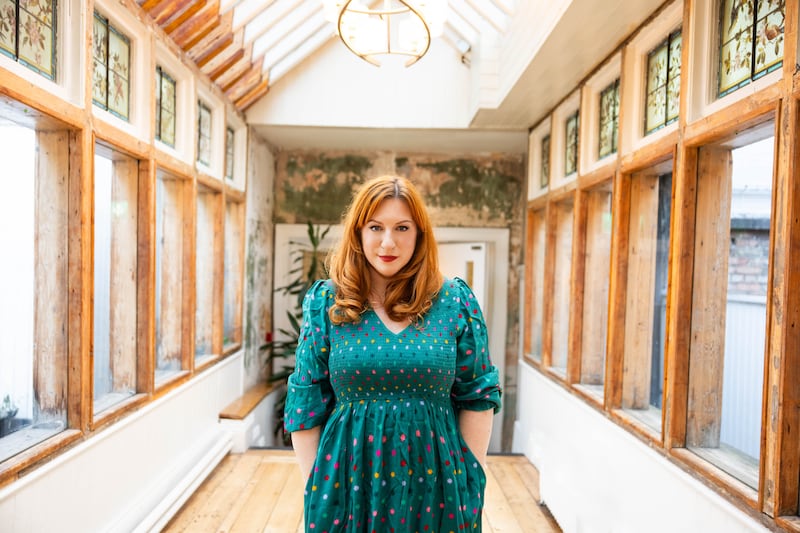
A columnist and feature writer for the Irish Independent, Tanya Sweeney makes her fiction debut this month with Esther Is Now Following You (Bantam), a captivating plunge into the mind of Esther, who, after struggling in her marriage, becomes obsessed with a Canadian actor called Ted, leaving her home in London to find him.
Clíodhna O’Sullivan

In her forthcoming debut, Louth author Clíodhna O’Sullivan gives the romantasy genre an Irish twist. Acquired by Puffin US in a three-book pre-empt, Her Hidden Fire conjures up an Ireland-like world in which patriarchal elites have magical powers.
Jessamine O’Connor

From Dublin and dwelling on the Sligo-Roscommon border, Jessamine O’Connor’s Lilliput-published debut novel Somewhere tells of Clodagh, who leaves her partner Seamus and tries to make it on her own in Dublin, all the while navigating addiction, a housing crisis and other corrosive relationships.
Rosaleen McDonagh

In her debut short-story collection Contentious Spaces, due in March from Skein Press, playwright and performer Rosaleen McDonagh homes in on her Traveller characters’ inner lives, addressing themes of identity, shame and resilience as they battle with the prospect of imminent eviction.
Rebecca Murphy
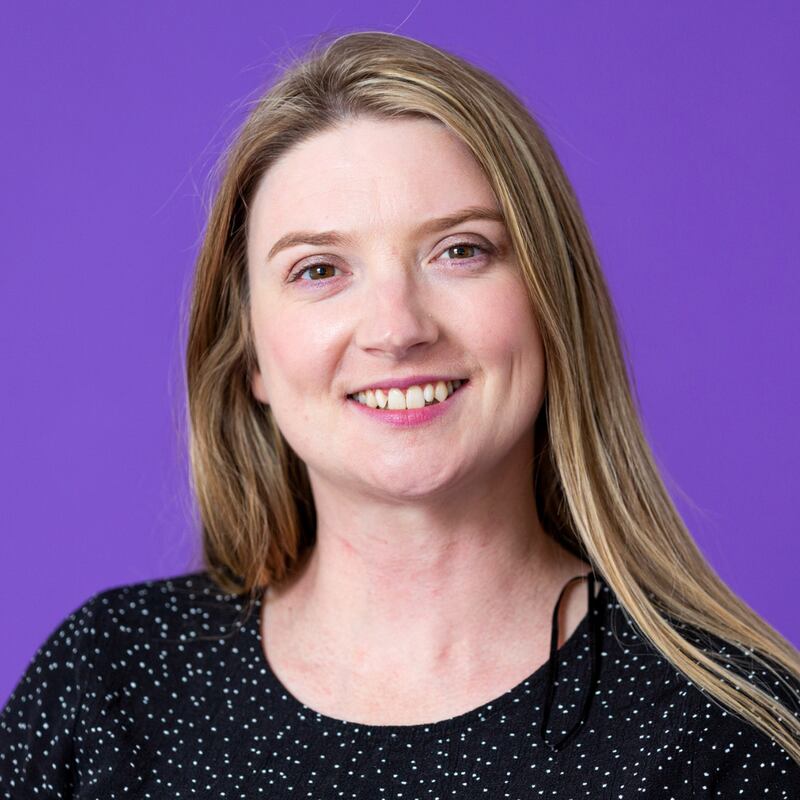
Rebecca Murphy got her publishing deal via a competition on RTÉ’s Today Show, securing a contract with Mercier Press. In Blood and Water, Susan believes her inheritance of a cottage on a windswept Irish island will give her a chance to escape her crumbling marriage. But long-buried family truths soon emerge.
Niamh Mac Cabe

Visual artist, editor and lecturer at ATU Sligo, Niamh Mac Cabe has won awards for her short stories, 14 of which are gathered together for her debut collection Four Night Seas, published in March by Lilliput. In these tales, characters navigate boundary lines from within and without, as they seek to find meaning or reconcile with the past.
Helen Dwyer

Dublin-based writer and broadcaster Helen Dwyer co-edited We Stand with Ukraine (Mercier) and has also published three poetry collections. Her debut novel The Long Way Home, which will be published by Poolbeg in May, steps back in time to 1970s Ireland. Schoolgirl Fiona falls in love and becomes pregnant, but cannot keep her child – 20 years on, she is given the chance to meet her daughter Grace.
Andrew Cunning
In Belfast, two women writers meet in a coffee shop. Over several months, a relationship forms between them that will reshape their views on life and writing. From the north of Ireland, Andrew Cunning was a winner of the Irish Novel Fair in 2025 and his debut, Clara and Christina, is published in July by John Murray Press.
Cormac Quinn
Dublin-based writer and former journalist Cormac Quinn delivers his debut crime novel via Mercier Press in May. In Murder on Lough Derg, when a mysterious drowning takes place during a family holiday, foreign correspondent Jack Myers cannot help using his investigative skills to uncover the truth – but everyone has a motive to stop him.


