

In recent days, in the wake of two New IRA attacks, more than one senior Police Service of Northern Ireland (PSNI) officer grimly referred to the old phrase of how the republican paramilitaries “only have to be lucky once” to make a deadly impact.
The New IRA, despite its failed bomb attack in Lurgan over a month ago and the exploded car bomb outside the Dunmurry PSNI station on the outskirts of south Belfast last Saturday, is in bad order but still it can demonstrate, to use another well-worn phrase: it hasn’t gone away, you know.
The Dunmurry explosion made headlines in Belfast, Dublin and London, and once again illustrated that Northern Ireland still has a ways to go to become a normal society. Indeed, the headlines could have been starker.
Most people know that the “lucky once” reference is to the 1984 Provisional IRA Brighton bombing that killed five people and narrowly failed in its intent to murder the British prime minister, Margaret Thatcher.
READ MORE


[ Thatcher said after Brighton bombing she ‘doubted she would die in her bed’Opens in new window ]
“Today we were unlucky, but remember we have only to be lucky once, you will have to be lucky always,” the IRA responded to the prime minister’s survival.
The PSNI this week released body-camera footage of one of its officers, who was evacuating people from the danger zone, approaching the car just as the bomb exploded. Had he been a few metres closer to the vehicle, he could have been badly injured or worse. He was one of the “lucky” ones.
The New IRA lapped up the publicity. It followed up with an admission of responsibility to the Irish News saying its intention was to kill police officers as they were leaving the station. It said it would start to target police officers in their homes while boasting: “We have plenty of Semtex and plenty of engineers, and we know where they live. We are well aware they are working to an MI5 agenda.”
It also warned that “anyone collaborating with British crown forces . . . will be severely dealt with”.
But it seems clear it has a number of collaborators in its own ranks judging by the successes of the PSNI, MI5 and the Garda in targeting the New IRA. That undermining of the organisation is down to policing and intelligence work but also due to what informed sources say is heavy infiltration of the New IRA.
Currently, there are 14 people in the dissident wing of Maghaberry Prison in the North and five in Portlaoise. Moreover, three Derry men are awaiting a reserved judgment over the 2019 New IRA murder of journalist Lyra McKee while six others face charges over rioting on the night she was shot dead.

Four other men, three of them from Derry, including one of the New IRA’s suspected leaders, Thomas Ashe Mellon, also face a reserved judgment over charges linked to a dissident Easter commemoration in Derry in 2023.
Six years ago, in a case that is still making its way through the legal system, 10 New IRA suspects were arrested and faced a range of charges from directing terrorism to preparing “acts of terrorism”. This was part of Operation Arbacia run by the PSNI and MI5.
At the time the, crime operations PSNI assistant chief constable Barbara Gray said the arrests were “part of a significant and carefully planned operation” that also involved “partners such as MI5, Police Scotland, An Garda Síochána and the Metropolitan Police Service”.

Another example of the weakening of the New IRA was the relatively low turnout and the small colour party at its recent Easter commemoration parade in Derry.
The last major operation by the New IRA, as per its own standards, was the shooting in front of his son of off-duty senior PSNI officer John Caldwell in Omagh in February 2023. He suffered severe injuries but survived. But even here the New IRA allegedly had to link up with other criminals including some from a loyalist background to carry out that shooting.

MI5 seems convinced the New IRA is under the cosh. The London Times reported this week how, curiously, MI5 sent suspected New IRA members a video of articles from the Belfast Sunday Life about how the PSNI was cracking down on the organisation and how it was implicated in general criminality.
Some of the articles linked the New IRA to “loan sharks” and drug dealers. MI5 also asked the recipients did they feel they were being exploited.
“I doubt your ‘leadership’ are thinking about you taking the risks when they are on multiple holidays a year,” it stated, adding: “It’s 2025, is this the activity you want done in your name? There are better paths to take.”
The New IRA was formed in 2012, comprising members of the Real IRA, Republican Action Against Drugs and a number of independent republicans. Derry, Lurgan, parts of Fermanagh, Tyrone and west Belfast were its relative strongholds but it’s not strong now, according to PSNI sources.
It carried out a number of murders including some arising from internal and criminal feuding. It murdered two prison officers: David Black (52), who was shot dead as he drove to work in Maghaberry Prison in Co Armagh in 2012, and Adrian Ismay, who died 11 days after a bomb exploded under his van in Belfast in 2016.
Before its formation some of its members were believed to have been involved in the 2011 murder of PSNI officer Ronan Kerr in Omagh and, two years earlier in Antrim, in the murders of British soldiers Patrick Azimkar and Mark Quinsey outside Massereene Barracks.
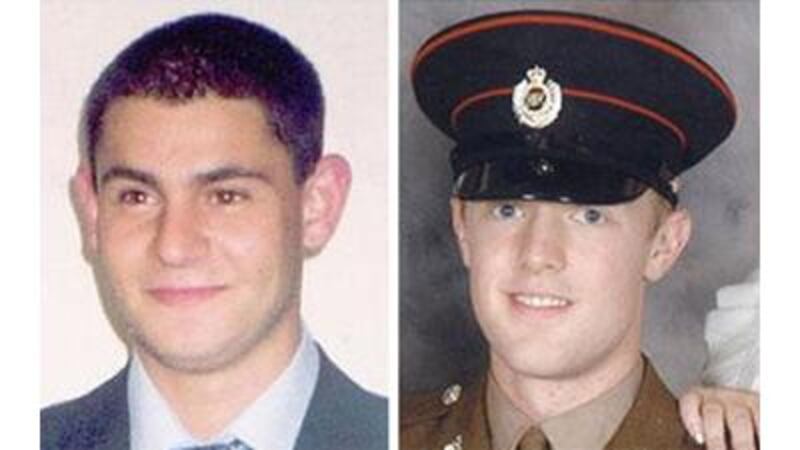
It has targeted other PSNI officers in gun and attempted under-car booby trap bomb attacks. It also has carried out so-called “punishment” attacks.
But although there is little doubt that the New IRA is diminished, there is no escaping the dread “lucky once” concept. As police sources confirm, “it does not have significant numbers” but yet it is still dangerous.
Jonny Byrne, a lecturer in criminology at Ulster University, noted how with little resources and reduced numbers the New IRA could still make an impact, heightening security and making sure police officers “will be more vigilant in checking under their cars”.
The group’s actions also could deter young people, particularly underrepresented Catholics, from joining the police.
“Someone put it to me like this: ‘It’s like the Strait of Hormuz, Iran with a couple of mines can completely block the world’s economy while a couple of guys with some gas canisters can completely change the narrative of Northern Ireland’,” Byrne said.
PSNI assistant chief constable Davy Beck, appealing for public patience and support, said there would be an “increase in policing activity as a high visibility policing operation gets under way to counter the ongoing dissident threat”.
Ulster University’s Byrne said it was important the PSNI got the balance right in its response.
“The New IRA wants a disproportionate reaction,” he said.
“They want more stop and search, more police patrols, more securitisation of the PSNI, increased house searches, they want to recreate the conflict imagery of the 1980s and 1990s. The question is: what do we do – do we retrench or continue with normalisation?”
While the police, politicians and public consider this question, he said people must realise that no matter “how scaled down” the New IRA was, there always would be dissidents married to the idea of the “long war” and prepared to “carry the flame” of violent republicanism from one generation to the next, regardless of the contrary views of the overwhelming mass of the population.


