

There were no gangland gun murders in the Republic in 2025, marking – for the first time in at least three decades – no such murders in a year.
It’s so unusual for a full year to pass without a single gang-related gun murder, not even Garda Headquarters could say for certain when it last happened.
Most gardaí who spoke to The Irish Times, including those with almost 40 years’ service, believe it’s 30 to 40 years ago since it happened.
It is a big turnaround on the violence of the previous 10 years.
READ MORE


A decade ago the Kinahan cartel and Hutch gang had just begun their feud. By the end of 2018, 18 people had been murdered. Looking back to the Celtic Tiger era, there were more than 20 gangland gun murders in some years.
“No, I’m not surprised,” Det Chief Supt Séamus Boland says of how the killings have plummeted in recent years.
Boland leads the Garda’s Drugs and Organised Crime Bureau . He says the Kinahan-Hutch feud attack at the Regency Hotel on Dublin’s northside in February 2016, “changed everything” for the Garda.
Kinahan cartel associate David Byrne (33), the brother of Liam Byrne, who ran the cartel’s Irish operation at the time, was murdered in the attack.
“The motive for that attack was for multiple murders,” says Boland of the Hutch gang intending to murder Kinahan cartel leader Daniel Kinahan and all of the senior cartel figures accompanying him on the day.
“Any guards who arrived at that scene were at risk of death as well. That wasn’t the type of gang that was going to surrender to armed gardaí arriving. In 36 years on the job, it’s the most outrageous act of violence I’ve ever seen.”
Boland says the attack increased the resolve of the Garda and secured more resources for them.
The subsequent clampdown, he says, was even more relentless than that which followed the 1996 murders of Det Garda Jerry McCabe and crime journalist Veronica Guerin by the Provisional IRA and John Gilligan drugs gang respectively.
Boland says an unprecedented number of killers for hire and the “decision makers” who ordered the hits have been jailed in the policing operation into the Kinahan-Hutch feud.
It had a deterrent effect too. Drug dealers with the capacity and motivation to murder witnessed how even the once mighty Kinahan cartel’s Irish operation was dismantled in the post-Regency Garda clampdown.
They do not want to become the target of the that same Garda attention and have made the strategic decision not to become involved in gun feuds, Boland believes. Gun homicides plummeted as a result.
He concedes that, during the early years of his policing career, he believed many gangland gun murders arose from “hot headedness ... people going out and shooting others without much planning”.
“But of course there was months of planning that went into some of these murders,” he says.
“We had criminal gangs using technical equipment to carry out surveillance on their target, even doing dry runs for their getaways. They had developed ... they had learned their trade up through the 1990s and into the early 2000s.
“But the reality now is that some of the most dangerous criminals of the current generation in Ireland are now locked up in prison,” he adds.
“And these are the people who would have continued to commit serious violent crimes. When they were removed from society, that’s a significant threat removed.”
Boland describes as “crucial” the capture of “kill teams” – groups of men caught as they were about to murder a rival – during the Kinahan-Hutch feud.
In one case, a team of armed criminals linked to the Kinahan cartel were arrested just as they were about to try to kill Patsy Hutch.

Hutch is the brother of Gerry “The Monk” Hutch, who was named by the Special Criminal Court as the leader of the Hutch gang, and father of Gary Hutch, who was murdered by the Kinahan cartel in Spain in 2015.
The three-man “kill team” was switching cars in an underground car park, about 250m from Patsy Hutch’s house on Champion’s Avenue in Dublin’s north inner city, when gardaí moved on them in March 2018.
Another armed team of five men were caught in Marino on Dublin’s northside on their way to attack Hutch associate Gary Hanley in November 2017. All would-be attackers received lengthy prison terms.
Others who murdered at the behest of the Kinahan cartel, or were involved in failed murder attempts, were jailed for periods of up to life. This included the one-time leader of the Kinahan’s Irish operation, Freddie Thompson, who is now serving life for the feud murder of David Douglas in Dublin in July 2016.
[ Patsy Hutch: Did the man under 24-hour Garda protection plan the Regency attack?Opens in new window ]
Boland says during the investigation of these murder conspiracies, the surveillance of the criminals was so involved that at times their conversations were bugged. Teams of gardaí were able to covertly track the murder teams on the days they intended to strike.

Gardaí waited until the criminals had armed themselves and were on the way to the intended killing before moving in and arresting the suspects.
“In some of these cases, they had literally turned the corner towards [their target’s] house and they’d cocked the gun and were ready to jump out, and then we intervened. But they were never getting near their target in any way,” Boland says.
By waiting until a murder conspiracy was in its final seconds before the trigger was to be pulled, gardaí knew they could maximise the sentence the would-be killers would receive in court. If the armed Garda teams moved in too quickly, the men arrested would simply face charges of possessing a gun.
Getting caught red-handed, just before an intended murder – in getaway cars with cloned registration plates and wearing masks and gloves – meant a judge would later at trial fully understand what had been intended on the day and pass sentence accordingly.
“It’s never a true reflection of what was actually going to happen,” he says of would-be killers simply being caught with a gun long before a planned killing.
“We have to get the message out there that if you are going out to kill somebody, that’s the scenario we will be presenting to the court, that you weren’t just in possession of a gun, you were going out you were going to pull that trigger. You were going to kill somebody.”
According to Boland, over the past decade, gardaí had also aggressively pursued more minor players in murder conspiracies: the people who sourced the guns, getaway cars and burner phones used by “kill teams”, even those who bought the credit for the burner phones.
Boland cites the example of Martin Aylmer of Casino Park, Dublin 3. He aided the Kinahan cartel kill teams who murdered father of four Noel Kirwan in Clondalkin in west Dublin in December 2016 and Michael Barr in the Sunset House Pub in Dublin 1 in April 2016.
Aylmer also aided the would-be cartel kill team who tried to murder James “Mago” Gately, who survived, despite being wounded five times in 2017.

Aylmer was jailed for six years for his supporting role in the Barr murder. He received another eight years and four months for his role in the Gately attempted murder conspiracy and aiding the Kirwan murder.
He bought the tracking devices used in the surveillance of Gately and, separately, Kirwan as the kill teams in the pay of the Kinahan cartel tried to determine how best to target the two men. Aylmer bought the mobile phones used by the kill team who shot dead Barr.
Boland says the legislation used to prosecute Aylmer – the Criminal Justice Act 2007 – included the offences of directing organised crime, participating in a crime gang or enhancing a gang’s capabilities. He says the legislation is the envy of other police forces and enables gardaí to target even the lowest-level criminals who aid crime gangs, further degrading the capabilities of those gangs.
“There have been hundreds of Martin Aylmers,” Boland says of those who had assisted scores of gangland gun murders.
“But the Martin Aylmers always previously got away because they were so far removed.
“People like him were never being prosecuted and then all of a sudden, we prosecute someone like him three times. And more than 10 years later, they will still be in jail.”
Boland says the same approach was taken to financial crimes linked to drugs gangs, targeting how and where they store or invest their money and, crucially, how they move it around, including abroad. These prosecutions were aimed at catching a whole network of people who were supporting serious criminals but who would not have been caught previously.
“We see now that family members of big drug dealers are being prosecuted for money laundering,” he says.
In some cases relatives, partners and friends of drug dealers have been caught using their bank accounts, or even money apps such as Revolut, moving money for them or even directly to them.
In other actions, by the Criminal Assets Bureau, family members of drug dealers had been brought into the criminal justice net.
Their assets were taken and they had been named and shamed in court with the curtain pulled back on the source of their lavish lifestyles.
At the top of the Irish drugs trade, at home and abroad, are the three Kinahans: cartel founder Christy Kinahan and his sons Daniel and Christopher jnr who now run the group. They remain at large, based in Dubai, but are being investigated by the Garda and by US law enforcement.
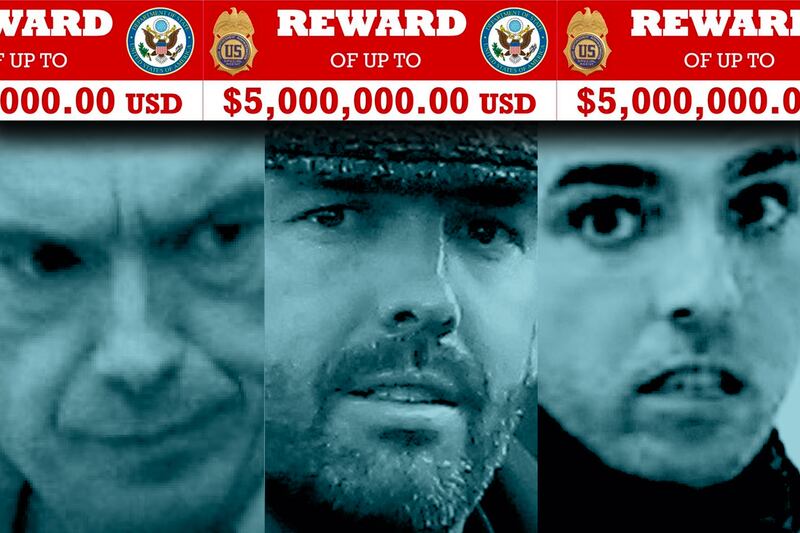
Boland says he is “confident” they will be brought to justice.
For the most part, he says, the vast majority of drug dealers in the Republic never accrue significant wealth.
“For most of them, it’s a hamster wheel. They’re rich this week and they’re broke next week,” he says.
“And very often the minute there is law enforcement attention, they can become a liability for any criminal organisation they’re linked to – your trust, your standing drops.”
The rare exceptions to the rule, he says, don’t last long in Ireland because it has become such a hostile environment for them, especially over the past decade since the Regency “changed everything”.
“There’s a very small number of them still living here who are making lots of money,” says Boland.
“But you can’t live the big lifestyle – that big display of wealth – if you stay in Ireland. It’s become too small for them with the police attention; they don’t like that.”


