
When Zohran Mamdani took the stage at his election night party last year, he declared his victory was for all the struggling, overlooked New Yorkers who had propelled his rise to power.
He also singled out a taxi driver, addressing him directly in his speech: “My brother, we are in City Hall now.”
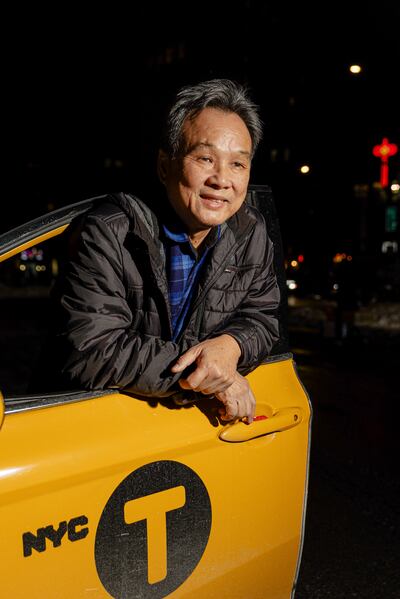
The mayor-elect was talking to Richard Chow, a 67-year-old taxi driver and immigrant from Myanmar who has been a regular presence in, first, Mamdani’s campaign, and now, his administration.
Chow drove Mamdani and his wife, Rama Duwaji, past the cheering crowds to his inauguration at City Hall on New Year’s Day.
READ MORE


Almost two weeks later, Chow drove Mamdani to his new home, Gracie Mansion, from a news conference at LaGuardia Airport where the mayor had nominated Midori Valdivia to lead the New York City Taxi & Limousine Commission.
“I never even dreamed of a mayor riding in my cab,” said Chow in an interview as he drove his taxi on Tuesday night. “This year, I’ve already driven the mayor two times. My taxi cab is like a historic cab now.”
The two men, who come from very different worlds, became friends in 2021 when they took part in a 15-day hunger strike outside the gates of City Hall. They were demanding help for drivers facing financial ruin after taking out reckless loans to buy medallions, the city-issued permits required to own a yellow cab, at inflated prices.
Now, their friendship has brought fresh hope to drivers who have spent years fighting for higher pay, better working conditions and protections from threats to their livelihood, including, most recently, driverless vehicles.
George Arzt, a long-time political consultant, said the mayor was “more likely to take up their causes because of his close relations to them and it’s a part of his campaign to help struggling workers.”
[ Zohran Mamdani’s unlikely rise as New York mayor — and the enormous job aheadOpens in new window ]
Arzt, who served as press secretary to mayor Ed Koch from 1986 to 1989, said that every mayor had a base that he was more willing to listen to than other constituents. For instance, even though Koch had lived for years in Greenwich Village in Manhattan, “he would always be in the outer boroughs because he felt those were his people.”
Nearly 180,000 drivers work in the city’s for-hire vehicle industry, which includes taxis, Ubers and Lyfts. The largest group of drivers, or 34 per cent, live in Queens, followed by Brooklyn, with 26 per cent, and the Bronx, with 18 per cent, according to the taxi commission. Most of the drivers are immigrants, including many from Bangladesh, India, Pakistan and the Dominican Republic.
Chow and other taxi drivers said they were barely holding on. Many have yet to recover from the coronavirus pandemic, which decimated their ridership and livelihoods. But even before that, they were losing riders to Uber and Lyft, and struggling with enormous debt from buying medallions.
Even now, Chow says he cannot afford to stop driving because he still owes $161,000 in loan payments for his medallion.
In 2018, a spate of suicides by desperate taxi owners and for-hire drivers shook the taxi industry and the city.
Chow and his younger brother, Kenny Chow, had each bought medallions with loans they could not afford, and were unable to pay them back as medallion prices began to collapse in 2014. Richard Chow said that his brother grew increasingly distraught, and in 2018, his body was found in the East River.
Chow, a married father of two who lives on Staten Island, chanelled his grief into a crusade to help other drivers.
“I lost my brother,” he said. “I woke up all the drivers. We have to fight back.”

Bhairavi Desai, the executive director of the New York Taxi Workers Alliance, which represents more than 28,000 taxi, Uber and Lyft drivers, said Chow had come to every meeting and protest.
“I call him the moral leader of our movement,” she said, “because he leads with such pure love.”
Chow used to see Mamdani, a former member of the state assembly from Queens, at the alliance’s events. Then, in 2021, Mamdani joined the group’s encampment outside City Hall during the medallion crisis, which later escalated into a hunger strike.
Chow, who has diabetes and high blood pressure, remembered that Mamdani would check on him every morning during the hunger strike, asking “Hey, how are you Richard? Are you okay?”
Chow said he would see Mamdani sitting on a bench, working on his laptop and cell phone. Sometimes, Chow would sit with him. One day, Mamdani’s laptop ran out of power and Chow lent him a portable power bank. When Mamdani was not busy, they talked about Chow’s family, his brother and how hard it was to live in New York.
The strike ended after city officials agreed to a programme that has since provided $476 million in debt relief to more than 2,000 medallion owners.
The taxi commission has increasingly sought to improve conditions for drivers, including by raising fares in 2022 for the first time in a decade. It has also required Uber and Lyft to significantly increase driver pay and approved regulations to keep the companies from blocking drivers from their apps when demand drops.
Jason Kersten, a spokesperson for the commission, said “we fully support Mayor Mamdani’s commitment to drivers and stand ready to implement his agenda.”
Desai said that drivers needed more to survive, including retirement benefits and a higher wage standard that factored in their long hours, expenses and potential job risks, such as accidents and assaults. Desai said she hoped that would be possible now under the Mamdani administration.
The mayor said in a statement Friday that during the 15 days he had spent on the hunger strike alongside Chow and other drivers, “I felt what New Yorkers have always known: Our cabbies – many of them immigrants who travelled thousands of miles for the chance to build a life here – represent the very best of this city. They deserve to be treated with the dignity that defines their work.”
In recent weeks, the taxi alliance has fought for a bill that would establish protections for drivers from unfair deactivations by services like Uber and Lyft. The bill was approved by the City Council last year, but vetoed by mayor Eric Adams. On Thursday, the city council voted to override that veto.
On a recent night, Chow pulled out his cell phone to show photos and videos of him beside Mamdani at protests and on the campaign trail. In one photo, Mamdani is giving him a hug. In another, Mamdani is serving him biryani at a campaign dinner in Queens.
Chow said he supported Mamdani for mayor because “he supports us, the drivers.”
Chow said he was surprised, and honoured, when Mamdani wanted to ride in his taxi to the inauguration. To prepare for the occasion, Chow washed his car, dusted the seats and sprayed a floral scent inside.
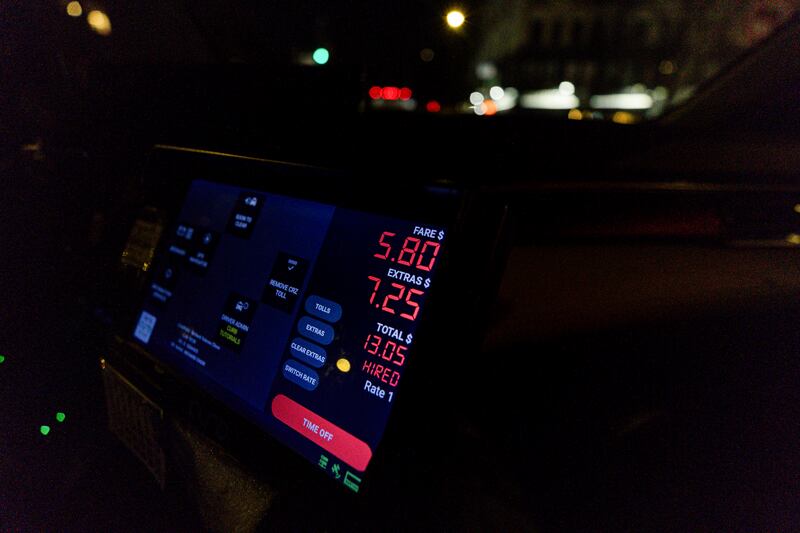
After Mamdani and Duwaji slid into the back seat, Mamdani reminded him to start the meter.
“I said, ‘No, no mayor, I’m good, don’t worry about it,’” Chow said. “‘This is my pleasure to do this so I don’t charge you anything. I’m so happy.’” – This article originally appeared in The New York Times.
[ After a year in the wilderness, Democrats are quietly finding their way backOpens in new window ]


