
When Hamas militants attacked Israel in October 2023, killing about 1,200 people, the first call to Israeli prime minister Binyamin Netanyahu came not from Washington or Europe, but New Delhi.
Narendra Modi, India’s prime minister, used the conversation, confirmed by two people with knowledge of the exchange, to express his support for Israel. “Deeply shocked by the news of terrorist attacks in Israel,” he posted on X afterwards. “We stand in solidarity with Israel at this difficult hour.”
Modi’s gesture epitomised the strong bond that has developed between him and Netanyahu over the past 12 years, rooted in what both men cast as their shared fight against terrorism, as well as their visions of their nations as homelands for their religious majorities.
Critics argue that the two leaders also share authoritarian traits. Both have fostered an environment, they say, in which hostility to Muslim and Christian minorities has intensified, the power of independent institutions has been eroded and the activities of foreign NGOs restricted.
READ MORE


The flourishing relationship spans intelligence sharing, surveillance, billions of dollars of arms sales, joint weapons development, trade, agricultural technology and cultural ties.
Diplomats say Modi and Netanyahu speak regularly on the phone and understand each other well. Modi was the last world leader to visit Israel before Netanyahu attacked Iran with the US on February 28th. After Israel bombed Tehran, Modi spoke to the Israeli leader and called for “an early restoration of peace” but did not criticise the strikes.
“In a world that was going towards universalism and post-national institutions,” says Reuven Azar, Israel’s ambassador to India, Modi and Netanyahu “were different ... not just embracing nationalism but embracing identity”.
The closeness in ties between Netanyahu and Modi contrasts with Israel’s increasing isolation on the world stage, including among some of its closest western allies, amid outrage over its devastating offensive in Gaza, which has caused a humanitarian catastrophe in the Palestinian enclave, and its conduct in the occupied West Bank.
Netanyahu is now persona non grata in many European countries due to the International Criminal Court’s arrest warrant for him on charges of war crimes. Even Donald Trump has become increasingly critical of the Israeli prime minister, whose offensive in Lebanon appeared to endanger the US president’s push for a deal with Iran.
The view in New Delhi is different.
“Mr Modi and his followers ... believe that Israel is standing up to an evil force in the world, which is radical Islam and we all need to also fight radical Islam,” says Prof Sreeram Sundar Chaulia, dean of the Jindal School of International Affairs in Sonipat, near New Delhi. “There’s an ideological affinity.”
Once a leading light in the Non-Aligned Movement of developing nations, which resisted cold war superpower alliances, embraced the Palestinian cause and criticised Israel, India now leans much more closely towards the Jewish state.
Jonathan Spyer of the Jerusalem Institute for Strategy and Security, a think-tank, says that at a time of mounting international pressure, particularly in western Europe, for Israel “to have a massive trading partner in Asia, with which it also shares a geopolitical or even maybe ideological world view, is a major asset”.
Israel’s closeness to India is also viewed in the Middle East as part of a deepening alignment between both countries and the United Arab Emirates. Abu Dhabi is doubling down on its relations with Israel and India, while Saudi Arabia has become more closely aligned with Pakistan, signing a defence pact with Islamabad last year.
A senior Indian official dismisses criticism of the ties with Netanyahu’s government as partisan, maintaining that New Delhi’s position on the two-state solution for Israel and Palestine “has not changed”.
But others in India question whether Modi’s administration is drawing too close to Israel, risking its traditional position as a moral leader in the global south and its policy of maintaining alliances with multiple partners.
India initially opposed the creation of Israel. Scarred by the August 1947 partition of the Indian subcontinent, prime minister Jawaharlal Nehru’s diplomats voted against the division of Palestine at the UN three months later and at first opposed Israel’s admission to the world body.

It was not until 1992 that New Delhi fully recognised Israel. Another turning point came in 1999 during the Kargil war, when India was struggling to fight off a Pakistani incursion along the de facto border between the two states in the mountainous region of Jammu and Kashmir.
Israel stepped in, providing mortars and laser-guided missiles at a time when India faced arms restrictions from western powers because of a 1998 nuclear weapons test, according to accounts that have surfaced since.
When Modi was first elected in 2014 he found in Netanyahu an ideological soul mate who, like him, believed that the correct response to militant attacks was not to negotiate but to crack down.
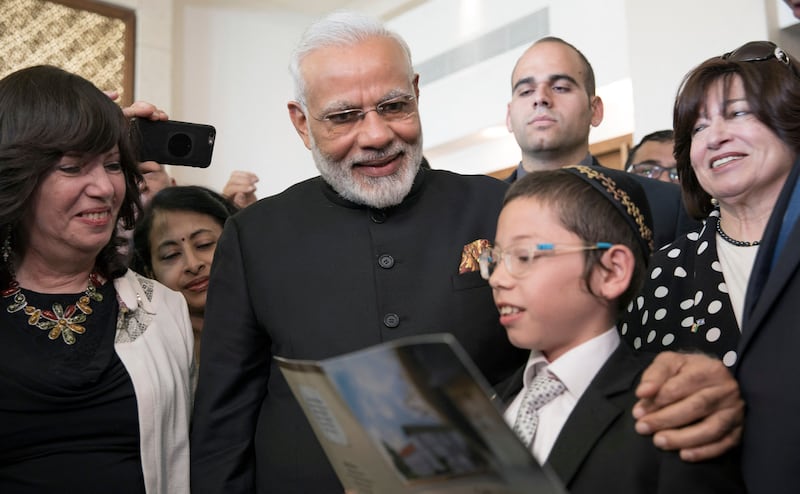
In 2017, Modi made a bold political gesture by becoming the first Indian prime minister to visit Israel, where he held an emotional meeting with Moshe Holtzberg, an Israeli boy whose parents were killed when Islamist militants attacked Mumbai. Netanyahu reciprocated with a state visit to India the following year.
Azar, the Israeli ambassador, says the visits were pivotal. “The relationship became more public, more legitimate ... there was finally an acknowledgment of the things that we have together.”
Almost a decade later, India is firmly established as a top buyer of Israeli arms and a key partner in developing and manufacturing new weapons.
“Israel often ends up offering these technologies,” says Kabir Taneja, head of the Middle East arm of the Indian think-tank Observer Research Foundation, who adds that the equipment comes without the conditions imposed by other arms exporters. “From an Indian perspective, it’s like going to a very, very well-stocked Walmart for armaments.”
The Barak anti-missile system widely used by Israel’s armed forces is manufactured by several companies including Rafael and IAI of Israel and Bharat Dynamics and a subsidiary of Bharat Forge in India. Israel’s Mossad spy agency co-operates with India’s foreign intelligence service in the hunt for Islamist militants.
Gautam Adani, India’s wealthiest man, has companies working with Israel’s Elbit to develop and manufacture Hermes reconnaissance drones, and with Israel Weapons Industries to make small arms in India. Adani Ports also spent $1.2 billion on a 70 per cent stake in Haifa port, Israel’s largest.
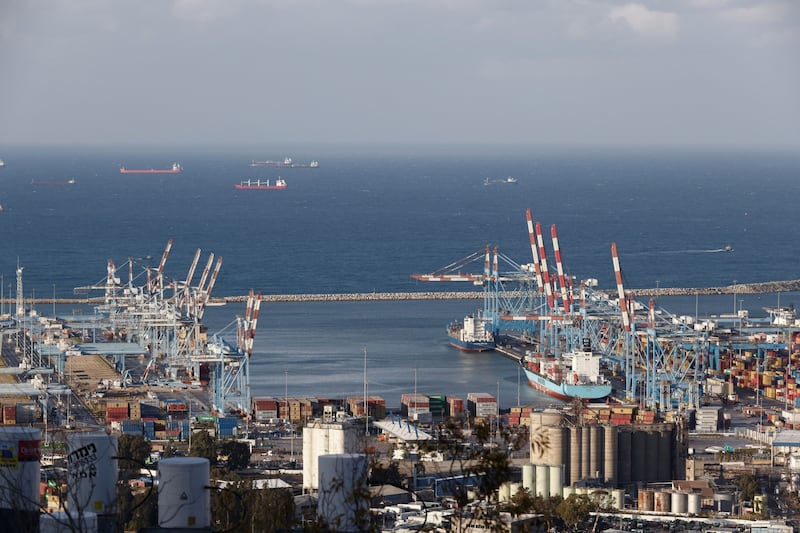
Indian companies are now starting to manufacture Israeli-designed killer drones such as the Harop, according to people with knowledge of the industry.
“We have a strong collaboration with Israel in the areas of innovation, defence, security, sustainability, start-up, innovation,” says the senior Indian government official. “Those are key areas.”
Israeli military officers are frequent visitors at India’s army headquarters, with up to two dozen going there even during the current war with Iran, according to a person with knowledge of the situation.
“Defence is what truly leads this relationship with Israel,” adds Taneja at the Observer Research Foundation. “Defence is absolutely the critical driver.”
But the collaboration goes much further. Israeli negotiators are working on a free-trade deal with India, while young Israelis often head to the beaches of Goa or Indian yoga retreats after military service. Israeli scientists train their Indian counterparts on how to manage water supplies in arid areas. Tens of thousands of Indians now work and study in Israel.
There are other cultural bonds too. Hindu nationalist scholars from Modi’s power base are due to visit Israel this month to meet officials and academics to learn about Zionism, according to two people familiar with the plans.
Both India and Israel point to the fact that the subcontinent has traditionally welcomed Jews and that they share a past as victims of conquest and colonisation.
“The Indian subcontinent, the Jewish people, they’re ancient nations,” says Azar, adding that both were “subject to millennia of invasions by foreign powers that plundered the country”.
India has also taken surprising risks on behalf of Israel.
In August 2022, Qatar arrested eight former Indian naval officers and later sentenced them to death. Neither country gave details of the case but a person briefed on the matter told the Financial Times at the time that the eight were engaged in spying for Israel on Qatar’s submarine programme. The officers were released after a state-owned Indian company signed a 20-year agreement to buy large volumes of Qatari liquefied natural gas.
The idea of India and Israel as nations engaged in a mortal battle with terrorism has also been reflected in popular culture.
Dhurandhar: The Revenge, the second highest-grossing Bollywood hit of all time, released in March, offers viewers a gory nearly four-hour epic of slaughter in which an undercover Indian commando infiltrates and then destroys a Pakistani jihadi network.
The plot has parallels with a popular Israeli TV drama, Fauda, which features an undercover Israeli unit hunting down a wanted Hamas militant.
Dhurandhar has been shown in Israel and the country’s embassy in New Delhi invited diplomats this year for a discussion with the film’s lead researcher, according to one invitee. During his February visit to Israel, Modi met actors from Fauda and Israel’s consul-general in Mumbai, Yaniv Revach, is planning to bring key figures from the drama to India before the fifth series airs on Netflix India.
Modi “wanted something that would connect the people of Israel to the people of India for many many years and not just one specific event”, Revach says. “So the first idea that I had is to bring the team of Fauda to India ... We wanted to connect Fauda with Dhurandhar.”
The consul is working on another project to make Indian culture still more visible to Israelis. A bronze statue of Shivaji, a Hindu warrior king revered by nationalists for his fight against Mughal invaders, has been commissioned by Israel and will be placed later this year in a major Israeli city.
Modi’s closeness to Israel has unsettled India’s foreign policy establishment. They are alarmed by his government’s downplaying of the Palestinian cause, its lack of criticism of Israel’s offensive in Gaza and how New Delhi has played down its relationship with regional partners such as Iran.
Nirupama Rao, formerly the top civil servant in India’s foreign ministry, says Modi’s proximity to Israel “risks creating the impression that India has diluted its long-held position” on Palestinian rights.
“I believe that perception does matter, not only in the Arab world but also in the global south,” she says.
Sonia Gandhi, the parliamentary chair of India’s main opposition Congress Party, described India’s reticence on the Gaza war as “an abdication of both humanity and morality” last year, adding that it was driven by the personal friendship between the two men rather than India’s strategic interests.
The senior government official rejected that characterisation, saying that India’s support for Palestine remained solid and that the country was continuing humanitarian assistance for Palestinians both bilaterally and through the UN.

More recently, Congress has accused Modi of “moral cowardice” for not condemning Israel’s strikes on Iran and said his visit to Jerusalem just beforehand created “the perception of a political endorsement of military escalation, which is deeply antithetical to India’s historic commitment to a rules-based international order”.
India had traditionally kept an open channel to Iran, a fellow Brics bloc member, valuing its oil supplies, its strategic location bordering Pakistan and the access it affords to Afghanistan and central Asia.
Yet when an Israeli attack killed Iran’s supreme leader Ayatollah Ali Khamenei at the end of February, there was silence from New Delhi. Four days passed before the top civil servant in India’s foreign ministry signed a condolence book in the Iranian embassy. The ministry said that the condolence book was not made available earlier.
Flanked by photos of the late Khamenei and his son and successor Mojtaba, the supreme leader’s emissary to India denies having a problem with India’s relations with Israel but hints they may come at a cost.
“We never said to Emirates, or to Bahrain or Qatar: ‘Why do you have relations with America?’” Abdul Majid Hakim Ilahi told the Financial Times. “But we said to them: ‘Please don’t let their bases on your land be used against us.’ Otherwise, we’d have to defend ourselves. And defending ourselves means that we have to attack these places.”
Modi’s current term as prime minister still has more than two years to run and his Bharatiya Janata Party enjoys a level of political dominance not seen in India since Indira Gandhi’s heyday in the late 1970s.
[ From the archive: Sharon's India visit fosters 'anti-terrorist' linksOpens in new window ]
With India fixated on Pakistan as its arch-enemy after the brief conflict between the two nuclear-armed states last year, the defence and intelligence partnership with Israel is becoming more important than ever. Analysts believe it will endure beyond the premierships of Modi and Netanyahu, whose far-right bloc is trailing rivals in advance of elections this year.
“The high-tech, defence and agricultural collaboration has taken off ... I don’t think India will stop this,” says Rotem Geva, chair of the Department of Asian Studies at the Hebrew University of Jerusalem. “Another Indian government might be more emphatic in its criticism of Israeli policies towards the Palestinians and in calling for an end to the occupation ...But I don’t see a dramatic shift occurring.”

For Israel, India represents a steadfast ally in an increasingly critical world. Neither India’s government nor its Muslim minority has been anything like as vocal over Israel’s offensive in Gaza – which has killed more than 70,000 Palestinians, and reduced most of the enclave to rubble – as their counterparts in Europe.
“Israel is probably today the most trusted partner as far as India is concerned in terms of strategic partnerships,” says Happymon Jacob, director of the Council for Strategic and Defense Research, a New Delhi-based think-tank.
He adds that “even the Russians ... may be ambivalent about their support for India” given the Kremlin’s ties to China, India’s big regional rival, and also cites Trump’s increasingly strained personal relationship with Modi.
“Therefore, you are probably looking at Israel as the country that comes without any strings attached, even when it comes to intelligence sharing, when it comes to weapon systems.”
Azar, the Israeli ambassador, notes parallels in the evolution of India and Israel as independent nations from 1947 and 1948.
“We both started as states that are secular and socialist,” he says. “And we became more conservative and more capitalist” and “to a certain extent” more religious. That, he says, makes the two countries “natural partners” in a sometimes hostile world. – Copyright The Financial Times Limited 2026


