
Main points
- Israel and Hizbullah have agreed to a ceasefire set to begin at 4pm local time on Friday, a senior US official has said
- US vice-president JD Vance had been due to travel to Switzerland on Friday to meet Iranian negotiators, but talks were abruptly cancelled
- At least 16 people were killed in Israeli air strikes in southern Lebanon overnight
- Earlier, Israel’s far-right national security minister Itamar Ben-Gvir said “all of Lebanon must burn”
Key reads
- Trump’s Iran deal leaves him facing a Carter-like dilemma
- US officials reveal details of Iran agreement to halt war
- ‘A city of ghosts’: Grief and defiance in Lebanon’s shattered south
Iraq to return to near pre-Iran war levels of oil production in two months
Iraq expects to return oil production from its southern fields to levels exceeding three million barrels per day within one to two months, Iraq’s state news agency reported on Friday, citing an Oil Ministry spokesperson.
Iraq normally exports a total of around 3.6 million barrels of oil per day and before the Iran war around 3.4 million bpd flowed through its southern Basra terminals.
Earlier, Iraqi oil officials told Reuters that Iraq has increased crude oil production from its southern fields by 250,000 barrels per day to around 1.75 million barrels per day as more tankers load crude from the country’s ports.
Iraq, like other Gulf oil producers, has suffered a drop in oil revenue as a result of the effective closure of the Strait of Hormuz amid the U.S.-Iran War. - Reuters
‘You just gotta calm down’: Trump says he told Israel
Donald Trump told NBC News in a phone interview that he spoke with Israel on Friday and asked them to agree to a ceasefire with Hezbollah.
“You just gotta calm down sometimes and use your head,” Trump was quoted as telling Israel.
Trump declined to specify whether he spoke with Benjamin Netanyahu directly. A senior US official earlier confirmed the ceasefire to Reuters, though Israeli attacks continue across Lebanon. - Guardian

Smoke seen rising from hills of southern Lebanon - reports
Smoke has been seen rising from the hills of southern Lebanon, despite reports of a ceasefire between Israel and Hezbollah on Friday afternoon, The Guardian is reporting.
The truce was preceded by one of the deadliest days in the conflict since March with Israeli strikes killing 47 people. The Israeli army said four of its soldiers had been killed.
Iran requiring insurance for ships to sail Hormuz – reports
Tehran has sought to assert control over Strait of Hormuz by saying that ships need its permission and mandatory insurance in order to cross, Bloomberg has reported.
It comes as the US said that 20 ships sailed through overnight via a route it recommends along Oman’s coast.
The conflicting signals come as the shipping industry tries to assess whether it’s safe to transit the world’s most important energy chokepoint and what sort of system will emerge after the US and Tehran reached an interim peace deal to reopen the strait.
The number of ships crossing with their signals on trailed off on Friday after an initial surge, and after a report of a mine spotted near Oman’s coast.
The insurance policy required by Iran is currently free, but could involve charges in the future, the country’s Persian Gulf Strait Authority said in a document on its website. It also said that ships must follow a prescribed route that passes along its coast and that alternatives are prohibited.
Shippers and producers have grown increasingly concerned about the prospect that Iran will seek to toll the strait in future, after the memorandum of understanding signed with the US said only that transit would be free for the duration of its 60-day term. – Bloomberg
UK, Irish shares suffer from renewed US-Iran tensions
UK shares fell on Friday as US-Iran tensions and political uncertainty dampened risk appetite, sealing a weekly decline for both blue-chip and mid-cap indexes.
Globally, shares fell but oil prices got a boost after Washington and Tehran called off peace talks, which traders had hoped would ease supply risks around the Strait of Hormuz.
The FTSE 100 ended down 0.4 per cent, at 10,363 points, losing 1 per cent on the week, the steepest weekly loss since early May. The FTSE 250 midcap index fell 0.6 per cent, down 0.5 per cent for the week.
The Irish stock market fared better. The benchmark index, the ISEQ All Share, settled at 13,785.73 points, down marginally from a previous close of 13,786.23.
Iran denies reports of nuclear inspection agreement
Esmaeil Baghaei, a spokesperson from Iran’s foreign ministry, has denied reports that Tehran has invited the International Atomic Energy Agency to inspect its nuclear facilities, Al Jazeera reports.
He says that Iran will maintain the current status quo of its nuclear programme pending a final deal with the US.
Baghaei says inspections of facilities that have been carried out until now, such as at Bushehr, will continue.
However inspections of any other facilities, where visits from the IAEA was suspended during the war, will take place once a final deal has been reached. – Additional reporting: The Guardian
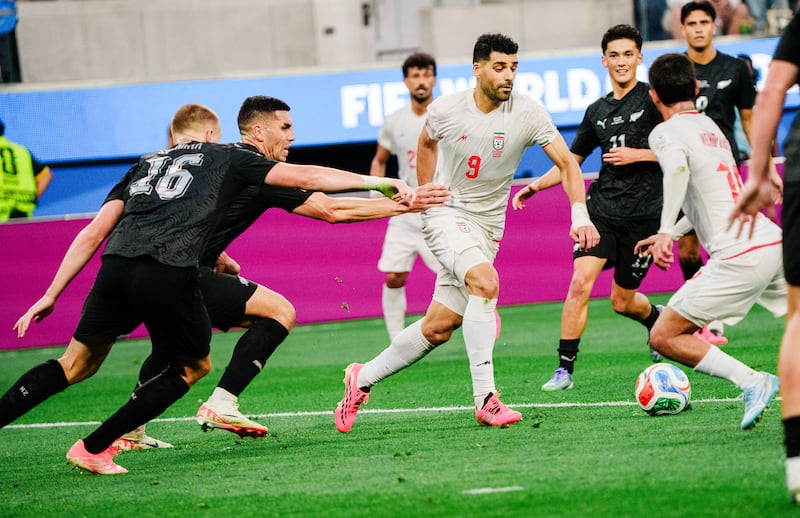
Iran FA to lodge Fifa complaint over World Cup travel restrictions
The Iranian football federation plans to lodge a complaint with Fifa over the travel restrictions its team is facing at the World Cup.
Against the background of the US-Iran conflict, the Iranian team have been forced to commute from Mexico for their three group games in the US.
The US is requiring Iran to enter within 24 hours of their matches and to leave the same day. They are the only team in the tournament wish such restrictions.
The Iranian coach, Amir Ghalenoei, said Iran were the “most oppressed” team in the tournament and that the disruption hurt them in their opening game against New Zealand.
In a statement on Friday, the Football Federation of Iran said the “restrictions are inconsistent with the principles of providing equal conditions for participating teams and may affect their technical preparation.”
“Under the coaching staff’s plan, the national team needed to travel to the host city two days before each match in order to achieve optimal technical and physical condition, and then return to their base the day after the match.”
“However, for the opening match against New Zealand, this request was not approved.”
Oil tanker traffic resumes flow through Hormuz
Oil shipments through the Strait of Hormuz picked up on Friday after the US and Iran signed a ceasefire deal.
Gulf producers are preparing to raise exports despite concerns over conditions set by Tehran for using the vital waterway.
At least four tankers carrying crude, oil products and liquefied petroleum gas entered the strait on Friday, heading for Iraqi Gulf ports, according to MarineTraffic data.
A Japanese-owned crude tanker exited the strait after being delayed by the war and was bound for Japan.

Separately, Indian-flagged crude supertankers Desh Vibhor and Desh Vaibhav had commenced voyages through the strait to India after days of disruption.
Ships resumed broadcasting positions as they transited Hormuz, after weeks of concealing movements by switching off transponders.
There were 25 commercial crossings through Hormuz on June 18 – the highest single-day count since April 18 and more than five times the average daily level of the first 10 days of June, AXS Marine data showed. Traffic remains well below the pre-conflict level of about 120 daily crossings. – Reuters
Friday: The day so far

IDF says it will continue its mission in Lebanon ‘until ordered otherwise’
Effie Defrin, a spokesperson for the Israeli military, said the IDF will remain in southern Lebanon and “carry on with its mission until ordered otherwise” to protect civilians in northern Israel.
Addressing the reported ceasefire during a press briefing, he said: “Our objective and mission are very clear. Anything concerning any agreements is a matter for the government.
“As long as we haven’t received different orders, we’ll act in accordance with the army’s chief of staff’s orders.”
There has not been official confirmation of a ceasefire in Lebanon from either Israel or Hizbullah, but it reportedly came into effect at 4pm local time.
In a post on social media, the IDF said it launched more than 150 strikes in Lebanon since midnight. – The Guardian
‘No urgency’ for Tehran to meet with US
The Iranian foreign ministry has said there is “no urgency” to meet US negotiators in Switzerland, as a memorandum of understanding to end the Middle East war had already been signed electronically.
“Given that the signing of the text of the MoU was done digitally on June 18, there is no urgency to hold the said meeting in Switzerland, but we are planning to hold a meeting in the coming days,” the ministry’s spokesman, Esmaeil Baqaei, said. – The Guardian
Senior Israeli official confirms Israel-Hizbullah ceasefire
A senior Israeli official told Reuters on Friday that Israel and Hizbullah were in a ceasefire.
The ceasefire will last for long as Hizbullah does not attack Israel.
“Then we are in war time,” the official said.
The official also said that Israel would keep its forces in southern Lebanon where it has occupied an area along Israel’s northern border.
A senior US official previously told Reuters that Israel and Hizbullah had agreed to a ceasefire set to begin at 4pm local time on Friday. – Reuters
Hizbullah says ceasefire in Lebanon in effect
Hizbullah has implemented the ceasefire with Israel that was due to take effect from 4pm today, two sources from the Iran-backed group told Reuters.
The news agency reported the sources saying: “As soon as we got word of the ceasefire we applied it from our end.” Several other media outlets including AP, AFP and the Times of Israel have cited sources confirming the ceasefire in Lebanon, which was reportedly mediated by Qatar, Iran and the US. – The Guardian
Trump claims Iran entered negotiations due to ‘desperation’
Trump has claimed that Iran entered the ongoing negotiations to end conflict in the Gulf due to ‘desperation’, in his latest social media post.
“We didn’t meet out of desperation, Iran did. They are FINISHED,” he said.
The US-Israel and Iranian negotiators were due to enter talks following the signing of a memorandum of understanding which would have kick-started a 60-day period of negotiations. The negotiations were due to focus on trade through the Strait of Hormuz and to relitigate Iran’s atomic stance.
The talks to implement a peace deal were cancelled after renewed strikes by Hizbullah and larger retaliatory air strikes by Israel of south Lebanon.
In a busy hour on Truth Social, Trump said the US will “play out” the 60-day period but vowed that Iran would “get no money, not ten cents!”

War has ‘diminished’ Iran’s military, Trump claims
US president Donald Trump has claimed that Iran has been left without an air force, navy or “practically anything else” in one of a series of social media posts in the past hour.
“The war has diminished Iran,” he claimed on his own social media platform, Truth Social. “It doesn’t, any longer, have an air Force, a navy, anti-aircraft equipment, radar, or practically anything else.”
The president acknowledged statements from “Dumocrats” that Iran’s military position is better now that it was at the start of the conflict. His response: “How stupid can some people be???”
Israel and Hizbullah agree to ceasefire, says US official
Israel and Hizbullah have agreed to a ceasefire set to begin at 4pm local time on Friday, a senior US official told Reuters.
“Hizbullah and Israel have agreed to a ceasefire,” the official said, adding that negotiators for the US and Qataris worked out the deal with help from Iran.
“We understand that after the exchange of fire earlier today, Israel and Hizbullah are now in a ceasefire,” he said.
WW1 ghosts haunt the signing of memorandum of understanding in the Palace of Versailles
Donald Trump may not be too interested in the first World War, given his refusal to visit Aisne-Marne American Cemetery for fallen Marines in 2018 during his first term because it might ruin his hair.
But it appears that nobody within his vast entourage understood the historical significance of signing the memorandum of understanding with Iran in the Palace of Versailles on Wednesday.
It was here in 1919 that the German delegation signed the Treaty of Versailles. It was supposed to be the treaty to end all wars, but became a byword in the years following for historical grievances weaponised by the Nazis to justify the second World War.
Versailles became associated in the German mind with abject surrender, though it was no harsher than the peace imposed on the Russian Empire by Germany in 1917.
Germany lost much of its territory and ended up paying very high reparations. It was only allowed to keep a tiny army.
The economist John Maynard Keynes wrote a book about it and predicted it would lead to another war.
Will the memorandum of understanding between the US and Iran be another Treaty of Versailles?
Israel will exact a very heavy price from Hizbullah, says Netanyahu
This is the full statement from Israeli’s prime minister Binyamin Netanyahu:
“I extend my heartfelt condolences to the families of the commander of the 52nd Armored Battalion, Lieutenant Colonel Dor Gadliah Ben Simhon, and of the three heroic fighters whose names have not yet been released, may their blood be avenged, and I wish a full recovery to the wounded in yesterday’s exchange of fire.
“Following the heinous attack by Hizbullah, which was a blatant violation of the ceasefire, I instructed the IDF last night to strike Hezbollah with full force.
“The IDF attacked more than 80 terrorist targets and eliminated dozens of terrorists. Subsequently, the IDF struck Hizbullah headquarters in the Bekaa Valley this morning.
“This morning, I held a situation assessment with the minister of defence and the chief of the general staff. My directive is clear: Israel will not tolerate attacks on our soldiers or our territory, and it will exact a very heavy price from Hizbullah for these attacks.
“The IDF will act to thwart any threat to our forces and our territory. As I made unequivocally clear, including yesterday: Israel will remain in the security zone in southern Lebanon for as long as required to protect the settlements in the north.
Oil prices steady as markets uncertain about next steps
Oil steadied as traffic through the Strait of Hormuz appeared to thin out today in the wake of the US and Iran postponing face-to-face talks over a permanent peace deal.
Brent futures traded above $79 a barrel in London, and were on track for a weekly drop of about 9 per cent.
While a flurry of ships carrying stranded oil began to make their way out of the waterway after an interim peace accord was signed between Washington and Tehran on Wednesday, no tankers were seen moving outbound from the Persian Gulf this morning.
Optimism this week over an interim US-Iran accord was quickly tempered when US vice-president JD Vance paused a trip to Switzerland for further talks aimed at a wider settlement with the Islamic Republic.
Trump says Netanyahu has to be kept ‘a little bit sane’
The Israeli prime minister Binyamin Netanyahu has said Israel will not tolerate attacks on its soldiers or territory and warned that it will “exact” a very heavy price from Hizbullah.
His comments come as Donald Trump repeated his view that if it weren’t for him “Israel would not exist today”.
The US president was speaking to American news outlet Axios, which has just released snippets of a 45-minute interview that has yet to be broadcast.
“If it weren’t for me, Israel would not exist today,” Trump said, adding that his relationship with Netanyahu is “good, but we have to keep him a little bit sane”.
IDF hits more than 80 targets in Lebanon overnight
The Israeli army has said it struck more than 80 Hizbullah targets in southern Israel and killed “dozens” of its fighters.
The Israel Defense Forces said the overnight strikes centred on the southern city of Nabatiyeh, which falls within its recently expanded so-called “security zone” in Lebanon where its troops are operating in, about 10km from the northern Israeli border.
Iran’s chief negotiator Mohammad Bagher Ghalibaf has said future talks with the US must respect Tehran’s “red lines” including an enduring ceasefire in Lebanon.
“As we have demonstrated throughout previous negotiations, we remain steadfast in respecting the established conditions and red lines, and in defending the interests of the Iranian nation,” Ghalibaf was quoted as saying by Iran’s official IRNA news agency.
“If the enemy becomes excessive [in its demands], we have proven that we are ready to retaliate and will not hesitate to deliver a stinging response,” he added.
No role in banning Iran opposition rally, says French foreign ministry
France’s foreign ministry has denied it asked for the ban of an Iranian opposition rally that had been due to take place on Saturday in Paris.
The Paris-based NCRI, the political arm of the People’s Mujahideen Organisation of Iran, said earlier in the day that the Paris police had banned their rally at the last minute and linked it to a call by France’s foreign minister Jean-Noel Barrot with his Iranian counterpart Abbas Araqchi yesterday.
“This allegation is false. The minister did not mention this protest or request its cancellation,” the ministry said in a statement sent to Reuters.
The NCRI has held frequent rallies in the French capital over the years.
They have been attended by thousands of people, including high-profile former US, European and Arab officials critical of the Islamic Republic.

European stocks edge higher
European shares inched higher on Friday, aided by gains in energy and healthcare stocks as investors remained cautious after US-Iran negotiations to end the Middle conflict stalled.
The pan-European STOXX 600 index inched up 0.2 per cent by 9.40am on Friday, with Germany’s DAX and France’s CAC 40 rising 0.3 per cent each, outperforming other regional markets.
Oil prices edged higher, helping drive European oil & energy stocks up 1.2 per cent. – Reuters
The IDF said it has launched a strike in Lebanon’s eastern Bekaa valley against what it described as Hizbullah infrastructure and “in response to repeated violations of the ceasefire” by the Iran-backed group.
Itamar Ben-Gvir says ‘all of Lebanon must burn’
Reacting to news of four IDF soldiers being killed in southern Lebanon, Israel’s far-right national security minister Itamar Ben-Gvir said “all of Lebanon must burn”.
Ben-Gvir said he told Israeli prime minister Binyamin Netanyahu that “for every tear of an Israeli mother, a thousand Lebanese mothers must weep”.
In a post on X, he said: “With all due respect to the Americans, Israel must make it clear to the entire world that the blood of our sons and the security of our citizens are not up for bargaining. All of Lebanon must burn.”
Ben-Gvir sparked diplomatic outrage last month after he shared footage of Israeli security forces abusing international activists, including Irish citizens. Ireland issued him with a travel ban following widespread condemnation of the video.
France wants to play role in talks about Iran’s nuclear programme
We have more details on those earlier comments from Jean-Noël Barrot, France’s foreign minister.
He said France wants to play a role in talks dealing with Iran’s nuclear programme and will not approve the lifting of UN sanctions unless it is satisfied by the terms of a final accord.
Barrot, whose country is a veto-wielding member of the United Nations Security Council, told broadcaster FranceInfo there would be no stability in the region unless US talks with Iran also dealt with Iran’s ballistic missile programme and support for proxies.
“The return for major concessions that will be asked of Iran is the lifting of sanctions, sanctions that were taken at the United Nations,” he said.
“France is a permanent member of the United Nations (Security Council) so, as was the case 10 years ago, France will have to give its approval for the sanctions to be lifted.”
The agreement reached between the United States and Iran this week calls for negotiations over Iran’s nuclear programme to take place over the next 60 days, with a final deal to be endorsed by the Security Council.
Barrot also advised people not to read too much into today’s talks in Switzerland being postponed, saying: “The hardest part remains to be done, but let’s not overinterpret the postponement of meetings, given that this [US-Iran] agreement has been signed.” – Reuters/The Guardian
Eurozone bond yields rise as Iran talks cancelled
Eurozone government bond yields rose on Friday as oil prices ticked higher after US-Iran peace talks in Switzerland were abruptly called off and as European Central Bank policymakers talked tough on inflation.
Germany’s 10-year bond yield, the benchmark for the bloc, rose three basis points to 2.955 per cent, having fallen to a more than two-month low of 2.915 per cent on Wednesday. Yields move inversely to prices.
Oil prices were up just under 1 per cent after Switzerland said US talks with Iranian negotiators on a pact to end the Middle East conflict would not take place on Friday.
Brent and US crude prices have fallen sharply since the US and Iran reached a tentative agreement to end their war at the weekend but doubts remain about the longevity of the deal, which faces opposition from some US Republicans and many in Israel. – Reuters
Normal shipping will not resume in Strait of Hormuz until 80 mines cleared
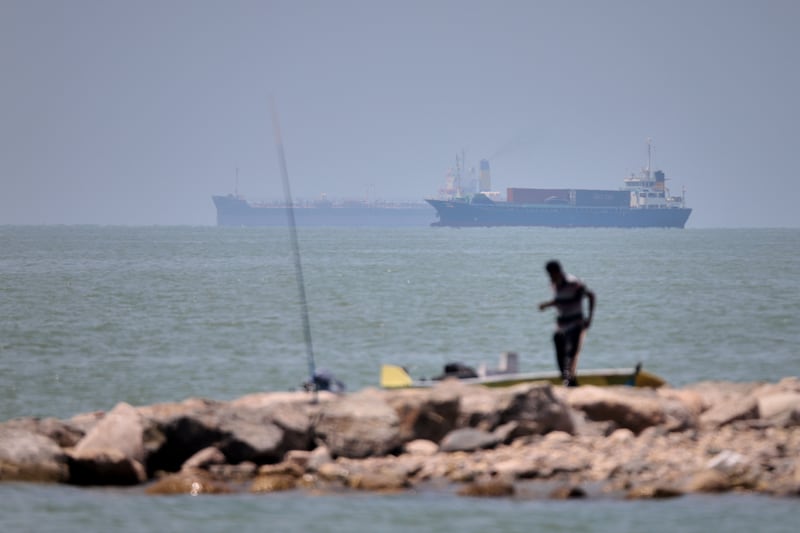
The centre of the Strait of Hormuz is blocked with about 80 mines that will need clearing for normal shipping to resume, the independent tanker owner trade body has said.
Several vessels began to exit the Gulf through the key maritime chokepoint on Thursday, after the signing of a memorandum of understanding between the US and Iran.
However, shipping is not expected to return to normal for some time, even if the ceasefire lasts, because of the mines and other obstacles, underlining the continuing challenges facing global trade.
“The main route ... through the middle of the Strait of Hormuz, that’s closed, that’s dangerous,” said Phil Belcher, marine director at Intertanko, the association of independent tanker owners.
“The latest figure we had was that there’s 80 mines in the Strait of Hormuz. It’s an enormous amount and it’s going to take some time to clear.” – The Guardian
No UN sanctions lifting on Iran without France’s approval, foreign minister says
France will not approve the lifting of United Nations Security Council (UNSC) sanctions on Iran unless it is satisfied that talks on Tehran’s nuclear programme meet its expectations, its foreign minister said on Friday.
Jean-Noël Barrot, whose country is a veto-wielding member of the UNSC, said there would be no stability in the region unless US talks with Iran resolved questions around Iran’s ballistic missile programme and support for proxies.
“We need a radical change of posture by Iran,” he said. – Reuters
The IDF said four of its soldiers were killed in southern Lebanon as fighting intensified between the Israeli military and Hizbullah.
Price of oil drops to €70 per barrel
The price of oil is headed for a substantial weekly drop as the Strait of Hormuz starts to return to normal. However, the stalled signing of the US-Iran deal may negatively impact prices.
Global benchmark Brent steadied at about $80 (€70) a barrel, down more than 8 per cent this week, Bloomberg reports.
On Thursday, vessels carrying nearly 10 million barrels of oil either appeared outside the strait or were sailing through, including the first Saudi-owned tankers since the conflict began more than three months ago.
In peacetime, Hormuz used to see daily transits of oil and products totalling about 20 million barrels, according to the International Energy Agency.
At least 16 people killed in Lebanon

Lebanon’s state-run National News Agency has said at least 16 people have been killed in the Israeli air strikes in southern Lebanon, which Israel’s military said were ongoing, while Hizbullah said there was intense fighting in the area.
Iran’s Revolutionary Guards ‘set up covert Iraqi cells to attack Gulf neighbours’
Iran’s Islamic Revolutionary Guard Corps (IRGC) has set up secretive new cells in Iraq to carry out attacks on Gulf countries that host American forces, bypassing established militia networks to avoid detection, eight Iraqi sources said.
Three or four cells, each comprising about 10 elite Iraqi Shiite Muslim fighters, launched at least seven drone attacks from desert locations near the southern cities of Basra and Samawa against sites in Kuwait, Saudi Arabia and the United Arab Emirates between April 20th and May 17th, three of the sources said.
A number of their members were drawn from Islamic Resistance in Iraq, an umbrella group of hardline Shiite factions with thousands of fighters. But the new groups operate outside its command structure, reporting directly to the IRGC, according to the sources, who include two Iraqi military officials, another security official and five local militia commanders.
The establishment of the new Iraqi cells, which has not previously been reported, reflects a shift in IRGC tactics aimed at preserving Iran’s ability to project force across the region at a time when its armed proxy groups are greatly diminished and its own military and economic resources are depleted, the five militia commanders said. – Reuters
Trump is ‘Israel’s only powerful ally left’

JD Vance has sharply rebuked Israeli government critics of the US deal with Iran, saying the cabinet members should remember that two-thirds of the defensive weapons that have protected Israel “have been built by American hands and paid for by American tax dollars”.
The US vice-president, asked about a report that Israeli prime minister Binyamin Netanyahu was fuming over the agreement, told reporters at the White House: “If I was in the cabinet of the Israeli government, I might not be attacking the only powerful ally that I have anywhere left in the entire world.”
The US provides Israel about $4 billion (€3.5 billion) in military assistance a year.
“The problem for Israel is not Donald J Trump, and anybody in Israel who thinks their biggest problem is the president of the United States needs to wake up and smell the reality of the situation that country is in,” the US vice-president said.
He was defending the deal to end the war with Iran that critics in the US and Israel have denounced for failing to curb Iran’s missile programme and providing no clear path to dismantling its nuclear facilities, while constraining Israel in its war with Hizbullah in Lebanon.
US critical of Israeli operations against Hizbullah
US vice-president JD Vance has said Israel needed to respect the peace process.
“What the president has grown frustrated with at times, is that we seem to be right on the cusp of a major breakthrough in the agreement, and then all of a sudden, there’s a major explosion that goes off in a civilian population centre in Beirut, and a lot of people who have nothing to do with Hizbullah lose their lives,” Vance told reporters on Thursday, adding that such actions were “not acceptable”.
On Friday, Iran’s chief negotiator Mohammad Bagher Ghalibaf warned against any breach of the agreement, saying: “In case of misconduct, breach of treaty and excess of the other side, we have no doubt that decisive respond will be given to the enemy.”
The diplomatic back-and-forth over the planned talks adds to the uncertainty over whether a lasting truce can be found to a regional war that has killed at least 7,000 people, sent energy prices soaring and shaken global markets.
Iran’s supreme leader Ayatollah Mojtaba Khamenei on Thursday said Trump had signed the deal “out of desperation” and signalled that upcoming talks would not be easy.
“If the American side wants to be too demanding, we will not accept it,” he said in a written message.
The deal gives negotiators 60 days to reach agreement on the status of Iran’s nuclear programme unless both sides agree to an extension, and set up a $300 billion (€262 billion) reconstruction fund for Iran and other financial incentives. – The Guardian
Israel pledges to continue attacks in Lebanon
The Israeli military said it carried out strikes overnight and continued attacking what it described as Hizbullah militants and infrastructure in several areas in southern Lebanon, adding that the attacks were in response to repeated violations of the ceasefire by the Iran-backed group.
Hizbullah said on Friday that its fighters destroyed three Israeli tanks in the country’s south and that clashes were “ongoing”. Israel had not confirmed its tanks were hit.
Hizbullah drew Lebanon into the Middle East war in March by attacking Israel, in what it said was revenge for the killing of Iran’s supreme leader by the US and Israel.
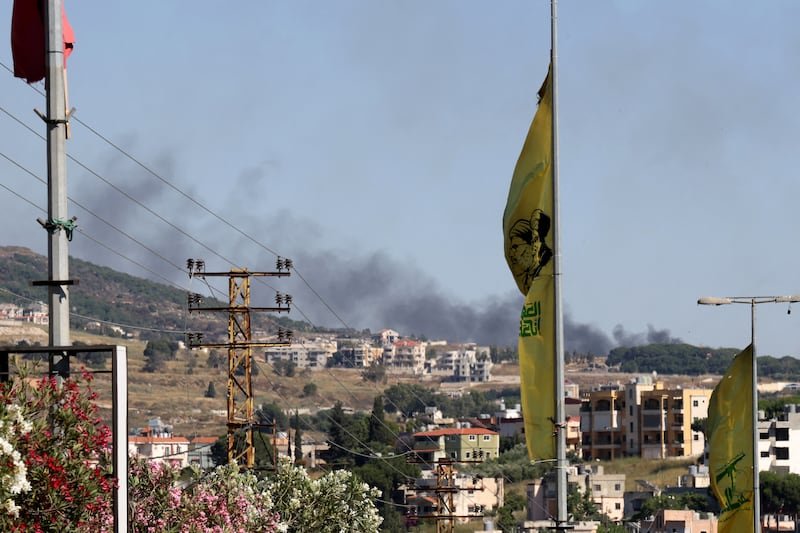
The MoU calls for the “permanent termination” of the war in Lebanon and for the country’s “territorial integrity and sovereignty” to be ensured. US president Donald Trump has said he expects a complete ceasefire on all fronts.
The government of Binyamin Netanyahu has continued to stress that it has no intention of withdrawing from Lebanon, leading to open criticism from Trump and Vance of Israel’s operations.
Talks in Switzerland on ending Iran war cancelled
Talks set to take place on Friday between the United States and Iran on implementing the 14-point agreement to end their war have been cancelled, Switzerland’s foreign ministry has announced.
The talks were set to begin in the tiny Swiss village of Obbürgen on Friday, two days after the signing of a memorandum of understanding (MoU) that opened a 60-day window to negotiate a permanent understanding over Iran’s nuclear program, while getting oil traffic moving through the strait of Hormuz.
The White House said the US looked forward to “beginning technical talks as soon as possible”, as it announced that JD Vance, who is leading negotiations for the Trump administration, would now not be travelling.
The cancellation of the talks came after a report from Al-Mayadeen, an Arabic language network that is politically allied with the Iranian-backed Lebanese militant group Hizbullah, said Tehran was delaying sending its delegation to Switzerland due to Israel’s ongoing military campaign in Lebanon.
Israel, which was not included in the peace talks and has distanced itself from the US-Iran agreement, has continued its fighting in Lebanon and launched fresh air strikes early on Friday, accusing Hizbullah of violating the ceasefire. – The Guardian


