
Main Points
- Israeli prime minister Binyamin Netanyahu said Israel was ‘continuing to strike Hizbullah’ and that there is ‘no ceasefire in Lebanon’
- While in an interview with NBC News, US president Donald Trump confirmed he asked Netanyahu to be ‘more low-key’ on Lebanon
- Iran’s supreme leader Mojtaba Khamenei said the country remains determined to ‘take revenge’ for his father, who was assassinated on the first day of the war, and all those killed in the conflict
- Some confusion arose when both the US and Iran gave different start dates for the beginning of talks in Pakistan, with both sides stating April 10th and 11th respectively
- Nato would be willing to a play a role in a possible Strait of Hormuz mission if it is able to do so, secretary general Mark Rutte said
Best Reads
- Sally Hayden: Israel launches fresh wave of air strikes across Lebanon amid dashed hopes of a ceasefire
- Mark Weiss: Netanyahu faces domestic backlash as Iran conflict enters new phase
- Keith Duggan: In Trump’s America, everyday conversations now would have been unimaginable three years ago
That concludes Thursday’s live coverage on the Middle East conflict.
We will be back tomorrow with more breakings news and analysis on irishtimes.com.
The Israeli military said it had detected rockets fired toward northern Israel from Lebanon, according to a military spokesman and Israel’s emergency rescue service.
Hizbullah said it had fired a rocket salvo toward northern Israeli settlements, in a statements published through its media arm.
The Israeli military spokesman said one rocket was intercepted and another fell in open space, and declined to say whether other rockets were fired. – The New York Times
Starmer and Trump discuss need for ‘practical plan’ for Strait of Hormuz
UK prime minister Keir Starmer has spoken to US president Donald Trump about the need for a “practical plan” to get shipping going through the Strait of Hormuz in the wake of the Middle East ceasefire.
It comes as Starmer is visiting allies in the Gulf for talks on how to support the pause in fighting and secure a permanent reopening of the key shipping strait.
A Downing Street spokesperson said: “The Prime Minister spoke to President Trump from Qatar this evening.
“The Prime Minister set out his discussions with Gulf leaders and military planners in the region on the need to restore freedom of navigation in the Strait of Hormuz, as well as the UK’s efforts to convene partners to agree a viable plan.
“They agreed that now there is a ceasefire in place and agreement to open the Strait, we are at the next stage of finding a resolution.
“The leaders discussed the need for a practical plan to get shipping moving again as quickly as possible.”
Earlier, Starmer said Israeli strikes on Lebanon following the US-Iran ceasefire deal are “wrong” and “should stop”. – PA
Netanyahu delaying ceasefire to avoid corruption trial, says Iranian minister
Iran’s foreign minister Abbas Araghchi has suggested that Netanyahu is resisting a ceasefire because of his corruption trial, and urged Trump not to “crater” the US economy by allowing the Israeli prime minister to jeopardise ongoing diplomatic efforts to stop the war.
Araghchi said on X: “Netanyahu’s criminal trial resumes on Sun. A region-wide ceasefire, incl in Lebanon, would hasten his jailing.
“If the US wishes to crater its economy by letting Netanyahu kill diplomacy, that would ultimately be its choice. We think that would be dumb but are prepared for it.”
Netanyahu’s long-running trial will resume on Sunday, an Israeli courts’ spokesperson said on Thursday.
The first sitting Israeli prime minister to be charged with a crime, Netanyahu denies charges of bribery, fraud and breach of trust brought in 2019 after years of investigations. His trial, which began in 2020 and could lead to prison terms, has been repeatedly delayed due to his official commitments, with no end date in sight. – The Guardian
Israeli evacuation orders for Beirut ‘operationally unfeasible’, says WHO chief
Director general of the World Health Organisation, Dr Tedros Adhanom Ghebreyesus, has said the Israel Defense Force’s latest evacuation orders for the Lebanese capital Beirut are “operationally unfeasible”.
The city’s Jnah area is home to two major hospitals, both of which are “operating at full capacity”, he said.
“No alternative medical facilities are available to receive approximately 450 patients from the two hospitals (including 40 patients in the ICU), rendering their evacuation operationally unfeasible,” he said in a post on X.
The neighbourhood is also home to the Lebanese ministry of public health complex as well as several shelters currently catering to some 5,000 people.
US deputy secretary of state Christopher Landau on Thursday summoned the Iraqi ambassador after a drone struck a major US diplomatic facility in Baghdad, the state department said in a statement. – Reuters
The US state department will host a meeting next week to discuss ongoing ceasefire negotiations between Israel and Lebanon, a state department official said on Thursday. – Reuters
Turkish president Recep Tayyip Erdogan told Iran’s president Masoud Pezeshkian by phone on Thursday that the upcoming US-Iran talks must be utilised to the utmost degree to achieve lasting peace, Erdogan’s office said.
It quoted Erdogan as saying it was of critical importance not to give opportunities to those seeking to undermine the process, and that Turkey was ready to help in all ways in the new process. – Reuters
Netanyahu says ‘no ceasefire in Lebanon’, Trump ‘very optimistic’ about Iran peace deal
Israeli prime minister Binyamin Netanyahu has said there is “no ceasefire in Lebanon”.
In a short video address posted on X, he said Israel was “continuing to strike Hizbullah with full force, and we will not stop until we restore your security.”
His comments come shortly after US president Donald Trump said he had asked Netanyahu to be “more low-key” in Lebanon, as the US seeks to negotiate with Iran to bring the war to an end.
Netanyahu added that he had instructed his government to “open direct negotiations with Lebanon as soon as possible.”
The talks will focus on the disarmament of Hizbullah and the establishment of peaceful relations between Israel and Lebanon, he added.
In an interview with NBC News, Trump confirmed he asked Netanyahu to be “more low-key” on Lebanon.
“I spoke with Bibi and he’s going to low-key it. I just think we have to be sort of a little more low-key,” Trump said, adding that he believed Israel was “scaling back” its operations in Lebanon.
Trump added that he is “very optimistic” a peace deal with Iran was within reach as a diplomatic delegation led by his vice-president JD Vance prepared to head to Pakistan for high-stakes talks aimed at ending the war this weekend.
Iran’s leaders “talk much differently when you’re at a meeting than they do to the press. They’re much more reasonable,” he said.
“They’re agreeing to all the things that they have to agree to. Remember, they’ve been conquered. They have no military. If they don’t make a deal, it’s going to be very painful.”
Operational activities halted at several energy facilities in Saudi Arabia, state news agency reports
Operational activities have been halted at several energy facilities in Saudi Arabia due to recent attacks, Saudi state news agency SPA reported on Thursday citing an official source at the ministry of energy.
The attacks resulted in the death of one Saudi national from the industrial security personnel of the Saudi energy company, SPA added. – Reuters
The Israel Defense Forces has said it has begun striking “Hizbullah launch sites” in Lebanon.
Supreme leader says Iran determined to take ‘revenge’ for his assassinated father

A statement attributed to Mojtaba Khamenei, Iran’s supreme leader, who has still not been seen or heard from in public, has just been read out across state media.
He said Iran remains determined to “take revenge” for his father, who was assassinated on the first day of the war, and all those killed in the war.
“Iran is not seeking war but will not forfeit its rights and considers all resistance fronts as a unified entity.
“We will certainly demand compensation for each and every damage inflicted, and the blood price of the martyrs and the compensation for the wounded of this war,” he said.
Khamenei is also quoted as saying Iran will move the management of the strategic Strait of Hormuz into a “new phase”. – Reuters/The Guardian
Lebanese president says ‘only solution’ is ceasefire before talks with Israel
Lebanese president Joseph Aoun has said that a ceasefire first is the “only solution”, despite an Israeli official telling CNN earlier that “talks will be held under fire”.
In a statement posted on X, Aoun said: “The only solution to the situation Lebanon is experiencing is to achieve a ceasefire between Israel and Lebanon, followed by direct negotiations between them.”
He added that Lebanon’s security forces have been “carrying out their work fully to enforce security and stability”, despite the “difficult circumstances they are facing”.
Hizbullah lawmaker says group rejects direct negotiations with Israel
Hizbullah lawmaker Ali Fayyad has said the group rejected direct negotiations with Israel and that the Lebanese government should demand a ceasefire as a precondition before any further steps are taken.
Fayyad’s statement came after Israeli prime minister Binyamin Netanyahu said he had instructed his cabinet to begin direct talks with Lebanon.
Fayyad said the Lebanese government’s position should also prioritise the withdrawal of Israeli troops from Lebanese territory and the return of displaced people to their homes. – Reuters
Cumulative death toll in Lebanon rises to 1,888
Lebanon’s health ministry said on Thursday that Israeli strikes across the country on Wednesday wounded killed 303 and wounded at least 1,150.
In a statement, the ministry said the cumulative toll since the start of the war between Israel and Iran-backed Hizbullah on March 2nd rose to 1,888 dead and 6,092 wounded.
It warned the death toll could rise further as search efforts were ongoing, as well as DNA testing of bodies transferred to hospitals.
Lebanon is holding a day of mourning on Thursday after the “unprecedented” wave of Israeli strikes wrought devastation across the country.

At a Beirut hospital, grieving families identify bodies after Israeli strikes
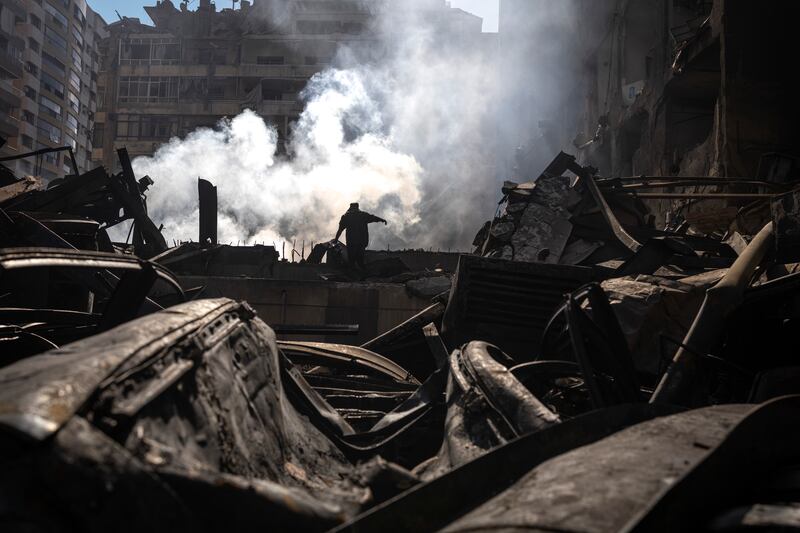
Ambulances arriving at a Beirut hospital on Thursday bypassed the emergency room and drove straight to the morgue, where exhausted medics unloaded a succession of bags of body parts for relatives to identify before burial.
Nearly 24 hours after Israel’s deadliest strikes on the Lebanese capital in decades, rescuers were still working to recover bodies from under the rubble of destroyed buildings.

More than 300 people were killed across Lebanon on Wednesday, according to the Lebanese health ministry, including in strikes on central Beirut that came without warning.
Among them were the brother and teenage nephew of 54-year-old Kheir Hamiyeh. They were both killed in a strike on Hay el-Sellum, a densely populated district of Beirut.
“We are waiting because there’s so many people ... all of them children and women,” Hamiyeh said outside the morgue at the Rafik Hariri University Hospital.

The Israeli strike, part of a campaign Israel says is targeting the Iran-aligned Hizbullah armed group, had destroyed their home and wounded his young niece Khadija, who stood next to him with bandages across her face.
“Her father was killed. Her brother was killed. She has one brother left. What are we supposed to do?” Hamiyeh said.
Khadija’s mother, Zeinab, told Reuters between bouts of crying that she had to carry the bodies of her husband and 13-year-old son to the ground floor on her own.
A rescuer outside the Rafik Hariri Hospital said he had spent all of Wednesday and Thursday trying to pull victims from pulverised apartment blocks across the city.
“We’re piecing people together,” he said, adding: “I’ve never seen anything like this.”
Relatives who were waiting at the morgue’s entrance were sobbing, calling other family members to tell them they had managed to identify a loved one inside. Three women were crouched on the sidewalk, holding each other upright so they would not collapse.
“The numbers are high, the situation is disastrous and painful,” hospital director Dr Mohammad al-Zaatari told reporters.
He declined to say how many bodies were in the morgue but a rescue worker told Reuters there were at least 100 inside. – Reuters
Death toll in Lebanon rises to 303
The death toll in Lebanon from Israeli attacks on Wednesday has risen to 303, according to the Lebanese health ministry. – Reuters
Dozens of states condemn attacks on UN peacekeepers in Lebanon
Dozens of states issued a joint statement at the United Nations on Thursday condemning “unacceptable aggressive behaviour” toward UN peacekeepers in Lebanon and calling for increased protections after the deaths there of three Indonesian soldiers.
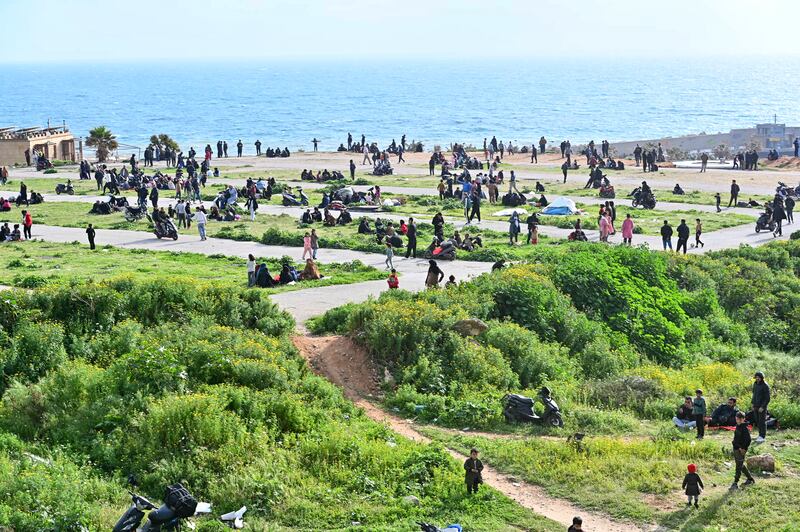
The 63 countries and the European Union also expressed “deep concern over the humanitarian situation in Lebanon, especially the significant civilian casualties, the extensive destruction of civilian infrastructure and the mass displacement of more than one million people.”

The statement was read by Indonesia’s UN ambassador Umar Hadi, accompanied by dozens of envoys from countries that endorsed it. It noted that attacks on peacekeepers could constitute war crimes under international law and those responsible must be held accountable.
While reaffirming their full support for the United Nations Interim Force in Lebanon (Unifil), the countries urged the UN and its Security Council “to strengthen the protection of UN peacekeepers in an increasingly dangerous environment.”
The statement called on all parties to return to negotiations and reiterated “strong commitment to the sovereignty, independence, territorial integrity and unity of Lebanon”.
Hadi said there were indications that more countries would sign the statement. Israel, Lebanon and the US were not among those he read out.
On Wednesday, UN secretary general António Guterres condemned strikes by Israel across Lebanon that day that the UN said had resulted in hundreds of civilians being killed and injured.
The UN said on Tuesday that preliminary findings from its probe into the deaths of the three Indonesian peacekeepers in separate incidents on March 29th and 30th showed that one was killed by an Israeli tank projectile and two by an improvised explosive device most likely placed by Hizbullah. – Reuters

Nato willing to play role in possible Strait of Hormuz mission, Rutte says

Nato would be willing to a play a role in a possible Strait of Hormuz mission if it is able to do so, the military alliance’s chief Mark Rutte said on Thursday.
“If Nato can help, obviously then there is no reason not to be helpful,” Rutte said during remarks in Washington. – Reuters
A toll for using Strait of Hormuz would be a ‘dangerous precedent’, UN’s ship agency says
Imposing a toll on ships sailing through the critical Strait of Hormuz would “set a dangerous precedent” and countries should not impede freedom of navigation, the UN’s shipping agency said on Thursday.
Iranian officials have raised the idea of charging a toll for using the strait after a two-week ceasefire between the United States and Tehran was agreed this week.
“There is no international agreement where tolls can be introduced for transiting international straits. Any such toll will set a dangerous precedent,” a spokesperson with the UN’s International Maritime Organisation said.
IMO countries adopted the UN Convention on the Law of the Seas, or UNCLOS, which outlines the rules that govern straits used for international navigation.
“According to UNCLOS, ships enjoy the right of transit passage through international straits. States bordering straits shall not hamper that right or suspend the transit passage,” the IMO spokesperson said. – Reuters
Lebanon has spent the last 24 hours advocating for a temporary ceasefire to allow for broader talks with Israel, a senior Lebanese official told Reuters, saying it would be a “separate track but the same model” as a fragile truce brokered by Pakistan between the US and Iran.
The official said no date or location had been set yet but Lebanon needed the US as a mediator and guarantor of any agreement.
The official spoke to Reuters after Israel’s prime minister Binyamin Netanyahu announced that he had instructed the start of direct negotiations with Lebanon “as soon as possible”. – Reuters
McEntee condemns Israel’s ‘brutal attacks’ across Lebanon
Minister for Foreign Affairs Helen McEntee has said she is “appalled” by yesterday’s “brutal attacks” by Israel across Lebanon, which saw more than 200 people killed.
In a statement issued on Thursday evening, the Minister said she spoke with her Lebanese counterpart Youssef Rajji, during which she condemned Israel’s attacks, which are “causing untold death and destruction in Lebanon”.
McEntee added that such attacks threaten to undermine the recent US-Iran ceasefire and “restart the wider conflict”.
“Israel’s attacks on Lebanon are unacceptable and must stop. They risk all efforts to bring peace and stability to the region. I have consistently condemned Hizbullah for its attacks on Israel. Israel’s military response is entirely disproportionate.
“I have welcomed the recent ceasefire agreement between the US and Iran, but it is essential that this also extends to Lebanon.
“We have consistently called for dialogue and diplomacy to find a lasting end to this conflict. I call on all parties to fully observe the ceasefire, to desist from any actions that undermine it and to support efforts to reach a long-term end to the conflict,” she said.
McEntee also paid tribute to the “professionalism and dedication” of Irish troops serving with Unifil in “challenging and dangerous conditions”.
Israel wants to start peace talks with Lebanon ‘as soon as possible’ – Netanyahu
Israeli prime minister Binyamin Netanyahu has said he has given an instruction for Israel to begin peace talks with Lebanon that would also include the disarming of Hizbullah.
“In light of Lebanon’s repeated requests to open direct negotiations with Israel, I instructed the cabinet yesterday to start direct negotiations with Lebanon as soon as possible,” Netanyahu said in a statement on Thursday.
“The negotiations will focus on disarming Hizbullah and establishing peaceful relations between Israel and Lebanon.”
There was no immediate response from the Lebanese government to Netanyahu’s remarks.

An hour before Netanyahu’s statement, Lebanese president Joseph Aoun said “the only solution to the situation in Lebanon is to achieve a ceasefire between Israel and Lebanon, followed by direct negotiations between them.”
He said he was working on a diplomatic track on this matter that was starting to be seen “positively” by international actors.
Israel launched a renewed offensive against Hizbullah after the Iran-backed militia began firing at Israel on March 2nd. Israeli strikes have killed around 1,700 people and uprooted more than a million people, according to Lebanese authorities.
At least 400 Hizbullah fighters have been killed, according to sources familiar with the group, which has fired hundreds of rockets and drones at Israel. – Reuters

Merz says Germany wants a UN mandate to secure Strait of Hormuz

German chancellor Friedrich Merz told US president Donald Trump that Germany would back a mission to secure sea lanes in the Strait of Hormuz, but that it would first need an international mandate.
Merz told reporters in Berlin Thursday that such a mandate ideally would come from the United Nations Security Council. Russia is a permanent member on the council and holds veto power over resolutions.
The US has sought specific commitments from European allies to help secure the Strait of Hormuz once the fighting in Iran has ended, Bloomberg reported earlier. Washington wants countries to present concrete plans within days.
“I told president Trump again yesterday during our conversation that we are prepared to help, for example, secure passage through the Strait of Hormuz following a peace agreement,” Merz said.
A UK-led coalition of more than 40 countries, which includes many European nations, Japan and Canada, has pledged to help reopen the strait, through which about 20 per cent of the world’s oil and natural gas flows, after active combat ends.
The closing of the strait has sent global energy prices soaring and raised concerns about imminent fuel shortages.
Merz said he told Trump that German involvement in securing the sea lanes would also require approval from Germany’s lower house of parliament.
“The American president knows this, and he respects it as well,” Merz said.
Trump has chided Nato allies this month, saying he was strongly considering leaving the alliance after countries denied US military aircraft use of their bases and airspace. He called allies “cowards” and said the alliance was a “paper tiger.”
US secretary of state Marco Rubio said last month that the US may need to reassess its relationship with Nato after the Iran war is finished, calling the military alliance’s alleged lack of support during the Middle East conflict “very disappointing”.
Merz said he discussed Nato with Trump and offered to have another conversation on the matter in advance of the alliance’s summit in July.
“It’s my firm intention to do everything possible to maintain Nato’s protection for Europe,” Merz said. “This alliance is, at least for the time being, irreplaceable.” – Bloomberg
What has happened so far today?

US president Donald Trump’s pre-ceasefire threat that Iran’s “whole civilisation will die” is “extremely concerning” and “unacceptable”, Minister for Defence Helen McEntee has said.
Ellen O’Riordan reports: “Any talk of eliminating civilisations, any talk of targeting or attacking critical infrastructure is completely unacceptable and not something that any country or anybody should accept, irrespective of where it comes from,” she said.
The ceasefire agreement is to be welcomed, although she said it is not a full ceasefire as significant attacks continue in Lebanon where Irish soldiers are based.
Speaking to reporters in Co Kildare on Thursday, the Minister called for calm and “cool heads” to ensure the ceasefire can hold.
Lebanese hospitals running out of medial supplies, WHO warns
Some of Lebanon’s hospitals could run out of life-saving trauma medical kits within days as supplies near depletion following mass casualties from large-scale Israeli strikes over the past day, the World Health Organisation (WHO) said on Thursday.
The life-saving trauma kits include bandages, antibiotics and anaesthetics to treat patients who sustained war-related injuries, the WHO stated.
“Some of the trauma management supplies were in short [supply] and we may run out in a few days,” Dr Abdinasir Abubakar, the WHO’s representative in Lebanon, told Reuters.
Israel bombed more targets in Lebanon on Thursday after its biggest attacks of the war on its neighbour on Wednesday killed more than 250 people and more than 1,000 were injured.
“If we have another mass casualty, like what happened yesterday, it will be a disaster,” Abubakar said.
“Probably we will lose more lives just because we don’t have enough supplies,” he added.
Shortages of supplies of trauma kits have been driven by a surge in recent casualties – the majority of whom are civilians – with roughly three weeks’ worth of supplies being depleted in one day, Abubakar stated.
Medicines to treat patients with chronic disease, such as insulin for diabetes patients, could also run out within weeks after supply chains were disrupted by the war in the Gulf and the closure of the Strait of Hormuz, Abubakar said.
Delivery costs of medical supplies into Lebanon have surged three times, while the WHO also faces constrained funding, he added.
The WHO said it and the Lebanese ministry of health were planning to move supplies between hospitals to avoid total depletion of stocks, but cautioned that the health system is being stretched to its limit.
More than one million people have been displaced across Lebanon since the conflict began on March 2nd, following joint US-Israeli strikes on Iran in late February, according to the United Nations. – Reuters
Nato doing everything US has requested, says Rutte
Nato chief Mark Rutte said on Thursday that member countries are doing everything US president Donald Trump had requested to strengthen the military alliance, even if some were initially “a bit slow” to provide support to the United States amid its war with Iran.
“When it came time to provide the logistical and other support the United States needed in Iran, some allies were a bit slow, to say the least. In fairness, they were also a bit surprised. To maintain the element of surprise for the initial strikes, president Trump opted not to inform allies ahead of time,” Rutte said during a speech in Washington.
“But what I see, when I look across Europe today, is allies providing a massive amount of support,” he added. “Nearly without exception, allies are doing everything the United States is asking. They have heard and are responding to president Trump’s requests.”
Rutte’s comments came after meeting Trump on Wednesday. He has briefed some capitals that Trump wants concrete commitments within the next few days for help securing the Strait of Hormuz, diplomats have told Reuters. – Reuters
Pakistan PM condemns Israeli ‘aggression against Lebanon’
Pakistani prime minister Shehbaz Sharif has condemned Israel’s “ongoing aggression against Lebanon” after speaking his Lebanese counterpart Nawaf Salam.
Sharif’s comments on X come in advance of expected US-Iran talks in Islamabad.
IDF issues new evacuation order for Beirut suburbs
An evacuation order to civilians in the southern suburbs of the Lebanese capital Beirut has been issued by the Israel Defense Forces (IDF).
Evacuation orders from the IDF are usually followed by missile strikes. Citizens of southern Beirut have already been seen packing their cars and joining roads leading to northern areas of the city.
If strikes go ahead the move is likely to test the volatile ceasefire agreement between the US and Iran.
Israeli prime minister Binyamin Netanyahu earlier vowed to carry out more strikes on Lebanon, following Wednesday’s attacks which killed at least 182 people and injured an additional 890.
However, Iran’s president Masoud Pezeshkian has warned more Israeli strikes on Lebanon would render negotiations between Iran and the US “meaningless”, adding Iran “will never abandon its Lebanese sisters and brothers”.
Iran reclosed the Strait of Hormuz on Wednesday night in retaliation for that day’s missile strikes on Lebanon.
But both US president Donald Trump and the Israeli leadership have said the ceasefire does not apply to Israel’s campaign in which targets Hizbullah militants it claims are based in Lebanon.
Joseph Aoun, the Lebanese president, described the Israeli attacks as barbaric and accused the IDF of committing a “new massacre” in the country after its intense bombardment yesterday.
UN secretary general Antonio Guterres said the attacks posed a “grave risk to the ceasefire and efforts toward a lasting and comprehensive peace in the region”.
US military claims to have disabled Iran’s ability to ‘project power beyond its borders’
The US military set out to dismantle the Iranian regime’s ability to project power beyond its own borders, “and we clearly accomplished this task,” Admiral Brad Cooper, Commander of US Central Command, has said in a video message posted on X.
The message was accompanied by images of what appeared to be US planes carrying out strikes on Iranian missile launchers, aircraft and military infrastructure.
Cooper said the “more than 50,000 of America’s sons and daughters in uniform launched Operation Epic Fury” and inflicted “a generational military defeat” on Iran. He said the United States and Israel “systematically destroyed” Iran’s conventional military capability, “built over 40 years at the cost of billions of dollars,” in 40 days.
Epic Fury involved “more than 13,000 strikes on Iranian military targets and flying thousands upon thousands of combat flights,” he said.
But he said, “US forces have paused offensive operations in accordance with the ongoing ceasefire.”
“However, we remain present, we remain vigilant, and we remain ready if called. We also continue to stand shoulder to shoulder with our regional partners in maintaining the most sophisticated and largest active air defence umbrella in the world,” he added.
UAE reports a pause in missile strikes
The UAE Ministry of Defence has said its air defence systems did not detect any ballistic missiles, cruise missiles, or unmanned aerial vehicles launched from Iran, on Thursday.
In a post on X, the ministry said: “Since the onset of the blatant Iranian attacks, UAE air defences have engaged a total of 537 ballistic missiles, 26 cruise missiles, and 2,256 UAVs.
“No injuries were recorded in recent hours, keeping the total number of injuries at 224, involving individuals of various nationalities,” the ministry added.
The total number of civilian fatalities in the UAE stands at 10, from Pakistani, Nepalese, Bangladeshi, Palestinian, Indian, and Egyptian nationalities, the ministry added.
US ‘credibility on the line’ over Pakistan talks says former UN ambassador
Some confusion has entered plans for US-Iran talks, which the White House press secretary Karoline Leavitt said on Wednesday were due to begin on Saturday April 11th.
Iran’s National Security Council appeared to contradict this saying talks between the US and Iran will begin in the Pakistani capital, Islamabad, on Friday, April 10th, based on Tehran’s 10-point peace proposal.
Al Jazeera has reported concern in Pakistan, citing former Pakistani ambassador to the United Nations, Maleeha Lodhi, saying the onus is on the US and president Trump “to ensure that Israel doesn’t sabotage” the upcoming talks.
Al Jazeera quoted Lodhi as saying “it’s up to the two principal parties [ Iran and the US] to now figure out how the talks go ahead.”
“It’s not Pakistan’s credibility that’s on the line. It’s America’s credibility that’s on the line, because it’s the Americans who assured us this ceasefire will hold, and that there would be nothing done provocatively to derail the ceasefire or derail the talks,” is quoted as saying.
Four Lebanese soldiers killed in Israeli strikes, Lebanon army says
Four Lebanese soldiers were killed in Israeli attacks yesterday, Lebanon’s army said in a statement.
More than 200 people were killed in Israeli strikes on Lebanon yesterday, according to Lebanese authorities, with a further 1,100 wounded.
Several world leaders and officials, including the UK foreign minister Yvette Cooper, have called for Lebanon to be included in the US-Iran ceasefire. – The Guardian
Iran war doubles Russia’s main oil tax revenue – Reuters
Russia will see revenue from its biggest single oil tax double to $9 billion (€7.7 billion) in April due to the oil and gas crisis from the war in Iran, Reuters calculations showed on Thursday.
The war is resulting in a windfall for Russia, the world’s second-largest oil exporter, from the Iran war, the reporting suggests.
The calculations are based on preliminary production data and oil prices, Russia’s mineral extraction tax on oil output will increase in April to around 700 billion roubles (€7.70 billion) from 327 billion roubles in March. The revenue is up by some 10 per cent from April last year.
For the whole of 2026, Russia has budgeted for 7.9 trillion roubles from the mineral extraction tax.
Warning to avoid Middle East airspace extended by EU aviation regulator
Europe’s aviation safety regulator, the European Union Aviation Safety Agency (EASA) has extended an advisory to airlines warning them to avoid the Middle Eastern and Gulf airspace.
The advisory was previously valid until April 10th, but the extension will carry the warning forward for a further two weeks until April 24th.
The warning applies to the airspaces of Bahrain, Iran, Iraq, Israel, Jordan, Kuwait, Lebanon, Oman, Qatar, the United Arab Emirates and Saudi Arabia.
Italy working to restore free movement in Strait of Hormuz – Meloni
Restoring freedom of navigation in the Strait of Hormuz was of vital interest for Italy and the European Union, Italian prime minister Giorgia Meloni said on Thursday.
As part of its proposals to end the war, Tehran has suggested it could charge fees for ships to pass through the Strait of Hormuz.
“If Iran were to succeed in obtaining the authority to apply additional tariffs to transits through the Strait, this could still lead to economic consequences and shifts in trade flows,” Meloni told parliament.
“We are already working with the UK-led coalition for the Strait of Hormuz, which includes more than 30 countries, to try to build security conditions that allow for the full restoration of freedom of navigation and supply,” she added.
However, deputy prime minister Matteo Salvini said on Wednesday that Italy would not send any ships to patrol the area in the absence of a UN mandate.
Meloni condemned all violations of the two-week ceasefire deal agreed between the US and Iran earlier this week. – Reuters
Iran’s uranium enrichment programme ‘will not be curtailed’
Iran’s atomic energy chief, Mohammad Eslami, said his country’s uranium enrichment programme will not be curtailed, according to Reuters news agency.
Citing a report by the state-backed Iranian Students’ News Agency, Reuters quoted Eslami as saying “the enemy won’t succeed in restricting Iran’s enrichment programme”.
His remarks go against statements made by US president Donald Trump and other US officials yesterday that there will be “no enrichment of uranium” in Iran as part of the ceasefire agreed by both countries. – The Guardian
Nato boss says Trump ‘clearly disappointed’ with allies
US president Donald Trump is “clearly disappointed” with his Nato allies, the alliance’s secretary general, Mark Rutte said overnight.
Taking to his Truth Social platform, the president suggested in all caps that Nato “wasn’t there when we needed them, and they won’t be there if we need them again”.
He continued, referencing the geopolitical crisis prompted by US attempts to “acquire” Greenland, Trump said: “Remember Greenland, that big, poorly run, piece of ice!!!”
Rutte told CNN in the early hours of Thursday that the president was “clearly disappointed” and made that clear in a “very frank, very open” discussion between “two good friends”.
“He clearly told me what he thought of what happened over the last couple of weeks,” he said.

“But at the same time, I was also able to point him to the fact that the large majority of European nations has been helpful with basing, with logistics, with overflights, with making sure that they live up to the[ir] commitments,” he said.
Oil prices surge back towards $100 amid ‘fragile’ ceasefire
Oil prices have jumped again and stock markets faltered as investors were wary over a “fragile” ceasefire in Iran, despite following a relief rally in the US.
The price of global benchmark Brent crude oil was rising by about 3.5 per cent to $98 (€83.80) a barrel on Thursday morning.
The oil benchmark had fallen back sharply to lows of about $90 a barrel following the announcement of a two-week ceasefire between the US and Iran on Wednesday.
Iran agreed to temporarily reopen the Strait of Hormuz, but closed the waterway again on Wednesday night in response to Israeli attacks on the Hizbullah militant group in Lebanon.
Stock markets opened in the red on Thursday, with the UK’s FTSE 100 edging lower by about 0.2 per cent in early trading.
There were deeper losses elsewhere in Europe, with France’s Cac and Germany’s Dax both down.
Kathleen Brooks, research director for XTB, said that oil prices remaining below $100 a barrel on Thursday “could be a sign that investors remain hopeful of a breakthrough in the coming days, or at least firmer foundations for the ceasefire to take hold”.
“This could limit the downside for risk in the short term, and it could cap oil price gains,” she said. – Reuters

Italy suggests pausing EU budget rules if Iran war continues
European Union authorities should consider a temporary suspension of budget deficit rules if the US-Israeli war against Iran flares up again, prime minister Giorgia Meloni told parliament on Thursday.
Meloni also said her government was ready to take every possible measure to prevent potential speculative behaviour on energy prices, including introducing windfall taxes on energy companies.
“We believe that discussing a possible temporary suspension of the stability and growth pact should not be taboo. Not a waiver for individual member states, but a general measure,” Meloni said.
Her remarks come as the Italian government is preparing to cut its GDP growth estimates for 2026 and following years later this month, making it more difficult for Italy to bring its deficit below the EU’s 3 per cent of GDP ceiling this year, as planned. – Reuters
Hizbullah leader’s nephew killed in IDF strike overnight, Israel claims
Israel said on Thursday it had killed the nephew of Naim Qassem, the leader of the Iran-backed Lebanese group Hizbullah, in a strike on Beirut overnight.
“The IDF struck in the Beirut area and eliminated Ali Yusuf Harshi, the personal secretary and nephew of Hizbullah Secretary-General Naim Qassem,” the military said.
*Reuters has corrected previous reporting suggesting the leader was killed.
The statement comes amid a heightened and “expanded” ground military operation in southern Lebanon over the past week in which the IDF said it has killed “dozens” of Hizbullah fighters.
The IDF also said it struck weapons storage facilities, launchers and the headquarters of the organisation on Wednesday night.
Hizbullah named Qassem, a senior figure in the group for more than 30 years, as its new chief a month after his predecessor veteran leader Hassan Nasrallah was killed by Israel in 2024.
The 2024 air strike on a Beirut suburb, came at the climax of a conflict that began when Hizbullah fired at Israeli positions at the border in support of the Palestinian Islamist militant group Hamas. – Reuters
Ceasefire must cover Lebanon, says French foreign minister
The ceasefire agreed by Iran and the United States must also cover military actions in Lebanon, French foreign minister Jean-Noel Barrot said on Thursday, adding that France condemned “massive” Israeli strikes the previous day.
Barrot said he expected Iran to make a series of concessions as part of the peace talks due to start in Pakistan.
“Iran must give up to have nuclear weapons and means to obtain them, must give up using its missiles and drones to threaten countries in the region and give up supporting groups like Hizbullah, Hamas and Houthis who destabilise the region,” he said in an interview with Radio Station France Inter.
Iran must also open the traffic in the Strait of Hormuz, he said. – Reuters

Iranian official deletes post about new US talks
After posting to social media that an Iranian delegation is set to arrive in Islamabad tonight for negotiations with the US, Iran’s ambassador to Pakistan, Reza Amiri Moghadam, appears to have deleted the post.
Moghadam had posted: “Despite scepticism of Iranian public opinion due to repeated ceasefire violations by Israeli regime ... Iranian delegation arrives tonight in Islamabad for serious talks based on 10 points proposed by Iran.” That post no longer appears on his X account. – The Guardian
IDF claims dozens of Hizbullah fighters killed in ‘expanded’ operations
The Israel Defense Forces (IDF) has claimed “dozens” of Hizbullah fighters have been killed in its “expanded” ground military operation in southern Lebanon over the past week.
In a series of posts on X, the IDF said its forces have operational control of the area and will continue to strike what it described as Hizbullah infrastructure.
The Lebanese civil defence service said at least 254 people were killed in the Israeli strikes on southern Lebanon yesterday, and more than 1,100 others were wounded. – Agencies
Israel attempts to restart domestic natural gas production
Israel’s energy ministry said on Thursday that it had instructed Energean to begin resuming operations at the Karish natural gas platform off Israel’s Mediterranean coast following the ceasefire with Iran.
Before the shutdown, oil and gas giant Energean produced 15,000 barrels per day of oil alongside gas. Following facility upgrades, production will hit 20,000 barrels per day upon restart, helping offset deferred income. – Reuters
Fuel shortages from Gulf threaten food supply in south Asia
The fuel crunch from the Iran war is rippling through Bangladesh’s countryside, leaving tens of thousands of farmers struggling to secure diesel for irrigation at a critical stage of the paddy season.
Rice is a staple food in the south Asian nation of 175 million people and late March is a crucial window for sowing the main summer crop. But diesel shortages, rationed sales and long queues at fuel stations are disrupting irrigation, heightening concerns about plant growth, lower yields and increased losses for farmers.
Bangladesh relies on imports for 80 per cent of its refined fuel needs with much of that coming from the Middle East. Service stations frequently hang banners at the pumps reading “No Fuel”, with farmers queuing throughout the day for diesel.
Price volatility and supply disruptions as a result of the war have squeezed supplies, but while the government has introduced measures to conserve energy and find new sources of fuel, farmers say they are struggling.
Pump operators say they are struggling to meet demand. “Farmers need a lot of fuel in this season,” said Abdul Salam, a local pump manager. “We are following Government guidelines, but the supply we receive is not enough.” – Reuters
Crude oil could sit at $100 for rest of 2026 – Goldman Sachs
Brent crude is set to average more than $100 (€85.62) a barrel right through 2026 if the Strait of Hormuz were to remain closed for another month, according to Goldman Sachs Group.
“The situation remains fluid,” analysts, including Daan Struyven, said in a note following the start of a two-week ceasefire between the US and Iran, noting comments from US vice president JD Vance that the truce was fragile. “We continue to see the risks to our price forecast as skewed to the upside.”
At present, Goldman’s base-case outlook is for energy flows through the strait to start to pick up from this weekend, followed by a gradual, one-month recovery in Gulf exports to pre-war levels. Under that scenario, Brent is seen averaging $82 a barrel in the third quarter, and $80 in the fourth.

Under the bank’s so-called adverse view, including the reopening being “postponed” for one month, Brent was expected to average above $100 a barrel in the second half, they said.
Another outcome, based on a longer closure and the loss of some regional production, came with even higher forecasts, with Brent seen at $120 a barrel in the third quarter and $115 in the fourth.
The global oil market remains fixated on the strait, which has been largely closed to traffic since the US and Israeli attack on Iran in February that ignited the war. While Tehran and Washington said they paused the fighting in exchange for a reopening of the conduit, there’s little clarity on what was agreed. – Bloomberg
Japan considers new release from national oil reserves
Japan is considering a new release of about 20 days’ worth of oil reserves as early as May, Japanese news agency Kyodo reported on Thursday, amid uncertainty over the reopening of the Strait of Hormuz.
Japan, dependent on the Middle East for some 95 per cent of its oil supply, began releasing oil from its stockpiles in March in line with other nations and on its own.
In total, Japan is making available about 50 days’ worth of oil consumption and has asked the International Energy Agency to consider a co-ordinated release of a second batch.
It now has enough oil for 230 days in its reserves.
Asked about the report, a top official at the Japanese ministry of economy, trade and industry, Narumi Hosokawa, told reporters the ministry continues to examine the situation.
To help cope with the energy supply crisis, Japan has started searching for non-Middle Eastern barrels, rolled out gasoline subsidies and stepped up coal-fired generation to reduce the need for liquefied natural gas supplies, which have also been cut due to the closure of the Strait of Hormuz. – Reuters
Ceasefire eases fears but LNG sector scarred, says executive
The liquefied natural gas (LNG) sector has been scarred by the conflict in the Middle East, a top gas industry executive has warned.
The disruption has dented confidence in Gulf suppliers and raised doubts among Asian buyers – particularly poorer countries – over the fuel’s reliability and affordability, according to Menelaos Ydreos, secretary general of the International Gas Union (IGU).
The IGU has more than 140 members globally and represents more than 90 per cent of the world’s gas market. LNG prices have, as of last week, soared over 80 per cent since the US and Israel launched strikes on Iran on February 28th, closing the Strait of Hormuz.
The narrow waterway normally carries about a fifth of global LNG supplies.
“Where you have choke points and you have geopolitical events that occur, it impacts security of supply,” he said.
Global gas supply remains ample. But LNG depends on complex infrastructure, specialised ships and predictable transit routes. When those are disrupted, cargoes flow to buyers able to pay more, leaving poorer importers exposed, he said.
That dynamic is critical for Asia, where LNG demand growth has relied on the fuel’s reputation as a stable bridge away from coal.
The reputational impact is particularly sensitive for Qatar, the world’s second-largest LNG exporter, whose supply record has long been a cornerstone of Asian energy security. – Reuters
Pakistan declares national holiday in advance of talks
Pakistan has suddenly declared two days of local holidays in Islamabad from Thursday, authorities said, in advance of US-Iran talks due to take place in the capital.
No reason was given in the official notification, but authorities in Islamabad have often announced holidays or restrictions for security reasons in advance of high-profile diplomatic events.
Pakistan has been preparing for high-stakes talks involving US and Iranian representatives.
The White House says the vice president, JD Vance, will be leading a team to the negotiations in Islamabad “this weekend”.
Oil prices rebound after biggest one-day drop in six years

Oil prices rebounded on Thursday after their biggest one-day drop since April 2020, as the Strait of Hormuz remained largely blocked and Israeli attacks on Lebanon threatened to derail the fragile ceasefire in the Middle East.
Brent rose toward $97 (€83) a barrel after slumping 13 per cent on Wednesday. West Texas Intermediate was also near $97. Iran’s semi-official Fars news agency reported that passage of tankers through the strait was halted after Israeli strikes, although US vice president JD Vance countered that assertion, saying “we are seeing signs that the straits are starting to reopen”.
On Thursday, two fully laden Chinese oil tankers in the Gulf were approaching the strait, potentially putting them on track to become the first such vessels to cross since the ceasefire was announced. A successful passage is not guaranteed, and there’s been little change in traffic over the past day.
The near-halt of traffic through the waterway – through which about a fifth of the world’s crude and liquefied natural gas flowed before the US and Israel first struck Iran at the end of February – has caused the biggest-ever oil market disruption. Vance will lead a US delegation to Islamabad in Pakistan for direct talks to Tehran on Saturday.
Meanwhile, the Iran’s ports and maritime organisation announced two designated safe routes for vessels entering and exiting the strait, according to state-run Nour News. The passageways were established to avoid possible mines, according to the report.
[ Iran to charge cryptocurrency fees for ships passing Strait of HormuzOpens in new window ]
Even once Hormuz transit picks up, the return of energy supplies won’t be instant. Output has been reduced at oil and gasfields, while refineries have curtailed production or shut down. Some of those will take weeks – or possibly longer – to return to normal.
“This isn’t over just yet,” said Dennis Kissler, senior vice president for trading at BOK Financial Securities Inc. “We will need to see a full opening of the strait with no obstacles before we see crude prices in the low $80s. And I don’t see that in the next two weeks.”
Israel kills at least 254 people in Lebanon strikes
Israel carried out its largest attack on Lebanon on Wednesday since its war with Hizbullah began, killing at least 254 people and wounding 837.
Warplanes levelled several buildings in the centre of Beirut, filling the skies with smoke in what Israel’s defence minister said was “a surprise strike” on the pro-Iranian group.
The Lebanese capital was filled with cars crumpled by the blasts and the flaming wreckage of buildings that first responders struggled to extinguish, as Israel bombed more than 100 Hizbullah military sites across Lebanon.

The office of Israel’s prime minister Binyamin Netanjayu said the two-week Middle East ceasefire did not include Lebanon, contrary to a statement made by mediator Pakistan – while US president Donald Trump, after initially remaining silent, said Lebanon was “a separate skirmish” and not part of the deal.
Iranian sources told Iran’s Tasnim news agency that the country was ready to exit the ceasefire agreement if Israel “persists in violating the truce in Lebanon”, and the crisis was discussed by Iran’s foreign minister and his Pakistani counterpart.
Israel Katz, the Israeli defence minister, said Iran and Lebanon were separate and that the aim was to “change the reality in Lebanon and remove threats from the residents of the north”.
Katz went on to directly threaten Hizbullah’s leader. “We warned Naim Qassem that Hizbullah will pay a very heavy price for attacking Israel on Iran’s behalf – and Naim Qassem’s personal turn will come too,” he said.
The Red Cross said it was “outraged by the devastating death and destruction” in densely populated areas across Lebanon, adding that the country had been once again plunged into “panic and chaos”. – Reuters
Ceasefire at ‘grave risk’ if Israel continues Lebanon attacks, UN warns
The UN secretary general Antonio Guterres has warned that ongoing Israeli attacks on Lebanon pose “a grave risk” to the fragile US-Iran truce.
“The ongoing military activity in Lebanon poses a grave risk to the ceasefire and the efforts toward a lasting and comprehensive peace in the region. The secretary general reiterates his call to all parties to immediately cease hostilities,” the spokesman said in a statement on Wednesday.
Trump threatens US will start ‘shooting’ again if Iran deal fails

Donald Trump said US military ships and aircraft will remain around Iran and threatened that the US will start “shooting” again unless Tehran fully complies with the deal reached with Washington.
“All US Ships, Aircraft, and Military Personnel, with additional Ammunition, Weaponry ... will remain in place in, and around, Iran, until such time as the REAL AGREEMENT reached is fully complied with,” Trump said on his Truth Social platform on Wednesday.
“If for any reason it is not, which is highly unlikely, then the “Shootin’ Starts,” bigger, and better, and stronger than anyone has ever seen before.”
Iran had said earlier on Wednesday that it would be “unreasonable” to proceed with talks to forge a permanent peace deal with the United States after Israel pounded Lebanon with its heaviest strikes yet on Wednesday, killing hundreds of people.
The two sides appeared to be far apart on Iran’s nuclear programme, with Trump saying Iran had agreed to stop enriching uranium, and Iran’s parliament speaker Mohammed-Bager Qalibaf saying it was allowed to continue enriching uranium under the terms of the ceasefire.
“It was agreed, a long time ago, and despite all of the fake rhetoric to the contrary – NO NUCLEAR WEAPONS and, the Strait of Hormuz WILL BE OPEN & SAFE,” Trump added in his Truth Social post.


