Donald Trump’s war against Iran is costing the US hundreds of millions of dollars a day – and about a tenth of that is the price of military equipment destroyed in the fighting, according to recent analysis.
US losses of soldiers and materiel are light by the standards of wars in which the two sides are more evenly matched, defence experts say, but Iran’s destruction of costly US radar systems has left Washington more vulnerable in the event of future conflicts in other theatres such as China.
There have been 13 American deaths in strikes on US bases since February 28th. More than 300 American soldiers have been wounded.
Elaine McCusker, a senior fellow at the American Enterprise Institute (AEI) and a former senior Pentagon budget official, estimates the cost of the campaign against Iran at between $22.3 billion (€19.3 billion) and $31 billion over the five weeks since Trump ordered US forces to attack in late February.
READ MORE


Her calculations include the cost of deploying additional US assets to the Middle East since late December but do not include a full battle-damage assessment, which is unlikely to be clear before hostilities end.

These numbers include between $2.1 billion and $3.6 billion for battle damage and equipment replacement. The higher end of that range includes the cost of repairing the USS Gerald R Ford, an aircraft carrier withdrawn for maintenance after a laundry room fire, and the price of fixing a drone-damaged ballistic missile early warning system in Qatar.
“Damaged equipment can sometimes be repaired in days, while some destroyed systems will take years to replace on a one-to-one basis,” said McCusker, adding that the war was likely to exacerbate existing bottlenecks for critical materials and components needed for repairs and maintenance.
Iran appears to have prioritised targeting radar and communications systems at US bases around the Middle East as well as refuelling aircraft that allow US fighter jets to undertake long-distance strikes.
This lengthening list of scarce and sophisticated equipment struck by Iran has prompted analysts and former officials to express concern about American overstretch and the use of resources that could be better deployed elsewhere.
The Pentagon is seeking an additional $200 billion from Congress to cover the cost of its operations in Iran.
Mark Cancian, a senior defence and security adviser at the Center for Strategic and International Studies, said he estimated the campaign was costing the US about half a billion dollars every day.
CSIS estimates the US suffered at least $1.4 billion worth of combat losses and infrastructure damage in the first six days of the fighting, after which the number of Iranian missile launches declined. Estimates vary depending on methodology and what is included in different tallies.
“Details remain highly limited. The cost could be significantly higher depending on what equipment was inside the facilities that were struck,” Cancian said.
It would probably cost more than $700 million to replace the Boeing E-3 Sentry, an airborne early warning and control system that acts as an aerial control post, which was badly damaged in a strike on Prince Sultan Air Base near Riyadh, he said.
A US defence official declined to comment on the Pentagon’s battle damage assessments for operational security reasons.
Along with the E-3, analysts say two radar systems in Jordan and Qatar are among the most important assets damaged. These include an AN/TPY-2 radar, critical to the functioning of an advanced US missile defence system known as Thaad, reported to have been destroyed on a base in Jordan early on.
Another AN/TPY-2 in Saudi Arabia is also reported to have been struck, but the scale of the damage remains unclear.
Each AN/TPY-2 has been estimated to cost about $485 million to replace. It can take almost three years for Raytheon, the US defence group, to produce a single AN/TPY-2. It delivered the 13th such system last year, and there are no surplus units in storage, which means filling gaps will require reshuffling military commitments elsewhere.
“This is a very scarce and highly capable radar,” said Tom Karako, director of the missile defence project at CSIS. He said these systems were crucial both to allow the US to parry ballistic missile volleys out of Iran and for the overall American defensive posture around the world.
“Repairing or replacing them is going to be a very high priority,” Karako said. “You cannot take an Amazon Basics radar and substitute it for an AN/TPY-2.”
A former senior US military official said much of the damage to American assets was “self-inflicted” because of the flawed use of resources. “We either didn’t defend ourselves properly, or we made mistakes in the employment of the systems,” the former official said.
Kelly Grieco, a senior fellow at the Stimson Center, said Iran had had success in striking static targets such as parked aircraft and buildings at US bases. “It is much easier to go after larger, fixed targets,” she noted.
The strikes on US radar infrastructure will make it more difficult to quickly identify and intercept incoming Iranian missiles.
“It removes one of your tools to more effectively characterise and respond to missile attacks,” said Sam Lair, a research associate at the James Martin Center for Nonproliferation Studies.
This made it harder to accurately calculate the size, composition and targets of incoming Iranian ballistic missile and drone volleys, Lair said.
But Lair said damage sustained by US bases was broadly in line with expectations. “This is a fairly low level of damage given the capabilities of the Iranian missile and drone force,” he said. “It could have been worse.”
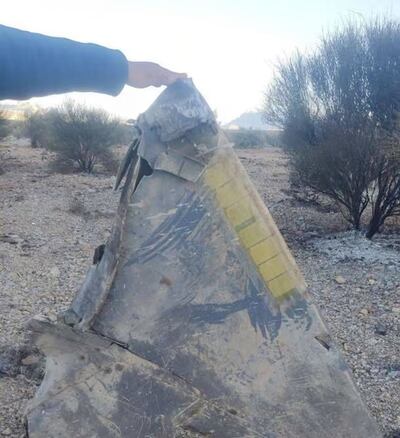
While Iran is reported to have shot down more than a dozen General Atomics-made MQ-9 Reaper drones, its most significant aerial scalp was the downing of an F-15E over mountainous southwestern Iran on Friday.
Iranian and American forces raced to find the two crewmen, who were both rescued by the US over the weekend.
A low-flying A-10 Warthog offering air support for the search-and-rescue mission was hit by Iranian fire and subsequently crashed over the Gulf.
US media reported that two C-130 Hercules transport aircraft had to be destroyed on the ground by US forces during the operation. Iran’s central military command said two US Blackhawk helicopters and two C-130 Hercules were downed in southern Isfahan.
Cancian said that by the standards of other recent US campaigns, the damage suffered in the past few weeks appeared on the heavier side. “But by the standards of warfare in general, this is very light,” he added.
In the five weeks of Operation Desert Storm in 1991, when a US-led coalition liberated Kuwait from Iraq, 14 US aircraft were destroyed in combat.
Early in the war on Iran, three F-15Es were shot down in a “friendly-fire” incident over Kuwait and a KC-135 tanker was lost over Iraq. Each F-15E costs about $100 million, while the KC-135 will cost around $160 million to replace.
Maintenance costs on ships and aircraft will also mount the longer the war continues. The AEI estimates repair costs for ships missing their planned maintenance schedules will be about $75 million.
But what worries analysts most is that the US is losing assets and expending weapons stockpiles needed to bolster its defences against China.
Fabian Hoffmann, a missile defence expert at the Oslo Nuclear Project, said: “The Thaad early-warning radar and the E-3 would certainly have been useful in a war with China.”
The US is reported to have begun moving elements of a missile defence system from South Korea to the Middle East.
Karako at CSIS said he worried that continued attrition could tempt China to undertake a military campaign to claim Taiwan. “We cannot afford to keep expending these things,” he said. – Copyright The Financial Times Limited 2026