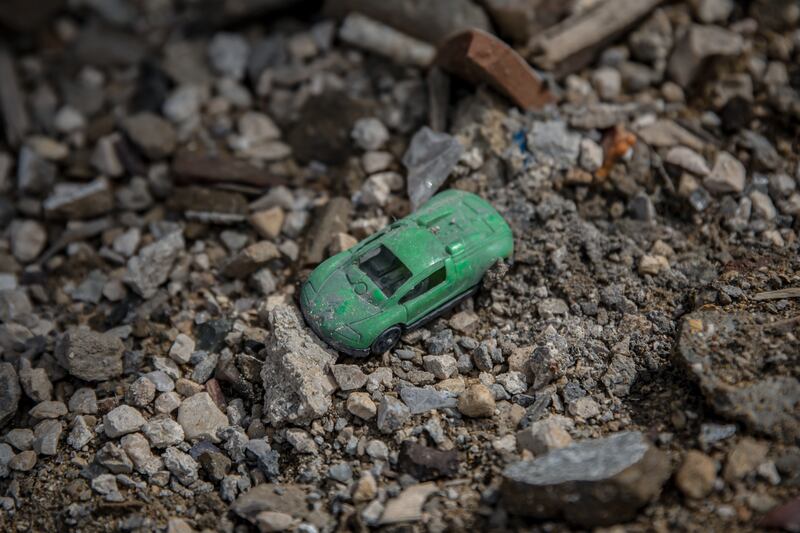
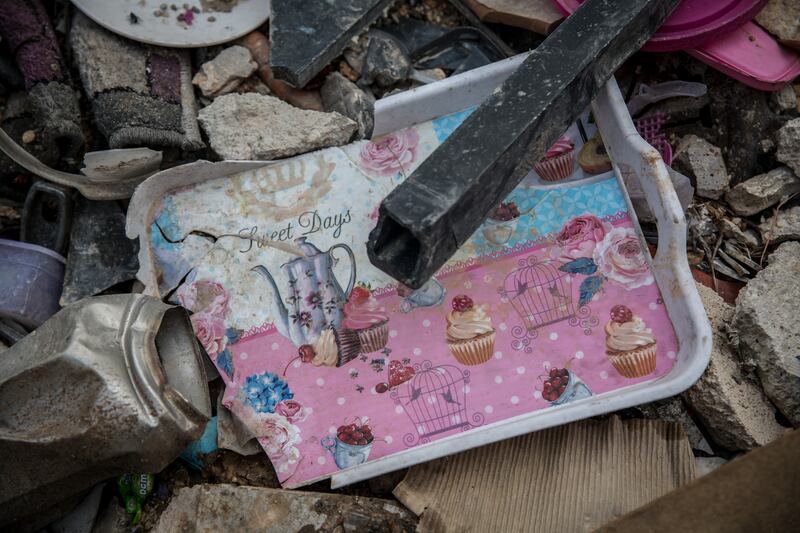
Among the rubble of the decimated homes in Lebanon’s eastern Baalbek district was a silver heeled shoe; nappies; toys, including miniature cars and teddy bears; an English dictionary; and school and academic work of various levels.
Hizbullah – which exercises control in the area - brought dozens of journalists on a tour earlier this week to visit air strike sites and “to highlight the resilience of its residents in the [eastern] Bekaa despite the war and destruction”.
All three strikes took place on what neighbours and family members say were residential properties. They happened in the evening, during or after iftar – the meal to break the fast during Ramadan – when family members were most likely to be home.
Since all-out war between Israel and Hizbullah restarted in the early hours of March 2nd, Lebanon’s ministry of health says more than 1,000 people have been killed, including at least 120 children and 80 women. Almost 3,000 have been wounded, including more than 380 children and 430 women. More than one million people in Lebanon are registered as displaced and around 14 per cent of the country’s territory is under forced evacuation orders.
READ MORE


While southern Lebanon is facing an expanded Israeli invasion and potential occupation, air strikes also continue in the east, which is traditionally a Hizbullah stronghold and the route the group used in the past to bring weapons from Syria.

In a statement this week, US-headquartered Human Rights Watch said that – since October 7th, 2023 – Israeli forces “have committed numerous violations of the laws of war and apparent war crimes in Lebanon with total impunity, including apparently deliberate or indiscriminate attacks on journalists, civilians, medics, financial institutions, reconstruction-related facilities and peacekeepers.”
It said countries which continue to provide Israel with arms and military aid “risk complicity”.
Israel says it abides by international law, does not deliberately target civilians and is taking military action because it wants to protect its citizens from Hizbullah attacks, which began again on March 2nd. An Israeli military spokesperson did not respond to questions regarding the specific air strikes mentioned in this article in time for publication.
Shahd Hammouri, a lecturer in international law at the University of Kent, said that what is being seen in Lebanon now is what she called the “Gaza doctrine” and “a lot of patterns of irresponsible targeting”.
Even if one of the people inside is a Hizbullah fighter, she said, “nothing in international law says that you can bomb a residential building where a military personnel is staying with their family”.
Strike
A strike on Baalbek city’s Ras al Ain neighbourhood on March 17th killed at least four people and injured seven others, according to Lebanon’s ministry of health. Locals said the dead included a couple and two children, while they said a woman who remains badly injured in hospital is not expected to survive.
Ali Bwari said his 31-year-old sister, her 42-year-old husband and their three-year-old child were killed. His sister was a teacher with a non-governmental organisation and her husband had a “mini-cafe”: “pure civilians”, he said. His nephew, nine-year-old Karim, somehow survived the strike – which he called a “miracle”.

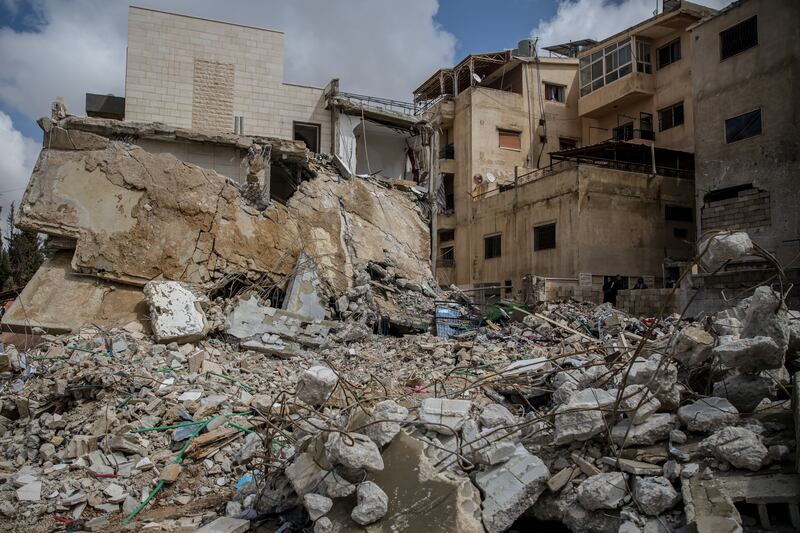
Bwari said he arrived minutes after it hit. “I cannot describe what I found.” He said there were no full bodies. Asked for his reaction, he said: “I can’t answer this question. Anyone who sees me will know what I’m feeling now.” He accused Israel of “hitting random houses” instead of “targets”.
“I have some peace inside, because I know [those killed] just went to heaven, but I’m asking all the world to know that Israel are monsters. They are killing kids and women. Some people [Hizbullah fighters] on the border are kicking their asses, and they are killing, here, children and women.”
When asked if he thought Hizbullah has the power to fight Israel, he said: “Actually, not Hizbullah. There is a God, actually, and he’s seen everything. And I think this innocent blood will bring victory and justice.”
If Israel’s assault does not stop, “believe me, if the war is going to be more aggressive, everyone – women, children and men – will defend their land”.
A 17km drive away, in the town of Shaath, six people from one family were killed on the evening of Wednesday, March 18th.
A local journalist who arrived on the scene shortly afterwards said the victims included a man, his wife, two children and the man’s brother and sister. The figure of six killed was also shared by monitoring groups.
Ali el Attar, the mukhtar, or mayor, of Shaath, said he was eating iftar when the air strike hit, and ran to the site. There had been no evacuation warning for the town, he said, and all its roughly 15,000 residents still live there.
Attar did not know the family personally but the man who was killed was a farmer and the children were aged three and five years old, he said.
The area around the town was hit 48 times during the last all-out war, in 2024, though there were no strikes inside the town, he said. This time there have been two. No weapons are stored in the town, he added.
Another property was hit in Shaath around 500m away. On the evening of March 11th, eight people were killed and three wounded, according to the relatives of the dead and the Lebanese ministry of health.
Hassan Tahan (45), the brother of the men, said three families were eating together when the air strike hit.
The Israeli military previously said they targeted a Hizbullah terrorist infrastructure while operatives were present, according to the BBC, but Tahan said it was a civilian property and that the Lebanese army searched for weapons afterwards. “ ... They didn’t find anything ... We don’t even have a pistol,” he said. One brother was a mechanic and the other a farmer, he added.

While his family were part of the “community” that supports Hizbullah – which is a political party and social movement, as well as a militant group – he said none were members. Tahan said he is a mathematics teacher, but “now I’ll hold a weapon to face Israel, I will be one of the Hizbullah men, me and all my family”. He flashed a victory sign and posed for a photograph. “Send it to Israel,” he said. “We were not Hizbullah but after this massacre we will be, we will sacrifice ... Kill us, our people will number more and more. We will be more fixed to our land.”
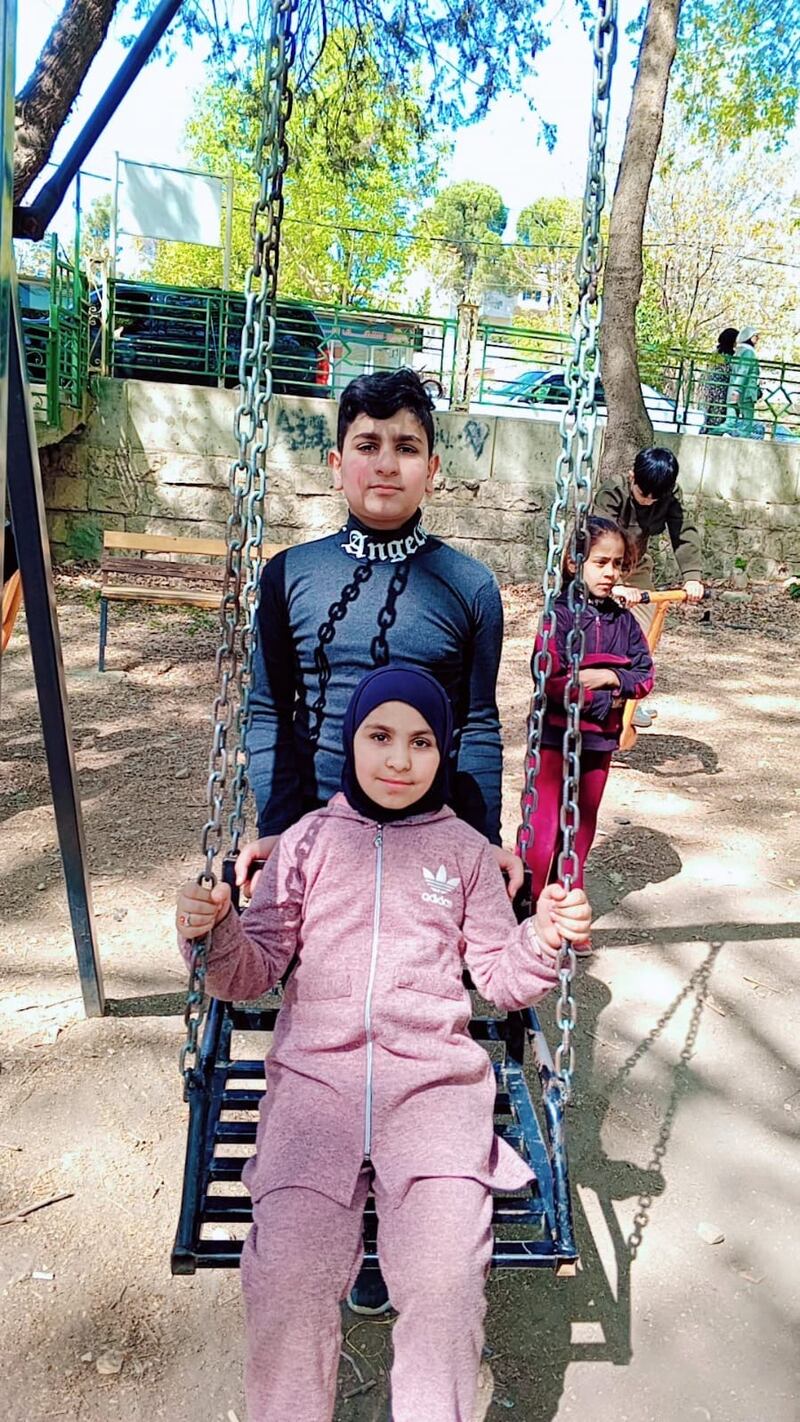
Another relative, 12-year-old Mohammed, had also come to the site of the air strike. He said he was searching for “anything” previously owned by his cousin Yahya which he could keep to remember him. He recalled also running to the site of the air strike the night it happened, describing the pitch blackness in the aftermath.
“We came quickly and I started searching ... They said everyone is dead but I didn’t believe that and was searching for anyone alive.”
Mohammed eventually found a basketball which belonged to his cousin and took it back to his bedroom to keep there.