
Main Points
- Disruptions to jet fuel supply are expected from “early May” if the war continues beyond the end of April, Ryanair chief executive Michael O’Leary has said
- US president Donald Trump has said he is considering pulling out of Nato after allies did not join his war with Iran - Trump has also claimed Iran have asked for a ceasefire
- US secretary of state Marco Rubio has said Washington could see the “finish line” in the Iran war. While Donald Trump estimated that the US will be done attacking Iran in two to three weeks
- Iran’s Revolutionary Guards said they will target US companies in the region as of April 1st in retaliation for attacks on the country, state media reported
- Oil prices were set for a record monthly rise on Tuesday
Key Reads
- Donald Trump says US could withdraw from Iran ‘whether we have a deal or not’
- Are Irish peacekeepers at risk in Lebanon?
- Listen: David McWilliams on why war in Middle East could mean rationing and recession
Nato’s Rutte to meet Trump next week
Nato’s Secretary General Mark Rutte will travel to Washington next week and meet with US president Donald Trump, The Wall Street Journal is reporting.
Rutte’s Washington visit was long planned, Nato spokeswoman Allison Hart said. But he will arrive in Washington at a pivotal time as Trump and his aides have been discussing whether the US should remain in the alliance.
It should prove to be an interesting encounter.
Can Trump pull the US out of Nato?

US president Donald Trump threatened on Wednesday to pull the United States out of Nato due to its European members’ refusal to send ships to unblock the Strait of Hormuz near Iran, as he intensified his denunciations of the military alliance.
Experts say it is not clear whether Trump could act unilaterally to leave the 77-year-old trans-Atlantic coalition, even though he frequently makes major decisions without congressional approval, some of which are held up by US courts.
Here’s a look at the issue:
What does the treaty say?
The North Atlantic Treaty Organisation, which includes European countries, the US and Canada, was formed in 1949 with the aim of countering the risk of Soviet attack and has been the cornerstone of the West’s security ever since.
Article 13 of the 1949 North Atlantic Treaty says that any party may withdraw after giving one year’s notice to the government of the US, which will then inform other governments of the “notice of denunciation”.
To date, no Nato member has ever rescinded its membership.
What does US law say?
In 2023, Congress passed, and then-president Joe Biden signed into law, legislation barring any US president from suspending, terminating, denouncing or withdrawing the United States from the treaty that established Nato unless the withdrawal is backed by a two-thirds majority in the 100-member Senate.
The legislation was introduced as an amendment to the 2024 National Defense Authorization Act, a massive annual bill setting policy for the Pentagon. The amendment’s lead sponsors were Democratic senator Tim Kaine of Virginia and then-Republican senator Marco Rubio of Florida.
Rubio, who is now both Trump’s Secretary of State and National Security Adviser, said on Tuesday that Washington would have to reexamine its relations with Nato after the Iran war, which began on February 28th with US and Israeli air strikes.
The NDAA amendment also said that no US funds could be spent on a withdrawal from Nato. - Reuters
Trump says he no longer cares about Iran’s enriched uranium
Just hours before he was scheduled to speak about the Iran war in an address on Wednesday evening in Washington, US president Donald Trump said he no longer cared about the enriched uranium that Iran still possessed because it was buried deep underground, as he continued to offer conflicting signals about how soon the war could end.
“That’s so far underground, I don’t care about that,” he said in a Reuters interview, referring to Iran’s stockpile of uranium, which was largely buried after the June 2025 strikes. His comment was sharply at odds with his argument that a main goal of the war was to prevent Iran from being able to produce an atomic bomb.
Before Trump’s address, Iranian President Masoud Pezeshkian issued his own message to the American people. “Continuing along the path of confrontation is more costly and futile than ever before,” he said in a letter.
“Exactly which of the American people’s interests are truly being served by this war?”
- The New York Times
Ireland among 15 European countries to denounce violence in Lebanon
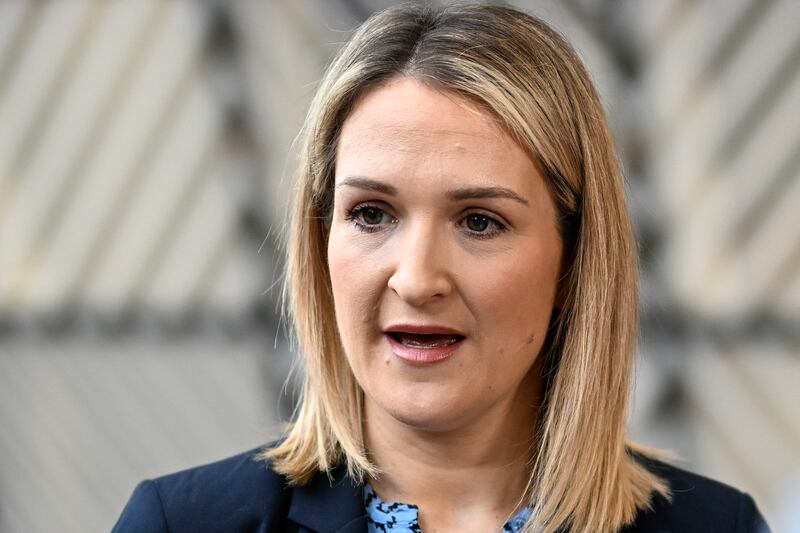
Ireland is among 15 European countries to issue a joint statement saying it is “appalled” at the escalation of violence in Lebanon.
Foreign affairs minister Helen McEntee and her counterparts in Belgium, Croatia, Estonia, Finland, Iceland, Italy, Latvia, Luxembourg, Moldova, Norway, Poland, San Marino, Spain and Sweden co-signed the letter.
The ministers said they were “appalled by the dramatic situation and renewed escalation of violence in Lebanon, where there are already 1.2 million internally displaced persons, representing some 25 per cent of the overall population”.
The letter states:
“More than 1,000 people have been killed so far, most of them civilians, including children, aid workers and journalists, according to the Health Ministry of Lebanon.
“We strongly condemn the decision by Hezbollah to attack Israel in support of Iran. Hezbollah must immediately cease all hostile actions against Israel and disarm, in line with relevant UN Security Council resolutions.
“We recall Israel’s obligation to fully abide by international humanitarian law, including the principles of distinction, proportionality and precaution and stress the importance of the protection of civilians and civilian objects. Attacks against civilians, healthcare personnel, aid workers, journalists, civilian infrastructure and facilities are unjustified and unacceptable. They must cease immediately.”
The ministers said they “support the United Nations Interim Force in Lebanon (Unifil) in the implementation of its mandate”.
“We condemn all attacks on UNIFIL’s contingents, which provoked unacceptable casualties among the peacekeepers, notably the killing of Indonesian peacekeepers. The safety and security of UN peacekeepers must be ensured at all times.
“We express our condolences to all victims, and their families, of the violence in Lebanon and in Israel.”
Read the full letter here.
Top Iranian official injured in strike on Tehran
Kamal Kharazi, a top foreign policy official and former Iranian foreign minister, has been severely injured in an airstrike on his home in Tehran earlier, according to semi-official Mehr news agency.
His wife was reportedly killed in the attack. Kharrazi, considered a moderate politician and veteran policy expert, also served as an adviser to the former supreme leader Ayatollah Ali Khamenei, who was assassinated in the first hours of the US-Israeli war on Iran.
As the BBC notes, this reported attack will raise questions about why Kharazi, head of the Strategic Council on Foreign Relations, was targeted in a system now increasingly dominated by hardliners.
According to The New York Times, two Iranian officials said Kharazi had been overseeing engagement with Pakistan for a possible meeting between Iranian officials and US vice-president JD Vance. The officials said the targeting of Kharazi is being viewed as an attempt to derail diplomacy. - The Guardian
Bahrain’s Hormuz resolution runs into fresh obstacles at UN
Bahrain’s effort to secure a UN resolution to authorise “all necessary means” to protect commercial shipping in and around the Strait of Hormuz ran into new obstacles on Wednesday, underscoring divisions over how to deal with Iran’s effective closure of the waterway that has resulted in the worst energy-supply disruption ever.
Bahrain, which took over the presidency of the 15-member UN Security Council for the month of April, had circulated a fresh version of a draft resolution that dropped a previous explicit reference to binding enforcement, hoping to overcome objections from other nations, particularly Russia and China.
But a UN diplomat said China, Russia and France raised issues with the new draft before it would have gone into final form at noon on Wednesday under a so-called silence procedure - where a resolution is adopted if no member objects. Bahrain’s UN ambassador Jamal Fares Alrowaiei told reporters the resolution still required “a lot of work”.
Major Gulf and Western powers still do not have a concrete plan to reopen the waterway, which has been effectively shut since the conflict began a month ago, sending energy prices soaring. Roughly one-fifth of the world’s oil and gas normally transits the crucial strait. - Reuters
World Bank ‘extremely concerned’ by fallout of Iran war - Paschal Donohoe
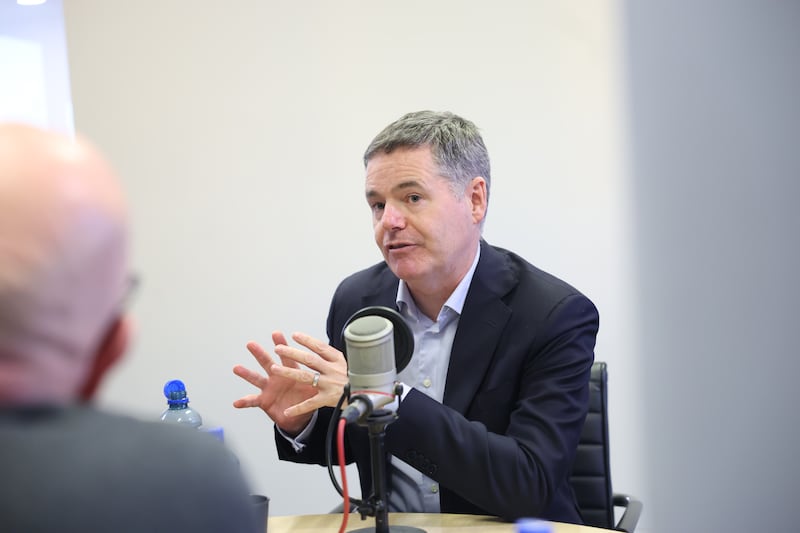
The World Bank is “extremely concerned” about the effect the war on Iran will have on inflation, jobs and food security, and is in talks with member states on how to address immediate needs in the crisis, Paschal Donohoe told AFP today.
“We are extremely concerned regarding the effect that this will have on inflation, on jobs and on food security,” he said. “That is why we will put in place responses that have a financing element and a policy element that can and will be of support.”
Donohoe, Managing Director and Chief Knowledge Officer of the World Bank Group, made the comments as his organisation announced a new partnership with the International Monetary Fund and International Energy Agency to coordinate aid responses to the war.
Donohoe flagged that countries in Asia and Africa were particularly vulnerable to the energy, price and supply-side shocks of the crisis.
“At the moment, we are consulting with many governments and countries in relation to what their needs will be, and I would anticipate within the next number of weeks that will become far clearer,” he said.
Trump says King Charles would have taken ‘different stand’ than Starmer on Iran
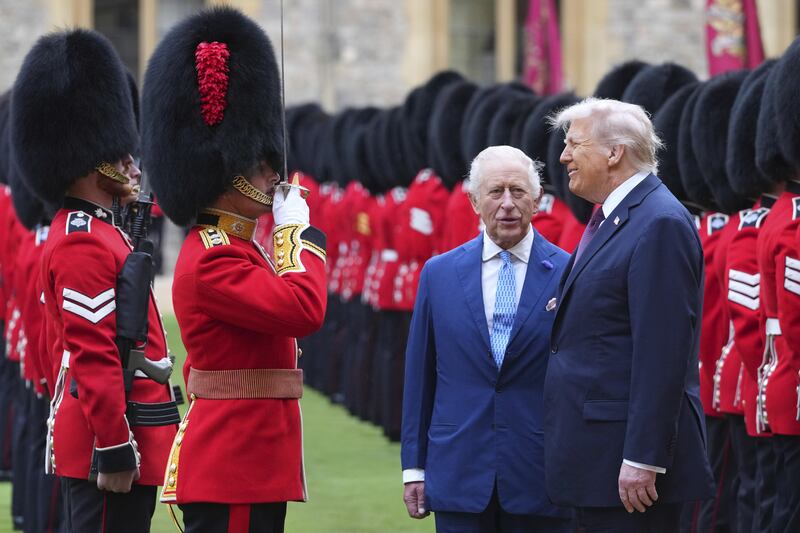
Donald Trump has appeared to suggest that Britain’s King Charles would have backed him over the war in Iran, saying the monarch would have taken a “very different stand” to British prime minister Keir Starmer.
Charles and Camilla’s state visit to the US was confirmed to be going ahead this week despite calls for it to be postponed or even cancelled because of the conflict in the Middle East.
The US president was asked about the King’s visit in an interview with The Telegraph.
“I like him. I always liked him as a prince. He’s a good man, a great representative for your country,” Trump said.
He added: “I think he would have taken a very different stand (on the war in Iran) but he doesn’t do that. I mean, he’s a great gentleman.”
Ties between Starmer and the US leader are under strain from Trump’s repeated criticism of allies for refusing to join the military action.
The US president told the newspaper that Charles had “nothing to do with this”, referring to the breakdown in US-UK relations over the Iran war. – Press Association
Iran’s president rejects perception of Iran as a threat, in open letter addressed to American people

Iran’s president Masoud Pezeshkian has rejected portrayals of Iran as a security threat, and described the perception of it as such as a product of the “political and economic whims of the powerful”.
In an open letter addressed to the people of the United States and carried by state media outlet Press TV, he argued that Iran’s modern record is defensive.
“Iran, by this very name, character, and identity – is one of the oldest continuous civilisations in human history,” he wrote.
“Iran has never, in its modern history, chosen the path of aggression, expansion, colonialism, or domination ... Iran has never initiated a war. Yet it has resolutely and bravely repelled those who have attacked it.”
He continued: “Portraying Iran as a threat is neither consistent with historical reality nor with present-day observable facts. Such a perception is the product of political and economic whims of the powerful, the need to manufacture an enemy in order to justify pressure, maintain military dominance, sustain the arms industry, and control strategic markets.” – The Guardian
Why reopening the Strait of Hormuz matters for the US economy
US president Donald Trump has suggested that reopening of the Strait of Hormuz was a problem for other countries to resolve.
The United States produces “plenty” of its own energy to use and sell, Trump wrote on social media on Tuesday, addressing countries that are having trouble securing jet fuel because of Iran’s blockade on the strait that carries a quarter of the world’s oil.
These nations, he wrote, should “build up some delayed courage, go to the Strait, and just TAKE IT. You’ll have to start learning how to fight for yourself, the U.S.A. won’t be there to help you any more, just like you weren’t there for us.”
He later told CBS News that the US military was “not yet” ready to pull back from the effort to reopen the strait, while reinforcing that other countries were “going to have to come in and do their own work.” Early on Wednesday he posted that he would consider a ceasefire only when the waterway was “open, free, and clear”.
Although the United States imports very little oil and gas via Hormuz, the interconnectedness of global energy markets means that any restrictions on traffic through the waterway creates economic shocks felt around the world.
Economists warn the effects on inflation and growth, in the United States and elsewhere, will compound if disruptions persist, making the reopening of the strait a key issue for the global economy. – Read the full article in The New York Times.
French navy chief says China will have to engage more in Strait of Hormuz discussion

China will at one point have to engage more directly on how to restore oil traffic flows in the Strait of Hormuz because the number of vessels it has going through is probably insufficient, France’s navy chief said on Wednesday.
“We have not seen China’s navy step in to reopen the strait. On the other hand, there is direct political dialogue between Chinese and Iranian authorities to ensure that a certain number of vessels can pass. Will that be enough to restore normal traffic flows? I don’t believe so,” admiral Nicolas Vaujour told the War & Peace security conference in Paris.
“As a result, China will probably have to engage more directly in the debate and show its impatience with the fact that the strait remains closed.”
Vaujour said France was working to bring a number of countries around the table at a political level first to determine the conditions under which the strait could be reopened in a lasting way.
Militaries would ultimately be needed to monitor that reopening and they were looking at the model of the previous EU-led Agenor mission that operated in the strait.
He said militaries were also assessing whether mines had been laid and would need to be cleared.
“This is obviously not a question for France alone. It concerns all partner countries, Gulf states, the United States and other European countries as well. But it is clearly an issue we are working on, should mining be confirmed, which, as of today, has not been established,” he said. – Reuters
US state department offers $3m reward for information on attacks on Iraq facilities
The US state department is offering a reward of up to $3 million (about €2.6 million) for information on attacks on its diplomatic facilities in Iraq.
It comes after the US embassy in Baghdad, the Baghdad Diplomatic Support Centre and the US consulate General in Erbil, in Iraq’s semi-autonomous Kurdish region, have faced repeated attacks since the US-Israeli war on Iran began over a month ago.
“If you have information on Iranian-aligned terrorist militia groups or others responsible for these attacks, send us your tips today,” the department’s Rewards for Justice programme said in a post on X.
“Your information could make you eligible for relocation and a reward.”
This is the latest of a number of bounties for information the department has issued since the start of the war, including on top figures in the Iranian leadership. – The Guardian
Iranian president to address US public in letter
Iranian official Mehdi Tabatabai has said an important letter from president Masoud Pezeshkian will be released to the American public in the coming hours. Tabatabai posted about the letter on social media.
No further details were immediately available. – Reuters
Finnish president tells Trump a ‘more European Nato’ is taking shape
Finnish president Alexander Stubb told US president Donald Trump in a phone call on Wednesday that “a more European Nato” was taking shape and that Europe was “shouldering responsibility”, Stubb’s office said in an emailed statement.
Trump told Reuters on Wednesday he intended to say in an address to the nation later that he was considering withdrawing the US from the Nato military alliance.
“Constructive discussion and exchange of ideas on Nato, Ukraine and Iran. Problems are there to be solved, pragmatically,” Stubb wrote in a social media post.
A more European Nato will be on the agenda at the military alliance’s annual summit in Ankara on July 7th and 8th, Stubb’s office said. – Reuters
Placing US troops in Middle East hotels may violate laws of war
The US military’s decision to move troops away from bases under Iranian attack to hotels and office spaces in civilian areas may amount to violations of international humanitarian law and the US military’s own laws of war, human rights officials and experts say.
The constellation of US bases in the Gulf region has been essential to the US military’s execution of the air war over Iran. But commanders have relocated many of their troops because the sprawling compounds did not have adequate defences to protect from Iranian ballistic missiles and drones, US defence officials said.
The move illustrates the US military’s lack of preparedness for a war that the Trump administration started on its own terms, military experts said.
“It is unconscionable that US forces would knowingly put civilians at risk by leaving their bases and moving to hotels in the densely populated city centres,” said Brian Castner, a crisis researcher at Amnesty International. “The commanders who ordered these relocations, not out of the conflict area but right into the heart of the civilian populations, should be investigated for violating US laws of war.” – Read the full report in The New York Times.
Families of UK citizens detained in UAE express frustration at British government
The families of UK citizens held in the United Arab Emirates over allegations they shared images of the conflict with Iran have voiced frustration at the British government’s failure to help.
Several British citizens are among more than 100 foreign nationals who have been detained under draconian Emirate rules that outlaw publishing or sharing material that could “disturb public security”.
UK government ministers have refused to condemn the arrests, amid claims they are too fearful of offending the Emirates because of their economic clout.
The campaign group Dubai Watch, which is supporting nine British detainees, said their identities could not be revealed for fear of reprisals. But it has shown The Guardian anonymised correspondence from their increasingly anxious families.
A mother whose daughter is being held wrote: “This experience is exhausting, mentally and emotionally.” She described reading media reports about the continuing conflict in which Iran has retaliated against US and Israelis strikes by firing drones and missiles against its Gulf neighbours, including the UAE. She said: “I have just read another article, and quite frankly I could do one purely on the inadequacies and sycophantic responses from this [UK] embassy.” – The Guardian
What has happened so far today?
- US president Donald Trump claimed that Iran has asked for a ceasefire, some five weeks after the US and Israel attacked Iran and started the war.
- Iran’s foreign minister, Abbas Araghchi acknowledged receiving direct messages from US Middle East envoy Steve Witkoff but the country’s foreign ministry later said Trump’s ceasefire claim was “false and baseless”.
- Relations between the US and Nato allies have continued to be strained as Trump said he is considering pulling the US out of the defensive pact over the refusal of European members to send ships to unblock the Strait of Hormuz.
- The Israel Defense Forces said it killed the commander of Hizbullah’s southern front unit after a strike in Beirut on Tuesday. At least seven people were killed and 24 wounded in two Israeli strikes in the Beirut area, the Lebanese health ministry said earlier in the day.
- Houthi forces in Yemen have claimed responsibility for a missile attack on southern Israel this morning, saying it was a joint operation with Iran and Hizbullah.
- Iran’s Islamic Revolutionary Guard Corps acknowledged an attack on an oil tanker in Qatari waters earlier in the day, claiming it had ties to Israel.
- A large number of other aerial attacks have been reported in various parts of the Middle East on Wednesday, including Kuwait, Bahrain, Qatar, Israel, Iran, Lebanon and the United Arab Emirates.
- British prime minister Keir Starmer said a meeting of up to 35 nations aimed at reopening the Strait of Hormuz, the shipping lane vital to maintain global fuel and oil supplies, is to be held later this week.
- Tánaiste Simon Harris said the economic and humanitarian impact from a further three weeks of war would be “extraordinarily concerning”.
- Disruptions to jet fuel supply are expected from “early May” if the war continues beyond the end of April, Ryanair chief executive Michael O’Leary said.
Trump to address US on Iran war
US president Donald Trump will address the nation on the Iran war on Wednesday, his first prime-time speech since the conflict began.
The White House has given no details on the address, but it comes hours after Trump claimed Iran had sought a pause in hostilities – even as he set conditions that underscored the uncertainty surrounding the war’s trajectory, AFP reported.
Iran’s president “has just asked the United States of America for a CEASEFIRE!” Trump wrote on his Truth Social platform. “We will consider when Hormuz Strait is open, free, and clear. Until then, we are blasting Iran into oblivion or, as they say, back to the Stone Ages!!!”
There was no independent confirmation of Trump’s claim.
Trump is set to speak at roughly 2am Irish time on Thursday, more than a month after the United States and Israel launched their assault on Iran – a delay that contrasts with the early addresses presidents typically deliver at the outset of major conflicts. – The Guardian
Trump’s statement on ceasefire ‘false and baseless’ – Iran’s foreign ministry
Iran’s foreign ministry spokesperson has said Trump’s statement on Iran requesting a ceasefire was “false and baseless”, Iranian state TV reported on Wednesday. – Reuters
Trump’s threat to leave Nato scales up tensions with allies
Tensions between the United States and Nato allies flared up as Donald Trump said he was considering pulling the US out of the military alliance due to its European members’ refusal to send ships to unblock the Strait of Hormuz.
Trump told Reuters on Wednesday that he was “absolutely” considering withdrawing the US from Nato, and that he would discuss his “disgust” with the alliance during an address on Wednesday night.
Trump’s remarks came after US defence secretary Pete Hegseth declined to reaffirm the US commitment to Nato’s collective defence, a concept that lies at the heart of the alliance.
Asked on Tuesday if the US was still committed to Nato’s collective defence, Hegseth said: “As far as Nato is concerned, that’s a decision that will be left to the president. But I’ll just say a lot has been laid bare.”
“You don’t have much of an alliance if you have countries that are not willing to stand with you when you need them.”
France was among the first European Nato members to react to similar comments by Trump to Britain’s Daily Telegraph published earlier in the day, in which Trump called Nato a “paper tiger” and said he was considering exiting the alliance after allies failed to back US military action against Iran.
“Let me recall what Nato is,” French junior army minister Alice Rufo said, though without directly addressing Trump’s threat to leave Nato.
“It is a military alliance concerned with the security of territories in the Euro-Atlantic area. It is not intended to carry out an operation in the Strait of Hormuz, which is not in accordance with international law.”
Poland’s defence minister Wladyslaw Kosiniak-Kamysz, meanwhile, called for calm.
“I hope that amid the emotions surrounding the president of the United States today, a moment of calm will come,” he said. “And why? Because there is no Nato without the United States, and it is in our interest that this calm comes. But there is also no American power without Nato.”
A German government spokesperson, when asked about Trump’s comment, said Germany remained committed to Nato.
“This isn’t the first time he’s done this, and since it’s a recurring phenomenon, you can probably judge the consequences for yourself,” the spokesperson told a regular government press conference, speaking of Trump. – Reuters
‘Very good chance’ Iran will make a deal – Trump
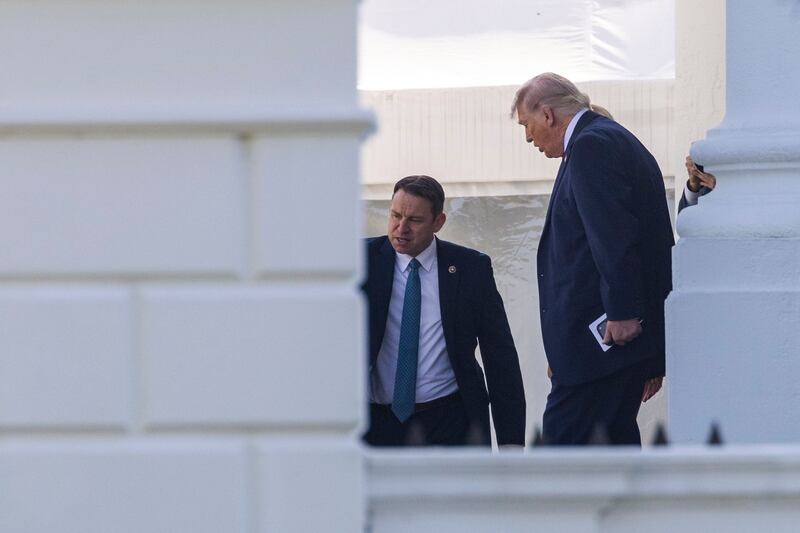
In a phone interview with Reuters, Trump expressed his hope for a deal with the new leaders in Iran after air strikes killed supreme leader Ali Khamenei.
“We have had full regime change,” he said.
“I’m dealing with a very good chance that we’ll make a deal because they don’t want to be blasted any more.”
“I didn’t need regime change, but we got it because of the casualties of war. We got it. So we have regime change and the big thing we have is they’re not going to have a nuclear weapon,” said Trump, adding: “Nor do they want one.”
As for the enriched uranium still possessed by Iran, Trump said: “That’s so far underground, I don’t care about that.”
“We’ll always be watching it by satellite,” he said.
Iran claims Qatari oil tanker targeted on Wednesday had ties to Israel
Iran’s Islamic Revolutionary Guard Corps (IRGC) has acknowledged the attack on an oil tanker in Qatari waters, claiming it had ties to Israel.
Qatar was targeted by three Iranian cruise missiles on Wednesday, one of which struck an oil tanker leased to QatarEnergy in northern waters.
The crew of 21 people were evacuated from the tanker and no injuries have been reported, Qatar’s ministry of defence said earlier.
In a statement carried by Iranian state media, the IRGC said an oil tanker belonging to the “Zionist regime with the trade name ’Aqua 1’” in the Gulf “was precisely targeted”.
Ukrainian drone interceptors and military expertise are delivering results in the Middle East, Volodymyr Zelenskiy said on Wednesday.
Zelenskiy said Ukraine was already co-operating with Saudi Arabia, the United Arab Emirates, Qatar, and Jordan, and was also in contact with Bahrain, Kuwait, and Iraq.
The government team was also in talks on potential engagements with Turkey and several other countries, he said. – Reuters
US to leave Iran ‘pretty quickly’ and return if needed, Trump says
The United States will be “out of Iran pretty quickly” and could return for “spot hits” if needed, Donald Trump told Reuters on Wednesday, hours before he was scheduled to make a prime time address to the nation.
In his speech, Trump said he would express his disgust with Nato for what he considers the alliance’s lack of support for US objectives in Iran. He said he is “absolutely” considering an attempt to withdraw the US from Nato.
Asked when the United States would consider the Iran war over, Trump said: “I can’t tell you exactly ... we’re going to be out pretty quickly.”
He said US action has ensured Iran will not have a nuclear weapon.
“They won’t have a nuclear weapon because they are incapable of that now, and then I’ll leave, and I’ll take everybody with me, and if we have to we’ll come back to do spot hits,” Trump said. – Reuters
Ryanair chief has his ‘finger on the pulse’ on jet fuel disruptions – Minister for Transport
Minister for Transport Darragh O’Brien has said Ryanair chief executive Michael O’Leary has his “finger on the pulse” regarding disruptions to jet fuel supplies.
Earlier on Wednesday, O’Leary said disruptions to jet fuel supply are expected from “early May” if the war continues beyond the end of April.
The Minister said the issue was discussed at a meeting of EU energy ministers, noting that a “sizeable portion” of jet fuel comes through the Strait of Hormuz.
“If this doesn’t cease soon, there will be impacts on aviation,” he said.
“Those concerns have been raised with me, and it was something that was discussed yesterday at the Energy Council that I attended virtually yesterday.
“So the EU are acutely aware of it, and I am too. Aviation is critically important to Ireland.”
He said European Commission president Ursula von der Leyen is to unveil a package on energy measures next Wednesday, which would include measures on aviation.
O’Brien said ensuring gas supplies were secure, purchasing fuel in bulk, energy storage options and affordability would be examined in advance of the unveiling of EU measures.
“Costs (and) affordability has to be central of this and I raised that very point myself yesterday,” he said.
“In everything we’re discussing, we’ve got to protect jobs, protect the people’s livelihoods, and protect people as best we can. We’re not going to be able to soften every increase in costs.”
He added: “It’s interesting to see that the level of intervention that we have made is one of the most significant in Europe so far, but we have said that that is our first intervention.
“We have flexibility in that to intervene again should we need to.” – PA
Trump claims Iran has asked for a ceasefire
US president Donald Trump has claimed that Iran has asked for a ceasefire.
In a post on Truth Social, Trump said he will consider a ceasefire “when Hormuz Strait is open, free, and clear”.
“Until then, we are blasting Iran into oblivion or, as they say, back to the Stone Ages!!!” he wrote.
His post, in full:
“Iran’s New Regime President, much less Radicalized and far more intelligent than his predecessors, has just asked the United States of America for a CEASEFIRE! We will consider when Hormuz Strait is open, free, and clear. Until then, we are blasting Iran into oblivion or, as they say, back to the Stone Ages!!! President DJT”
Iranian authorities warned Bulgaria not to let US use airports
Iranian authorities warned Nato member Bulgaria last month not to let the US use its airports for planes participating in military operations in Iran, the foreign ministry said on Wednesday.
Earlier on Wednesday, Stanislav Balabanov, a deputy with the There is Such a People party, showed a note from March 18th in which the Iranian government protested against US military refuelling planes parked at Bulgaria’s Vasil Levski airport.
In the note, Iran said it “reserves the right to take all necessary measures to protect its sovereignty, security and national interests in accordance with international law”.
Later on Wednesday, in a statement to reporters, Deputy foreign minister Marin Raikov confirmed the note and said: “Bulgaria is not at war.”
“No combat aircraft are being loaded over Bulgaria to participate in military operations,” he told reporters. “We maintain intact diplomatic relations with the Iranian side.” – Reuters
UAE bars entry to some Iranians
Some Iranian nationals are now barred from entering or transiting through the United Arab Emirates, according to the country’s flagship airlines, as the regional war enters its second month.
Exemptions will apply to long-term “Golden Visa” holders, athletes, bank executives, doctors, families, engineers, investors, senior professionals, traders, and children of female UAE nationals or spouses of citizens, according to Dubai’s Emirates Airlines.
A notification on Abu Dhabi’s Etihad Airways PJSC’s website indicated that the company had instituted similar rules.
The move is significant as the UAE hosts an estimated 500,000 Iranian expatriates and remains a key trading partner to Tehran. The airlines and the UAE ministry of foreign affairs did not respond to requests for comment.
The Gulf nation has borne a large part of Iran’s attacks on Gulf states, which began after Israel and the US struck Tehran on February 28th.
The UAE’s defence ministry said on Wednesday its air defences have engaged 438 ballistic missiles, 19 cruise missiles and more than 2,000 drones since the conflict began. Eleven people have died from the strikes, which at times have targeted civilian sites such as airports and energy infrastructure. – Bloomberg
Iranian supreme leader praises Hizbullah
Iran’s supreme leader, Mojtaba Khamenei, has issued a message of gratitude to Hizbullah’s secretary general, Naim Qassem.
In a statement carried by Iranian media, he praised Hizbullah for its “perseverance, steadfastness and patience” against “the most ruthless enemies of the Islamic world”, as he vowed Iran will continue to support groups fighting US and Israeli forces across the Middle East.
Khamenei has not been seen since the war began on February 28th and has only issued written statements since becoming Iran’s new supreme leader.
US and Israeli officials believe he was wounded in the attack that killed six of his family members, including his father, Ayatollah Ali Khamenei, and remains in hiding. – The Guardian
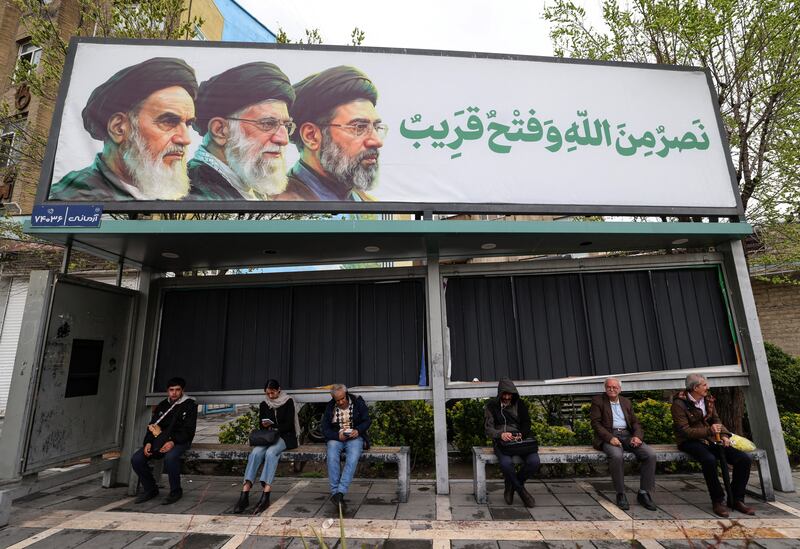
IFA to meet Tánaiste as excise cuts ‘simply nowhere near enough’
Representatives of the Irish Farmers’ Association (IFA) are to meet Tánaiste and Minister for Finance Simon Harris on Wednesday evening to discuss the “crisis” caused by the spike in agricultural diesel costs in recent weeks.
IFA president Francie Gorman said the association is calling on the Government to review last week’s cuts to excise duty and to “properly address fuel costs for farmers and agri contractors”.
“The excise duty reductions announced did very little to lower the cost, with a temporary five cent reduction for the sector.
“This is simply nowhere near enough to address the issue for the farming sector as agri diesel has increased by over 50 per cent in recent weeks. The five cent reduction amounts to a 3 per cent price reduction,” he said.
Gorman said the inevitable result of this “current fuel shock” will be economic inflation, adding that food is “massively exposed to the cost of fuel and energy”.
“Consumers need to be aware that carbon tax is contributing to higher food costs,” he said.
Wednesday’s meeting is also due to be attended by representatives of Farm and Forestry Contractors in Ireland (FCI) and Minister for Agriculture Martin Heydon.
Meeting of 35 nations to be convened on reopening Strait of Hormuz
A meeting of up to 35 nations aimed at reopening the Strait of Hormuz is to be held later this week, British prime minister Keir Starmer has announced.
The meeting will be hosted by British foreign secretary Yvette Cooper and will assess “all viable diplomatic and political measures that we can take to restore freedom of navigation, guarantee the safety of trapped ships and seafarers, and resume the movement of vital commodities”.
Military planners will be convened following that meeting to “look at how we can marshal our capabilities” and keep the Strait of Hormuz clear after the fighting ends, Starmer said.
Oil supply disruptions from the Middle East will rise in April and will hit Europe as supplies dwindle due to the closure of the Strait of Hormuz, head of the International Energy Agency Fatih Birol said on Wednesday.
“The loss of oil in April will be twice of oil loss in March, on top of the loss of LNG.
“The biggest problem today is the lack of jet fuel and diesel. We are seeing that in Asia, but soon, I think, in April or May, it would come to Europe,” Birol told a podcast with Nicolai Tangen, the head of Norway’s sovereign wealth fund. – Reuters
Oil falls and stocks surge on hope of early end to Iran conflict
Stocks soared, bonds rallied and the dollar wallowed on Wednesday, as hopes of a de-escalation in the Iran conflict fuelled the biggest rebound in regional equities in more than three years.
Oil prices dropped after US president Donald Trump again signalled the potential end to the Iran war that’s roiled markets, even as the Strait of Hormuz remains largely closed and more US troops arrived in the region.
Read more here.
‘Central figure’ in Hizbullah killed, IDF says
The Israel Defense Forces (IDF) has said it has killed the commander of Hizbullah’s southern front unit after a strike in Beirut on Tuesday.
In a statement on Wednesday, the IDF said it “eliminated” Yusuf Ismail Hashem, who it described as a senior commander with more than 40 years of experience and a “central figure” in Hizbullah.
“His elimination constitutes a significant blow to Hizbullah’s ability to carry out terrorist operations against Israeli civilians and to manage ongoing combat against IDF soldiers in southern Lebanon,” the IDF said.
Closer partnership with EU allies required as world continues down ‘volatile path’ – Starmer

Britain’s long-term national interest requires a closer security and economic partnership with the European Union as the world continues down a “volatile path”, British prime minister Keir Starmer has said.
Speaking at Downing Street on Wednesday, Starmer said Brexit “did deep damage to our economy”, adding that opportunities with the EU are “too big to ignore”.
“We will continue to stand up for the British national interest, and we will continue to do what we must to guide our country calmly through this storm.
“However, it is increasingly clear that as the world continues down this volatile path, our long-term national interest requires closer partnership with our allies in Europe and with the European Union,” he said
“As the chancellor has rightly pointed out, Brexit did deep damage to our economy, and the opportunities to strengthen our security and cut the cost of living are simply too big to ignore.
“In the coming weeks, we will announce a new summit with our EU partners, and I can tell you that at that summit, the UK will not just ratify existing commitments made at last year’s summit.
“We want to be more ambitious. Closer economic co-operation, closer security co-operation, a partnership that recognises our shared values, our shared interest and our shared future.
“A partnership for the dangerous world that we must navigate together, a world where this government will be guided at all times by the interests of the British people.” – PA
In the UK, British prime minister Keir Starmer has warned it is now clear the impact of the Iran war will “affect the future of our country” but insisted that “no matter how fierce this storm, we are well-placed to weather it.”
Speaking at a press conference in Downing Street, Starmer said: “We have a long-term plan to emerge from it a stronger a more secure nation.”
He promised the UK will not be dragged into the conflict in the Middle East.
“I know that this is causing huge concern. People turn on their televisions, they look at their screens, they see explosions, infrastructure blown up, aggressive rhetoric.
“They worry that the UK will be dragged into this. We won’t.” – PA
The European Commission is working on “advice and maybe a toolkit” containing “sensible ideas that might be offered to the public”, according to Tánaiste and Minister for Finance Simon Harris.
The advice is expected to be made available next week, Harris told reporters on Wednesday.
Asked if the Government would be issuing advice to citizens to work from home, he said “the level of Government advice” would depend on how long the war goes on for “because every day it goes on, the energy supply crisis worsens”.
He said measures, like those taken during the Ukrainian crisis, where lights on public buildings were not turned on at night, are “under review”.
Impact of further three weeks of war would be ‘extraordinarily concerning’ – Tánaiste

The world does not have another three weeks for the de-escalation of the Iran war, Tánaiste Simon Harris has said.
On Wednesday morning, both Harris and Taoiseach Micheál Martin responded to comments made by US president Donald Trump overnight, suggesting the war could be over in two to three weeks.
Speaking to reporters outside Government Buildings, Harris said: “The war is currently ongoing for about 33 days, look at the scale of damage that has been done to the world’s energy infrastructure in that period of time.
“We don’t have another 21 days, or thereabouts, to see de-escalation.
“We’re already living through the largest energy crisis in the history of the world, bigger than the last three combined.”
He added two to three weeks “might sound like a relatively short period of time”, but the economic and humanitarian impact would be “extraordinarily concerning”.
Martin said two to three weeks was “too long”, adding: “There is simply too much volatility around this war.”
He said the Government is pressing for “as early an end to this as possible”.
“The sooner this ends, I think, the sooner we see de-escalation across the region, then the greater the prospect of restoring some degree of normality, although it will take a considerable degree of time.”

Asked if they were concerned about reports that prices at petrol pumps are rising again, despite last week’s cut to excise duty, Harris said he believed the cuts were passed on to consumers.
“Diesel and petrol prices are still below where they were in advance of the excise cuts.
“So imagine how much higher they would have been had those measures not been put in place, so I do believe they were the right measures to take,” he said.
The Taoiseach said the situation is “very, very volatile”, adding that “the only certain way” to stop prices rising is “to end the war”. – PA
British prime minister Keir Starmer said he would act in the country’s interest, whatever the “noise”, when asked about Trump’s comments.
“Whatever the pressure on me and others, whatever the noise, I’m going to act in the British national interest in the decisions that I make,” Starmer told reporters on Wednesday. – Reuters
Trump says he is considering pulling out of Nato
US president Donald Trump has said he is considering pulling out of Nato after allies did not join his war with Iran.
Trump also claimed the UK does not have a navy and that its aircraft carriers “didn’t work”.
Asked whether he would reconsider the US’s membership of Nato, Trump told the Daily Telegraph: “Oh yes, I would say (it’s) beyond reconsideration.”
“I was never swayed by Nato. I always knew they were a paper tiger, and Putin knows that too, by the way.”
Trump rebuked British prime minister Keir Starmer for refusing to get involved in the US-Israeli war against Iran, and suggested the Royal Navy was not ready.
“You don’t even have a navy. You’re too old and had aircraft carriers that didn’t work,” he said.
Asked if Starmer should spend more on defence, Trump said: “I’m not going to tell him what to do. He can do whatever he wants. It doesn’t matter. All Starmer wants is costly windmills that are driving your energy prices through the roof.” – PA
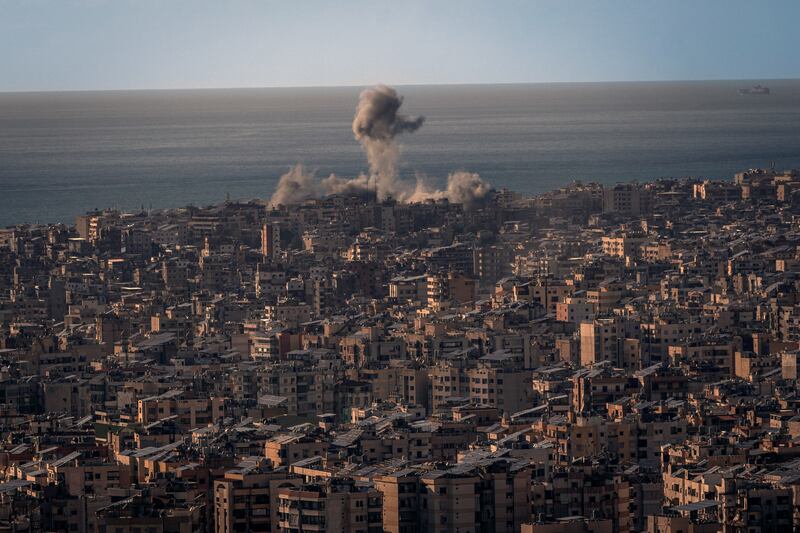
Some photos are coming in from Beirut, showing the aftermath of overnight Israeli air strikes.

At least seven people were killed and 24 wounded in two Israeli strikes in the Beirut area, the Lebanese health ministry said on Wednesday.
The attacks hit vehicles in Beirut’s southern outskirts and in an area just south of the capital.
The strikes are the latest in an escalating Israeli offensive in Lebanon that has killed at least 1,200 people and displaced 1.2 million others.
Lebanon was pulled into the war in the Middle East when Hizbullah fired rockets at Israel in solidarity with Tehran, two days after Iran was attacked by Israel and the United States.
Hizbullah’s attack prompted a new Israeli ground and air offensive.
Israel’s military said on Wednesday it carried out two separate strikes targeting a senior Hizbullah commander and another senior member of the Iran-aligned group in the Beirut area, but it did not identify them or say whether they had been killed. – Reuters

Albanese says months ahead ‘may not be easy’, urges Australians to save fuel
Australian prime minister Anthony Albanese has warned the months ahead “may not be easy” because of the oil crisis caused by the Middle East war.
“No government can promise to eliminate the pressures that this war is causing,” he said in a rare national address. “I can promise we will do everything we can to protect Australia from the worst of it.”
He urged Australians not to panic buy fuel and to trade cars for public transport where possible.
“If you’re hitting the road, don’t take more fuel than you need, just fill up like you normally would. Think of others in your community, in the bush and in critical industries,” he said. – The Guardian
The National Bank of Kuwait said it is closing its headquarters for two days as the Gulf nation continues to face Iranian attacks.
The bank’s headquarters in the capital Kuwait City and a branch in Subhan, which is close to the airport, were closed “due to current developments and in the interest of everyone’s safety and business continuity”, it said in a statement.
It follows reports of an Iranian drone attack at Kuwait airport that struck fuel tanks at the site, triggering a large fire. – The Guardian
The Israeli military said a strike in central Iran killed a senior engineering officer of Iran’s Islamic Revolutionary Guard Corps (IRGC) Quds Force.
The Israel Defense Forces (IDF) said Mahdi Vafaei, chief of engineering in the IRGC Quds Force’s Lebanon Corps, was killed in the strike in Mahallat on Tuesday.
The IDF claimed Vafaei led the “Iranian terror regime’s efforts to establish underground terrorist infrastructure sites for Hizbullah and the Assad regime in Syria.
It said he “advanced underground projects across Lebanon and Syria” for two decades, including “dozens of underground projects in Lebanon that were used to store advanced weaponry”.
Disruptions to jet fuel supply expected from early May – Ryanair chief

Disruptions to jet fuel supply are expected from “early May” if the war continues beyond the end of April, Ryanair chief executive Michael O’Leary has said.
“The fuel companies are happy there won’t any disruption until early May. But if the war continues, we do run the risk of supply disruptions in Europe in May and June,” he said, speaking on Sky News on Wednesday.
“Obviously, we hope the war will finish sooner than that and that the risk to supply will be eliminated.”
O’Leary said Ryanair was “reasonably well hedged” on 80 per cent of its fuel but added it is paying almost double (at around $150 a barrel) on the other 20 per cent.
He said if the war ends and the Strait of Hormuz reopens by the end of this month, “then there’s no risk to supply”.
“Like everybody else in the industry, we hope that this war will end sooner rather than later,” he said.
Oil tanker in Qatar struck by Iranian missile
Qatar was targeted by three Iranian cruise missiles on Wednesday, Qatar’s ministry of defence has confirmed.
Its armed forces intercepted two of the missiles, while the third struck an oil tanker leased to QatarEnergy in northern waters.
The crew of 21 people were evacuated from the tanker and no injuries have been reported, the ministry said.
QatarEnergy, the world’s largest producer of liquefied natural gas, said there is “no impact on the environment as a result of this incident”.
Houthis claim responsibility for missile attack on Israel
Houthi forces in Yemen have claimed responsibility for a missile attack on southern Israel this morning, saying it was a joint operation with Iran and Hizbullah.
In a statement, the Houthi movement said it carried out its third missile attack in the conflict in conjunction with Iran and Lebanon’s Hizbullah.
The Houthis targeted “sensitive Israeli enemy targets” with a “barrage of ballistic missiles”, the Tehran-backed group said.
It threatened “further escalation” if Israel continues to attack Lebanon, Iran, Iraq, the occupied West Bank and Gaza.
The statement comes about three hours after the Israeli military said a ballistic missile launched by the Houthis in Yemen at southern Israel was intercepted. No injuries were reported. – The Guardian
Girl (11) in serious condition and 12 others wounded in central Israel after missile attack

Israel’s emergency medical service said an 11-year-old girl was in serious condition after a missile attack the military blamed on Iran and police said caused damage at several sites, reports AFP.
The military said it had identified missiles launched from Iran for the first time in about 20 hours, with air raid sirens activated across central Israel.
Another warning of incoming missile fire came less than an hour later, prompting alerts across large parts of northern and central Israel.
The Magen David Adom emergency medical service said an 11-year-old girl was seriously wounded by shrapnel in central Israel as a result of the first launch.
Spokesman Zaki Heller told Israeli TV that at least 13 others were also wounded, including a 13-year-old boy and a woman (36) in moderate condition, all from the same impact site.
Israeli media said cluster munitions, which explode mid-air and scatter bomblets across a wide area, were used in the attack. Iran and Israel have previously accused each other of using cluster bombs.
IDF working to intercept missiles from Iran
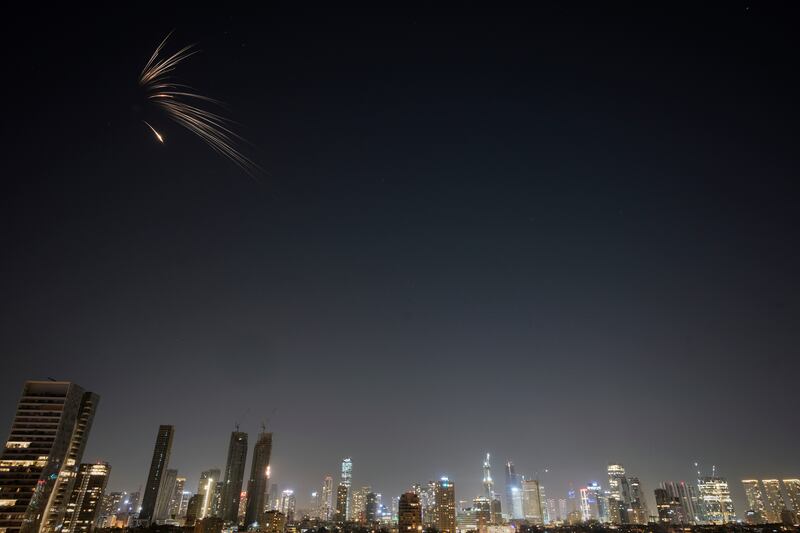
A number of missiles have been launched from Iran towards Israel on Wednesday morning, according to the Israel Defense Forces (IDF).
In several alerts posted on social media, the IDF warned those living in affected areas to enter a “protected space” and remain there until further notice.
It said defensive systems are operating to intercept the missiles.
One person killed by drone debris in UAE
One person has been killed after debris from an intercepted drone fell on a farm in Fujairah in the United Arab Emirates, state media said. The individual killed was a Bangladeshi national. – The Guardian
Strikes reported across Middle East as war rages
Large numbers of aerial attacks have been reported in various parts of the Middle East on Wednesday, with drones hitting fuel tanks at Kuwait’s international airport causing a big blaze and authorities in Bahrain reporting a fire at an undisclosed company facility from an Iranian assault.
A tanker was hit by an unknown projectile near the Qatari capital Doha causing damage to the hull at the waterline, the United Kingdom Maritime Trade Operations said, adding the crew were safe.
Explosions were heard in multiple areas of Tehran early Wednesday after US-Israeli air attacks, Iranian state media reported, adding that its air defences were activated.
Israel’s military said early on Wednesday it had carried out a “wide-scale wave of strikes” on Tehran. Separately, it said an Israeli military drone had been downed by a surface-to-air missile during operational activity in southern Lebanon overnight on Tuesday.
Shahid Haghani Port, Iran’s largest passenger terminal located in Bandar Abbas port on the Gulf, was hit by an overnight air strike but there were no casualties, the deputy governor Ahmad Nafisi told state media, calling it a “criminal” attack against civilian infrastructure.
Israel said early on Wednesday it had also struck a plant supplying Iran with fentanyl, a powerful synthetic opioid, to allegedly use in a chemical weapons programme.

Iran acknowledged the strike on Tofigh Daru factory, but insisted it only supplied “hospital drugs” used in medical operations. The strike happened on Tuesday, both the Israelis and the Iranians said.
Gulf countries, some home to US bases, have been repeatedly fired on by Tehran during the US-Israeli war, with concerns mounting about Iran’s closure of the Strait of Hormuz and ability to use the vital waterway, a conduit for a fifth of global oil and liquefied natural gas, as a bargaining chip.
Oil markets were subdued as trading resumed in Asia on Wednesday but stocks and bonds rallied at the start of the session on hopes of a de-escalation.
The MSCI’s broadest index of Asia-Pacific shares outside Japan was up 2.7 per cent after a four-day losing streak as the Nikkei 225 jumped 3.9 per cent at one point.
Rubio says US should ‘re-examine’ Nato relationship
US secretary of state Marco Rubio has said Washington could see the “finish line” in the Iran war, which is now in its fifth week, and the US will have to re-examine ties with Nato after the conflict.
“We can see the finish line. It’s not today, it’s not tomorrow, but it is coming,” Rubio told Fox News Channel’s Hannity show.
The war began on February 28th when the US and Israel attacked Iran. Tehran responded by launching its own attacks on Israel and Gulf states with US bases.
Joint US-Israeli strikes in Iran and Israeli attacks in Lebanon have killed thousands and displaced millions. The war has also raised oil prices and shaken global markets.
Rubio said there were messages being exchanged between Iran and the US and there is the potential to have a “direct meeting at some point” between the two sides.
“There are messages being exchanged, there are talks going on. There is the potential for direct meeting at some point,” Rubio said.
Trump – who has offered shifting timelines and objectives for the war, ranging from toppling Iran’s government to weakening its military and regional influence – said on Tuesday the US could end its military attacks on Iran within two to three weeks.

Rubio said “that there’s nothing any government is doing, or any country in the world is doing now to help Iran that is in any way impeding our mission.”
He added Washington will have to re-examine its relations with Nato after the Iran war.
“Ultimately, that’s a decision for the president to make, and he’ll have to make it,” Rubio said.
“But I do think, unfortunately, we are going to have to re-examine whether or not this alliance that has served this country well for a while is still serving that purpose, or has it now become a one-way street where America is simply in a position to defend Europe, but when we need the help of our allies, they’re going to deny us basing rights, and they’re going to deny us overflight,” he added in reference to use of military bases.
European leaders have refused to get directly involved in military attacks against Iran.
Iran foreign minister in contact with Witkoff
Iran’s foreign minister, Abbas Araghchi, has acknowledged receiving direct messages from US Middle East envoy Steve Witkoff.
In an interview with Al Jazeera aired late on Tuesday, he said: “I receive messages from Witkoff directly, as before, and this does not mean that we are in negotiations.
“We do not have any faith that negotiations with the US will yield any results. The trust level is at zero.”
Asked about a possible ground offensive by the US, Araghchi said “we are waiting for them.”
“We know very well how to defend ourselves,” he told the Qatar-based broadcaster. “In a ground war, we can do it even better. We are completely ready to confront any sort of ground attack. We hope they do not make such a mistake.”
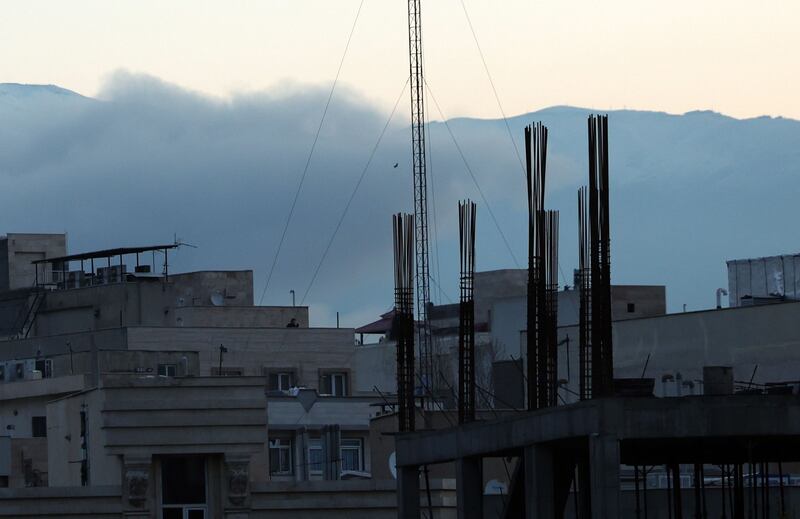
Trump claims war will end in ‘two or three weeks’
US president Donald Trump said securing the Strait of Hormuz is “not for us” and estimated that the US will be done attacking Iran in two to three weeks.
Trump said the US “will not have anything to do with” what happens in the strait, instead telling reporters on Tuesday that the responsibility for keeping the vital waterway open will rest with countries that rely on it.
The president said there is “no reason for us to do this”.
“That’s not for us. That’ll be for France. That’ll be for whoever’s using the strait,” Trump said.
Earlier on Tuesday, Trump lashed out at US allies such as the United Kingdom and France for not doing more to support the American efforts in the Iran war.
“You’ll have to start learning how to fight for yourself, the USA won’t be there to help you any more, just like you weren’t there for us. Iran has been, essentially, decimated. The hard part is done. Go get your own oil!” he wrote.
Spain, which has emerged as Europe’s loudest critic of the war, said on Monday that it had closed its airspace for US planes involved in the conflict.
The White House said the president would deliver a prime-time address on Wednesday evening to update the public on the war.


