A flurry of book launches and signing events across France by rival politicians can mean only one thing: the jostling to succeed incumbent president Emmanuel Macron in next year’s election is decidedly under way.
Neither the youthful former prime minister Gabriel Attal nor former finance minister Bruno Le Maire, both members of Macron’s political movement, have formally announced their candidacies.
But the launch of books by both is viewed as a clear signal of leadership hopes, and the works have coyly significant titles that invite speculation.
In A Free Man, Attal makes a break with his political patron Macron and positions himself as a breath of fresh air: a gay man unafraid to divulge details about his personal life.
READ MORE


“I have nothing to hide – and certainly not the man I love,” writes the 37-year-old centrist, who was France’s first openly gay prime minister. A chapter in the book is dedicated to his partner, the EU commissioner and fellow Macronist politician Stéphane Séjourné.
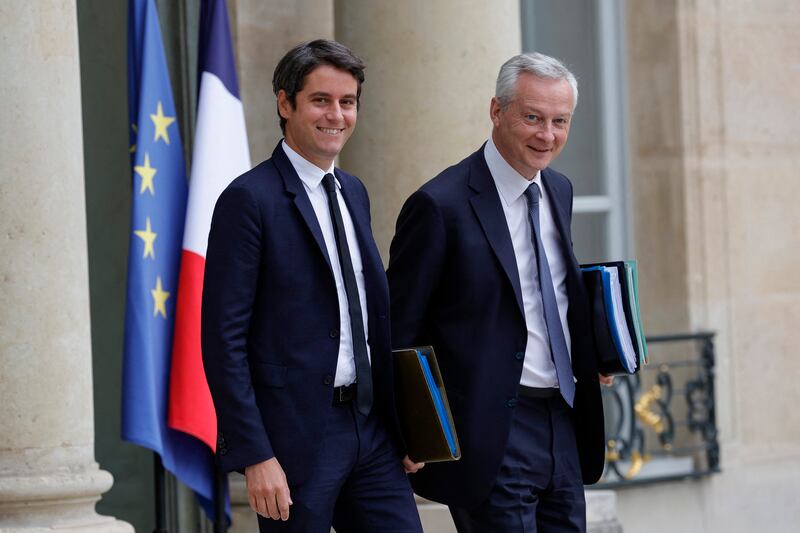
In Decision Time, Le Maire recounts the personal toll of his turbulent last months as a minister, when he was blamed for France’s debt crisis and was forced to resign almost immediately on being named to a new job in the defence ministry. The government veteran describes being confronted over his record by members of the public while on a hiking holiday with his son, before spending an hour in conversation changing their minds.
“That just leaves you with just 67 million more people to convince, Mr Minister,” Le Maire recalls his chief of staff telling him. “I couldn’t have put it better myself.”
Publishing a book is a well-worn political strategy to make a bid for leadership in France, allowing politicians to create interest in their personal lives, lay out a political vision, and embark on a tour of the country to meet supporters.
[ Lara Marlowe: A far-right victory in France would be a win for Putin and TrumpOpens in new window ]
Attal and Le Maire will appear within days of each other for signings at the same bookshop in the northern seaside town of Deauville this month.
The tactic has previously been used to great effect by the far-right Jordan Bardella of the National Rally party. His works What I’m Looking For (2024) and What the French Want (2025), reflecting on his background as the son of Italian immigrants and precocious rise in politics, became publishing sensations and cemented the 30-year old MEP as the heir apparent of Marine Le Pen.
Earlier this month, Bardella publicly launched his romantic relationship in the glossy French weekly Paris Match, another storied path to prominence for political hopefuls previously used by presidents Macron, François Hollande, and Nicolas Sarkozy.

The magazine ran front-page flattering seaside photographs of Bardella and Maria Carolina of Bourbon Two-Sicilies, the daughter of a claimant to a royal line in southern Italy, promising an exclusive look at their “Corsican escape”.
Bardella later told French television that he had “decided to stop hiding and to accept what, for us, has now become an obvious fact in our private life”.
The field of declared and potential candidates is already becoming crowded in France, with the first round of the election expected to be held just under a year from now. The right, left, and centrist groups are all debating whether to hold primaries to narrow down the field.
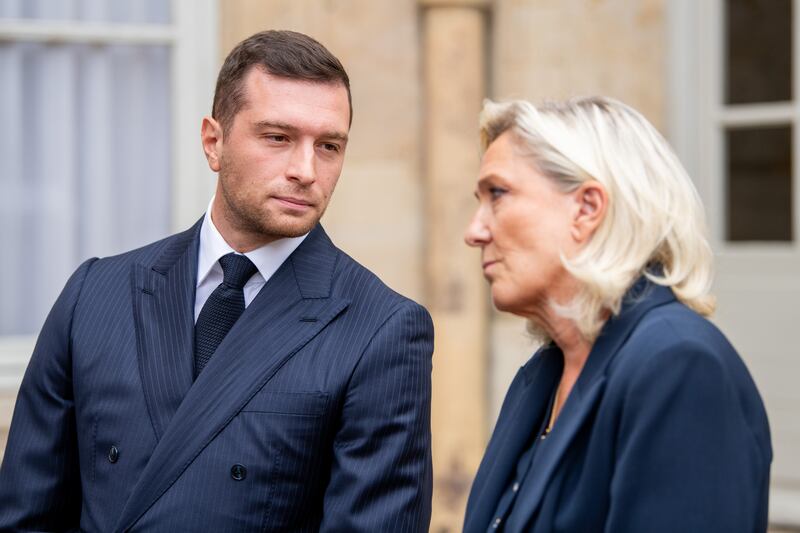
Surveys suggest a clear desire for change among the French public. Bardella is the most popular among potential candidates, followed by Le Pen, whose ability to run depends on her appeal against a bar on holding public office due to the misuse of funds.
However, voters from across the spectrum may rally around a moderate candidate to defeat the far right, as has happened before and surveys suggest may happen again.
[ Naomi O'Leary: France is talking to the Iranians, and it's paying offOpens in new window ]