The Ukrainian army is the largest and most experienced in Europe. It is also the oldest, with an average age of 45, compared with about 30 in the European Union. Not only do Ukrainian men fight longer, they die younger, with a life expectancy of only 66.9 years, compared with 80.3 years for Irish men.
Because the birth rate dropped sharply during the post-independence economic crisis of the 1990s, Ukraine is an ageing society. The government made a deliberate choice to preserve the lives of young men so they can repopulate and rebuild the country after the war. President Volodymyr Zelenskiy resisted pressure from the US to lower the draft age from 25 to 18.
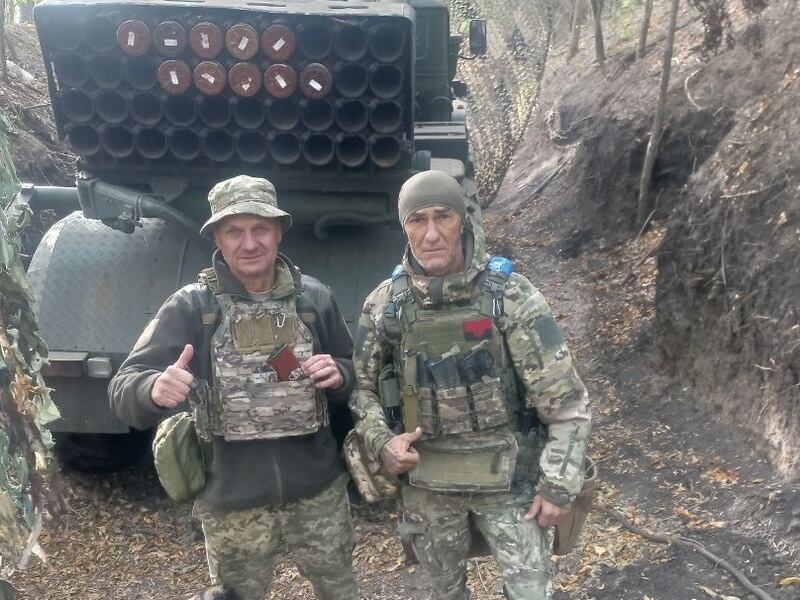
Master sergeant Oleksandr Yurychko (55) is one of the soldiers known as the “didy”, or grandfathers. He’s a founding member of the Wolves of the Steppes, a volunteer battalion created in 2018 for men who are rejected by the regular army on the grounds of age, war wounds or ill health.
Yurychko says the government is right to spare the young. He harks back to the Cossack forefathers of modern-day Ukraine. “Cossacks wouldn’t let their children fight. They said a young man should not die before he has a family, or we will die out.”
READ MORE


Before the first Russian invasion in 2014, Yurychko was a mechanic and kickboxer in Orikhiv, near Zaporizhzhia. He joined up at age 43 and fought in the biggest battles of the past 12 years. “My health is betraying me, but I still have a bit of strength left in me,” he says.
On the first day of the full-scale invasion in 2022, the Russians shelled Orikhiv. “Our house was damaged,” Yurychko says. “My wife and children were in the basement. I evacuated them the same day. I packed my entire life into one rucksack.”
The Wolves of the Steppes repair army equipment in a warehouse in Zaporizhzhia, escort humanitarian workers to the front line and evacuate wounded soldiers. Some still take part in assaults, the most dangerous mission for a soldier.
“My friend Yuriy, who is 67, still does assaults,” Yurychko says. “He used to be a history teacher.”
Yurychko looks weathered, tough and sinewy. He boasts of carrying 43kg of equipment. His last assault on Russian lines occurred in June 2025, near Robotyne, 40km from Zaporizhzhia.
“We entered a village and within a few minutes they used a chemical weapon,” he says. “It suffocated me. I couldn’t breathe. We were evacuated before they could kill us.”
Yurychko was given an umpteenth medal, for defending the city of Zaporizhzhia, and was discharged from the army. He spent two months with his wife Oksana, three of their four children and his three granddaughters in Riga, Latvia.
“The Latvians offered me permanent residence. The municipal police offered me a job. I told them, ‘You gave asylum to my family. If there is a war in Latvia, I’ll be fighting in Latvia’. They looked at me like I was crazy and they said, ‘We wouldn’t fight for Latvia; we’d run away’.”
Defence minister Mykhailo Fedorov said last January that two million Ukrainian men are avoiding military service. Videos of men being chased and manhandled by recruiters are posted on Instagram and the Telegram messenger service almost daily.
“Sometimes young, healthy people pay money not to fight,” says Yurychko. “But when the old men are drafted, they go.”
Men as old as 60 can be called up.
“Recently I received a call asking if I would take someone who’d been snatched by a recruiter. I said I didn’t want him, because if he doesn’t want to fight, he’ll just be a burden to us.”
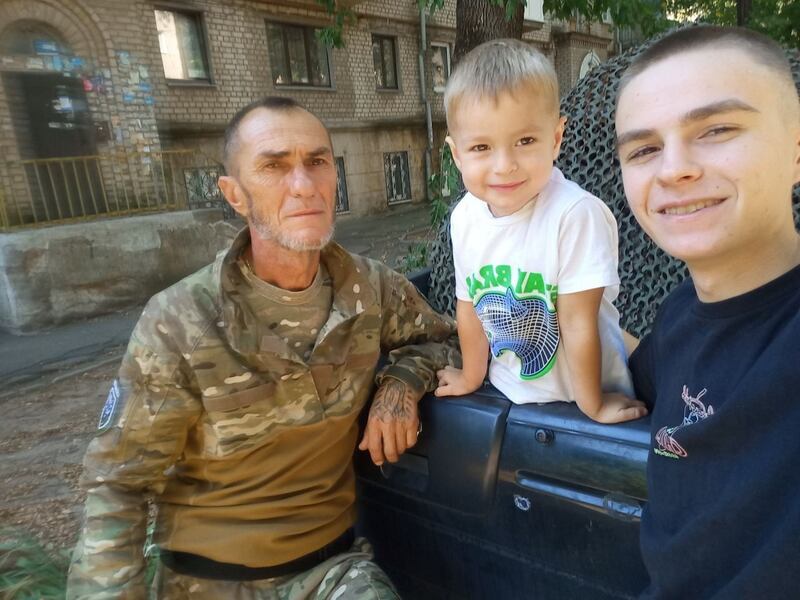
While he was recovering from the Russian gas attack, Yurychko’s wife took him to a Ukrainian social event in Riga. He saw men 10 to 15 years younger than himself there. “I said, ‘Why are you not protecting your country?’ They didn’t answer.”
Yurychko made his way back to the Wolves of the Steppes. There’s a chronic manpower shortage in the Ukrainian army. “The army doctors said no, but the commanders were happy to see me. They said, ‘You should just take light duties now.’ I said no way I was going to take light duties.”
He continues escorting humanitarian workers to the front line and evacuating the wounded. He’s grown close to a Canadian NGO who call him Rambo.
One night in early April, Yurychko and 67-year-old Yuriy were driving to evacuate a wounded soldier. A Russian drone flew under the protective net hung over the road to stop drones and headed straight at them.
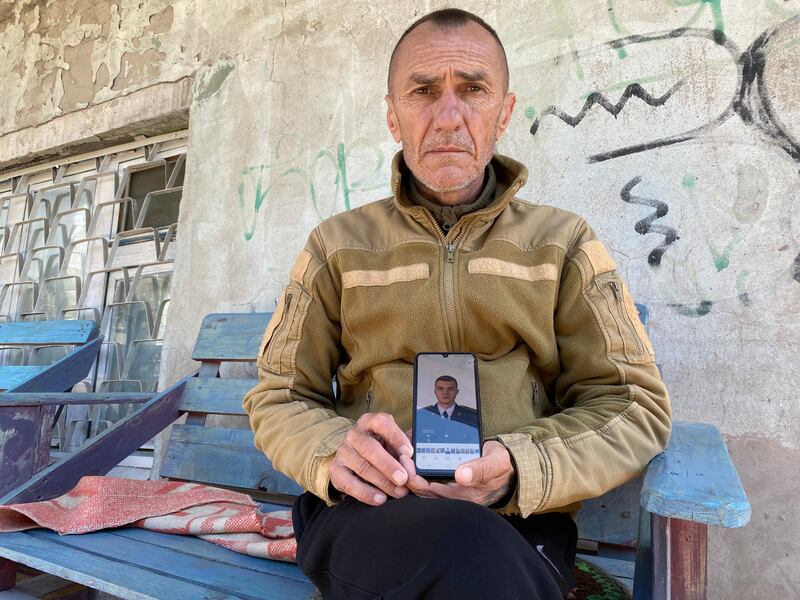
Yurychko shows me the video from their truck recorder as we sit on benches outside the hospital where he is under treatment. The grey and red drone surges from the darkness and crashes into the windscreen. Everything goes blank. I find it terrifying.
“We managed to jump out a second before impact,” he says. “I got a concussion from the blast. It happens all the time. There are waiter drones hiding in the ditch and as soon as you pass by, they attack you. If you drive very fast, they hit you from the back. This one was guided by a fibre optic cable so it couldn’t be jammed.”
Yurychko is proud of his eldest son. Oleksandr jnr (26) went to military academy in Lviv and is a lieutenant in the army, fighting in Donetsk. Oleksandr was severely wounded in the legs by an artillery shell last month.
Yurychko doesn’t want his second son, Ihnat (18), to fight. “I look at him and other young people, and I see they have no motivation. Young people are hiding. Recruitment officers are trying to snatch 50-year-olds now. Oleksandr and I are enough.”
In peace, sons bury their fathers; in war, fathers bury their sons, wrote the ancient Greek philosopher Herodotus.
Yurychko hopes that Ukraine can defy the laws of nature. “I want our children to live. I want our children not to see this war. Even those who are hiding under skirts,” he says.
Many thousands of young Ukrainian men and women have chosen to fight the Russian invaders. Many of them have died, and it would be unfair to ignore their sacrifice. The grandfather soldiers who grew up under Soviet totalitarianism fully expected to be sent to war. The young generation have tasted western individualism and freedom but are often not willing to risk their lives for it.
I ask Yurychko why young people do not want to fight and old people do. “I think they are waiting for it to work itself out,” he says. “I cannot explain it. I see a lot of wounded soldiers and all of them are older men.”
In 12 years of war, Yurychko says he has killed or taken prisoner hundreds of Russian soldiers.
“They are invaders,” he says. “Throughout history, wherever they go they start a war. They are liars and nasty people. They are inhuman, but killing people is not something to be happy about. I don’t enjoy it. We have to do it to defend our country. After a fight I feel heavy in my heart, because I realise the man I killed was someone’s son.”