Last year Serge Betsen, the former French international rugby union flanker; Marie-José Perec, a triple Olympic gold medallist sprinter; Marion Bartoli, who won the women’s singles title at Wimbledon in 2013; and French football team captain, Kylian Mbappé, signed an open letter calling on voters to reject the far right in a snap parliamentary election called by president Emmanuel Macron.
They all dipped their toes in the political arena.
Early this week the Donald Trump-backed former MMA fighter Conor McGregor posted on his X account.
“As President, I [will] remove all imported criminals and mentally deranged lunatics from Ireland. As well as put a rapid end to the funding/teachings of radical ideologies in Irish society.”
READ MORE


On Wednesday he posted a picture of a bust of philosopher Aristotle with a non-ironic caption: “Tolerance And Apathy Are The Last Virtues Of A Dying Society.”
McGregor is one of the long lines of sports stars who have jumped into the political lane. Not the first.
We’ve had former rugby international Trevor Ringland, who was vice-chairman of the Ulster Unionist Party’s East Belfast branch and Olympic silver medal-winning boxer Kenny Egan, who was elected to South Dublin County Council for Fine Gael in the 2014 local elections, while Jim Glennon, who played for Ireland in the inaugural Rugby World Cup in 1987, became a Fianna Fáil TD and senator.
We’ve had twice-elected taoiseach Jack Lynch, with his hurling and football All-Ireland medals and Federation Cup (now Billie Jean Cup) tennis player Catriona Ruane, a Sinn Féin MLA in the Northern Ireland Assembly (MLA) for South Down from 2003 to 2017 – both athletes making the move from sport into politics.
Outside Ireland, middle-distance Olympic champion Seb Coe, a Conservative member of parliament from 1992 to 1997 for Falmouth and Camborne in Cornwall, has become a baron.
Pakistan cricket captain Imran Khan was prime minister of Pakistan from August 2018 until April 2022, while Indian batsman Sachin Tendulkar, widely regarded as one of the greatest cricketers of all time, was a member of India council of states by presidential nomination from 2012 to 2018.
Manny Pacquiao, the only eight-division world champion in men’s boxing, became a senator in the Philippines and in 2022 ran for the presidency.
Vitali Klitschko, the former heavyweight champion of the world, has been mayor of Kyiv since 2014, while two-time Grand Slam champion Marat Safin won a seat in Russia’s lower house of parliament to become one of the youngest members of the Russian legislature after he retired.

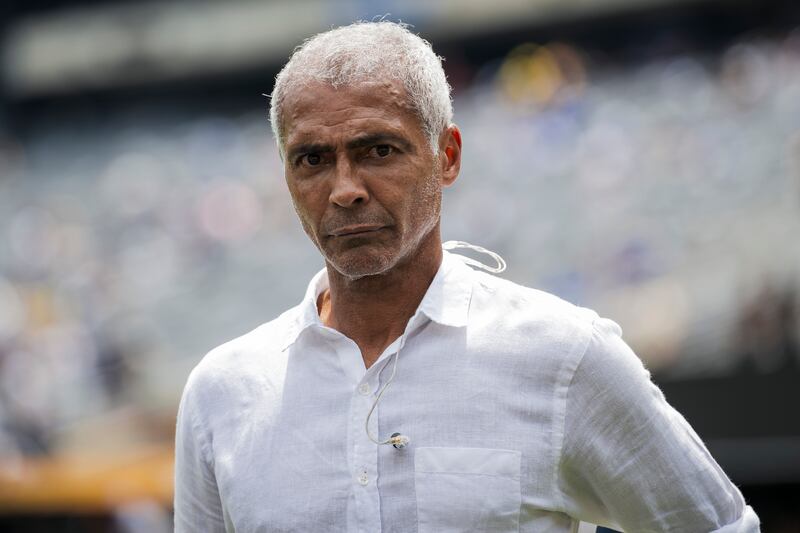
Then there is Bebeto, elected to the legislative assembly of Rio de Janeiro representing the Democratic Labour Party and World Cup-winning striker for Brazil, as well as his great forward partner at USA 94 Romário, who was elected a senator in 2014.
In January 1995, Pelé was appointed by Fernando Cardoso as minister of sports in Brazil.
The fact is sport is common among those active in electoral politics. It is an obvious pathway into political office as athletes in team or individual sport possess transferable skills.
Discipline, team play, goal-setting, diplomacy within a group, focus, resilience and the possession of an ability to bounce back from disappointment are skills applicable to both; although the most obvious one is visibility and name recognition, which gives instant traction in the public arena.
Looking at what voters’ favourite sports are can also inform about their political views and this is used to great effect in election campaigns.
In the United States, the political leanings of the audience are sharply reflected in sport.
On the right of the spectrum is the professional men’s PGA Tour, college football and Nascar. Also heavily Republican are professional hockey’s NHL and the LPGA Tour women’s golf.
Closer to the centre but still red are the Olympics, college basketball, American football (NFL) and professional baseball (MLB).
More left or Democrat is the ATP men’s tennis, professional soccer in the MLS, the WTA women’s tennis, the NBA men’s professional basketball and the WNBA women’s professional basketball.
In terms of participation in politics, a paper published this year in The Journal of Representative Democracy argued that individuals who take part in organised, competitive sports are more likely to engage in formal electoral politics than those who do not.
In an aside it also asserts that the long-standing underrepresentation of women in organised sports “is simply one more impediment towards achieving gender equity among political aspirants”.
In other words, sport, for a variety of reasons, is a natural grounding place for the political arena.
The toxic McGregor and his Maga spew probably knows that his past in the Octagon and his 10.6 million followers on X give him an advantage, at least in profile and volume.
But caveat emptor. Former England footballer Sol Campbell ran for the Conservative party’s nomination for mayor of London in the 2016 election but was not shortlisted, while All Black David Kirk captained New Zealand when they won the inaugural Rugby World Cup before becoming a National Party member in New Zealand.
He then sought the party’s nomination for the 1992 Tamaki byelection but lost to Clem Simich.
McGregor should know. A loud megaphone and high stump is not the whole kit and caboodle.