
Ireland’s export performance over the past few years has been impressive, with steady year-on-year growth. Exports reached a record high of around €260 billion in 2025, an increase of over 16 per cent on the previous year. While much of that can be attributed to the multinational base, especially the pharmaceutical sector, the indigenous sector is emerging as an increasingly significant growth area. Exports from Enterprise Ireland-supported firms grew by around 8 per cent last year to €35.7 billion.
The resilience of the export sector is all the more noteworthy when the challenging geopolitical environment is taken into consideration. Over the past six years, exporters have faced a series of challenges including Brexit, a global pandemic and US tariffs, as well as wars in Ukraine and Iran, resulting in energy shocks, price inflation and trade disruptions.
Indeed, the impact of one of those challenges, US tariffs, has already had a direct bearing on export performance, with advance sales of pharmaceutical products swelling 2025 figures in advance of the introduction of tariffs. This is likely to have added at least €30 billion to the 2025 total.
Rising political tensions in Europe, including the rise of the far right and extreme nationalism in countries such as France and Germany, are likely to add to existing tension. According to Simon McKeever, chief executive of the Irish Exporters Association, this is already beginning to have a bearing on exporters.
READ MORE


“Some of our traditional markets are looking a little weaker this year, especially on the Continent,” he says.
“Exports to Germany are down significantly and in most of the industrialised countries in the EU the figures are either down or are flat. Externally driven demand has suffered recently.”
McKeever notes that general and regional elections in countries such as France, Germany, Italy and Poland in the coming year could have implications for trade.
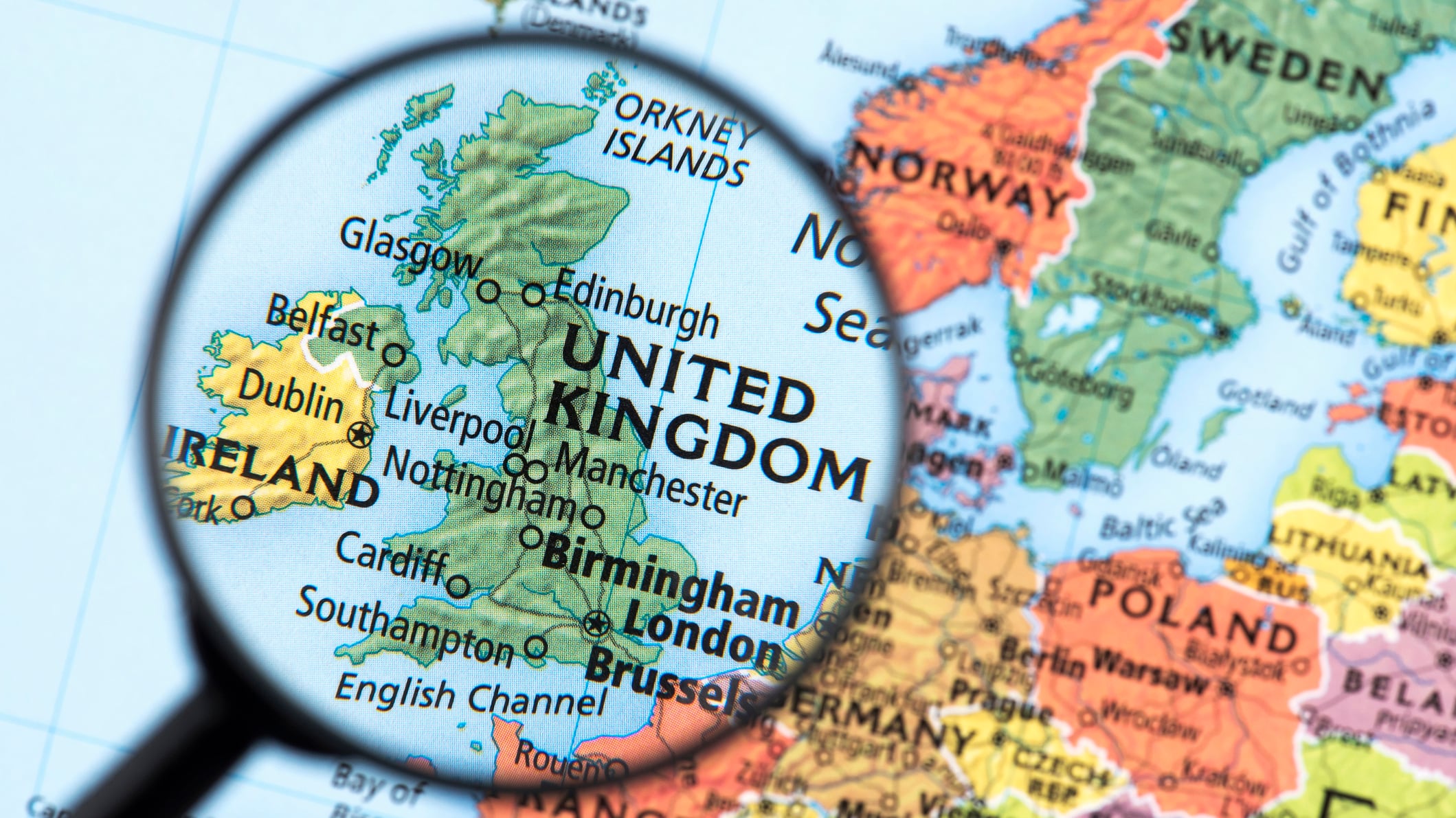
The indigenous sector has performed well, at least until recently, with strong growth across most territories reported by Enterprise Ireland-supported firms in their 2025 figures. Exports to the UK were up 10 per cent; Europe rose by 6 per cent; the Middle East-Africa was also up 10 per cent; while the effects of US tariffs led to an understandably small increase of 1 per cent for North America.
The Nordics proved to be the strongest-performing region overall, with an impressive 39 per cent surge, to reach €2.78, billion while the big underperformer was Asia-Pacific which declined by 3 per cent. Latin America declined by 1 per cent.
Looked at by sector, food, drink, nutrition and climate tech advanced 5 per cent last year to just under €17 billion. The advanced manufacturing, construction and life science category meanwhile grew by 14 per cent to just over €13 billion. Within this, high tech construction increased by 24 per cent to €6.6 billion.

Clearly, many Irish companies have so far continued to outperform their international peers through a combination of nimbleness and innovation, as Aidan McKenna, Enterprise Ireland’s regional director for Americas, notes.
“The companies responding most effectively are those diversifying their customer base and market exposure, investing in local market presence, strengthening strategic customer relationships and continuing to innovate. Export success is increasingly about having multiple routes to growth rather than relying heavily on any single market. That is a central objective of the Government’s diversification strategy and one we are actively supporting through our overseas network,” he says.
The biggest challenge facing exporters today is uncertainty, McKenna adds, with customers postponing investment decisions, reassessing their supply chains and doing their best to manage the potential impacts of tariffs, rising costs and geopolitical instability.
“From our overseas teams’ perspective, the companies performing best are those that stay close to customers, make informed decisions based on market intelligence and continue investing in competitiveness and innovation. Our role is to help them identify opportunities, reduce risk and build sustainable growth across a broader range of international markets,” says McKenna.
Through the Government’s Action Plan on Market Diversification, Enterprise Ireland has expanded financial supports to help businesses assess new opportunities, enter new markets and strengthen resilience, he adds.
This includes initiatives such as a New Markets Validation Grant of up to €150,000 to help companies validate opportunities, assess demand and develop market entry strategies. Enhanced Market Research Grants of up to €35,000 are also available to assess market opportunities, analyse tariff impacts, address trade barriers and strengthen supply chain resilience.
McKeever would also like to see an expansion of the scale and ambition of indigenous companies, along with the Government support that would help them to achieve what their FDI sector peers do.
“We need to take the global champions in that SME category and superscale them,” he says. “We lack the competence in it. We’re good at scaling the S to M at the moment but we’re not good at developing from M to L [large]. That requires a whole new way of thinking about how we develop global brands.
“We need to be doing what those US multinationals are doing out of Ireland and one of the biggest challenges we need to address is the notion that everything needs to be made in Ireland,” he continues. “In my view, as those companies scale up it won’t be economical to make everything in Ireland. We need production centres around the world, especially as the world fractures into three global centres of supply chain, one servicing EMEA, one for the Americas and one serving the Asia market.”