Financial capacity has never been more important for businesses of all sizes and in all sectors. At a time of heightened market volatility, businesses with strong cash visibility, resilient balance sheets and flexible funding options can absorb shocks and make long-term decisions from a position of confidence rather than constraint.
However, while financial capacity is an important defensive safeguard, it is also a strategic advantage that can give well-prepared businesses greater freedom to invest, respond and negotiate when opportunities emerge.
In the current highly disrupted macro-economic and geopolitical environment the defensive aspect has assumed greater importance. When we look at world events, continuing wars in Ukraine and the Middle East, and geopolitical volatility, the impact on the cost-of-living crisis is clear. The cost of doing business has also risen and the risk landscape has become more difficult to navigate.
We can see this play out in the results of the AIB Ireland Purchasing Managers Index (PMI). An interesting dichotomy has emerged in recent months.
READ MORE


The September results showed a slight improvement in manufacturing sector growth. This should come as no surprise as the domestic economy remains strong with output growing and employment remaining at record levels while exports continue to increase. There is much more caution looking ahead, however, with the number of businesses expecting growth over the next 12 months slipping to just 38 per cent of respondents.
That caution, or growing pessimism, is understandable against a backdrop of continuing shocks in the form of US tariffs last year and the oil price surge this year among others.
We must accept that Ireland is a very small, open economy that will be buffeted from time to time by the ebbs and flows of global markets. It’s not all bad news, of course, and there has been a surge in business investment and financial markets over the past few years. Artificial intelligence (AI) is responsible for some of this.
Artificial intelligence brings risks as well as opportunities. There are fears that AI investment is unsustainable and is creating a bubble that will burst in a similar fashion to the dotcom bust at the turn of the century. On the other hand, much of the investment is going into useful technologies that will be required regardless of the success or otherwise of companies in monetising their AI powered products and services.
At the same time, the world has returned to geopolitical competition and trade wars. It now appears that the period of sustained growth and relative calm during the 1990s and early 2000s was abnormal and that the series of shocks experienced over the last decade should be seen as a more natural state of affairs.
We must accept that reality and acknowledge our exposure to events that are far beyond our control. But we must also accept that all these crosscurrents in global economy, some up, some down, create both risk and opportunity for Irish businesses.
In these circumstances, businesses need to build up their resilience in the form of rainy-day funds and other financial firepower that will not only enable them to withstand future shocks but allow them to invest through the cycles.
They must also understand that the highly dynamic global environment means they can’t rely on strategies put in place two years, or even a year ago. They are not fit for purpose today and must be constantly updated.
For example, most Irish companies are quite small and serve local markets here in Ireland. They do that very well but are challenged by energy price swings and the broader cost environment. That underlines the importance of financial resilience.
Exporters face another set of challenges including tariffs and currency volatility. Most Irish exporters sell into the UK and the EU markets with a smaller number selling into the US as well. The EU presents almost no currency risk as most member states are in the Euro.
But, if 20 per cent of your sales are in sterling and another 15 per cent are in US dollars, that’s a lot of currency risk. Recently, we saw the Euro fall from US$1.17 to $1.11. That is good news for Irish exporters to the US who are effectively receiving a price increase, but we have seen equally dramatic swings in the opposite direction. For example, it climbed from $1.16 to $1.20 in the space of two weeks in January, hitting the bottom line quite hard.
We have also seen swings in value against sterling.
Currencies can move quite dramatically and Irish companies with significant exposure should look at hedging strategies. They should engage with financial institutions to develop strategies to mitigate currency risk.

Interest rates are on the rise and that also presents risks for businesses. Once again businesses should engage with banks and financial institutions to examine the extent of their exposure and how to manage it.
Fortunately, many businesses have built up substantial precautionary cash holdings in recent years in preparation for potential shocks. This needs to be viewed as more than a nest egg or rainy-day fund only to be deployed in emergencies; it should be seen as part of the foundation for a growth strategy along with credit and other funding lines.
Businesses need to deploy capital if they are to grow and succeed. Businesses fund expansion in a number of ways; cash reserves, bank and other lines of credit, and equity investment. However, the funding needs to be put in place well in advance so that they can operationalise their strategy at the opportune time.
This might involve something as simple as having a good relationship with a bank. That will enable the business to have a funding stream in place and ready to go when suitable business opportunities arise.
There are some practical trade-offs between holding liquidity, investing for growth and maintaining an efficient capital structure. While holding some cash reserves on the balance sheet is prudent, having very large amounts brings opportunity costs. The company isn’t making any money on it and its unwillingness to deploy it means its growth profile probably won’t be the same as its competitors.
Indeed, a recently published study by jobs data company Revelio Labs and fintech Ramp has shown that, contrary to common belief, AI will not replace all jobs. Furthermore, US employers making the biggest AI investments, including software and media companies, increased employment by about 10 per cent after adopting AI tools. They also saw topline and bottom-line revenue growth. The lesson is that businesses that invest are likely to grow faster than those that do not.
This is not to make a case for spending or investing simply for the sake of it. It is a question of having the funding headroom in place to enable a company to act on an opportunity at a time when competitors may be forced to pause due to financial constraints.
That in turn requires companies to have a two or three or even five-year plan in place which is ready to deploy and execute. Businesses without a worked-out plan are unlikely to get funding when they go looking for it.
As noted earlier, the plan must be constantly reviewed and amended. Companies need to work through multiple alternate scenarios and assess their potential impact on the plan and the business. Oil price shocks, the imposition of tariffs or other trade restrictions, interest rate rises – they must all be taken into consideration. The lesson of the last decade is that the next shock is coming, we just don’t know how soon.
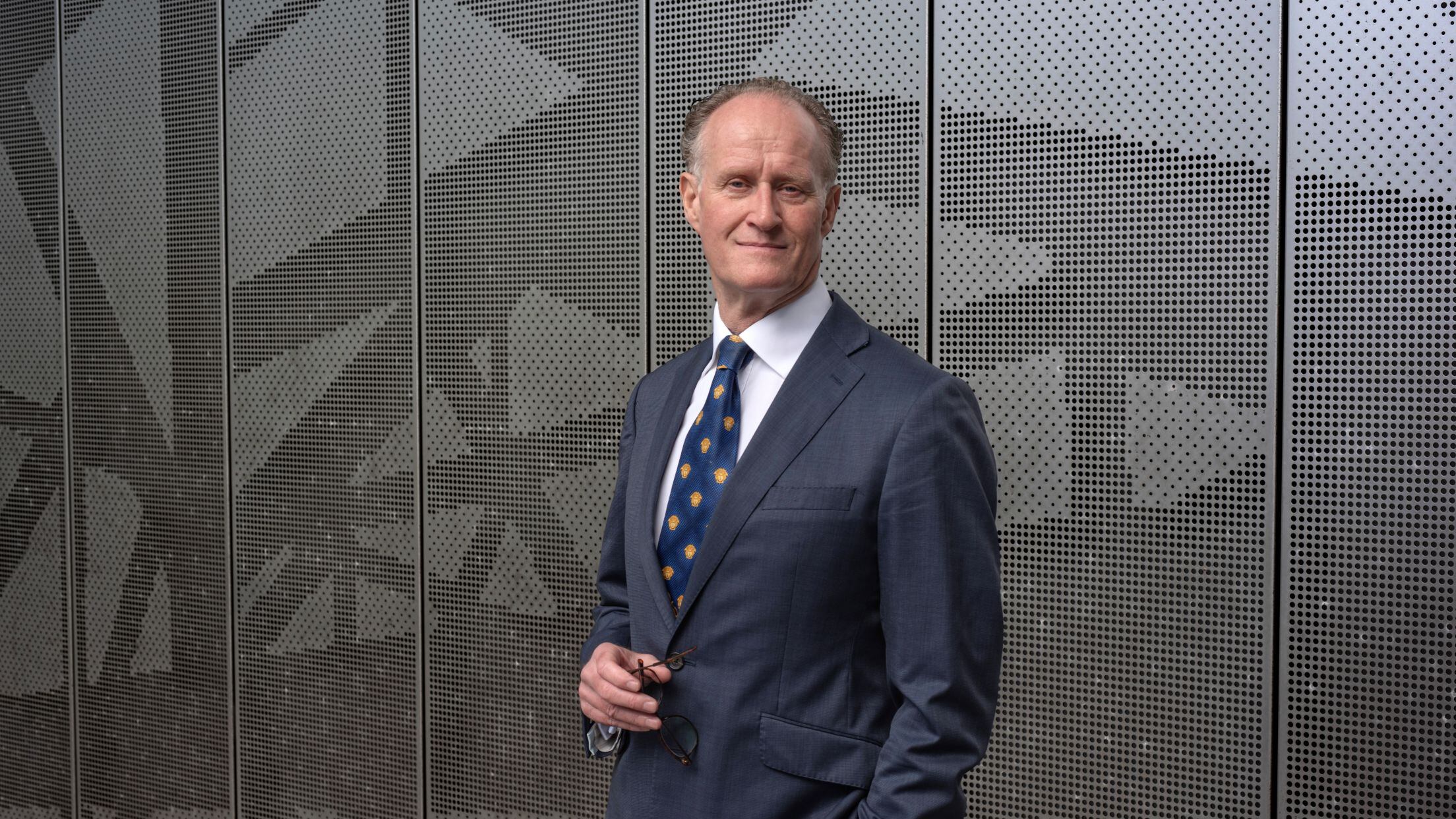
David McNamara is chief economist at AIB