

It is 20 years since Richard Dawkins published The God Delusion. The book triggered fiery debates between bishops and “new atheists” about whether the world would be better off without religion. Dawkins came to Dublin and got a standing ovation in the National Concert Hall. Christians dismissed his arguments as unbalanced and superficial.
Looking back, the war of words over “Dawkinism” seems rather quaint. Today there is a more troubling religious debate – and this time it’s the Christian right stirring things up.
Western civilisation has sown “the seeds of its own demise”, according to Cambridge theologian James Orr. Militant feminism, “wokeism” and liberal multiculturalism have taken us down a dangerous path; to recover we must return to our Christian roots. So argues Orr, Reform UK’s head of policy and a self-proclaimed member of the “new right”.
Other prominent figures in this camp including United States vice-president and Catholic convert JD Vance; and Peter Thiel, the billionaire co-founder of military defence company Palantir. It is Orr, however, who gives the movement some intellectual clout. He sees himself in the tradition of the nationalistic English philosopher Roger Scruton who explored how society moves from “me” to “we”.
READ MORE


Orr – who is described by Vance as his “British sherpa” – set out his stall in a recent interview with Australian politician John Anderson. “Progressive elites” have tried to persuade us “that everything that we held dear ... was something to be ashamed of”, Orr says. “Diversity on the whole is not a strength,” and low birth rates in Europe are “threatening our future in a more devastating way, in some ways, than even the black death”.
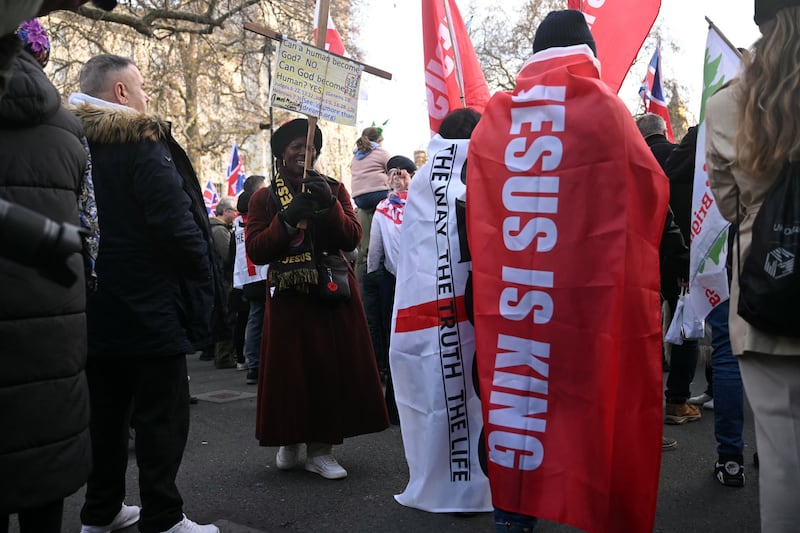
There are traces of this traditionalist movement in Ireland too. A familiar complaint here is that conservative Catholics don’t get a fair hearing, particularly on issues like abortion and the removal of Christian symbols from public life.
Accounts of Catholics being “faith shamed”, however, tend to be exaggerated. Christmas is largely a festival of shopping and Easter largely a festival of chocolate. But is this really evidence of anti-Catholic bias, or is it proof that capitalism seeps into every aspect of society?
Catholics are not being persecuted in Ireland. But Christian teaching is being ignored. And in some respects that is a pity because, even if you don’t agree with everything the Bible says (and who does?), being literate in the word of Jesus enriches public debate. In particular, it facilitates fruitful coalitions on issues of common interest between Christians and people who belong to other faiths or none.
[ Is religion better than atheism as a coping mechanism?Opens in new window ]
The Catholic Church, for example, has become an influential voice on climate action. Laudato si’, Pope Francis’s encyclical on the need to combat rapacious capitalism, is basically a Green Party-People Before Profit manifesto with scriptural footnotes.
Tackling inequality is another cause ripe for cross-faith collaboration. In their book How Much Is Enough?, economist-philosopher duo Robert and Edward Skidelsky highlight the role Christian thinkers have played over the centuries in advancing economic justice. They write: “Could a society entirely devoid of the religious impulse stir itself to pursuit of the common good? We doubt it.”
Christians and non-Christians could also find common ground on regulating new technology. Orr, for example, is a strong critic of pornography sites that generate huge profits from user-uploaded explicit material. He asks: “Shouldn’t a company as evil as Pornhub be shut down? Shouldn’t OnlyFans be shut down?” Yes is the answer to both of those questions.
Christianity foregrounds moral responsibility, a concept that all fair-minded people can work with. Many powerful leaders and corporations today believe they should not be held responsible for harm they cause (according to Big Tech, having to clean up your own mess stifles innovation), and this “responsibility gap” is set to widen with artificial intelligence (AI). After all, no computer can be hauled off to jail.
Last month the US bombed a girls’ primary school in Minab, Iran after the site was incorrectly identified as a security installation. At least 168 people, including about 110 children, were killed, Iranian officials say. We don’t know whether AI played a role in vetting the target. But we do know the US has been increasing incorporating AI into its warfare, including Palantir’s Maven Smart System. A spokesman for Thiel’s company boasted on Fox News that Maven has enabled the US to plan air strikes “in a fraction of the time it would have taken in prior conflicts of this scale”. Whatever technology was used in the bombing, it appears no one will be held responsible. US president Donald Trump has repeatedly brushed aside questions about the attack, while also claiming without evidence “it was done by Iran”.
[ How an untested new US missile hit Iranian sports hall and primary schoolOpens in new window ]
Looking back on those furious debates about Dawkins and militant atheism, they didn’t achieve a whole lot except to create pointless rancour between potential religious and secular allies on issues of common concern. The last thing we need is another religious culture war – this one inspired by conservative Christian victimhood.
Well-meaning people can find common cause on issues that really matter. But it means people breaking bread across the divide and being generous – or even Christian – in debate across faith backgrounds. Given the high stakes globally, we have a moral responsibility to at least try.


