Most countries invest in burnishing their international reputation. When I first joined the Department of Foreign Affairs in 1978, there was a team that produced a glossy periodical, Ireland Today, copies of which were sent to our then 30 diplomatic missions.
Its content was invariably of high quality, but the challenge for embassies was to find the right readership.
Today, every Irish ambassador has an account on X and our embassies post on multiple social media platforms, which gives us access to previously unreachable audiences, but it also creates exposure to toxic animosities. The storm of online criticism spurred by the plan to rename Dublin’s Herzog Park makes me think we need a dedicated Government operation to set out our point of view in social media real time.
Historically, the Irish and our emigrants were often the butt of prejudice, but in more recent times we have become accustomed to being liked.
READ MORE


St Patrick’s Day festivities, Irish pubs, Riverdance and traditional music have worked to lay a warm balm over our national image. For most visitors, a trip to Ireland is a positive experience. We thus notice it more acutely when we encounter rougher waters.
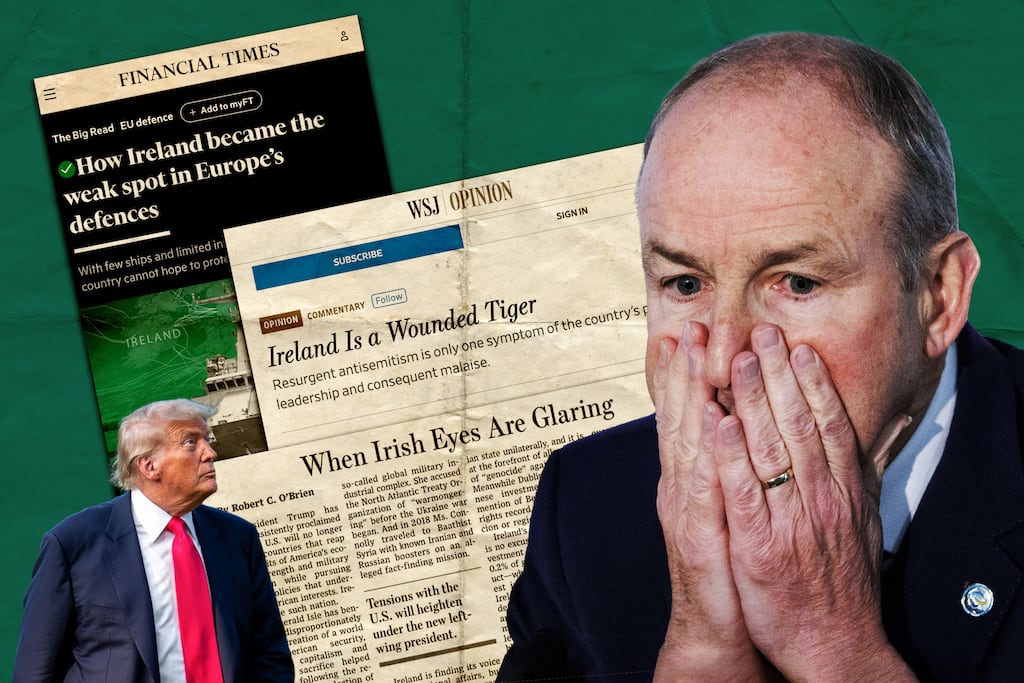
The fallout from Brexit put us offside with conservative elements in Britain who blamed us for standing in the way of their ideal vision of Brexit. More recently, criticism of Ireland has spread across the Atlantic with two sharply critical commentaries in the influential Wall Street Journal.
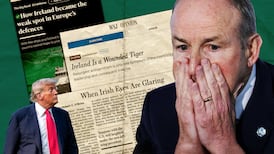
Former US national security adviser during the first Trump administration, Robert O’Brien, had a go last month at Ireland’s weak defence posture and what he perceived as an antagonism towards American interests as defined by the Trump administration in an article headline “When Irish Eyes Are Glaring” in the Wall Street Journal. “Ireland’s president-elect embodies antagonism towards American interests,” he wrote.
My successor as ambassador in Washington, Geraldine Byrne Nason, responded robustly in a letter to the newspaper, correctly pointing to the surge in Irish investment and job creation across America. The idea of Ireland as a security liability again resurfaced in the Financial Times at the end of November on “How Ireland became the weak spot in Europe’s defences”.
[ Irish influence in the US is waning, says new report from influential think-tankOpens in new window ]
Last summer, a group of US Republican lawmakers took us to task on the Occupied Territories Bill and, responding to the FAI’s move to have Israel banned from Uefa competitions, influential Republican senator, Lindsey Graham, warned of consequences for Ireland.
Then this week, the Wall Street Journal published a malicious diatribe by Dominic Green, US editor of The Spectator and a contributor to The Daily Telegraph. Its tone is epitomised by his description of Dublin in the past as “a dirty backwater”, harking back almost to Victorian depictions of Ireland. The piece is an error-strewn hit on Ireland, but its appearance in a major newspaper is worrisome.
What does all of this mean for us? We should neither minimise the threat posed by these developments nor overstate their importance. We have to accept that the zeitgeist in which we operate has changed. In the two countries that matter most to Ireland, Britain and the USA, opinion has hardened against the liberal/progressive trend that has become prevalent with us.
Although Britain has a Labour government, the showy populists of Reform UK are waiting in the wings. Britain also has an influential think tank and media milieu that is hostile to Irish preferences across the board. O’Brien’s critical commentary originated as part of a negative report on Ireland by the conservative think tank, Policy Exchange.
There are close links between Brexit-enthusing British conservatives still smarting at the underwhelming outcome of their project, and Trump-aligned elements in Washington, which is unsettling for us given the importance of our transatlantic relationships.
Recent targeting of Ireland has sprung from our position on Israel/Gaza, which has led to accusations of anti-Semitism. I don’t accept those charges, because they do not square with my experience – but we have seen how they have mushroomed online in ways that are problematic for our reputation in America.
This offers a preview of potential fallout if and when the Occupied Territories Bill is passed. Fairness will not come into it. Partisan perceptions of our motives and actions will dominate, and we will struggle to control the narrative.
[ Ireland should be EU-US bridge, says Washington’s ambassadorOpens in new window ]
The views of others should not, of course, determine our foreign policy, but nor can we afford to ignore international reaction to what we do and say. America’s political pendulum will eventually swing back, although probably not to where it was before. Considering the importance of our American ties, we need to ride out the coming years. That will be difficult but not just for Ireland. The combative tone towards Europe in this week’s US National Security Strategy tells us that we are all in the same boat when it comes to the delicate task of handling the Trump administration.
We will no doubt continue to attract criticism from American conservatives, but, all going well, I expect Washington to go green again next March.
Irish American affection for Ireland is not dependent on concurrence with our political or international outlook. The celebration of Irish heritage is an American phenomenon – but it’s one from which we gain.
It is also true that the things that put us in the dock in the minds of some Americans tend to go down better in the wider world, where our national brand is strong. The last proper test of our international standing, when we stood for UN Security Council membership in 2020, worked out well for us when we polled ahead of Canada. We now have 100 diplomatic missions to spread the word about us.
It is within the European Union (EU) that our national reputation will ultimately stand or wane. Brexit showed us to be in good stead in Europe. Our EU membership is now a mature one, but it is set to be tested by looming issues of defence and security, where we continue to be plagued by a degree of reticence, which is understandable considering the fraught condition of public opinion on that subject.
Daniel Mulhall is a retired Irish ambassador. He posts on X: @DanMulhall