
Have my prayers been answered? Are estate cars making a proper, genuine, SUV-bashing comeback?
It’s faintly possible. The VW Passat, having been denied in its latest form to Irish buyers thus far, will roll back on to our roads later this year, in its estate-only form, so that’s encouraging.
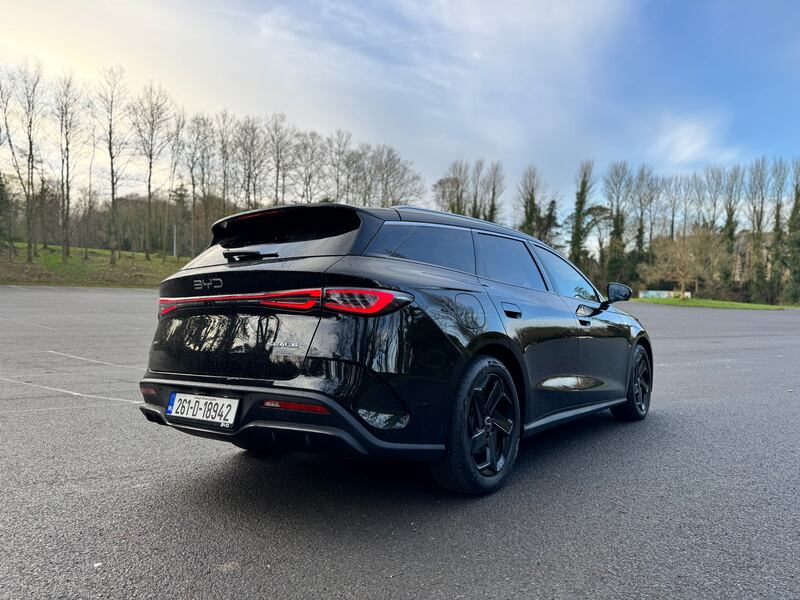
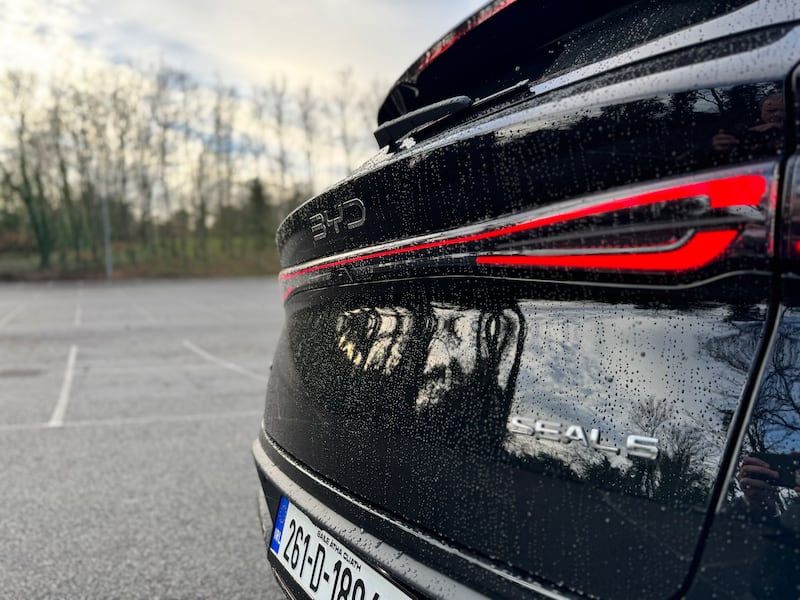
Then there’s this: the BYD Seal 6 Touring. There’s a saloon version of this too, but I’ll sniffily ignore that and focus on this load-lugging version.
I come from a part of the world in west Cork where you always feel like you need a practical car, but you also want something that cannot merely cope with the curves and bumps of the tight and twisty coastal roads but can actively make those roads enjoyable. Fun. So it was estates for me, and ever has been.
READ MORE


More recently, it has been a somewhat curmudgeonly sense of pushing back against the unstoppable tide of SUV fashionability, but maybe I can now change that tune. Certainly, if China’s biggest car maker, and the car brand that is increasingly dictating global motoring tastes and mores, reckons that an estate is a car worth having in the range, then perhaps others might take heed.
BYD has worked out that what customers here in Ireland and potentially across Europe want is a medium-sized estate that’s both family- and business-friendly, and which comes with enough electric range to count as an EV in most people’s daily driving, but which has a petrol engine and fuel tank to take the sting out of longer journeys.
That’s exactly what this Seal 6 is. Beneath the slightly plain exterior there’s BYD’s ‘super hybrid’ system, which ties a 1.5-litre petrol engine in with a 145kW electric motor and, in this top-spec Comfort model, a 19kWh ‘blade’ lithium-iron phosphate battery for a combination of 212hp, and a 100km EV range.
You can even fast-charge this one on DC power, which is helpful, but the more basic Boost model gets a smaller battery, a 50km EV range and no fast-charging.
Both get the same roomy interior, though. The boot is large – 675 litres puts it not quite on par, but certainly on the same golf course as the Skoda Superb Combi – and the boot is flat, square and has useful hooks for bags, as well as a 12-volt socket.

There’s no underfloor storage, though, which is annoying as it gives you fewer options when it comes to stashing charging cables.
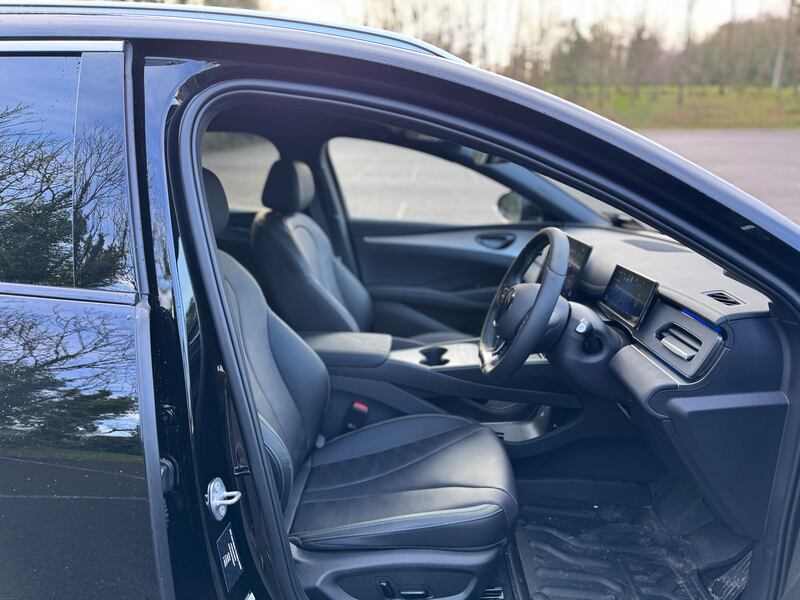
The back seats are roomy, but you can feel the compromise for taller passengers of mounting the battery under the floor – your knees are too high for comfort and your head is somewhat uncomfortably close to the roof. Smaller people – children, especially – will be fine though.
Up front it’s all a bit of a mixed bag. The big 15.6-inch touchscreen looks slick, but it proves unnecessarily brain-fogging to use. BYD provides a smattering of physical buttons, which is welcome, but one of those is for the most pointless driving mode selection of all time (it makes no difference at all to how the car drives), so that seems like a waste.
Having ambient lighting that flashes in time with the music you’re playing is all well and good, but I’d rather have physical buttons for the heating and a simpler, less cluttered driver’s instrument panel.
I’d also quite like some front seats which are less flat and hard than these, and while overall quality is fine, the cheap interior door handles and the McDonald’s-spec plastic on the centre of the steering wheel are both let-downs, not least because BYD hasn’t given this car a truly bargain price tag (it’s €43,590 for our test car, or €38,990 for a basic Boost model – although both now enjoy BYD’s new 250,000km battery warranty).
If you’re hoping for an Audi RS2 driving experience, well... I hate to be the bearer of disappointments. In fairness, neither of this car’s primary rivals – the Skoda Superb and the reconstituted VW Passat – is sparkling to drive, but the Seal 6 is a bit of a disappointment with its flaccid, rubbery steering. The ride comfort is better thanks to relatively soft springs, and it’s certainly a comfortable barge in which to biff about, but there’s no fun to be had here at all.

There is some good common sense, though. That hybrid system works very well, with about 80-85km achievable on a fully-charged battery in mixed driving, which means that if you’re fairly diligent about charging up, you can essentially use this Seal 6 as an electric car most of the time.
When you need to wake up the petrol engine, for the most part, it chimes in unobtrusively, but there is a tiresome gnashing growl if you ask for maximum acceleration. For longer runs, it’s impressively economical – on our test, it easily hit 6.0-litres per 100km on long runs, and occasionally dipped below the 5.5-litres per 100km mark. That’s way better than the same super-hybrid set-up could manage in the bigger, bulkier, Seal-U SUV, and illustrates once again just what an expensive mistake most SUVs are.
I quite like this Seal 6 Touring. It’s not a thrilling car, at all, which is a bit of a let-down, and BYD needs to work on some of its refinement and cabin quality, but it is useful, mildly stylish and comfy if not enervating to drive. Properly economical too. It’s no Volvo 850 T5 or anything, but it’s an estate, and that to me is a good starting point.
Lowdown: BYD Seal 6 Touring
Power: 1.5-litre four-cylinder petrol engine with 145kW motor and 19kWh lithium-iron phosphate battery producing 212hp and 122Nm (engine) + 300Nm (e-motor) of torque and powering the front wheels via an e-CVT automatic transmission.
CO2 emissions (annual motor tax): 38g/km (€140).
Fuel consumption: 1.7l/100km (WLTP) – 6.0l/100km (observed)
0-100km/h: 8.5 secs.
Price: €43,590 as tested, Seal 6 starts from €37,490
Our rating: 3/5.
Verdict: Spacious, economical and a welcome estate addition. Could do with being more fun to drive, though.


