
Thursday: Nine things we learned
- US President Donald Trump has said he will extend his pause on his threat to attack Iran’s energy infrastructure for 10 days until 6th April
- Trump also repeated his disappointment with Nato, again accusing the alliance of doing “absolutely nothing”
- Iran and US harden positions as Tehran keeps its grip on Strait of Hormuz
- US special envoy to the Middle East, Steve Witkoff, said Iran has “repeatedly rebuffed on everything we asked for” in negotiations
- The United Arab Emirates engaged 15 ballistic missiles and 11 drones on Thursday, the country’s defence ministry has said
- The Israeli military killed the naval commander of Iran’s Revolutionary Guard in an overnight attack, Israel’s defence minister Israel Katz, said
- Ireland is donating 8,000 thermal blankets for displaced people in Lebanon, through Irish Aid
- Iran has rejected a 15-point US proposal for ending the war in the Middle East.
- Irish consumers face months of rising prices as the conflict squeezes oil supplies and fuels inflation, ESRI and Central Bank warn.
Key Reads
- Global Briefing: Blaming Israel for US war on Iran lets Trump off the hook. Sign up for the newsletter here.
- Who is the latest Iranian commander targeted by Israel?
- How many missiles does Iran have left?
- Analysis: Why Trump’s rehashed 15-point Iran plan will not appease Tehran
- Trump turns on Starmer over Iran war: ‘What if Donald shouts at me?’
That concludes our rolling coverage of the war in the Middle East this evening. We’ll be back tomorrow with more live updates on the war.
Trump extended a pause on threats to bomb Iranian energy plants by 10 days as Iran labelled Washington’s proposals to end nearly fours weeks of conflict as “one-sided and unfair”.
The diplomatic impasse over the possibility of ceasefire talks has set the stage for another escalation in the Middle East War.
Read our coverage from Mark Weiss here.
Trump extends deadline to strike Iran energy sites
Trump has said he will extend his pause on his threat to attack Iran’s energy infrastructure for 10 days until 6th April, claiming that the request came from Tehran.
Originally, Trump threatened last Saturday to strike Iranian energy infrastructure if Tehran did not reopen the strait of Hormuz.
Then, on Monday he said he would pause his threat for five days (until Friday), citing “very good and productive conversations” with Iran on ending the war (which Tehran dismissed as “fake news” designed to “manipulate” the oil markets).
He’s now pushing that deadline back again.
In a post on Truth Social, he said: “As per Iranian Government request, please let this statement serve to represent that I am pausing the period of Energy Plant destruction by 10 Days to Monday, April 6, 2026, at 8 P.M., Eastern Time. Talks are ongoing and, despite erroneous statements to the contrary by the Fake News Media, and others, they are going very well”.
Strikes near Iran nuclear plant could trigger “major radiological accident”, IAEA chief warns
The head of the UN nuclear watchdog has expressed “deep concern” over recent military strikes near Iran’s Bushehr nuclear power plant, warning that any damage to the operating facility could cause a “major radiological accident affecting a large area in Iran and beyond”.
International Atomic Energy Agency (IAEA) director general Rafael Grossi reiterated his call for “maximum restraint” to avoid the risk of a nuclear accident.
The most recent reported strike took place on Tuesday night, when the Atomic Energy Organization of Iran said a projectile had struck the grounds of the nuclear power plant. The IAEA previously confirmed a strike on 17 March. No damage to the plant was reported in either incident.
UAE engages 15 Iranian ballistic missiles and 11 drones
The United Arab Emirates engaged 15 ballistic missiles and 11 drones on Thursday, the country’s defence ministry has said.
“UAE air defences are dealing with Iranian ballistic and cruise missiles and drones,” it said in a post on X.
Its air defences targeted 372 ballistic missiles, 15 cruise missiles, and 1,826 drones since Iranian attacks began, the ministry added.
World Bank to assist countries affected by Middle East War
The World Bank Group will support client governments as they deal with challenges brought on by the Middle East conflict, including major increases in energy costs, by leveraging fast-disbursing policy financing instruments, the group said in a statement on Thursday.
It was ready to respond at scale with immediate financial relief, policy expertise and private sector support to preserve jobs and growth in affected countries, the statement said.
Ireland sends thermal blankets to aid displaced people in Lebanon
Ireland is donating 8,000 thermal blankets for displaced people in Lebanon, through Irish Aid.
The blankets arrived in Beirut this morning on a special humanitarian flight from the UN’s Humanitarian Response Depot (UNHRD) in Brindisi, Italy.
The flight carried relief items from Ireland, Italy and the European Union’s humanitarian department, ECHO.
It included nearly 18,000 thermal blankets, 3,600 kitchen sets and 15,600 water jerry cans. The items will be distributed to displaced families in Lebanon by the UN Refugee Agency (UNHCR), in close coordination with the Lebanese government.
Ireland recently announced humanitarian funding of €3 million for the crisis in Lebanon, which will be provided to the Lebanese Humanitarian Fund and the UN Refugee Agency.
Announcing the relief items, Minister for Foreign Affairs Helen McEntee said: "Over one million people have been forced to flee their homes, with many staying in public buildings that the Lebanese government has designated as temporary shelters".
“Ireland is making an important contribution to this joint EU humanitarian response, and it will provide temporary relief to the many innocent people affected by this war. However, only a diplomatic solution can deliver a lasting peace for the people of Lebanon, and the many refugees that live there. I call on all parties to halt attacks, de-escalate, and commit to dialogue,” she said.

Ireland and other EU states must use all channels to encourage de-escalation, McEntee says
Ireland and other EU states must use “all of our channels to encourage deescalation and a return to diplomatic processes” Minister for Foreign Affairs Helen McEntee has said.
Helen McEntee told the Dáil “it is more than regrettable that time was not allowed for dialogue and diplomacy”, before the war began four weeks ago, our Parliamentary Correspondent, Marie O’Halloran, reports.
It was “made clear to us that the Friday before this attack happened progress had been made,” she said. “It is regrettable that further talks did not continue. The EU must now use all of our channels to encourage deescalation and a return to diplomatic processes.”
Ireland and EU member states have expressed “extreme concern about breaches of international law”, in deepening Middle East conflict, she said.
They also highlighted “the need for solidarity with Gulf states who are the subject of direct attacks, and the risk of further widening and escalation of the conflict which we are starting to see in other parts of the region”.
She hit out at Israel’s attacks on Lebanon as unacceptable. “It is essentially a ground invasion. The Israeli defence forces and army are trying to annex the south part of the region,” where Irish Defence Forces personnel are located.
She was responding to Sinn Féin TD Ruairí Ó Murchú who said Israel has used the war “from a point of view of continuing its attacks in Gaza and the West Bank, and it looks like it is looking to build a cordon sanitaire beyond the Litani River in Lebanon”.
The Minister told him “all of our troops are safe and accounted for” and the situation is monitored continuously.
The 27th infantry battalion is on UN peace keeping duties in south Lebanon. The Minister said there were times personnel “have to go into groundhog, which is when they are underground in very confined small spaces for a long period of time.
“There are other days when that’s not happening and they are out patrolling. They are obviously working very closely with their international partners and battalions,” and the operations are kept under continual monitoring through UNIFIL headquarters.
Who is the latest Iranian commander targeted by Israel?
Alireza Tangsiri, the commander of the naval forces of Iran’s Islamic Revolutionary Guard Corps, is the latest senior military figure targeted by Israel in its month long bombardment of Iran.
This piece explains who he is.
Trump says Iran allowed some oil tankers through strait as sign of good faith
Iran is allowing some oil tankers through strait of Hormuz as a sign of good faith for talks, Trump has said.
Iran allowed 10 oil tankers to pass through the strategic strait as a “present” to show it was serious about negotiations to end the war.
“[Iran said] we’re going to let you have eight boats of oil, eight boats, eight big boats of oil. This was two days ago. And they’ll sail up tomorrow. That was three days ago. And I didn’t think much about it,” Trump told reporters.
“And then I watched the news and they said... something’s unusual happening. There are eight boats that are going right up the middle of the strait.
And actually they then apologized for something they said, and they said, we’re going to send two more boats. And we ended up being 10 boats".
US special envoy to the Middle East, Steve Witkoff, said Iran has “repeatedly rebuffed on everything we asked for” in negotiations.
Addressing Trump, he said the 15 point action list had been “circulated through the Pakistani government, acting as the mediator, and this has resulted in strong and positive messaging and talks, as you just indicated to the press”.
“You have instructed us that your preference is always peace and that we should make that our priority. We have delivered that message, sir, along with the 15 points for peace. Finally, we have told Iran one last thing; don’t miscalculate again,” he added.
Trump gives updates on Iran war in cabinet meeting at the White House
Trump is now speaking at a cabinet meeting in the White House where he is delivering updates on the Iran war.
Repeating his earlier remarks that Iran is “begging to make a deal”, he said: “They are begging to make a deal. Not me. They’re begging to make a deal”.
“I don’t know if we’ll be able to do that. I don’t know if we’re willing to do that. They should have done that four weeks ago. They should have done it two years ago,” he said.
The Gulf region and the US were “shocked” by Iran’s retaliatory attacks in the Middle East, he said.
He repeated his disappointment with Nato, again accusing the alliance of doing “absolutely nothing”.
Taking particular aim at the UK, he said in a mocking tone that Britain’s aircraft carriers are “toys” compared to what the US has.
“We had the UK say that we’ll send – this is three weeks ago – we’ll send our aircraft carriers, which aren’t the best aircraft carriers, by the way, they’re toys compared to what we have. But we’ll send our aircraft carrier when the war is over. I said, oh, that’s wonderful, thank you very much. Don’t bother, we don’t need it. We don’t need it, and we don’t need them".
It would be a “very big mistake” to cancel the UK King’s planned state visit to the US, Washington’s ambassador to the UK has said.
There have been calls for the historic royal trip to be scrapped or delayed because of the ongoing conflict in the Middle East.
But Warren Stephens argued it would be wrong to call off the trip, which has not yet been officially announced.
In a question and answer session after his speech to the British Chambers of Commerce conference in London on Thursday, Stephens said: “I think that would be a very big mistake.”
He said he could not confirm the visit, but added: “I think he will go and I think it will be a very meaningful trip for him.”
US president Donald Trump last week declared the visit was going ahead, saying the monarch was coming to see him “very shortly” and that he was “looking forward” to it.
Asked whether the UK’s reluctance to support the military action in the Middle East was holding back its trade relationship with America, Stephens said: “I’m unaware of anything that’s being held back because of that.
“When I got in this position, the depth of the ties between the US intelligence community and the British intelligence community, and our militaries, is frankly astounding. And those two things, in addition to the businesses here, make the relationship unbreakable.
“While there has not been any direct engagement by the UK or any Nato country militarily other than defensive, the intelligence has been vital and very useful to the United States and Israel, I’m sure.”
Sinn Féin has again criticised the Government’s package of measures to address the surge in fuel prices and re-iterated its call for “real, immediate relief” on petrol, diesel and home heating oil.
As the war in the Middle East continues the party’s finance spokesman Pearse Doherty said costs had risen to “eye watering levels”, parliamentary correspondent Marie O’Halloran reports.
The Government’s two cent a litre reduction in home heating oil, worth a “measly” €20 to the cost of a fill would be taken back from householders in a few weeks “when you jack up the prices by increasing the carbon tax”.
The Sinn Féin TD said the Government left 750,000 families “in the lurch. You abandoned them”.
He cited the case of a 67-year-old woman who is still working but only turns on the heating when her grandchildren visits, and “a woman who is wrapped in a blanket with a disabled son and afraid to turn on the heat”.
“People are denying themselves the basic heat in their own homes, and that’s the reality of your decisions, whether you like it or not,” he said.
Tánaiste Simon Harris said the Government brought in “one of the largest interventions of any EU Member States, based on our population” to help people “in the here and now” with petrol, diesel and home heating oil costs.
He said from next week nearly 500,000 households “will benefit from the decision we took to increase the fuel allowance” and extending it into the summer “is the right thing to do” because of the level of volatility around fuel.
The Government “may well need to intervene again”. He said the economic medicine for now may need a different prescription in the period ahead.
“But the package we put in place was the right package for the right moment, and we remain nimble and agile,” for any further interventions that may be required.
He hit out at Sinn Féin as the only party that voted against the package of supports, when other parties decided “we’ll take off our party jersey and actually vote with the Government, because this package of measures will help people in some way”.

Russian president Vladimir Putin has said it is hard to predict the consequences of the conflict in the Middle East but that some had compared the potential impact to that of the Covid pandemic.
The conflict, Putin said, was causing significant damage to international logistics, production and supply chains while putting intense pressure on hydrocarbon, metals and fertiliser companies.
“The consequences of the conflict in the Middle East are still difficult to accurately predict,” Putin told business leaders in Moscow on Thursday.
“It seems to me that those who are involved in the conflict cannot predict anything themselves, but for us it is even more difficult."
Putin added: “However, there are already estimates that they can be compared with the coronavirus epidemic. Let me remind you that it has dramatically slowed down the development of all regions and continents, without exception.”

The Israeli military killed the naval commander of Iran’s Revolutionary Guard in an overnight attack, Israel’s defence minister Israel Katz, said on Thursday, taking out the leader of a force that has played a pivotal role in shutting down the Strait of Hormuz.
The commander, Alireza Tangsiri, was in an apartment hideout in the area of Bandar Abbas, a port city in southern Iran, with other Revolutionary Guard officers at the time of the attack, according to two Israeli officials who spoke to The New York Times.
Iran has not commented on the commander’s status.
Tangsiri is the latest senior Iranian official to be targeted and killed since Israel and the United States began their coordinated attacks against Iran on February 28th. He oversaw the naval force’s testing of drones and cruise missiles, according to the US Treasury, which imposed sanctions on him in 2019 and 2023.
In recent weeks, he posted repeatedly on social media about Iran’s closure of the Strait of Hormuz, a vital oil and gas route, and about attacks carried out by the Guard’s navy.
The United States and Iran showed little public sign that they were close to starting talks to end the war after nearly four weeks of fighting. The Israeli military said Thursday that it had struck targets in Isfahan, a city in central Iran, and elsewhere in the country. It said it had detected missiles launched from Iran toward Israel, reporting at least one impact.
Iran also launched fresh strikes against US allies and sites in the Persian Gulf. Iran said it had targeted a US military base in Kuwait and an air base used by US forces in Saudi Arabia with drones and missiles.
The United Arab Emirates’ air defences responded to Iranian missiles and drones, the country’s defence ministry said, and falling debris from a missile interception over the UAE killed two people, authorities in Abu Dhabi said.


Iran and the United States hardened their positions as diplomacy aimed at reaching a ceasefire in the war in the Middle East appeared to be faltering on Thursday.
Tehran moved to formalise its control over the crucial Strait of Hormuz while Washington prepared for the arrival of US combat forces in the region that could be used on the ground in the Islamic Republic.
Iran is instituting a “de facto ‘toll booth’ regime”, industry experts say, with some ships paying in Chinese yuan to pass through the strait, where 20 per cent of all traded oil and natural gas is transported in peacetime.
Read the full piece here.


Message from the Editor

The conflict is causing a rise in tourist cancellations and a dive in new bookings in Cyprus and to a lesser extent other countries whose economies rely heavily on summer visitors.
Daily cancellation rates for short-term rentals in Cyprus shot up from around 15 per cent before the conflict to as high as 100 per cent in the days after, according to data from US-based AirDNA, which tracks such bookings.
That figure has since dropped but remained around 45 per cent by March 21st. Greece and Turkey saw slight rises in cancellation rates too.
Cyprus’s Hoteliers Association has seen a near 40 per cent drop in March bookings and a similar reduction in April, association director general Christos Angelides said.
US president Donald Trump has also posted on Truth Social to again criticise Nato countries and say the US does not need its help with the war in Iran.
“NATO NATIONS HAVE DONE ABSOLUTELY NOTHING TO HELP WITH THE LUNATIC NATION, NOW MILITARILY DECIMATED, OF IRAN,” he said.
“THE U.S.A. NEEDS NOTHING FROM NATO, BUT ‘NEVER FORGET’ THIS VERY IMPORTANT POINT IN TIME!”

Israel says it has killed the commander of the Iranian Islamic Revolutionary Guards Corps Navy, Alireza Tangsiri.
Israeli defence minister Israel Katz said Tangsiri was “directly responsible for the terrorist act of bombing and blocking the Strait of Hormuz”, and has been “blown up”.
According to a statement from Katz’s office, Tangsiri was killed in a “precise and deadly” attack and a number of other “senior Navy command officials” have also been killed.
Iran has not yet commented.
US president Donald Trump has said Iranian negotiators were “begging” for a deal, as he rejected Tehran’s public stance that it is only reviewing Washington’s proposal.
“The Iranian negotiators are very different and “strange”,” he said in a Truth Social post on Thursday.
“They are “begging” us to make a deal, which they should be doing since they have been militarily obliterated, with zero chance of a comeback, and yet they publicly state that they are only “looking at our proposal.” WRONG!!! They better get serious soon, before it is too late, because once that happens, there is NO TURNING BACK, and it won’t be pretty!”

Cyprus will cut VAT on electricity bills, reduce fuel taxes and subsidise tourism industry salaries amid a fear of cost increases due to the Iran conflict, its president, Nikos Christodoulides, has said.

Euro zone banks have limited direct exposure to the war in the Middle East, but the conflict could still generate systemic stress given interconnected vulnerabilities, European Central Bank vice-president Luis de Guindos said on Thursday.
Financial markets have come under stress in recent weeks from the impact of the US and Israeli war on Iran, but the sell-off outside the Middle East has been limited, even as some assets remain overvalued.
“Spillovers to the euro area financial sector have so far remained contained,” de Guindos said in a speech.
“Direct bank exposures to the region are limited, and the banking system is well positioned with strong profitability and robust capital and liquidity buffers.”
De Guindos argued that even market infrastructure operators, such as central counterparties whose services include energy markets, have managed margin requirements effectively, despite the volatility.
Still, there was a broader risk, given interconnections in the financial system, said de Guindos, whose roles at the ECB include monitoring financial stability.
“Amid already elevated global uncertainty, this conflict could trigger the unravelling of interconnected vulnerabilities and cause systemic stress,” he said.

US president Donald Trump and Chinese leader Xi Jinping will hold their highly anticipated summit in Beijing between May 14th and 15th, following a delay that brought fresh uncertainty to relations between the world’s largest economies.
White House press secretary Karoline Leavitt announced the rescheduled dates on Wednesday and said Xi would visit Washington at a date later this year.
Trump was due to visit China later this month but the US president postponed the meeting to remain in Washington and focus his attention on the war with Iran. The war brought fresh strains to US-China ties, even as the two economies sought to navigate lingering issues from a trade detente struck last year and simmering tensions over Taiwan. Iran is a major trading partner for China, the world’s biggest crude importer.
Leavitt said the administration has “always estimated approximately four-to-six weeks” for the conflict when asked if the new dates indicated Trump would look to wind down the war by that point. She sidestepped a question about whether concluding the war was a precondition for rescheduling the summit.
“There was a discussion about the rescheduling of the meeting between the president and president Xi. President Xi understood that it’s very important for the president to be here throughout these combat operations right now. He understood, obviously, the request to postpone and accepted it, which is why we have new dates on the books,” Leavitt said.

Iran has rejected a 15-point US proposal for ending the war in the Middle East. In doing so, it imposed five conditions of its own, including a conclusion of the war on all fronts, payment of war damages and sovereignty over the Strait of Hormuz.
An Iranian security official said Tehran is determined to continue defending itself and will deliver “severe blows” until its demands are met. He said the conditions presented by Washington are “excessive and detached” from what he described as the US failure on the battlefield.
Iran’s response came after reports Washington had transferred to Iran, via Pakistan, a plan to end the fighting.
Three Israeli cabinet sources said Israeli prime minister Binyamin Netanyahu’s security cabinet had been briefed on the US proposal. They said its terms included removing Iran’s stocks of highly enriched uranium, halting enrichment, curbing its ballistic missile programme and ending funding for regional allies.
Iran and the United States hardened their positions as diplomacy aimed at reaching a ceasefire in the war in the Middle East appeared to be faltering on Thursday.
Tehran moved to formalise its control over the crucial Strait of Hormuz while Washington prepared for the arrival of US combat forces in the region that could be used on the ground in the Islamic Republic.
Iran is instituting a “de facto ‘toll booth’ regime”, industry experts say, with some ships paying in Chinese yuan to pass through the strait, where 20 per cent of all traded oil and natural gas is transported in peacetime.
Meanwhile, a strike group anchored by the amphibious assault ship USS Tripoli drew closer to the Middle East with some 2,500 Marines.
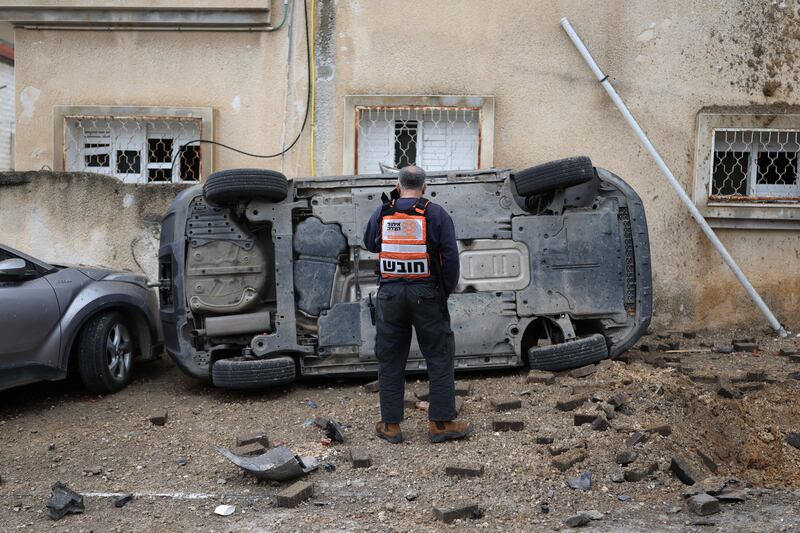

The outlook in the Gulf looks deeply uncertain, with the US suggesting it is seeking a peace deal with Iran, while at the same time moving thousands of troops and equipment to the region.
“The president’s preference is always peace. There does not need to be any more death and destruction,” White House press secretary Karoline Leavitt told a press conference on Wednesday night.
“But if Iran fails to accept the reality of the current moment, if they fail to understand that they have been defeated militarily and will continue to be, president Trump will ensure they are hit harder than they have ever been hit before.”
Her comments came after Iran apparently rejected the US proposals for ending the war, responding with five conditions of its own, including a conclusion of the war on all fronts, payment of war damages and sovereignty over the Strait of Hormuz.

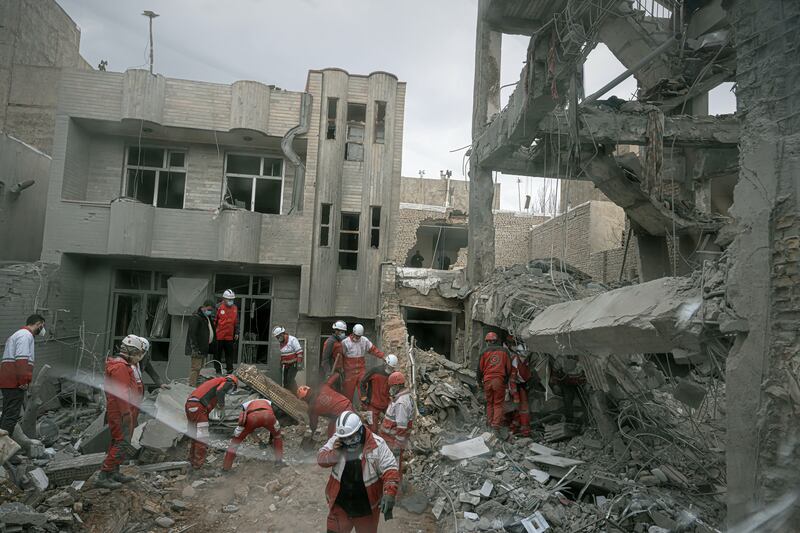
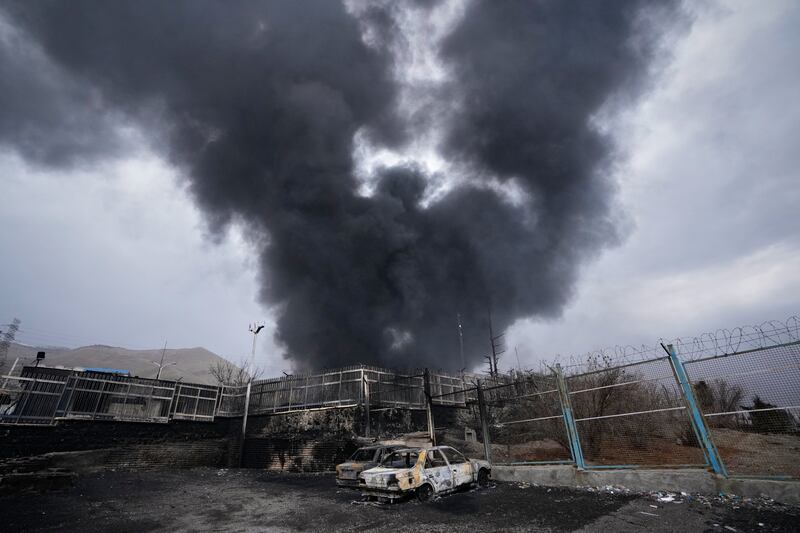
Consumers are facing months of rising prices as the conflict in the Gulf squeezes oil supplies and fuels inflation, two heavyweight forecasters have warned.
The Economic and Social Research Institute (ESRI), an independent think tank, and the Central Bank both issued sharp warnings of inflationary pressures across the economy as higher oil prices begin to bite.
Their warnings come as Iran poured scorn on US claims that it was considering peace proposals, though Tehran stopped short of rejecting efforts out of hand. In Washington, the White House said that president Donald Trump favoured a peace deal but was also willing to “unleash hell” against Iran.


