
Ireland’s birth rate may be falling but the incidence of twin births continues to rise, with almost two in every 100 births being twins.
Curiosity and fascination have always surrounded twins and their unique sibling relationship. Some of Ireland’s best-known twins include Taoiseach Micheál Martin, who has a twin brother, Pádraig; golfers Leona and Lisa Maguire; Jedward and Edele and Keavy Lynch from B*witched.
A woman is more likely to have twins if there are twins in her extended family and more people are having fertility treatments, which means multiple pregnancies are becoming more common. International Twins Day is celebrated in the first weekend of August.
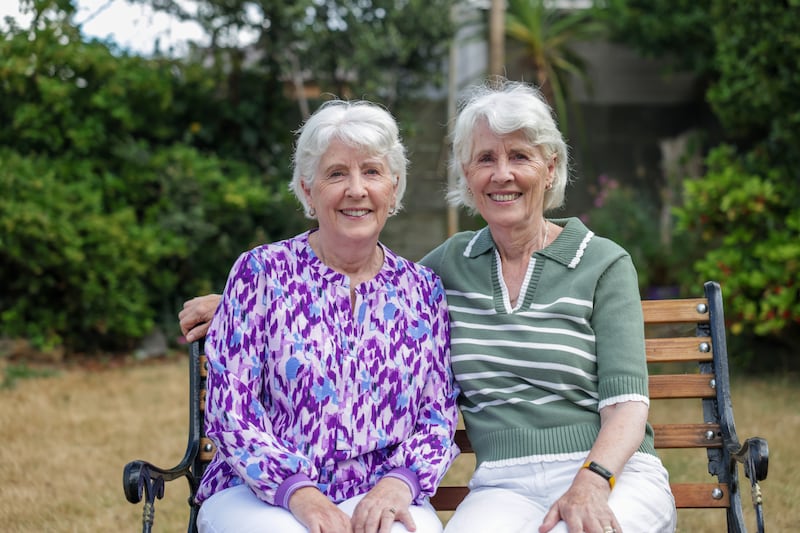
Seventy-three year old Kay Murray has experienced twin life in just about every way possible. Not only does she have an identical twin sister, Eileen, she’s also mother to a set of twins, and grandmother to nearly eight-year-old twins. And if that wasn’t enough, her son, who is a twin, married a twin, And her daughter, who is a twin, married a triplet.
READ MORE


“My mother had myself and my twin sister when she was 37. I had my twins when I was 37. And my daughter had her twins just the month before she was 37,” Murray says.
“It’s brilliant being a twin”, she adds. Murray lives in Cork, while her twin Eileen lives in Dublin. “We’re probably mirror images of each other … mannerisms, very alike. Speech, very alike.”
“Every six weeks I try to get up for the weekend. And I feel more or less feel complete,” she says. Growing up “we were very, very close. We really didn’t need anybody else … We actually worked in the same company”.
When they were younger even their older brother couldn’t tell them apart. “We had to wear different shoes,” says Murray.
“Growing up, I was Kathleen and she was Eileen and we were known as Katheileen”.

So did being a twin herself prepare her for parenting twins?
“I didn’t know until 10 days before they were born [that I was having twins]. My mother didn’t know until we were born. And at that stage I had four other children,” she says.
Murray breastfed her twins, at a time when fewer women in Ireland breastfed. “Obviously I couldn’t do it out, so I didn’t go out much. I breastfed them until they were about three … It was easier to get them down for their naps with just the breastfeeding. And it’d give me two hours respite.”
Her father-in-law, who was 79 when the twins were born, was “brilliant” she says. “He was an extra pair of arms to hold them when I was busy, because I used to spend two hours in the afternoon on the road collecting kids from school. There were three different schools. I’d run home, breastfeed, run back out again, collect the next lot.”
After Murray’s twin grandchildren were born, she was reminded how much work was involved caring for two babies at the same time when their six-year-old sister was briefly hospitalised. “I used to mind the kids for two-and-a-half hours [to allow their mother visit their sister] I’d be walking the streets [around] Griffith Avenue … I think I lost half a stone. That’s why I don’t want any of the others to have twins,” she says, laughing.
Fifty-four-year-old twins Dervilla Power and Paul O’Donovan were their mother’s “miracle babies”, following the loss of two older baby brothers with spina bifida, O’Donovan says.
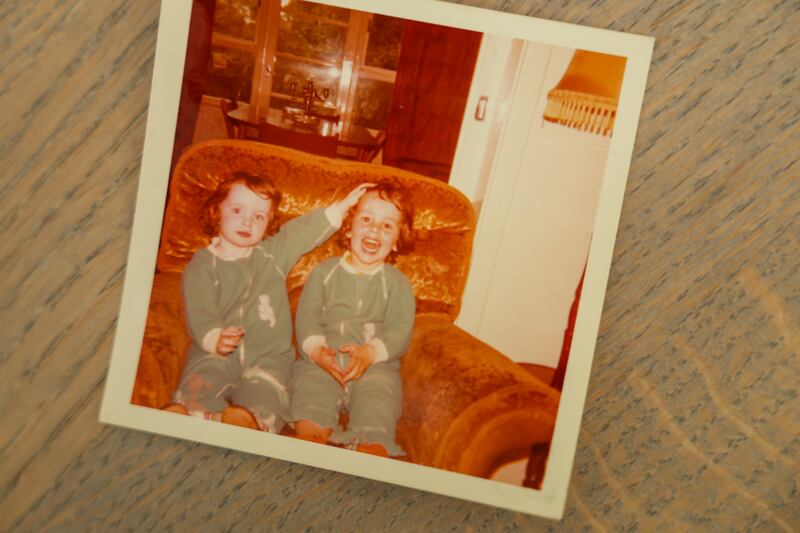

The twins have one brother who is five years older than them. “We were very close and we never had arguments like lots of siblings do,” Power says. “We went everywhere together,” O’Donovan adds.
Although they formed their own friendships in their teenage years, they still remained closely connected. “All my girlfriends were her friends,” O’Donovan says. “I wouldn’t let any of my friends date her,” he laughs.
The twins’ spouses learned very quickly not to involve themselves in “debates” between the twins.
As for “twin telepathy”, O’Donovan says he has sensed when things might be up with his sister. But he has also felt it physically. “I remember one occasion I started getting these terrible stomach pains … It went on for a couple of weeks. I went up to my mum … and Dervilla was sitting on the couch. I’m looking for sympathy and the two of them started laughing … and Dervilla said: ‘I’m pregnant’. And once she said that, [the pain] was gone”.
[ ‘Having matching heart attacks is the most twin thing we’ve done’Opens in new window ]
They are in daily contact and when O’Donovan moved abroad for work, Power says she really struggled. “I found it so difficult. When he told me, I think I cried the whole weekend until he left.” “I mourned him going away. It was like a living grief.”
The closeness extends beyond the sibling relationship – their children are also extremely close. Power is a special-needs assistant and has a very close bond with her nephew, who is autistic.
Three sets of twins may not be for the faint-hearted. But for Phil Kane-Flynn, who is the mother of two non-identical sets of twins and one identical set of twins – all girls – multiples are all she knows.
“It’s joyful and it’s challenging at times, as well … but I’ve no idea what it’s like to have a single child,” she explains.
“The beauty of having the twins, especially with the big gap from the big ones to the little ones, is they entertain each other.”
“There’s 14 months between Rebecca and Emma, and Tara and Emer,” and Kane-Flynn was shocked to discover she was expecting twins a second time. “My mother was alive and she was a huge, huge help to us ... I don’t think I would have survived it without my mother, to be honest.
“The oldest two had to grow up pretty quickly, because at that time a quad buggy wasn’t heard of.” The older twins stood on the back frame of the double buggy, she explains. “You do learn to live on very little sleep. I don’t think you ever sleep ever again once you have children.”
Twenty-eight year old Emma is four minutes younger than her sister Rebecca and that mattered a lot growing up. “It was really good having a twin sister growing up. You always had a friend beside you.” In fact the twins only really went their separate ways when they went to college “and that was a major shock”, Emma says.
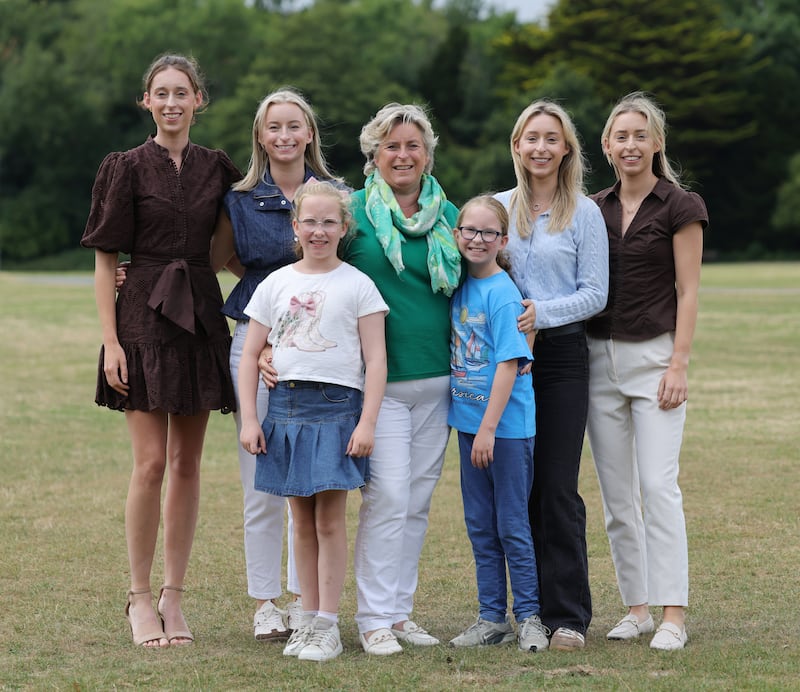
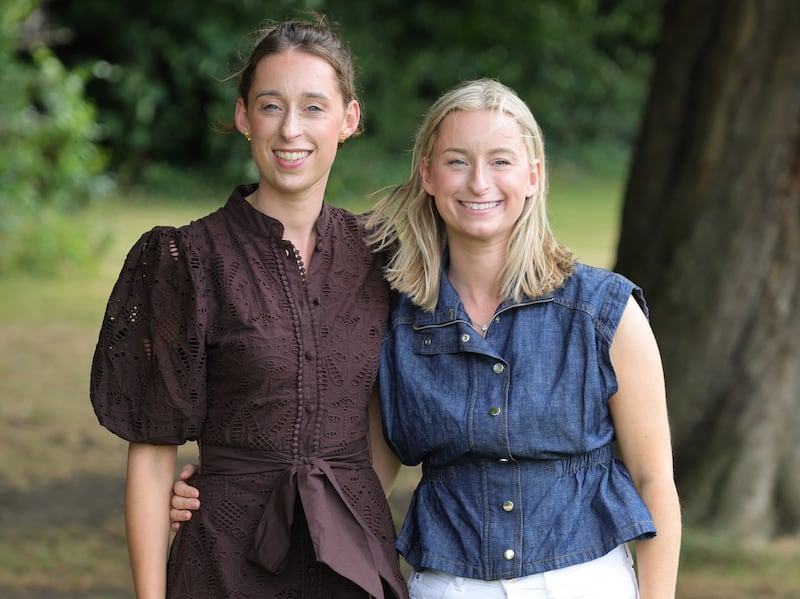
Rebecca says there are lots of upsides to being a twin but “the downside is the clothes. Because we’re all the same size, your clothes just vanish”, she laughs. The closeness makes separation all the harder and Rebecca explains when Emma emigrated to Australia for a time, she felt “lost”. “It was like a void.”
Identical twins Emer and Tara (27) have “learned to go by two names”. “People mix us up all the time,” Tara says. In school, teachers couldn’t tell them apart, and even boyfriends have confused them.
The identical twins are a force to be reckoned with, their mother suggests. “As the ‘middle child’ you have to be”, Tara replies, laughing. “We were the babies and then we were replaced,” Emer concurs. “We’ve never had a birthday apart,” she continues. “Tara had an exchange in Australia, and that was the first and longest we’ve been apart, but I actually went over to meet Tara for our birthday in Brisbane.”
Mum Philomena recalls a time she was sitting having tea with Tara, when Tara dropped the cup and ran out the door. A couple of minutes later the phone rang: Emer had fallen off her horse. “Tara was down with Emer before I got down. I said ‘Tara how did you know?’ She said ‘I’ve no idea. I just got this feeling’.”
It’s not something Philomena has witnessed between her fraternal twins.
Ten-year-old twins Alicia and Mabie have very different interests. The best part of being a twin is never being “stuck for a friend”, Alicia explains. “I like horse riding and pink stuff, and Mabie likes army soldiers and football,” she continues. “It’s sometimes fun [being a twin] and it’s sometimes not, because they could steal your stuff,” Messi fan Mabie explains. “They say sorry, but they do it again.”
Still “there’s lots of things to love about having a twin sister” she admits, though having different interests isn’t one of them. “When Alicia’s in pony camp, I get sad because I miss her. And then I realise how hard it is being a single child.”
Anna Farren discovered she had polyendocrine metabolic ovarian syndrome, when she started trying for a baby. “We were having difficulty getting pregnant,” she explains. “I took Letrozole ... There’s a higher risk of there being multiples, which is why I have the boys”.
“It was so difficult to get pregnant in the first place that it was more joy. And then of course comes the fear,” Farren says of discovering she was expecting fraternal twins. “I will say I am delighted that my first children were twins, because I think if I knew what it was like having one baby, then the fear would be way more overwhelming.”
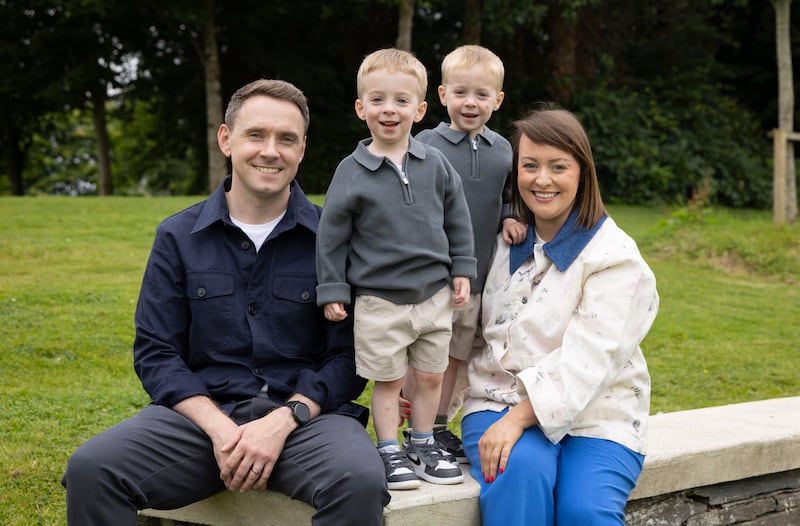
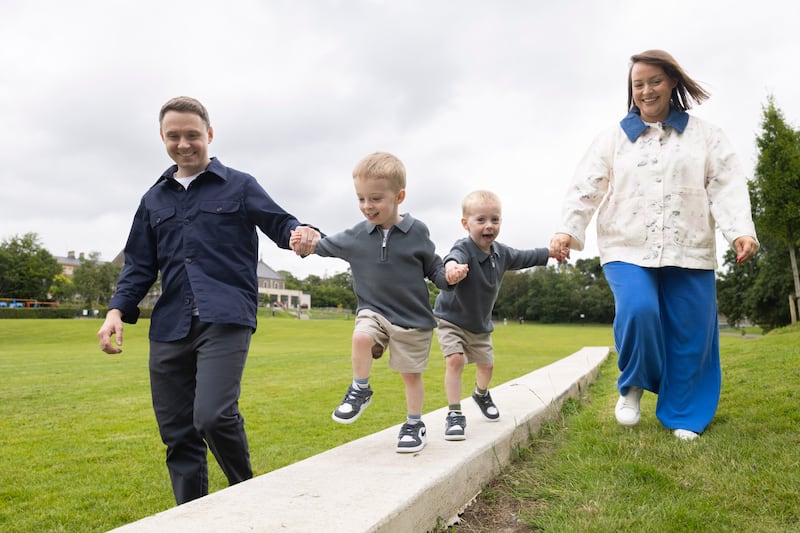
Going from zero babies to two babies required an all-hands-on-deck approach. “With one baby, I would have been jealous of people who say ‘oh, he takes the baby for the night’. There was no such thing, just the two of you were up all the time and that was that. It didn’t matter that he had work and I didn’t.”
“My mum and my auntie would do a night vigil basically and come for a night a week and they would take the boys that night. They’d be in the house and we would just get to sleep for the night. Knowing that was coming, you could get through the rest.”
The real challenge came when the twins, who are now aged three, “were both on the move”, she says. “At the beginning, logistically, it was fine. They couldn’t move. The public and people you don’t know see you coming and they’ll open the door, they’ll help … They see you coming with twins and you’re a bit of a novelty.”
“They are very different,” she says of her twin sons. And yet they are “so lost without one another”, she adds. “One had to go into hospital for a night; he had a virus. So one was on his own in the room and he was lost without [the other]. Equally, the one in hospital didn’t like going to sleep without the other one.”
She’s now five months pregnant again with a single baby. “The reality was it could have been twins again, but we made our peace with that. If we could do it once, we could do it twice.”


