
I don’t know about you, but I’ve been living beneath a giant rain cloud for so long that I’m feeling deeply nostalgic for last year’s drought. The only consolation for us gardeners is that the rain must stop eventually. In the meantime, here is a reassuringly hands-on list of useful gardening jobs that can be carried out over the coming weeks, even if it’s still lashing from the heavens. All will pay rich dividends down the line.
Sow tomato seed
Whether you’re a dedicated tomatophile who knows their heritage beefsteaks from their tumbling F1 grapes, or simply a gardener who loves the taste of your own homegrown toms, this vegetable (yes, we know, technically a fruit) is one of the staples of the summer garden.
Sow the seed sparingly into a 2-litre pot as soon as you can, placing it in a bright, warm spot under cover, ideally with generous bottom heat. Then prick out the young seedlings into individual small pots filled with a very good quality seed and cuttings compost as soon as they’ve produced their first set of true leaves, before growing them on in much gentler heat under cover.
Bear in mind that these heat and sunshine-loving plants typically need to be bumped up into successively larger pots several times over the course of their short lives. Here in Ireland, they’re best grown under cover in a glasshouse, polytunnel or sunny porch, where they’re guaranteed protection from wind, rain and cool temperatures. Where growing space is tight, concentrate on a variety suitable for hanging baskets, such as ‘Tumbling Tom’. Recommended seed suppliers include brownenvelopeseeds.com, greenvegetableseeds.com, irishseedssavers.com and quickcrop.ie.
READ MORE


Top-dress containers
After months of endless rain, container-grown shrubs and perennials will benefit hugely from a generous top-dressing to replace lost nutrients and revive tired compost. To do this, gently scrape away the top 5cm layer of compost and then replace it with a good-quality, fresh John Innes-type posting compost, followed by a few handfuls of a good-quality, slow-release, organic pelleted fertiliser. Remember that for acid-loving plants such as rhododendron, pieris, blueberries, Japanese acers and camellia, you’ll need to use an ericaceous compost as well as a fertiliser designed for lime-haters.
Also bear in mind that established plants grown in the same container for several years are possibly pot-bound and are best re-potted into a larger container. Failing that, shake most of the old spent compost loose from the root ball, lightly trim the roots and then quickly repot using fresh compost.
No-dig approach
The soil in most parts of the country is still too waterlogged to dig or rotovate without causing damage. Instead, adopt the no-dig approach by blanketing beds with a 5cm-8cm mulch of garden compost or well-rotted manure. With any badly overgrown areas that you’d like to turn over to cultivation, strim or cut down any coarse weedy growth, spread a generously overlapping layer of strong cardboard and then finish off with a generous organic mulch as above. Ideally use a few wide planks spread beneath your feet when doing this to protect the soil from compaction.
Plant seed potatoes
An Irish spring wouldn’t be the same without the ritual of planting seed potatoes into rich, dark, friable, weed-free soil, enriched with generous amounts of well-rotted manure. But if your garden or allotment looks like it will still be too wet for planting by late March to early April, then consider instead planting the chitted tubers into individual small plastic pots buried into growbags (lay the latter on the flat and cut slits into them for planting).
This is a great time of year for kitchen gardeners to plot out annual crops on paper to help minimise the risk of pests and diseases
Once conditions improve, these pots of sprouting baby potato plants can then be very gently removed from the bag (take care not to damage their fragile roots), tipped out of their pots and quickly planted into pre-prepared drills, making sure to water them generously to help the roots to re-establish. For best results, concentrate on blight-resistant varieties such as Allouette, Twister, Kelly Sevilla and Levante (fruithillfarm.com).
[ What are the best vegetables and fruits to grow in a polytunnel?Opens in new window ]
Sow sweet pea seed
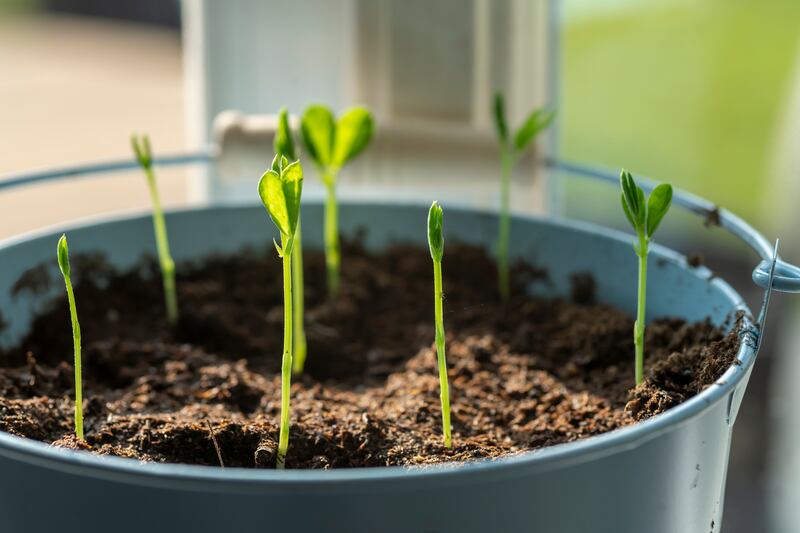
For strong, vigorous, floriferous plants in bloom by July, sow seed of sweet pea as soon as possible. Use a fresh, good-quality seed, pre-chitting it by gently wrapping within a few layers of damp kitchen paper in a clear plastic lidded container placed in a cool, bright, frost-free spot until it sprouts. Then very gently sow the chitted seed shallowly into deep root trainers filled with a good quality seed compost and place the latter in a cool, bright, frost-free spot to grow on, for planting in the garden in late April.
Start prepping summer containers
Even the most tasteful of gardens benefits from some summer dazzle in the shape of colourful summer container displays. If your pots are currently filled with spring-flowering bedding and bulbs, then you can still get a head start on prepping the tubers and bulbs of dahlias, lilies, gladioli, cannas, arum lilies, and tuberous begonias by potting these up into 2- or 3-litre plastic pots using a good quality John Innes-type compost. Place the pots in a bright, frost-free spot under cover – a sunny porch, conservatory, glasshouse or polytunnel are all suitable – taking care not to overwater. By the time your spring displays are ready to be evicted from their containers, you’ll have the perfect replacements waiting in the wings.
Sow flowering annuals
If you have sufficient bright, frost-free growing space under cover, start sowing seed of hardy and half-hardy flowering annuals this month for pricking out into modules or individual pots and then planting outdoors in early summer. For best results, use a really good-quality seed-compost (my favourite is Klasmann, available from fruithillfarm.com and quickcrop.ie) and a heated propagator. Recommended Irish seed suppliers include seedaholic.com and all good garden centres, while recommended types to sow between mid-March and mid-April include larkspur, corncockle, opium poppy, cornflowers, nicotiana, tagetes, amaranthus, cosmos, and rudbeckia.
Plant garlic and onions
Early spring is traditionally the time to plant garlic and onions into a sunny, sheltered spot with fertile, weed-free, friable soil that hasn’t been recently manured. But if ground conditions are too wet, you can still get a valuable headstart by planting the individual onion bulbs and garlic cloves into modules for transplanting into their final positions once conditions improve. Recommended varieties include Stuttgart, Sturon (onions) and Vallelado, Therador (garlic).
This week in the garden
Give winter-chilled compost heaps a reboot by vigorously turning over the material with a pitchfork. If it smells sour and looks wet and slimy, add a generous layer of browns in the shape of shredded cardboard, straw, woodchip or shredded paper. Compost heaps should also be covered to protect against the chilling, leaching effects of heavy rain.
This is a great time of year for kitchen gardeners to plot out annual crops on paper to help minimise the risk of pests and diseases. For the purposes of crop rotation, vegetables can be divided into the following five groups: brassicas, root vegetables, legumes, onions and potatoes.
Dates for your diary
Talks at the National Botanic Gardens Visitor Centre, Glasnevin, Dublin 9; Saturday, March 21st. Raw Gardening: Working with Nature in Your Garden, by Vicky Ind of the Individual Plants Nursery, on behalf of the Irish Garden Plant Society, at 11.30am, followed by RHSI Live with Oliver Schurmann of Mount Venus Nursery at 2.30pm. botanicgardens.ie.
RHSI Bellefield Plant Fair Shinrone, Co Offaly; Sunday, March 22nd (11am-4pm). With stalls from many of Ireland’s best independent plant nurseries and plant growers, see rhsi.ie.