
President Catherine Connolly is not yet among the famous alumni whose portraits hang from the high ceilings of Parkinson Hall in the University of Leeds.
Its most famous (or infamous) alumnus, Keir Starmer, the first British prime minister to be a graduate of the university, is one of them, along with the Olympic-winning triathlete Jonny Brownlee and the Nobel Prize winner for literature Wole Soyinka.
Connolly graduated from the University of Leeds with an MSc in clinical psychology in 1981.
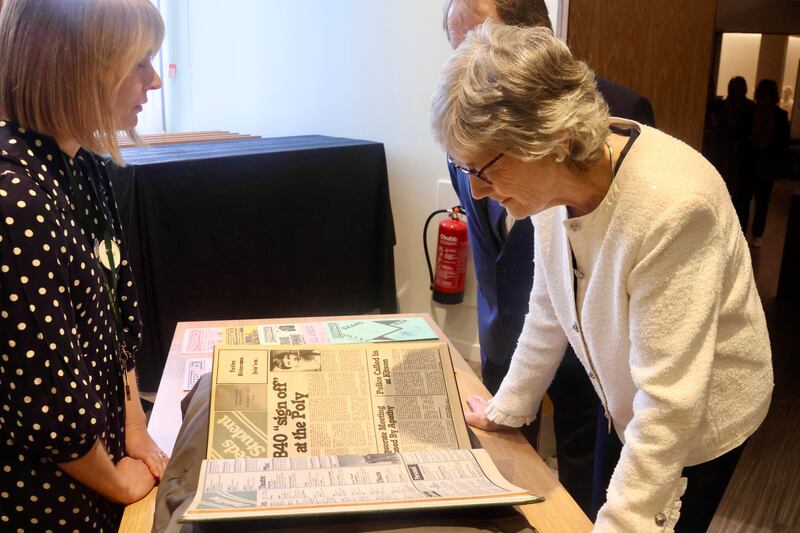
As she was reminded on her first visit to the university as President of Ireland and the first since she left, it was a dark time for women living locally. The Yorkshire Ripper was still on the loose and had killed 13 women. The student union archives, which she viewed, contained a flyer from her time for a Reclaim the Night march.
READ MORE


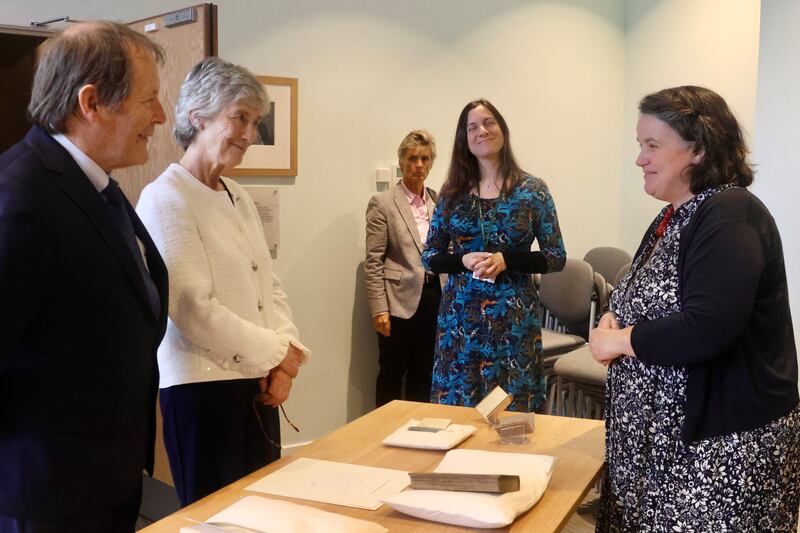
She also viewed the university’s collection of material associated with Yorkshire’s most famous literary family, the Brontës, whose father, Patrick Prunty (who changed his surname to avoid the connotation with Ireland), was originally from Co Down.
“We’re claiming them back,” the President joked in reference to the Brontë sisters, Emily, Charlotte and Anne.
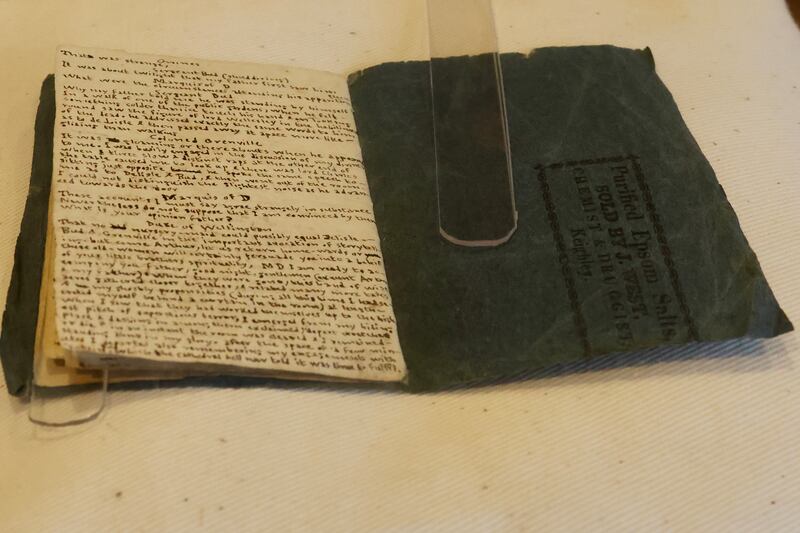
Paper was scarce in 18th-century England and Connolly viewed a mock newspaper written up by Charlotte Brontë in tiny handwriting on an Epsom salts wrapper when she was just 13. Charlotte read the newspaper to the family collection of toy soldiers.
The special collections contain a first edition of Bram Stoker’s Dracula and a letter to a friend exhorting him to buy a book.
The President then went on to meet students who are keeping the flame of Irish dancing and sport alive in the university. She recalled that she first took up running while she was studying there. “When I started, I could hardly run a mile,” she said.
In the afternoon she travelled to the Leeds Irish Centre. This unprepossessing building off a ring road belies its handsome interior, which has been recently refurbished. The first dedicated Irish centre in Britain, it was opened in 1970 and is still going strong after 56 years. The founders had the foresight to purchase the site around it and, where other Irish centres in the north of England have struggled, it thrives.
The Leeds Irish community has long roots stretching back to waves of emigration in the 1830s. After the Famine, one person in eight in the city was Irish. A century later another wave came to Leeds, mostly from the west of Ireland and in Mayo in particular to build the motorways, tunnels and housing estates in postwar Britain.
The Irish population continues to dwindle as those who arrived in the 1940s and 1950s reach the end of their lives and are not replaced. However, a sense of Irishness was transmitted to subsequent generations and more than 200 people from across the north of England attended the President’s speech.
The Leeds Irish Centre is a storied place where Oasis played one of their first gigs; TV presenter Gabby Yorath, whose mother is Irish, was crowned the Yorkshire Rose in 1991; and the first-ever televised game of darts took place back in 1973.
The President said with regret that she had never visited the centre while a student in Leeds, but was determined to make up for that.
She referenced the many links between Leeds and Ireland. Patrick Prunty, the father of the Brontë sisters, had met his wife in the city;Michael Davitt had lost an arm in Leeds as an 11-year-old working in a cotton mill; Leeds United was backboned by Johnny Giles and Ireland’s favourite Englishman Jack Charlton, who was a regular visitor.
As an erstwhile Irish emigrant to Britain, she recalled how Irish women usually outnumbered men in Ireland’s emigration figures to Britain.
“By the 1960s roughly 30,000 Irish-born nurses were working in the NHS – one in eight of the entire nursing workforce. They held that health service together in its early years. Ireland is proud of you.”
The President said Irish diaspora communities had enriched the places they went to, but also made an important contribution to their homeland.
“The diaspora have shaped our identity and enriched our republic. Indeed, I would say your contributions have forced us to grow up and become a more inclusive society and to belatedly recognise how important our diaspora is across the world,” she said.


