
Two teens walking by the lengthy line of cars stuck along the quays in Dublin city centre regarded the gridlocked commuters. “You can’t park there,” one shouted before they descended into laughter. Not every commuter found humour in the situation.
The first cars into the city centre at 6am on Wednesday were met with the reality of fuel protesters having extended their blockade of roads beyond O’Connell Street, across O’Connell Bridge and a number of key junctions along the quays.
Such was the extent of the disruption that gardaí had difficulty saying for sure how many roads were blocked.
Bus drivers were surprised by the changes to the protest in the morning, having been ushered down Bachelors Walk the previous day.
READ MORE


Some buses had been stranded in place for four or five hours. One driver, who did not wish to be named, said he took over the bus from a colleague while it was stuck in traffic. The pair did their handover while stuck on the bridge over the Liffey.

John Dallon, a spokesman for the protesters, put the onus on the Government to end the blockages, noting the “power is in their hands” to reduce fuel prices.
While those stuck in traffic hoped for a reprieve, Dallon said the blockade was “indefinite”, but asked commuters to “bear with us”.
“We are doing this for the common good,” he said, noting fuel prices affected all drivers across the country, not just those in farming, haulage and related industries.
John Young, from Co Louth, runs Travel Young Bus Hire and says the protesters slept in their vehicles overnight.
After refuelling with coffee on Wednesday, they extended the blockages. “We’re not allowed to do it with vehicles, but we can do it with people walking,” he said.

Looking at his watch, Young said: “The city has been at a standstill for the past four or five hours. The main objective is to get the price of diesel down to around €1.70.
“This isn’t just for agricultural services, truck drivers and bus operators. All of the public will benefit from this.
Rising fuel prices, however, are disproportionately affecting those sectors, he said. His weekly fuel bill for the four buses his company runs has risen by €400 each, or about €1,600. The people most affected, he says, are the farmers and those running larger vehicles that consume more fuel.
Haulier Mossy Owley and construction business owner Trevor Jackson, both from Co Wexford, expressed concerns that jobs would be lost across the sectors they work in.
“I’ve a mortgage and three kids, with one on the way. It’s scary enough times, there is a lot of uncertainty. Companies are running at a loss, it can’t keep going the way it is going,” Owley said.
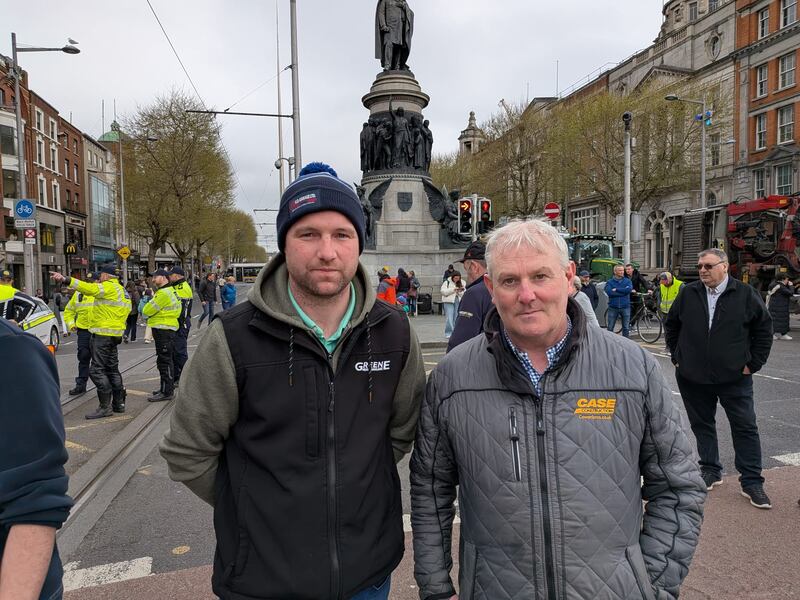
He called for a cap on the price of diesel – for large, long-haul trucks such as his own – he said there was a difference of as much of €500 per 1,000 litre fill at the fuel pump. Owley said the result will be lost jobs.
Jackson agreed. About 50 people work at his company, TJ Groundworks.
“Our costs have gone up hugely in the last month,” he said. “It is not sustainable for us. There will be people laid off if the Government don’t step in.”
Looking around the assembled men in their gilets and chequered shirts, Jackson said: “Farmers, contractors, builders, drivers. Those are the people here. These are all working people, they don’t want to be here. They have businesses to run. We are not professional protesters.”
On the north quays gardaí were diverting traffic across Grattan Bridge, which crosses the Liffey from Capel Street to Parliament Street. The majority of drivers took the right turn across the bridge without question, taking them out of the gridlock, but some stopped to ask for guidance.
“Most want to know how to get to the Jervis Centre,” one garda on duty said. “We have to tell them you just can’t”.
This traffic management measure meant the majority of vehicles on the north quays heading towards O’Connell Bridge were tractors and lorries involved in the protest, or buses.
Not so on the south quays. Several drivers were trapped in their vehicles for hours, particularly on Burgh Quay, between Tara Street and O’Connell Bridge.
Lorraine, an office worker from the northside, said her usual 20 minute commute into work for 6am had left her stranded on the Dublin quays for more than 2½ hours.
She said she understood the reasoning behind the disruption but was “running out of sympathy” for the cause.
The only people the action hurt, she said, were “the Joe Soaps”. She described the traffic as “chaos”, with lengthy diversions in place.
“I support these guys completely, but there should be some toilets here if I have to stay for more hours,” said Adam Alinowski, a taxi driver stuck beside O’Connell Bridge having terminated a fare on arriving at the protest. “I can’t say even one bad word about farmers [protesting in the city].”
The protests, he said, were the best way to reduce rising fuel prices and inflation.

Having moved to Ireland 20 years ago, Alinowski said he remembered fuel prices being less than €1 during the financial crash even when listed prices of Brent crude, a global measure for oil prices, were as high as $120.
Alinowski said taxes on fuel for those who work in the transport sector were unfair as they were also getting taxed on their income as well as on their costs.
Anne Kearns, a commuter into the city centre, said she had been sympathetic to the protesters before today. She said the protests would “garner their cause no sympathy”.
The disruptions to traffic left her an hour late for work. She said it was a “disgrace [that the protesters] are holding the city and commuters for ransom”.
Also stuck in traffic was Dawid, a roofing contractor. Coming from Dunshaughlin, Co Meath, he hit gridlock en route to a job at the Heineken building.
“I agree with them on the message of the protest, but we are all workers – we all need money, and we all need to go to work to get that money,” he said. Dawid and a colleague were stuck with their equipment in their van just “two minutes” away from work.
“I would support any other way they can protest it – to allow the people that have to get to work to get there, so they can support their families,“ said Dawid. “I can’t afford to spend the whole day in traffic.” He said he would not get paid for the day if he was not at work.
Georgina, a solicitor, had been making her way from Donnybrook to the Four Court at about 8.30am when she realised she had become trapped in the protest traffic.
“I think it’s very unacceptable, to interrupt people going to work, people going to hospital appointments. Luckily, I’m just going to my office, but I think it’s a ridiculous thing to do. It’s only affecting other people, not the Government. The Government are sitting up in Leinster House, and we’re sitting here on the quays.”
After more than two hours stationary on the quays, she was becoming frustrated, and concerned about how she would manage the rest of her day.
“I’ll have to try to make arrangements, pick people up after school and things like that,” she said.
She said no garda had approached her in the time she had been on the quays.
“The bus drivers have been very good, trying to find out what’s happening, but they are the only people we’re getting any information from,” she said. “There have been no gardaí down to us and I think that’s a big problem. There should be more of them, they should move on to protesters at this point. They made their point, they should let people get to work and wherever else they need to go.”


