

It was a dark, wet night last April when Bronagh English took her car out for a Leaving Cert grind in Co Tipperary. She never made it back.
She attended the honours maths lesson with two friends, dropping them home afterwards. Then she set out for home near Clonmel, taking a rural route that was new to her. This brought her into danger.
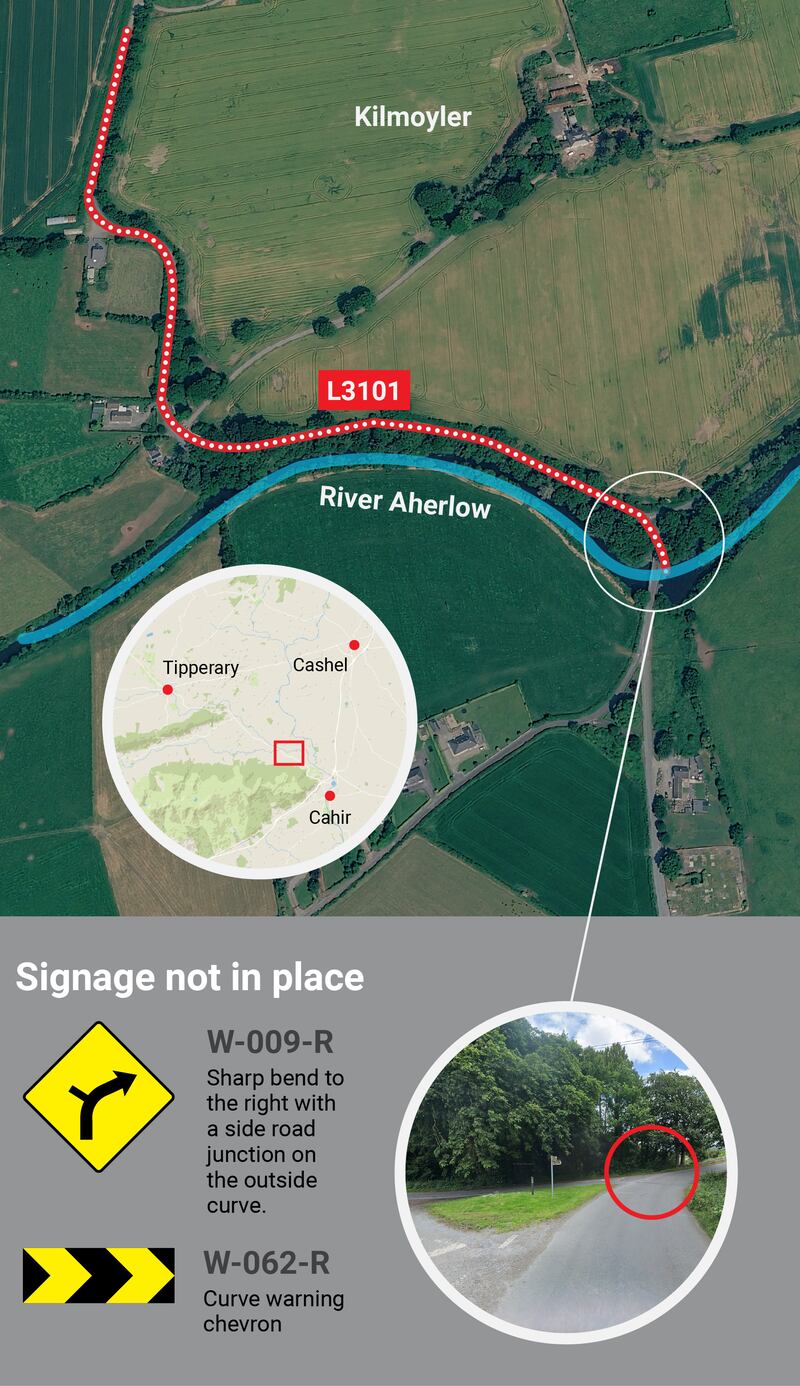
Along the narrow, winding road she came to a blind 90-degree turn on a three-point junction. This led immediately to the humpback Killardry Bridge, a structure dating back to 1800.
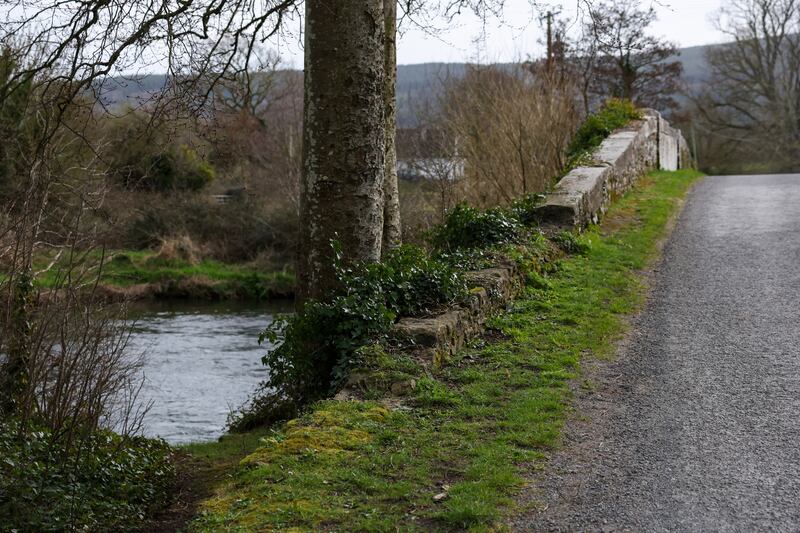
On rounding the sharp right-hand bend her white 2021 Ford Fiesta appears to have hit the bridge parapet wall to the left of the road. The car was catapulted into the river Aherlow below. She suffered fatal injuries.
READ MORE


Bronagh was 18, an award-winning student and the eldest of four children of Mike and Danielle English. She had passed her driving test 10 weeks previously and recently completed her mock Leaving Cert exams. With her graduation from Rockwell College imminent, she planned to study business at University of Limerick.
She was buried in her yellow debs dress, a treasured garment she never got to wear.
“I wasn’t able to come out here for a long time,” says Mike English, a technology entrepreneur, as he drives with his wife towards the scene of the crash.
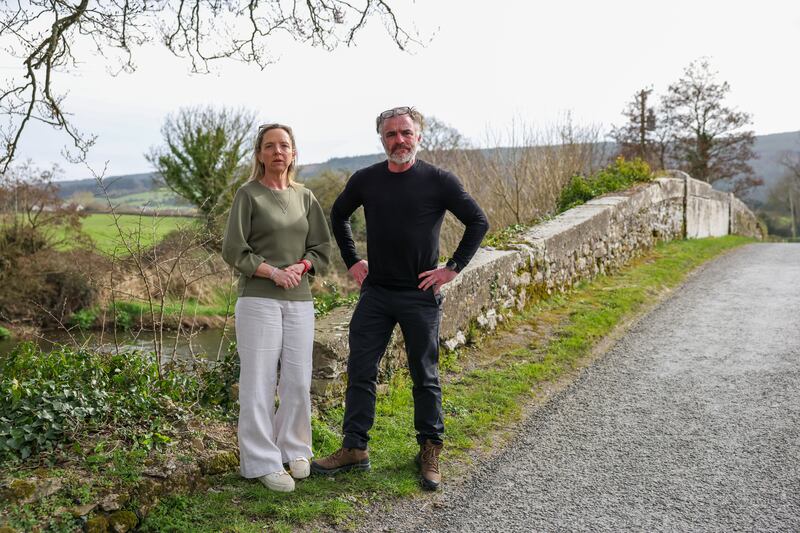
Pointing to large numbers of chevron warning signs on the main road from Cahir, the nearest town, he notes the lack of any such signs before the abrupt turn on the secondary road where his daughter lost her life.
“Just the one would have done us,” he says. “She didn’t know the turn was there.”
The L3101 road took Bronagh’s car southbound in the direction of Kilmoyler Cross, which is on the main road linking Limerick and Waterford.
We didn’t just lose her; we lost her in the most horrific circumstances
— Danielle English
The absence of warning signs about the junction ahead is but one concern her parents have about the road, the speed limit and the condition of the parapet wall leading to Killardry Bridge. Only 14 weeks earlier, the bridge was graded with a “significant damage” rating in an inspection for Tipperary County Council.
The family believes this raises serious questions for the council, but the local authority says it is unable to discuss the case.
There was no warning about the oncoming turn or the need to reduce speed as it approached. At the point of impact the parapet lacked capping on top, meaning it was lower than the rest of the wall.
This was immediately to the right of two trees. A car turning late to avoid the trees might be more likely to hit the wall at that place. But instead of the wall potentially sending the car back into the road, its low height seems to have functioned like a ramp, sending the car upwards and, flipping it over before it hit the water.
A forensic engineer’s report commissioned by Mike English found this exact spot was the only “reasonable location” where such an incident could have happened.
“We think that she probably thought she was going straight because there was nothing to say there was a bend,” says Danielle English.
“Even if she had skidded or whatever in heavy rain, the wall should have stopped her.”
Bronagh was never late so, on that night in April 2025, her mother was quick to sense something was wrong when she did not return home as expected.
Guided by the last location pin signal from her daughter’s phone, Danielle left for Kilmoyler Cross but could not find her, driving up and down the main road six times, her concern building all the time.
When the alarm was raised it was the parents of a friend of Bronagh who found crash debris by the bridge. They alerted the emergency services. Her body was recovered from the water shortly before dawn the following morning.
“You don’t believe your worst nightmare could come true,” her mother says.
Conversation fondly recalling a “one-in-a-million” daughter fades as the couple now approach the fateful junction where Bronagh died.
In the middle is a triangular grass island, with a Tipperary Heritage Way signpost for hikers. Beside it is a separate but lower waymarking post, also for hikers. Neither is reflective so they are unlikely to be seen from a distance at night.
The left turn leads into a cul-de-sac, with a sign placed on the right side of the road warning of “deep water” ahead.
But there is no sign at all in advance of the junction to say the through road turns abruptly to the right before a bridge. Although we know what lies ahead as we approach the junction, it still seems to come up very quickly.
It’s quiet as we walk around, the sound of tweeting birds overhead audible as well as the unmistakable sound of gushing water far below the bridge. The river has a strong current.
A big four-wheel-drive tractor hurtles by and then a noisy truck, signs that this countryside road remains a busy thoroughfare.
It must be very difficult to come here? “It is, yes,” replies Danielle English. “We didn’t just lose her; we lost her in the most horrific circumstances.”

The crash remains under Garda scrutiny, so the force has nothing to say publicly about it or on individual lines of inquiry.
“An Garda Síochána is continuing to investigate a single-vehicle road traffic collision which occurred on April 24th, 2025,” the force said.
Still, gardaí have indicated to the English family that Bronagh was within the speed limit. This comes from an examination of video from a security camera at a nearby house that picked up the white Fiesta on the road.
“They said she wasn’t speeding,” says Danielle. “There was no swerve, no nothing.”
Still, the family have questioned why motorists were not warned to cut speed before the junction.
The road was governed by the national speed limit, 60km/h at the time after a reduction from 80km/h the previous February. This is too fast for safety, according to a report for Mike English by consultant forensic engineers Denis Wood Associates.
“[To] safely negotiate the right-hand bend on the immediate approach to the bridge requires a significant reduction in travel speed from the national speed limit of 60kph, and particularly from the national speed limit which would have pertained approximately 2.5 months before this incident,” says the report.
Denis Wood Associates also examined the lack of signage.
“On our assessment, the sharp nature of the incident bend – in combination with the split junction to the outside of same and the presence of the humpback bridge at the southern end of same – is such that the presence of a warning sign(s) would have been justified, either by an advance warning sign W009R ‘side road on outside of bend’ or ‘sight board’ multiple chevron signs (W062),” the report says, referring to the technical codes for the signs in question.
“In our opinion, the multiple chevron signs would have been the most appropriate as ‘sight board’ warning signs at the incident location. For eastbound traffic, chevron signs could have been placed on the grass island at the split junction and close to the incident point,” it adds.
“In this tragic incident, the car appears to have mounted the bridge parapet wall and entered the river at the only reasonable location where this could have been facilitated.”
Another report for Mike English, by engineers and assessors John G Sullivan & Co, finds no problem with the Fiesta itself.
“This vehicle appeared to have been in excellent overall condition pre-accident,” they said.
Lawyers for Mike English also sought access under the Freedom of Information Act to county council records on the condition of the bridge.
The records released included findings from a June 2024 bridge maintenance inspection, which set out an overall “warning” rating and cited “warning” in relation to abutments and piers and vegetation. Still, the external walls and parapets were described as “good”.
There was also a separate January 2025 engineering inspection report, which set out overall rating of “significant damage” on the bridge.
“The capping of the downstream wall has been partly removed,” it states.
This report also cites four areas of missing stonework to the upstream wall and two areas to the downstream wall.
The family questions why no action seemed to follow this warning of bridge damage, three months before the fatal crash.
The Irish Times submitted nine questions to the council on the lack of warning signs, the speed limit and the engineering reports.
The local authority responded, expressing sympathies to Bronagh’s family and friends.
“The accident investigation process is called LA16, which is followed by all local authorities where a road fatality occurs,” it said.
“Tipperary County Council has co-operated fully with An Garda Síochána in their investigation as part of the LA16 process. Tipperary County Council is not at liberty to comment on specifics outside of this investigation.”
The LA16 process is a joint reporting procedure designed to collect key data at serious and fatal traffic collision sites. The objective is to record factual information so it can be quickly established whether there are road factors that may have contributed to the collision and need to be remedied.
As the first anniversary of Bronagh’s death approaches, her family are still waiting for answers.


