
Delivering a new cost-of-disability payment will be “so challenging” within current budgets, Minister for Social Protection Dara Calleary has said.
Speaking to The Irish Times at a cost of disability summit on Wednesday, attended by more than 350 disabled people and advocates, he noted additional cost to households with a disabled person was up to €555 a week.
Costs include increased heating and energy costs associated with reduced mobility and costs of charging equipment; accessible transport; assistive technology and equipment; housing adaptations; specialised diets, guide dogs and deaf-specific alerting systems.
Delivery of a new payment, in addition to and separate from current disability payments, is a commitment in the programme for Government.
READ MORE


A public consultation on a new payment received more that 1,100 submissions including 975 from individuals, many of whom detailed their personal struggles.
Elaine Grehan, who is deaf, said Wednesday’s event was “crucial” in allowing disabled people “the opportunity to show the lived experiences and barriers, particularly to ministers”.
The sense of exclusion felt by the estimated 5,000 deaf people “was not all about money,” she said.
“Society is all based on audio. We can’t go into the shops and communicate with people, can’t access cinema, can’t use an intercom on a doorbell, so deaf people become very isolated,” she says.
There were additional costs, for communication and hearing aids. “But we also need more investment in the accessibility of services.”
Brian Hayes from Kilkenny is chair of the National Platform for Self-advocates, an organisation for intellectually disabled people.
He noted the “very expensive costs” for wheelchair users in keeping them charged and changing batteries.
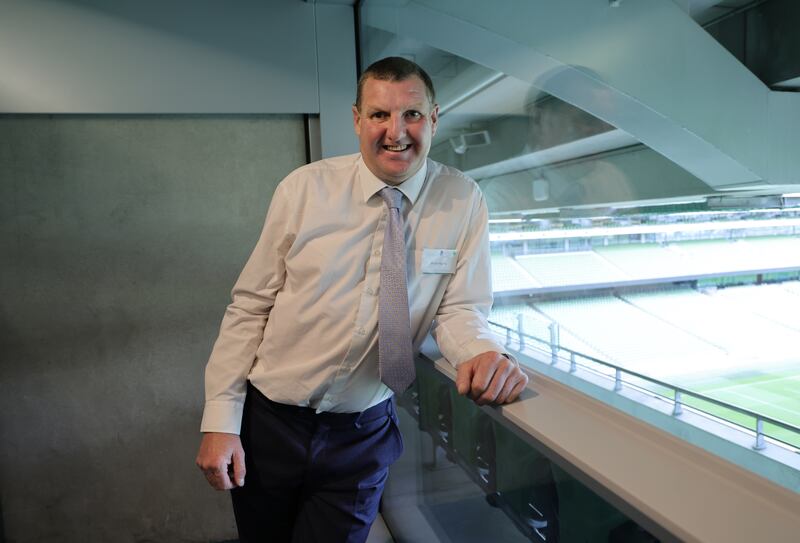
“I would know some individuals who work as traffic wardens and without having their chair’s battery charged they wouldn’t be able to work.”
In rural areas “inaccessible transport was “a big part of being isolated ... People can’t get to their services,” he said.
“Today’s event means a lot to us. It gives us the opportunity to tell the Government they need to work with us.”
Anne Marie Flangan, founder of the Clare Leader Forum, a disabled people’s organisation, was “glad” to be at the “important event”.
“I can’t but help be concerned though. That little sceptic in the back of my mind is there after a lifelong experience of engaging with the State around rights”.
Getting more disabled people into the workplace would not solve their significant consistent poverty rates of 20 per cent.
Employment would not remove their costs and would add costs associated with taking up work, she said. A wheelchair user, she has heating on year-round, uses an electric blanket every night, has to have a wheelchair-accessible van and when attending events has to buy two tickets – one for her and one for her disability personal assistant.
“I am concerned because we still live in a very ableist society,” she said.

The public consultation found widespread support for a cost of disability payment. It was not enough on its own but was “one tool among many” needed.
Most submissions said all 1.2 million disabled people should receive a payment that should not be means-tested. Enhanced rates should be available to those with higher costs.
Schemes to meet disabled people’s additional costs in the United Kingdom and in Australia, had “complex” assessment processes and cost up to 1.8 per cent of GDP annually, the summit heard.
Calleary would bring “a concrete proposal” on a new cost-of-disability payment to the Department of Public Expenditure by the end of June, he said. It would have to be delivered “within the department’s overall budget”, he said.
“That is why this is going to be so challenging ... It is too early to say whether there will be an increase in the department’s budget. It is only 13th May but equally I don’t have a concrete proposal yet. This is what today’s event is about.”


