

When Knut Moe was seven years old, he would sit at home in south Dublin, answering phone calls from his father’s patients and taking messages for him.
“My dad was a single-handed GP so he didn’t have a secretary. We were the secretary,” he says.
“We grew up with it. Patients called the house, he had a surgery in the house. It was all around you, dinner-table discussions about who you met and that sort of thing.”
His father, Knut Harald Moe, moved to Ireland from Norway in the 1960s to study medicine, graduating in 1971, and set up the Moe Family Practice in 1977. His grandfather was a physician in Norway and in charge of the medical army surgical hospital.
READ MORE


GPs are often referred to as family doctors, but in some cases the term takes on a new meaning with multiple generations from families going into the field of medicine. Moe is one such example.
Following in his father’s footsteps was in the back of his mind when he was in school, but he did not think he would have been doing it for himself at the time. Instead, he studied business.
He worked in investment banking in London for a number of years before realising it was not what he wanted to do. At that point, his brother suggested that he consider a career in medicine.
“I woke up one morning, about five in the morning, wide awake. My parents were away at the time and I had about four or five days to put an application in [to study medicine] and so I did,” he says.
Moe did the six-year course at the Royal College of Surgeons in Ireland between 2004 and 2010 and then did GP training afterwards.
“I kind of dabbled with the idea of doing surgery, but ultimately I was qualifying at 30 and I wanted to do something that had a clearer end-point with starting a family and that sort of thing,” he says.
He is grateful for that decision now. He was able to work with his father in their practice in south Dublin. He also has a practice with his doctor wife, Hannah. The work itself gives him joy and Moe loves being able to foster closer connections with members of the community and provide continuity of care.
Following in a parent’s footsteps is not uncommon in medicine. A number of studies show a higher proportion of medicine students have at least one doctor parent than those who do not have doctor parents.
In some cases that is because of the educational and socioeconomic advantages provided to these children, but in others it’s a case of seeing and admiring a specific type of work and deciding that it is something they also want to pursue.
Bríd Shanahan is a fourth-generation doctor. Her great-grandfather, grandfather and father all worked in the field.
When growing up she watched her father, Eamonn, run the local GP practice in Farranfore, Co Kerry, while her mother worked as the practice nurse.
“It was very familiar to me. I would have gone on house calls with dad,” she says, adding that this is not something her children would do today. “It was a very different time. Dad would have had to do house calls at the weekend and if mam was busy we would have had to go with him.
“So I’d be sitting in someone’s kitchen, they’d be giving me a cup of tea while dad is seeing someone in the bedroom. When I went to do medicine I didn’t really know what hospital medicine involved but I was very familiar with general practice.”

That family history is also what drove Eamonn into the discipline. He considered doing psychiatric care but had a one-week placement with Prof Bill Shannon and realised that was what he needed to do.
“My grandfather and father had been GPs in the same village. When I grew up I would have gone out on house calls with my father. With our family history, I did keep my mind open but I decided that [general practice] was it,” he says.
“There’s a cliche that in hospital, diseases stay the same and the people come and go. In general practice, the people stay the same and the diseases come and go. We see people at different stages along their life journey. It’s connecting with people you’ve known a long time. I could be treating four generations of a family.”
Having graduated more than a decade ago, Bríd Shanahan now works in Summerhill, Dublin 1. There are many differences between her work there and that of her father in rural Co Kerry, with a lot of homeless people and asylum seekers living in the area where she works.
“I also don’t live where I work. If I have to do a house call, I walk to it. If we need to call an ambulance, it’s going to the Mater. We see different kinds of emergencies; we don’t see farming incidents, we have a very diverse population. But overall, the work itself is quite similar,” she adds.
For Suzanne Kelly, the deputy medical director of the Irish College of General Practitioners, there is almost a web of doctors connected to her.
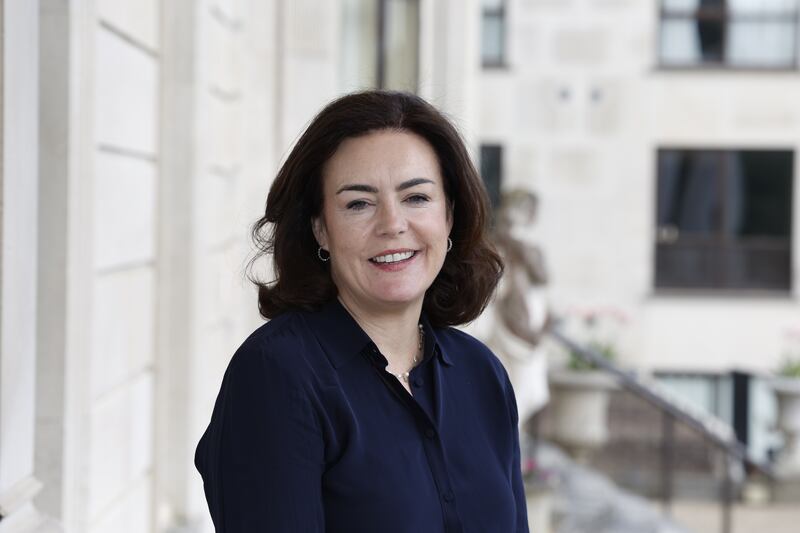
She has a GP practice in Ballincollig in Cork, while her husband is a cancer doctor. Both of her parents were doctors, as is her brother, while her dad’s first cousin was Maurice Neligan, the surgeon who carried out the first heart transplant in Ireland.
Kelly graduated exactly 30 years after her father. “For my 20-year reunion, he was at his 50-year reunion on the same day,” she says.
“My dad is kind of quiet and was very hard-working. People would show up to the house with very sick children or injured people and I was so impressed with how calm and methodical he was and what a huge difference it made to people every single day. I really had to think; I couldn’t think of any other job that would do that.”
Kelly worked in hospitals initially and enjoyed the energy and complexity, but she found the demanding hours and lack of control about working time quite difficult.
“I was really exhausted, really worn out. And also, I couldn’t pick which area of medicine I liked the most. That’s where general practice is great because you’re doing a bit of everything.”
Working in medicine can often be overwhelming. It is a hard job and the to-do list can feel endless at times. Though there is great solidarity among colleagues, having members of your own family who truly understand your work is something these doctors value.
Kelly says “being able to talk to my dad” was a great help.
“I found it hard when there were multiple things coming in at the same time. I remember my dad saying so clearly ‘You can only do the patient in front of you, so try to do that properly and try to not let the other things crowd you’,” she says.
“To this day, when I feel lots of people in the waiting room, I remember my dad saying that. And my brother Peter is a GP too. We ring each other every day.”


