

Over the past five years France’s long‑standing influence in francophone Africa – or Françafrique – has been gutted as former allies have pushed back against its presence and sought new political and military alliances.
Rising anti-French sentiment, coupled with a wave of unilateral military withdrawals and expulsions, has seen French troops depart Mali, Burkina Faso, Niger and Ivory Coast, marking the end of decades‑old defence agreements and signalling an erosion of Paris’s security footprint across the continent.
This geopolitical turmoil provides an ideal backdrop for François Ozon’s adaptation of The Stranger, Albert Camus’s seminal novel of 1942, which is rooted in France’s colonial domination of Algeria. The writer-director’s update, which stresses the political context over the book’s weary existentialism, required a careful conversation with the Camus estate.
“The story was written in 1939, and at that time Algeria was French,” the director says. “For us, we needed to have this context. That’s why I decided to start with archives, to hear the propaganda of the French colonial instinct, to understand more about the context in which this story happens. Of course, it echoes our current reality – Gaza, for example. Even if I’m faithful to Camus, I needed to have this.”
READ MORE


Contemporary Algeria is at the vanguard of Françafrique’s unravelling, having resisted French influence since its war of independence, in the 1950s and early 1960s. Enduring tensions with France contributed to Ozon’s inability to shoot his film there. Instead the director has re-created a facsimile of French-occupied Algiers in Morocco.
“Very often, when you want to represent Algeria in the present, you shoot in Tunisia,” Ozon says. “There are many similar architectures and buildings, similar whitewash, high, occidental buildings. Thanks to black and white and special effects, we got the feeling right.”
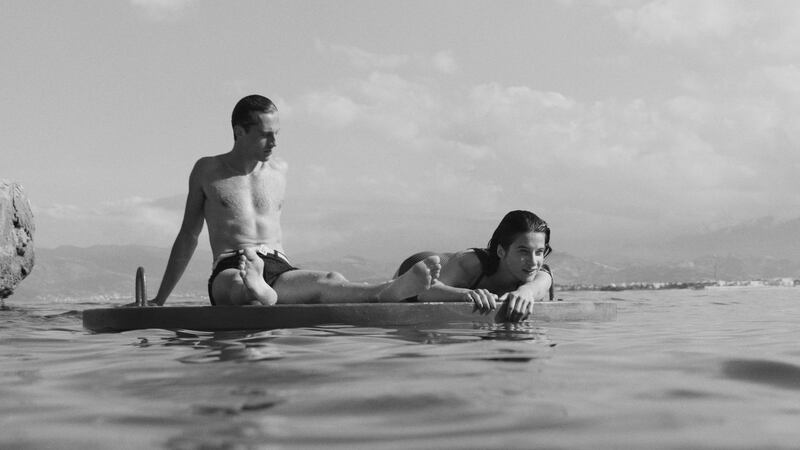
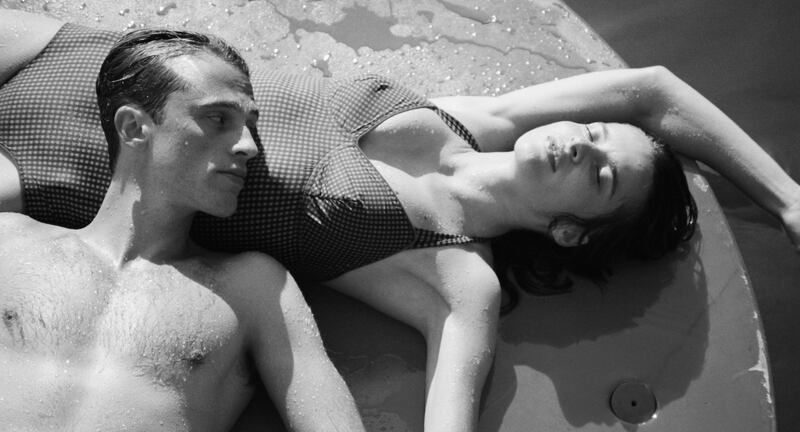
The film follows Meursault, an emotionally detached young French settler, played by Benjamin Voisin, whose indifferent reaction to his mother’s death and impulsive relationship with his loyal girlfriend, Marie (Rebecca Marder), stand in stark contrast to the societal expectations around him.
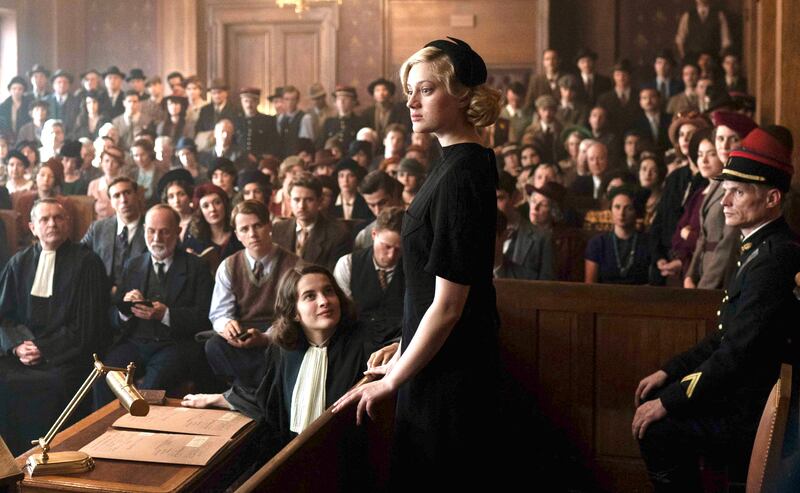
After he shoots an Arab man, Meursault faces trial not just for the act itself but also for his perceived moral indifference. In court, both the prosecution and the gallery are more shocked by Meursault’s apathy and failure to cry at his mother’s funeral than by the murder itself.
“For me, the challenge of adaptation was to create characters, to give them life,” Ozon says. “Was it possible to give life to a character you can’t identify with? I had to work on fascination and observation to understand the character.
“When I first read the book I didn’t understand it. It’s easy to follow the story, but you don’t understand all the elements of philosophy. I didn’t get it when I was a child. Actually, I’m not sure I really enjoyed the book. It was just something we had to do at school. It was homework.”
He laughs.
“I appreciate that the teacher gave such a difficult, complex, philosophical book to young people. And coming back to this book was quite a shock, because I realised how powerful it is, especially in front of the absurdity of the world today.”
Voisin also starred in Summer of 85, the prolific film-maker’s coming-of-age movie. Voisin’s Meursault is a study in callow youth, as indifferent to the actions of his brutish neighbour, Sintès (played by Pierre Lottin), as he is unmoved by Marie’s pleas.
“I asked him not to act,” Ozon says. “I probably have never had to say that to an actor, but he understood. It was a big challenge, but it was very exciting for him. To have everything inside.
“It’s only at the end of the film that he explodes and shows all his emotions. Until then he had to be restrained, and not play society’s game. I asked him to watch the films of Robert Bresson.
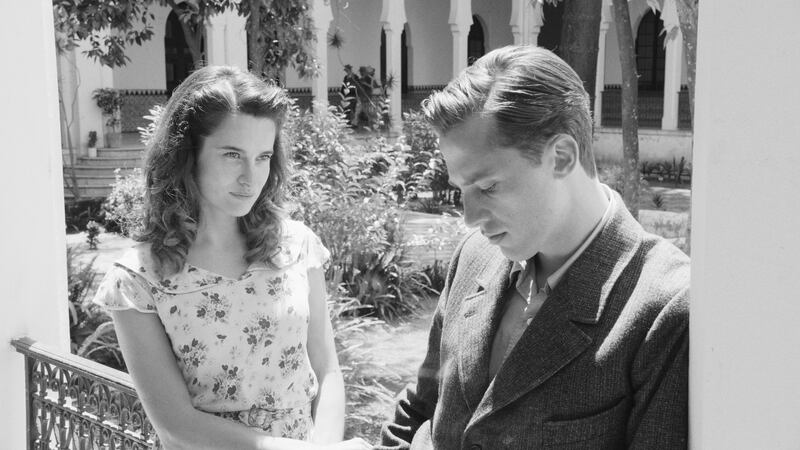
“That made it difficult for the other actors, too. I remember Rebecca Marder said to me: ‘He’s so mean, never saying hello each morning, and he doesn’t look at me.’ I said: ‘I’m sorry.’”
The Stranger belongs to a set of deeply interior works, among them JD Salinger’s The Catcher in the Rye, Virginia Woolf’s To the Lighthouse and James Joyce’s A Portrait of the Artist as a Young Man, that have proved notoriously hard to adapt. Interior monologue and stream of consciousness are not ideally suited to a visual, action-driven medium such as cinema.
Luchino Visconti, the great Italian director of Death in Venice, had a divisive crack at it in 1967.
“It’s considered an unadaptable book,” Ozon admits. “Visconti was such a great, amazing director. Because he failed, everybody says, ‘If he can’t make this, nobody will.’ So it was a worry. The shadow of Visconti was on me, but at the same time I read many interviews with Visconti, so many interviews of him explaining how he followed the book. He cast Marcello Mastroianni, who is a great actor, but he is Italian. Visconti wanted to make something else.”
Ozon’s sublime effort is the tricky novella’s third cinematic adaptation, following Visconti’s version and the 2001 Turkish film Fate.
Ozon’s film closes with arguably the book’s best-known export: Killing an Arab, The Cure’s debut single, from 1978, which directly references the text. Its provocative title prompted the BBC to ban the song from its airwaves at the outbreak of the first Gulf War, in 1991.
“The music is important, of course,” Ozon says. “The Cure are one of my favourite groups. But it was good to put the song in the context of the book, because very often this song has been used for bad reasons, by far-right groups in America. Robert Smith accepted very quickly to have the song in the credits at the end.”
Ozon first gained attention with Sitcom, an anarchic comedy about a bourgeois family. Then came the psychological drama Under the Sand, starring Charlotte Rampling. He has dipped his toe in horror, with Criminal Lovers, and resurrected the erotic thriller, with Swimming Pool and L’Amant Double.
He has addressed social and ethical issues, including euthanasia, in Time to Leave, and clerical sexual abuse, in By the Grace of God, which won the Silver Bear at the Berlin Film Festival. He is equally famed for his comedies with women, including 8 Women, Potiche and The Crime Is Mine.

Before The Stranger – Ozon is as tireless as he is multifaceted – he experimented with style, tone and mushroom-based murder, in When Autumn Falls.
No other French director has spread his creative net so wide.
“I know it’s maybe disturbing for the critics that they can’t pin me down like a dead butterfly,” Ozon told The Irish Times in 2024. “But audiences like to be surprised. And I prefer to fly wherever I want to go.”
The Stranger was a chance for the director to engage with his personal history. His maternal grandfather, a magistrate in Bône – present-day Annaba in Algeria – survived an assassination attempt there.
Ozon carefully updates details. Early on, “National Liberation Front” is graffitied on a wall. The Senegal-born Kuwaiti musician Fatima Al Qadiri provides the evocative score. The “Arab”, unnamed in the book and Cure song, is fleshed out. The murder victim’s sister, Djemila (played by Hajar Bouzaouit), occupies a major place in the narrative.
“Algeria is not forgotten, but it’s in a dusty place,” Ozon says. “You don’t speak about it. We had to do like the Americans did with Vietnam. It’s still difficult for the French to accept this reality.
“Many people suffer, of course. Their hearts suffer a lot, especially the French who had to come back. It was difficult material. That comes from Camus but also from all the criticism about the book. The book is definitely ...”
He pauses.
“ ... studied.”
Some have questioned whether the director should have pursued the project. One film writer, James Mottram, remarked, “There is something triggering about Ozon filming this now. Should it even have been made?”
“So many people know the book, and everybody has made their own version in their head,” Ozon says. “I had to fear that, but at the same time I knew it would be my vision.
“The thing is not finished for me. We don’t know how it will be received. But I’m quite excited. Now we are doing a tour in France to present the film. We are very surprised to see so many young people coming to see the film. I did not expect that, because it’s black and white. You realise how modern the novel is and how it touches people, especially teenagers.”
The Stranger is in cinemas from Friday, April 10th


