
In the preface to his BBC Radio 3 documentary The Inexhaustible Adventure of a Gravelled Yard, broadcast in 2018, half a century after the death of Patrick Kavanagh, Theo Dorgan describes him as “a one-man awkward squad, yet a man more beloved than he knew”. He also alludes to the fact that while WB Yeats was revered and Seamus Heaney beloved, the poet that just about everyone in Ireland can quote is Kavanagh.
Born in 1904, one of 10 children of an impoverished farming family, Kavanagh wrote unflinchingly about the desperate plight of the rural Irish population. More than 50 years later, just before Christmas 1956, he first set foot in New York, by which time he was widely considered to be at the peak of his poetic brilliance.
At that time, the literary life of New York was rocking to the voices of the emergent beat poets, whose rejection of conventional social thinking and poetic language was much to Kavanagh’s liking.
The admiration proved mutual. Indeed, there is widespread speculation that Howl, a long, controversial poem by the leading beat poet Allen Ginsberg, was inspired by Kavanagh’s The Great Hunger, a bleak, unfettered portrayal of the emotional and spiritual isolation of an unmarried Irish farmer amid the grim reality of contemporary rural life in Ireland.
READ MORE


This year marks Ginsberg’s centenary. As part of the worldwide celebrations, the annual Kavanagh Weekend in the poet’s hometown of Inniskeen, Co Monaghan, is presenting a tantalising collection of events reflecting the Irish writer’s relationship to the beats.
The programme has been curated by Unreal Cities, the multidisciplinary performance company set up by the actor and director Adrian Dunbar and the musician and composer Nick Roth.
“Adrian and I have been exploring the beat poets for a number of years, driven by Adrian’s assertion that the beat generation was the last time America had a genuine conversation with itself,” says Roth. He and Dunbar have travelled to New York, San Francisco, Los Angeles, Colorado and Morocco to search for what remains of the movement, and who is now carrying the torch.
“The Beat Happening is a space in which poetry, music and protest collide,” says Dunbar. “We had instigated a number of these happenings when Darren McCreesh, the manager of the Patrick Kavanagh Centre, invited us to engage with Kavanagh’s work and the impact of the beats on his late poetry. We felt that it was vital to bring a sense of the energy he would have witnessed in New York to this year’s edition of the Kavanagh Weekend.”
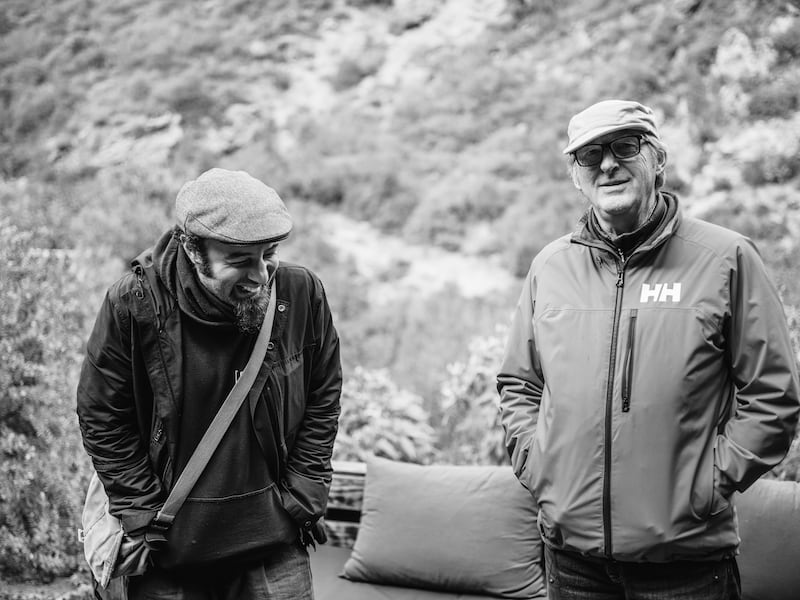
“A substantial amount of Kavanagh’s poetry was inspired by this area,” says McCreesh.
“This place, on the edge of the drumlin belt, remains relatively untouched. The Celtic Tiger passed it by. You feel as though you are walking the fields, the soil, the dark hills, the hedgerows that would have been recognisable to Patrick.
“When Patrick moved to Dublin, because he didn’t come from academia he was patronised by the middle-class intelligentsia, who took him in as a raw genius but expected him to know his place. The man was terribly damaged, had an unimpeachable sense of things being his way or the high way, was utterly self-confident, utterly driven, but unable to express himself in a way that was socially acceptable. I’ve always seen him as a punk. That sense of himself as a social outcast was, undoubtedly, a major part of the reason why he felt such an affinity with the beats.”
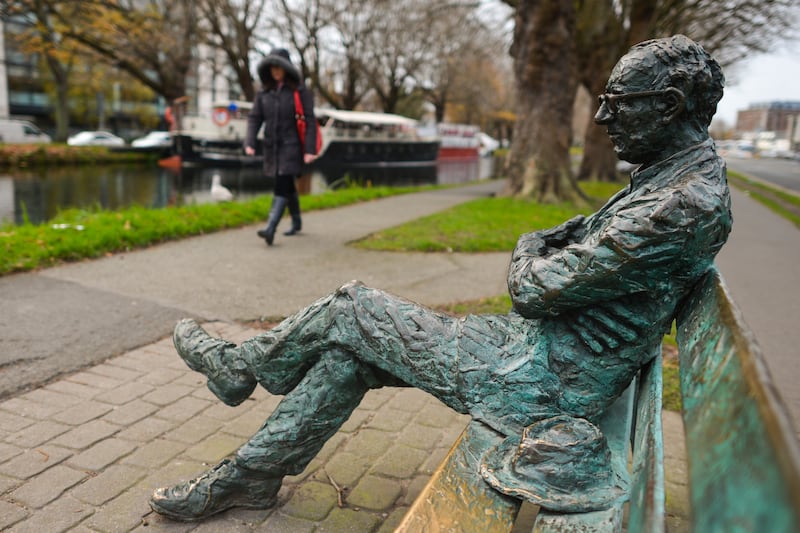
In the mid-1950s, Kavanagh suffered serious illness, which required the removal of a lung. He spent many days in recovery seated beside Grand Canal in Dublin, where he wrote some of his finest poetry. By now, his poetic reputation, within Ireland, was widely acknowledged. In a gesture of cultural diplomacy, the wealthy Farrelly family, who were patrons of the arts, invited him to New York, to introduce himself and present his work on that side of the Atlantic.
“The beats were really beginning to kick off in New York,” says McCreesh. “Ginsberg was living there and Greenwich Village was in its infancy. Ginsberg was widely feted because of Howl, and Kerouac was about to publish On the Road. Kavanagh found himself at house parties with these guys. Some years later, he publicly dismissed mainstream American poetry, declaring that the only authentic voice, the true pulse of America, lay with the beats.
“When he returned to Ireland, he began experimenting with a looser, freer form of conversational verse, fired by the energy of the beats. Nick and Adrian will be exploring the spirit of those ‘new poems’ in their curation of the weekend’s events.”
In 1967 Kavanagh shared a stage with Ginsberg in London. His reading during the Poetry International Festival at the Royal Albert Hall, curated by Ted Hughes, reached the ears of Pablo Neruda, Yehuda Amichai, WH Auden and Giuseppe Ungaretti, among others present. His inclusion in the ranks of this inspired gathering of poets offered him an unparalleled platform and cemented his reputation as one of them.

The festival’s keynote address will be delivered by Anne Waldman, an acclaimed poet, performer, political activist and “magpie scholar”. Along with Ginsberg, who called her his “spiritual wife”, and fellow poet and friend Diane di Prima, Waldman cofounded the Jack Kerouac School of Disembodied Poetics at Naropa University in Boulder, Colorado, the West’s first Buddhist-inspired liberal arts university. It was here that she first met and worked with Roth.
In preparation for her visit to Inniskeen, she has been reading The Great Hunger with renewed interest and awe. “It still feels like a monumental poem, granular and true. Close to the bone,” she says.
“Kavanagh’s poetry feels so relevant today. We are living through what he called the ‘crack in the crust’ – climate change, the rape of the land, endless depraved wars, genocide, humanity heartened by the powers of sovereign futurism, cyborgian life on steroids, the privilege of the billionaire class, attacks on migrants, white supremacism, class wars and so on. It’s terrifying.
“Back in the 1970s, as a young, feminist, experimental writer, I felt the phenomenal pull of countercultural poetry. A whole world was opening up. I was caught up with all the goings-on in my hometown of NYC. I attended ‘underground’ events, films, dance and performance work at the Kitchen and Andy Warhol’s Factory, jazz clubs, the black arts and so on. With Allen, I travelled with Bob Dylan’s Rolling Thunder Revue. With Allen, I was arrested while protesting against plutonium brought by train to Boulder, to be put into triggers for warheads.”
On Saturday, a five-hour performance entitled Brehon Lore will explore language, ritual, music, memory and collective experience. Waldman’s lifelong engagement with chant and performative poetry will connect with the Sufi trance rhythms of The Master Musicians of Jajouka led by Bachir Attar.
The centuries-old musical traditions of this hugely influential group have been passed down through successive generations in their native village of Jajouka, in Morocco’s Rif Mountains. Their presence at the festival is an echo of their memorable 1982 performance at the Connolly Hall in Cork, during Dorgan’s term as literature officer at the city’s Triskel Arts Centre.

In 1993, as director of Poetry Ireland, Dorgan heard that Ginsberg was coming to read in London and wondered whether he might be persuaded to come to Ireland. He recounts how Ginsberg’s prohibitively high fee was offset by the gift of a bespoke suit, made from the finest Donegal tweed, which he proceeded to wear, day in, day out, for the rest of his life.
Dorgan possesses a wealth of Kavanagh and beats-related anecdotes. They include the former’s disarming encounter in a Rome street with Jean-Paul Sartre and Simone de Beauvoir, and a chance meeting, in the men’s room of a New York venue, between Ginsberg and Kerouac, and Brendan Behan, whom they much admired. On learning that the pair were flat broke, Behan peeled off a $100 bill from a wad of notes and gave it to them.
Dorgan goes on to quote Paul Durkan’s recollection of Kavanagh’s early response to the beats: “Words to the effect of, ‘I see these beat rascals are making a good go of it in America. All you have to do is shout a lot, swear and wave your arms around. I’m thinking of giving it a go myself.’ The irony, of course, is that his own manner of delivery was not in the least shouty and sweary.
“Still, they shared much common ground. The beats and Kavanagh despised bourgeois, sterile conformity of all kinds. They were uncomfortable with it, raged against it, didn’t trust it. I suspect that people entirely failed to grasp what a sophisticated mind Kavanagh had. He liked to act the peasant boor, but nobody could write poetry that good without having a very sophisticated mind.”

Waldman agrees with Dorgan’s assessment of Kavanagh as an internationally significant poet and welcomes the opportunity to celebrate his and Ginsberg’s work in Kavanagh’s home place.
“Although Kavanagh is clearly a national hero for many – as Allen is in the USA – there is more work to be done in honouring their gifts and wisdom to their time and culture,” she says.
“Clearly, they were both shifting the frequencies of contemporary poetry, through their innovative, directly personal, inspired vision of the common man. Best minds.”
Kavanagh Weekend 2026 is at the Patrick Kavanagh Centre, Inniskeen, Co Monaghan, from Friday, September 25th, until Sunday, September 27th


