
Ed Power on Rawhead Rex
Directed by George Pavlou, 1986
If Father Ted had been a schlocky exploitation movie, then it would have looked a lot like Rawhead Rex, George Pavlou’s brilliantly kitsch 1986 adaptation of Clive Barker’s folk-horror short story. A cult VHS classic, it has everything fans of old-school horror would want: atrocious special effects, unrealistic gore and a brainwashed church sacristan trying to bring about the end of the world.
Barker immediately disowned the film, which relocated the action from Kent to Wicklow and swapped his psychosexual themes and evocative prose – he describes Rawhead Rex as “huge, like the harvest moon, huge and amber” – with lashings of creature-feature cheese.
But with hindsight he was blind to the charm of a tacky romp that stars the great comic actor Niall Tóibín as a heroic priest battling both his possessed verger (Ronan Wilmot) and the eponymous and marauding Rex, a cosmic horror ogre with glowing red eyes and the scariest mullet this side of peak Bono.
Budgetary headaches had led to the production switching from Berkshire to Wicklow at the last moment – a betrayal of the source material’s rumination on English identity but a move that added to the fun, as Rawhead Rex rampaged through rural Wicklow, his stop-offs including a caravan park and a local church.
READ MORE


For all Barker’s protestations, the hokeyness was largely on purpose, with Pavlou having set out to pay tribute to the monster-of-the-week horror flicks of the 1950s. It was a vision that acquired an extra eeriness as it manifested amid the drizzle and grey despair of 1980s Ireland.
Ed Power writes about television, music and broader culture for The Irish Times
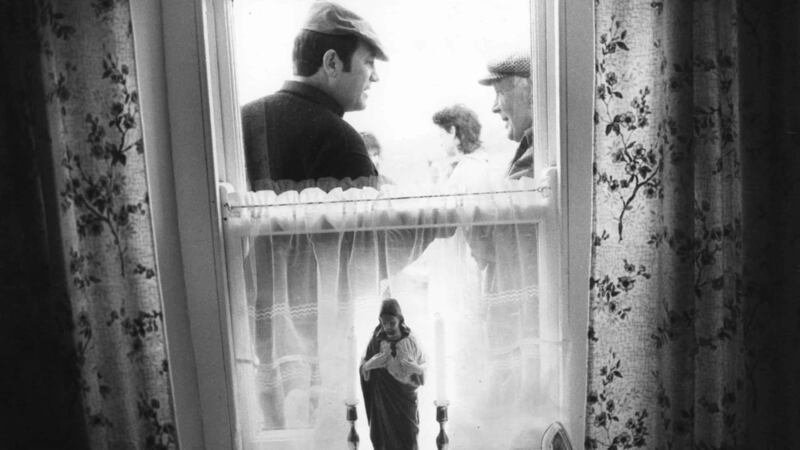
Aidan Gillen on Budawanny, directed by Bob Quinn, 1987
Laura Slattery on Bottom of the Pool
By Julie Dawson, 2024
Listening to Julie Dawson’s album Bottom of the Pool brings to mind a scene in Mad Men in which several characters try to decipher the meaning of a Rothko hanging on an office wall.
“Maybe you’re just supposed to experience it,” posits the most perceptive person in the room. “Because when you look at it, you do feel something, right? It’s like looking into something very deep. You could fall in.”
This quiet enigma of a solo record by the NewDad frontwoman is like hearing something very deep into which you could fall. While the Galway band’s shoegaze-influenced sound is a pleasure in its own right, Dawson’s hypnotic LP deserves a separate celebration. Co-written and produced by Jack Hamill, these 28 minutes of abstract electronica are dreamily nocturnal and intriguingly numb.
From the mesmeric beats and breaths of Close the Door to the sustained shimmer of Silly Little Song, this album is a swirl of introspection that leaves you yearning for more. “I need something to wash over me,” Dawson sings on the title track. “Everything’s exhausting,” she says. But weariness has rarely sounded as captivating as it does throughout Bottom of the Pool’s cascade of bleeps and sighs.
Laura Slattery is an Irish Times journalist
Joseph O’Connor on Census 26, National Archives of Ireland, 2026
Martin Doyle on The Fabulists
By Philip Casey, 1994
Set largely in contemporary Dublin, Philip Casey’s novel The Fabulists is the story of Mungo and Tess, a couple in their 30s, both chastened by broken marriages. Swept together by chance, they are bound by the stories they tell one another, made up to be sure but formed from the fragments of their lives and given an extra spin or shine.
What comes across is a sense that life is hard, whether lived in a damp, one-bedroom flat in the city or on a remote farm. But it holds the possibility of joy, be it found in the heady possibility of a love affair or in the steadier relationship between parent and child.
Mungo must live with the crippling knowledge that he almost burned his family to death by drunkenly dropping a lit cigarette in his children’s bedroom, an event that destroyed his marriage. Tess has left her husband but must stay in his orbit to be near their child. Their relationship is dictated as much by the demands of their families as by desire. One of the most striking features of the novel is the tender portrayal of the parent-child relationship.
The main theme, whose significance is reflected in the title, is how the characters oil their relationship by telling stories to reveal themselves obliquely, what Eoin McNamee called “the power of the imagination to transform and to heal”. A romance can mean both a love story and the telling of extravagant lies. Casey unites the two.
The Fabulists is published by the Lilliput Press. Martin Doyle is books editor of The Irish Times
Sara Keating on Ladies and Gentlemen
By Emma Donoghue, 1996
In 1996, in the leaking, rat-ridden warehouse of the old Project Arts Centre in Dublin, a new play by an emerging writer debuted with a spangle of smoke and mirrors.
“A simple story, all told ... not so much Lost and Found as Found and Lost”, Emma Donoghue’s play charted the rise and fall and rise of Annie Hindle, the mustachioed marvel of male impersonation who was a sensation on the vaudeville stage of New York City at the end of the 19th century.
A memory play that blurs the boundaries of time and gender, Ladies and Gentlemen was a fierce statement of Donoghue’s evolving talent: her skill at creating powerful, empathetic characters and her interest in women’s social and sexual experiences throughout history.
The Irish Times’ review is pretty damning – it dismisses, perhaps a little casually, the “flip flopping genders” of the characters as “transvestism” – but there is far more to the theatrical cross-dressing device than mere entertainment: a deeper questioning of gendered identities that feels strikingly relevant today.
There is also song and dance, and lots of stage business about stage business, which I have a personal weakness for.
Originally staged by the feminist collective of Glasshouse Productions, Ladies and Gentlemen doesn’t seem to have had another professional production in Ireland. What an opportunity for a new generation to find something fresh in it.
Sara Keating writes about theatre and broader culture for The Irish Times
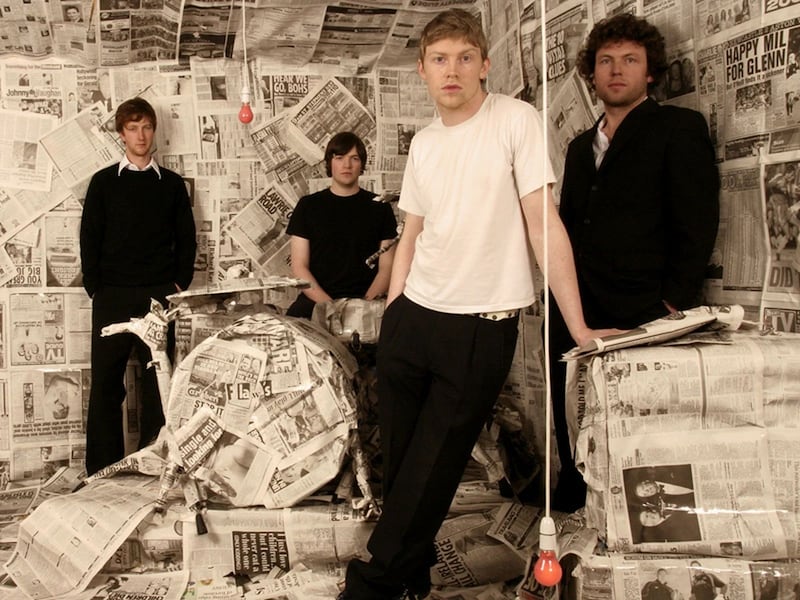
Niamh Farrell on Achieving Vagueness, by The Flaws, 2007
Patrick Freyne on The King of Elfland’s Daughter
By Lord Dunsany, 1924
A few years ago I bought a second-hand edition of Mary Lavin’s first book, Tales from Bective Bridge, which had a preface by her “mentor”, someone called Lord Dunsany.
“Mary Lavin’s mentor was an aristocrat?” I said, to myself, possibly out loud. I looked him up. Not only was Lord Dunsany, aka Edward John Moreton Drax Plunkett, Mary Lavin’s mentor; he was also an actual lord, the 18th baron Dunsany, and the author of more than 90 books. He worked with WB Yeats and Lady Gregory. He was once so famous that F Scott Fitzgerald referenced him in This Side of Paradise.
His first book, The Gods of Pegana, a self-created mythology from 1904, was an influence on JRR Tolkien’s Middle-Earth. His most acclaimed book, The King of Elfland’s Daughter, from 1924, is a beautiful, eerie, mythic story that has clearly influenced every fantasy writer from Gene Wolfe to Alan Moore. When I got it from the library I loved it. (Be warned: I have an unusually high tolerance for elves.)
I couldn’t really believe that Ireland, the country that celebrates any dead person who ever wrote a shopping list, had forgotten him. I guess it was a political thing. He was going by the name Lord Dunsany, after all, and when he tried to help during the Easter Rising it was for the wrong side. (He was shot and injured for his trouble.) Still, it feels about time we remember Lord Dunsany. You can still, apparently, visit his archive at Dunsany Castle, in Co Meath. (The Mary Lavin book was also great.)
Patrick Freyne is an Irish Times journalist
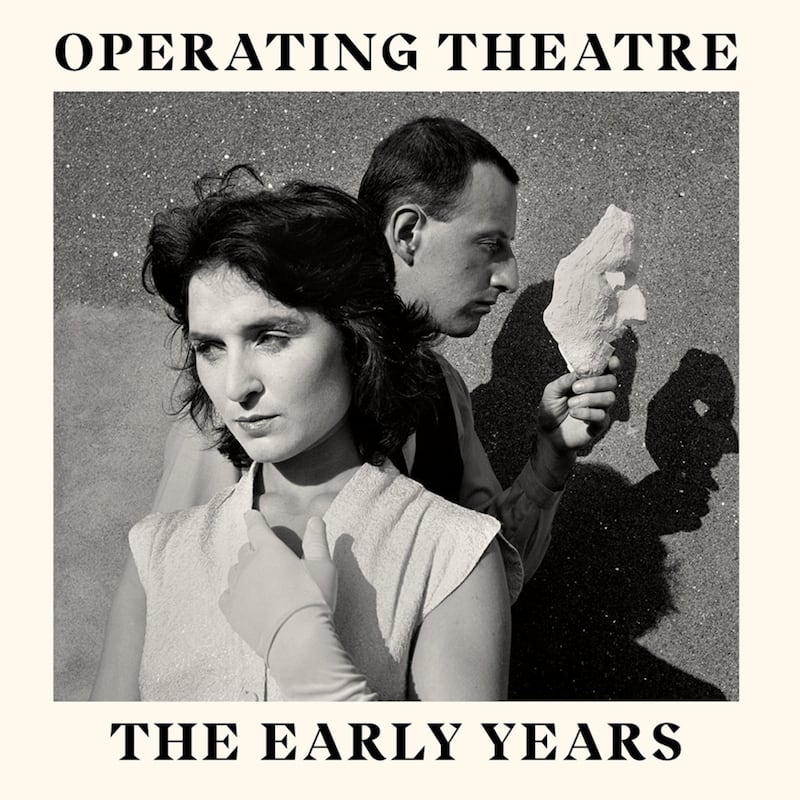
Kieran McGuinness on The Early Years, by Operating Theatre, 1986
Donald Clarke on Out of Here
Directed by Dónal Foreman, 2014
It is a small outrage that Dónal Foreman’s beautiful, slippery first feature is not yet recognised among the best Irish films of the century. Too quiet? Too oblique?
Fionn Walton subtly communicates submerged unease as Ciarán, a young man bumping about Dublin after a period abroad. This is not the stifling city with which returning emigrants reacquainted themselves through much of the 20th century. In 2014, two decades after the Great Cultural Shift, Fionn encounters a hip, engaged generation that feels in control of its own destiny.
“I know that moving away from home, from Ireland, made me reflect more on the country and my own conception of Irishness in a way that perhaps didn’t interest me as much when I lived there,” Foreman, a Dubliner long resident in New York, said in 2018.
Those meditations facilitate an ambiguous tension as Ciarán – captured in glassy, often static shots by Piers McGrail – wanders through an incandescent O’Connell Street to commune outside burbling public houses. The film’s distance from its characters suggests US mumblecore or hipper Asian cinema, but, as we wind to a gorgeous final shot, a school of dry Dub wit nails the story in place.
Out of Here is available to rent on IFI@Home; Donald Clarke is chief film correspondent of The Irish Times
Gemma Tipton on Sculpture in the Parklands
Lough Boora Discovery Park, Co Offaly

Imagine a landscape of elemental beauty and unique geology, with wild levels of biodiversity. Now picture astonishing works of land art – not the sort of bad sculptures that get in the way of a nice walk but mythic monsters, reflecting pools and a deep cut, down into the soil, that makes you realise the remarkable nature of where you are, right at this moment.
If Sculpture in the Parklands were anywhere else in the world, people would be beating a path to it, but somehow its location, on the former Bord na Móna cutaway bog at Lough Boora, in Co Offaly, seems to keep it a secret, hidden in plain sight.
Set up by the silversmith Kevin O’Dwyer in 2002, the project grew from an international sculpture symposium. Artists were given access to Bord na Móna’s workshops, and they often salvaged materials from the site’s workings.
These days it’s part of the Lough Boora Discovery Park, and the art to discover includes Michael Bulfin’s Sky Train, O’Dwyer’s huge timber triangles, Julian Wild’s metal water serpent and Alan Counihan’s cut path passage. There are also a walking-cum-cycling route and a cafe – which is good, as being astounded by art can be hungry and thirsty work. Admission is free.
Gemma Tipton writes about art for The Irish Times
Nadine O’Regan on The Meetings of the Waters
By Fionn Regan, 2017
Fionn Regan first found success with his debut album, The End of History, in 2006. Critics took out their reviewer pads and gave it an A+. Lucinda Williams called him “his generation’s answer to Bob Dylan”. But the Bray artist, it turned out, was not fond of the spotlight. As ethereal and dreamy as his winning music suggested, he seemed to disappear – pouf! – into the ether, having sent more fans to discover the works of Paul Auster than he might ever have imagined (“For the loneliness you foster, I suggest Paul Auster”).
Since that time Regan has resurfaced sporadically, enduring travails with labels but still creating, still crafting. His commercial success may have diminished, but that takes nothing from the music: an enchanting haze of gauzy, diaphanous layers that absorbs, bewitches and occasionally slaps.
When I first heard The Meetings of the Waters, specifically the hook-filled Cape of Diamonds, I was convinced he had a hit on his hands. But no: sometimes culture zigs, the artist zags and the twain cannot meet. Listen to the buoyant Book of the Moon, or the tenderly affecting Turn the Skies of Blue On, and be grateful that we continue to have a world-class artist in our midst, albeit one hidden by shadows.
Nadine O’Regan is an Irish Times journalist


