
Until 2024, Fiona Quigley O’Mahony worked for the Texas-headquartered data company Epsilon. She spent 12 years with the company, working from Laois and Dublin, and she describes it as a very positive experience overall. “There are a lot of challenges culturally”, she admits, but adds: “I’d a lot of flexibility … as long as the work was done, they didn’t mind.”
She now works as chief financial officer of All Human, and is co-founder of Find My College Course.
In her previous job, there was an upside to being out of bed before America wakes up. “The time difference sometimes worked in my favour,” says Quigley O’Mahony. She spent the hours between 9am and 1pm catching up on emails, which would give her a chance to get a “head start”, as she saw it. “And then you were into meetings and calls in the afternoon,” she adds.
Working across different times zones was something she had to navigate in her position. Sometimes meetings could be scheduled at 9pm. She’d remind colleagues of her working hours, but applied flexibility when required and when major projects were under way.
READ MORE


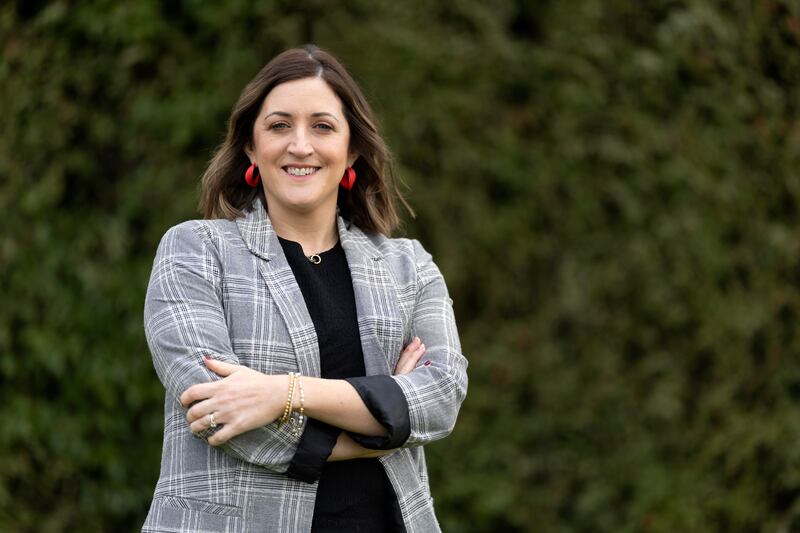
She observed a difference in the approach to Fridays. “On a Friday afternoon when we would have been winding down and clearing off our to-do list, I found the US was ramping up ... At 4.30pm on a Friday there’d be somebody trying to kick off a project.”
The sole member of the finance team working in Ireland, she says quarterly visits to the US opened her eyes to a different type of working culture, one that she felt was steeped in “the perception of being busy, and productivity”.
“It’s nearly worn as a badge of honour,” she says. “The optics of being seen to be busy instead of working smarter and more efficiently, as the Irish seem to do. We’re more about working smarter and having a work-life balance.”
The “always on” ethic was something she had to navigate carefully.
“There’s an expectation not to take holidays over there. We’re very lucky here with our laws and the employee protections,” she says. Of the US culture, she says: “It leaves people a little bit in fear. The email reply was always, ‘I’m out of office on PTO [paid time off]. Please expect a delayed reply”, instead of ‘I’ve no access to my emails’.”
“They were never off off.”
However, Quigley O’Mahony says she had “very good” managers. “The compensation and [other] benefits definitely are a lot better”, in the US multinational, she says. “I had a really positive experience at work. I couldn’t fault it. But I do think you have to set boundaries and expectations.” A response has been sought from Epsilon.
According to the American Chamber of Commerce in Ireland, US companies directly employ 245,000 people here – and the number has increased by 16 per cent in just two years. It also reported that an additional 169,000 people were indirectly employed in Ireland by US firms in 2024.
Many of those workers have to straddle their day’s work across several US time zones – and the compulsion to always “be on” can be hard to resist. Depending on the nature of the work, unsocial hours and late nights may be unavoidable. It is difficult to shake the pressure of getting back to US colleagues outside normal hours and in many cases Irish-based workers will respond to late queries.
Claire* works for US tech giant Microsoft in Dublin.
“Like any company, you’re really only as good as your last gig. There is a constant pressure to perform and to maintain performance. I think when you’re in an Irish satellite company from the US there’s always that bit of vulnerability there.”
She says working for an American multinational corporation while based in Ireland is “full on” and the workload can be tough, but the salary is very good.
“The days can be very long. If you’re catching the Asian time zone in the morning, the European time zone in the middle, and then the US time zone in the evening, you’re nearly on 24/7. That, to me, is the tricky bit – managing burnout. Coupled with that, as with every organisation, it’s a hard space if you’re a working mum.”
She travels to the US annually for work. “That’s hard on the family”, she says. “However, it’s a role that has afforded us a lifestyle and I’m very grateful for that.”
Claire says Microsoft is a healthy environment for many younger workers. She says the post-Covid return to the office has been a “great thing” for them, as well as for their older colleagues.
“We’ve got a gym. There’s all sorts of things on Fridays here. There’s massages, reflexology,” she says. “From a mental health point of view alone I think that all our young grads should all be in the office … I think you can diffuse the impact of the burnout when you’re surrounded by young people and you’re laughing and joking.”
She says there’s been a great improvement “in recognising female leaders in the company. It used to be brutal. It’s great to see women in leadership roles in the company. You can espouse these great roles in diversity and inclusion, but you have to live it”.
Claire observes that young women in the firm are “an awful lot more verbal. They stand up for themselves. I think that’s a game-changer. It’s a delight to see”.
I think you can diffuse the impact of the burnout when you’re surrounded by young people and you’re laughing and joking
— Claire, Microsoft
“The culture of Microsoft has changed completely”, she says. “In the [former chief executive] Steve Ballmer years, it was a different place, but the world was a different place.” Satya Nadella, Microsoft’s current chairman and chief executive, “came in, and since then he has completely changed the whole idea of diversity and inclusion, for the better”.
A Microsoft spokesperson said: “Supporting employee wellbeing is a priority for us, and we encourage open conversations about workload, boundaries, and how teams work together effectively. We offer a wide range of wellbeing and mental health resources and encourage employees to talk with their managers or HR if they need support.”
For many, the allure of a big salary and decent perks is what justifies the flat-out nature of their working lives.
Understandably, lots of people who currently work for US companies are reluctant to talk publicly about their roles.
Some say that even simply acknowledging the practical realities that face a firm with operations on both sides of the Atlantic might be considered disloyal or inherently critical.
Charlie*, who works in a senior position for another multinational company, depicts a life in which the phone is continually buzzing with work-related updates and queries. Working for a firm with operations on the US west coast, Charlie finds the working day can stretch well past close of business into the Irish evening and early hours of the following morning. Charlie acknowledges, like Claire, that this inconvenience is made somewhat easier by the knowledge that sizeable bonuses can await down the line.
[ Technology is sole reason why US is more productive than EuropeOpens in new window ]
But the differences in approach go beyond the daily habits of Irish and US workers. The emerging political gulf between the US and Europe under the Trump administration has compounded what was already a significant cultural one.
Old stereotypes can still be thrown around in workplace chats. The “hustlers” in the US who never take time off – and the “work to live” Europeans who are looking forward to holidaying for the month of August and setting up that all important out-of-office automated email reply.
It is a divide that still captures imaginations on both sides of the pond.
There are a lot of challenges culturally
— Fiona Quigley O’Mahony
So where do Irish workers feel that they find themselves on the Boston to Berlin spectrum? Do they feel able to embrace the work-life balance beloved by the French and the Dutch – or are concessions being made to US expectations and “hustle culture”?

If there is one concrete difference governing the workplace in the European Union it is the Working Time Directive. It is this piece of EU legislation – dating back to the 1990s – that dictates four weeks of annual paid leave for workers, a limit of 48 hours working per week and a minimum daily rest period of 11 hours.
In the US, employers have much more freedom to decide on leave, work breaks and time off. It has been described as the only advanced economy to not guarantee paid time off. But that’s not to say that workers in the US do not have access to paid leave; around 80 per cent of US workers are thought to have the option.
Reflecting Quigley O’Mahony’s experiences on her frequent trips to the US, almost half of those surveyed in a 2023 study by the Pew Research Center said they did not take all the days they were entitled to. They reported worrying that they might fall behind on work by taking time off. Around 20 per cent said they believed it could hurt their career growth – while 16 per cent said they feared losing their job.
Clearly Europeans take work-life balance more seriously than Americans do. The US is more obsessed with both producing and consuming, at the expense of both quality of life and the environment
— John de Graaf
Shawn Fremstad is director of law and political economy at the Center for Economic and Policy Research in Washington. Comparing US and Irish labour laws, he feels that Ireland falls between the “weak protections” of the US and a number of “very protective” EU countries such as France, Spain and the Nordic states.
“Notably, Ireland has protections against unjust dismissal that look closer to mainland EU and even a bit better than other English-speaking countries,” Fremstad says.
He notes an average trade union “density” in the State of about twice that of the US, “but not in the same league as the Nordics”.
Irish paid leave is “decent”, he says, but on the “low end compared to other EU countries”. From his vantage point, unemployment insurance and other social benefits, including healthcare, look weaker than most of the rest of the EU and “closer to the US”.
American author John de Graaf has written extensively about US working culture and worker’s rights.
“Clearly Europeans take work-life balance more seriously than Americans do,” he says. “The US is more obsessed with both producing and consuming, at the expense of both quality of life and the environment.”
A fierce critic of the US way of organising an economy, de Graaf believes this has a hugely detrimental impact on quality of life.
“We have dropped from 11th to 23rd on the World Happiness Report since 2012,” he says. “It would be much lower – but many Americans refuse to admit their pain or simply attribute it to not having enough money.
“Not having universal healthcare forces Americans to stay in jobs where they are overworked as well. We have all the wrong choices compared to Europe.”
De Graaf says that, in his experience, Americans returning from having worked in Europe “are reluctant to return to US work patterns”.
“The big issue here is that we should put quality of life first ahead of maximum profits,” he says. “I see a lot of interest in measuring success differently in Europe, especially even in very rich capitalistic countries like Luxembourg.”
Cork-based Samantha Lancashire worked in the US multinational sector in Ireland for the better part of 20 years.
Holidays in the US can be discretionary or performance-linked, she says. “Often you would have companies in the US saying ‘we’ve all this PTO or unlimited PTO’, but in actual fact nobody would ever be on holiday, because they’d always be scared to take the holidays.
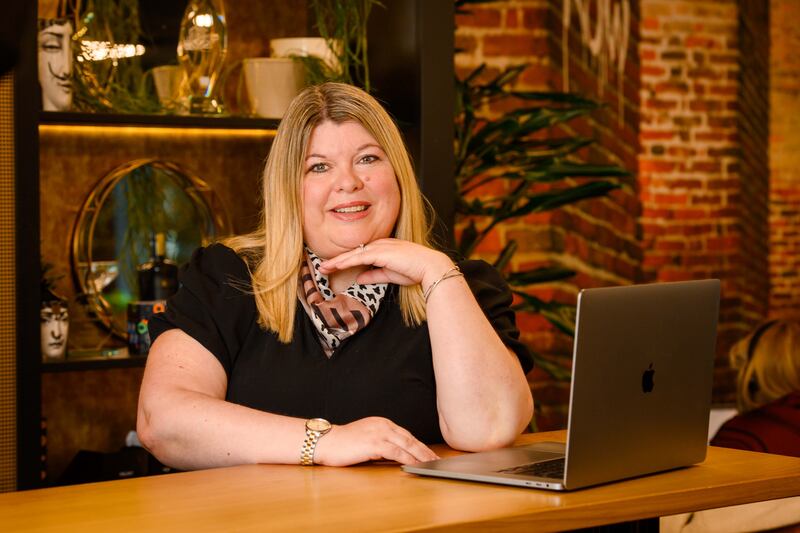
“I remember having a boss in the US and they were leaning on me to not take holidays because we had a high-pressure deadline. And I had HR [human resources] here in the office in Ireland saying that if I didn’t take them by this date I’d be at risk of losing them.”
The different expectations, she says, led to people in Ireland “feeling guilty about taking time off”.
From the US she says she would hear comments like: “Oh, you Europeans – you’re always off in July and August. We might as well shut the whole company down.”
Lancashire, who now runs her own performance-coaching company, Creating Lightbulb Moments, sometimes found the demands from US colleagues difficult.
“I was the global leader for a big corporate event … it was the US region, the European region and the Asia Pacific region,” she says. “The event itself was literally over a 72-hour period,” she explains – yet she only managed 12 hours sleep due to the workload involved.
“Before I wrapped, I asked my manager, who was in the US, would it be okay if I started late [the next day] so I could catch up on a little bit of sleep?”
Oh, you Europeans – you’re always off in July and August
She says she was told: “There’s a meeting in your calendar. I really think you should show up for that, don’t you?”
Lancashire has also had to navigate the challenges of working in a different time zone to parent companies. Calls and meeting were placed in her calendar for 8pm in the evening. “This happened regularly. And because it was my manager initially I felt I couldn’t say no.”
On the advice of a career coach, she approached the issue with her employer, offering flexibility as a solution. “There’s boundaries that need to be put in place,” she explains. She references how “trade-offs” can also be worked to an employee’s advantage: “I might need to finish at four because I’ve got to go and see one of my kids doing something at school … but, listen, I’ll be back on from 7.30 when they’re in bed.”
She says she sought to help US managers understand that “instant message does not equal instant response”.
The difference between some Irish people’s comfort levels with self-promotion versus some of their US counterparts is something Lancashire also notices. In the US it is about “sharing wins and building your brand and you’re blowing your own trumpet. Whereas particularly here in Ireland it’s a little more understated. We’re a bit more ‘I’ll let the work speak for itself’.”
[ Big Tech firms pay average salaries of up to €155,000 to staff in IrelandOpens in new window ]
According to Matthew Atherfold – now self-employed after a career with a number of multinationals – navigating this territory can be tricky.
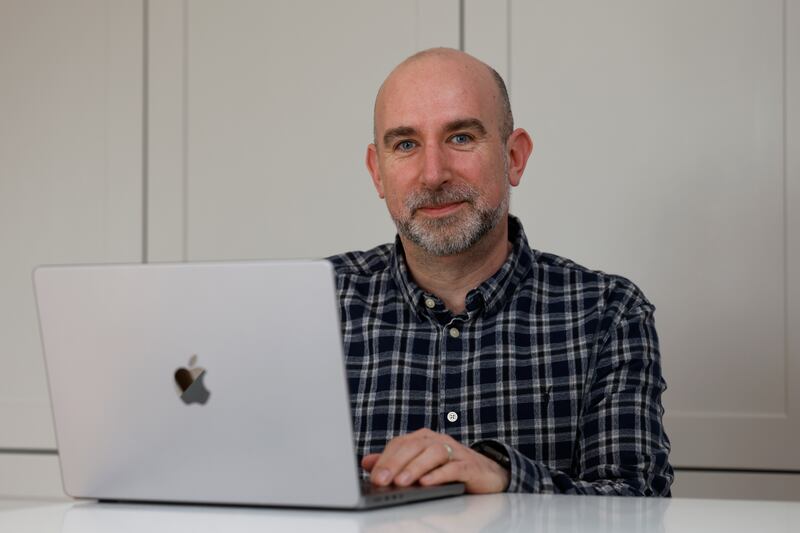
Referring to one company, he says: “It was unbelievable, I was expected to work until 11 o’clock at night. It was part of the norm. And you go into that knowing this could be part of the culture.”
After leaving his job in 2025, Atherfold, who lives in Dublin, founded Future Academy. It works with schools and businesses to help them understand and best utilise artificial intelligence. He found that meeting the expectations of managers in the US – while balancing the demands of raising a family of four children – proved difficult.
“You’d find you’d have to train your leaders that were US-based that ‘I’m not going to answer the phone between these hours because I have children’,” he says. “If you had to train your leaders, ‘hey, it’s not okay to ring me at 7pm at night, 9pm at night or ping me or email me or I just won’t reply’, then if you don’t have a really good relationship with them then you can start to be left out for opportunities or [a perception grows that] ‘I can’t count on this person’.
“So you have to balance your life versus what your opportunity might be in this company.”
Like Quigley O’Mahony, however, he also found there were managers and senior colleagues who were open to accommodating this important balancing act.
One leader in Dell told him: “Growing up with children, it’s so important to make sure that that period when they get back from school, until they go to bed is all about them. And they will remember the nights that you’re not there.”
Most of the companies Atherfold worked for had benefits such as free meals and other perks.
You have to balance your life versus what your opportunity might be in this company
— Matthew Atherfold
“Indeed [a recruitment company] would have probably been the most progressive with respect to that type of stuff,” he says.
“I think a big reason as to why that’s beneficial for most of their workforce is the average age is much, much younger and they’re paid much less. So actually they will want, they expect the free food … because they can’t afford to live where they’re staying.”
His experiences contributed to his decision to work for himself. “For a good few years I was very fortunate with the people I reported to; they were good humans. But then more recently some of the companies I worked for, you were just a number.”
He also felt the age difference with colleagues. “In some of the more recent companies I worked in … the average [age] of the company would be a lot less than my age. And they’re expecting you to go above and beyond, and it’s challenging – to the point where it gets detrimental between your family.”
Earlier this year, a thread on the discussion platform Reddit made headlines worldwide. Instagram posts telling the story garnered millions of likes. It is more notable for its virality then for the story itself – which we have not been able to verify.
It described a running battle between the Dutch employee of a US company with an office in the Netherlands and his line manager in the United States. The staffer objected to having to work beyond 5pm, deal with weekend emails or attend Zoom meetings with his colleagues that fell outside his normal working hours – much to the chagrin of management.
After he was told that employees of the US tech firm were expected to “go the extra mile” and threatened with a “performance improvement plan” – the worker had had enough, and reported the issue to his local human resources manager in the Netherlands.
The issue was quickly resolved once local labour laws were bluntly explained to Stateside headquarters – and the worker didn’t hear any such talk again.
The thread was picked up by various news websites and social media channels. Its retelling struck a chord with readers – the European worker getting one over on his American boss and heading out the door at 5pm.
Many current employees are not keen on talking about the impact that US national politics may be having on their workplaces. The Trump administration has been very clear that it wants American companies to abandon their DEI (diversity, equity and inclusion) policies.
Lancashire notes that some organisations have indeed “dialled it back” since the US president returned to office. The most public was Facebook-owner Meta, which announced very quickly that it would be abandoning the “charged” initiatives in its workplaces.
It proposed to replace these policies by having “cognitively diverse teams, with differences in knowledge, skills, political views, backgrounds, perspectives and experiences”. Some observers suggested that, in reality, this might not be much different from what had gone before.
The advice regarding politics in the office, it seems, is that which many Americans apply at the Thanksgiving dinner table – steer well clear of it.
* Names have been changed. Identities are known to The Irish Times


