


Step into the Kaffie-Frederick general mercantile store, in Natchitoches, and you could be in any century. It’s an artless wonderland – ornate model cars displayed on the alcove over the front door; a display of bathroom hangers, of wind chimes, a hardware section, a drugstore and rotating fans to stave off the Louisiana heat. “Everything from Waterford Crystal to water pipes,” Luke Frederick laughs when asked about his inventory.
Deep in the store is a framed hammer owned by his grandfather, Titus, who started as a floor sweeper and delivery man in 1920. It was first opened by the Kaffie brothers, Prussian Jews who fled persecution and made their way to central Louisiana to open a store when Natchitoches, a cotton town, was in the midst of the civil war. It has, miraculously, changed little since then.
“The Kaffies and my grandfather and father were all so conservative that they just didn’t spend any money renovating anything!” Frederick says. “And that just worked out well for us.”
The interior hasn’t had a renovation since 1932. It’s at once ramshackle and spacious and designed for browsing. The United States has been fretting about the “hollowing out” of its small towns since the 1960s. Natchitoches is a miracle in that respect; a perfectly preserved slice of historic Southern Americana. Two things happened. As the oldest settlement in the Louisiana Purchase, Natchitoches has always had a vigilant local historic society. And also, Hollywood came.
READ MORE


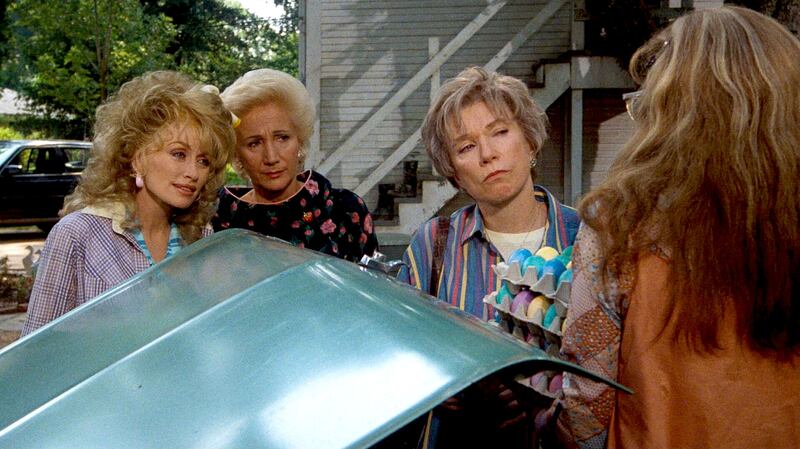
In 1989, the town was chosen as the location for Steel Magnolias, a lush, comedy-drama about female friendship, and grief, and small-town Southern living which assembled a cast that seems impossible now – Shirley MacLaine, Sally Field, Olympia Dukakis, Dolly Parton, Julia Roberts, Daryl Hannah, Sam Shepard.
At that time, the “South” was still a mysterious concept across much of the US, let alone the world, and the gorgeousness of the location, the performances and lines that stuck – “I’d rather 30 minutes of wonderful than a lifetime of nothing special” – has made the film a kind of enduring touchstone.
“My aunt was a model. She brought me down here when I was in school to stand in line to be an extra,” remembers Sarah Zeagler.
“We didn’t even make it in the building. But I remember falling in love with the movie instantly. Because it’s a true story. And even now, I see people in town and I think, ‘Oh, that’s such and such from Magnolias.’”
Zeagler moved to Natchitoches with her husband shortly after they finished college. She works as the tourism manager for the Louisiana Visitor’s Bureau. Thirty-five years after its release, Steel Magnolias brings devotees to Natchitoches. They want to see the landmarks, including the exterior of the Kaffie-Frederick store.
Natchitoches – named by the Native American tribe and pronounced Nak-a-tish (the tourism slogan is Hard to Say – Easy to Love) – isn’t quite a utopia. It has a complex racial past and for 40 years it displayed a statue of a Jim Crow figure, which was removed, abruptly, in 1968. But through museums and its university, it explores and presents its history unflinchingly. Its downtown is disconcertingly perfect, mainly because of the watchfulness of the local historical society.
“Any facade, or changes even in the yard, fences or paint colour have to go before the committee and it has to correlate,” says Zeagler.
In April, a domestic dispute led to a fatal shooting, the first in Natchitoches this year. When the local news bulletins described local “shock”, they meant it.
When Luke Frederick graduated from college in petroleum land management, the energy industry was in a bust cycle. There were no jobs. An opening came up in the store, so he and his wife took over as his grandparents were still running it – in their 80s.
Now, Luke’s son is extending the family tradition. He can recall years during that time when the pulse of the downtown flickered a little. The era of the “mall” had gripped the US and independent businesses fled the old downtown for the catch-all suburban centres. Kaffie-Frederick stayed on 758 Front Street, where it has been since 1863.
“Enough businesses stayed to keep it vibrant,” he says.
“And then the preservationists who worked their finger to the bones to keep modernisation out. But who knows what would have happened if that movie were not made. I don’t think we would be as vibrant. But we just have to be thankful that it was a saving grace.”
In the syrupy heat of summer, the Northwestern campus on Normal Hill will fall quiet and the tourists will continue to come. On July 4th, Natchitoches will celebrate the US’s 250th anniversary, but Zeagler says they will probably just recognise it as part of the annual celebrations.
The six-week Christmas market has become the busiest commercial time of year for the town, and anyway, Natchitoches is older than the US itself, celebrating its 312th birthday this year. And somehow, it has held on to a slow, distinct rhythm that sets it apart.
“It feels like that,” says Zeagler. “We have each other’s back here. We have everything we need. It’s deeply rooted in faith and culture. It is hot, yes. But we’re in Louisiana. It’s probably a little drier than we would like at times. But I live in the South because I like the heat.”
[ Keith Duggan’s US road trip: The Texas town where James Dean struck oilOpens in new window ]
[ Keith Duggan’s US road trip: The farther west you go the less real Trump becomesOpens in new window ]


