

Steven Lyn Evans first embraced Christianity as a teenager in South Wales, but the lure of the material world remained. At first he tried to be a professional golfer before turning to singing, building a career in London as performer in variety shows at the Palladium.
But it was while onstage in 1996 with fellow Welsh crooner Tom Jones that Evans says he realised his true calling: spreading the word of God. Evans is now a bishop with the evangelical Living Faith Church, headquartered in Orrell, near Wigan.
The local area, a patchwork of old mining towns about 35km west of Manchester, is in the global spotlight as a crucial byelection offers Labour’s Andy Burnham a springboard to unseat the flailing Keir Starmer as UK prime minister.
This week Evans, a former councillor, was happy to talk politics. He was charismatic, warm, still a true performer. Some of his followers also believe he is a miracle worker. For years, Evans has performed “healing” ceremonies, including on people with orthopaedic problems such as pain caused by legs of different lengths. “Miracle rev made our legs grow” was the splash on the Wigan Evening Post one day in May 2009.
READ MORE



This week in Orrell, Evans, twinkle in his eye, was bashful about the miracle stuff. “It was the papers who called them miracles. It’s God who does the real healing.”
Meanwhile, it has dawned on Team Burnham the true scale of the task now facing him, as the Greater Manchester mayor tries to heal Labour’s colossal vote haemorrhage to Nigel Farage’s radical right-wing Reform UK. Some believe Burnham will have performed a near-miracle himself if he wins the Makerfield byelection on June 18th.
Labour insiders reveal his canvassers are struggling to convince many recent Reform converts to back their man, although Brand Burnham is still a powerful force. Can he pull off a heroic byelection feat to become Labour’s new Chosen One, or is Burnham destined to be cast into the political wilderness, as his party enters a fresh hell?
[ Andy Burnham: the political chameleon making a bid for Labour’s top jobOpens in new window ]
“If he pulls this off, he walks on water,” said a well-informed Labour back-room broker in England’s northwest, latching on to the messianic theme. “[But] if he loses it, he also makes history. It’s going to be tight.”
“Let the battle commence!” splashed this week’s local Wigan Observer, after Reform chose local “plucky plumber” Rob Kenyon to fight Burnham. On page 16 and 17 were a flood of letters from locals accusing Burnham of political opportunism and careerism.

“Politicians wonder why people look at them with contempt,” wrote Paul Martin of Meadowcroft, referring to Burnham’s planned swap-out with Josh Simons, who stepped down to give the Manchester mayor a route back to parliament to challenge Starmer.
Another fumed that Burnham was “just another career politician with little regard for residents” of the area, and local voters would be “cast adrift” if he got the keys to Downing Street. Evans, meanwhile, had a letter published on page 17 saying that people in his local and church community felt frustrated by what was happening: “[It] is not simply political anger, it is a deeper concern about trust in public life.”
I travelled to Orrell to meet Evans. Superficial evidence of the challenge facing Burnham to win in what is now Reform territory – Farage’s party virtually swept the board here in recent local elections – fluttered from every lamp-post on the way into the village, on the western edge of the constituency. Union Jacks and English flags of St George hung everywhere. Enthusiastic flag-flying is usually a harbinger of a Reform stronghold.

Evans said one of Labour’s problems was that many of the party’s old voters in the Makerfield constituency felt taken for granted. He cited cuts to winter fuel allowances as particularly damaging. “People have had enough. They aren’t stupid. It seems as if we are at breaking point. It can’t go on like this.”
Evans cites other examples of where trust in the old system broke down. The local Orrell post office was shut down and older people had to get two buses into Wigan, 5km away, to collect their pensions. So the Living Faith Church stepped in to fund a post office in its community centre beside the church.
“People are queuing up to use our food bank and this isn’t even a bad area – Orrell is one of the nicer parts of the constituency. But you’ve got working families here who, to make ends meet, have to come to our food pantry and buy 10 items for £2. That leads to an existential mindset, people think: ‘What’s the point?’” said Evans.
It is political cliche to call England’s working-class northern towns “proud” but the areas surrounding Wigan have a distinct, strong local identity. Its old pit towns tended to be more socially conservative, as women had fewer options to work. The men went down the pit, the women stayed at home, perpetuating stereotypical views over time.
People around Wigan cling to their own English dialect, known as Wiganese. For example, Burnham and Starmer may both be “lothered” (sweating) on their futures.
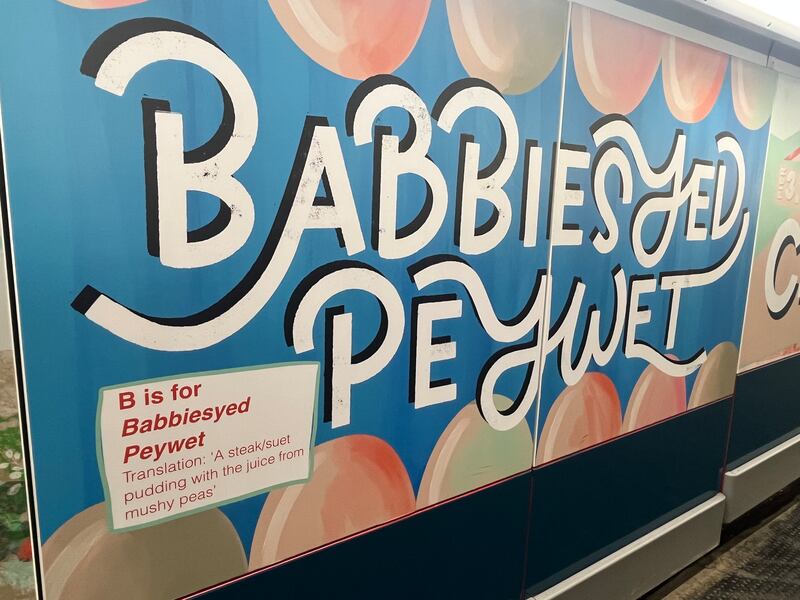
The area has its own working-class cuisine. Only here do people eat a Babby’s Yed, a steamed steak suet pudding that looks like a baby’s head. Sometimes it is served with “pey wet” (green juice from a can of peas), or else “flottin” (floating in gravy).

The wider Makerfield area, with low unemployment, is utterly distinct from the white working-class areas that Reform has conquered in, say, the northeast of England such as Sunderland, where economic deprivation is far more widespread.
What these areas have in common is overwhelming support for Brexit – two thirds of the Makerfield voters whom ardent Remainer Burnham must convince backed Leave in 2016.
Ashton-in-Makerfield, the biggest town in the constituency, is relatively prosperous. But demographic data suggests it has fewer of the middle-class graduates that have been Labour’s core in recent years. Instead, many Ashton workers are skilled tradespeople: tool engineers, carpenters or plumbers like Reform’s local man, Kenyon.
[ Keir Starmer revolt revives Brexit row. So, how could the UK rejoin the EU?Opens in new window ]
The likes of Orrell’s food bank users aside, then, what is it that ails the one-time Labour voters of economically stable areas such as Ashton?
Internal Labour qualitative research shows immigration is far and away the top issue of local concern, even though census data suggests 97 per cent of locals are “white” and mostly British – there is no immigration problem to speak of here.
The research also bears out the notion of an almost visceral personal disdain for Starmer, perhaps sparked by Reform’s relentless messaging pummelling him. The research showed that Burnham is much better liked, but the researchers were unsure if that would be sufficient to convince enough Reform voters to switch back.
“If Starmer had stopped the boats, none of this would be happening,” said one local man, a trader, who did not want to be named. He complained that some local mini-markets were run by Muslim newcomers whom, he alleged, sold counterfeit cigarettes.
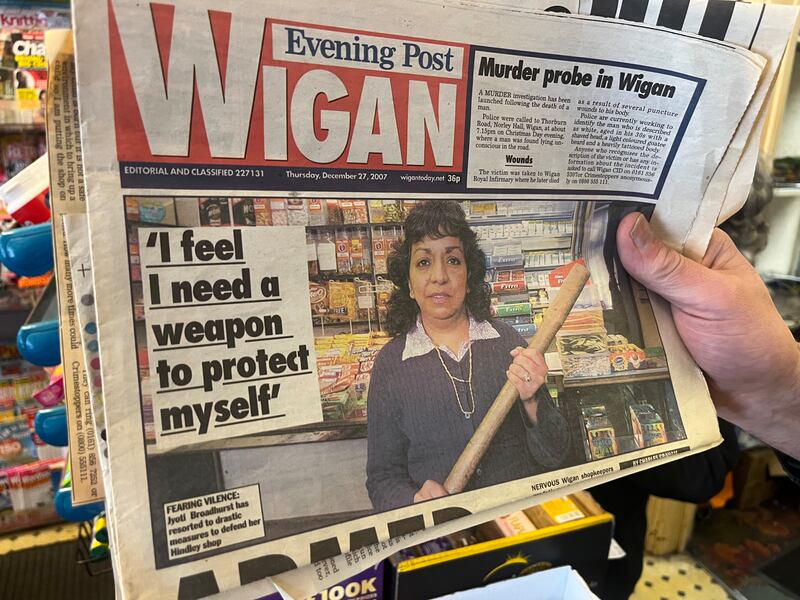
Another local concern is antisocial behaviour by youths, which another man insisted was a recent thing. Yet others say crime has always been an issue. Local shopkeeper Jyoti Broadhurst showed me a front page of the Wigan Evening Post from 20 years ago with a picture of her – a slip of a woman – holding a baseball bat to protect her shop.
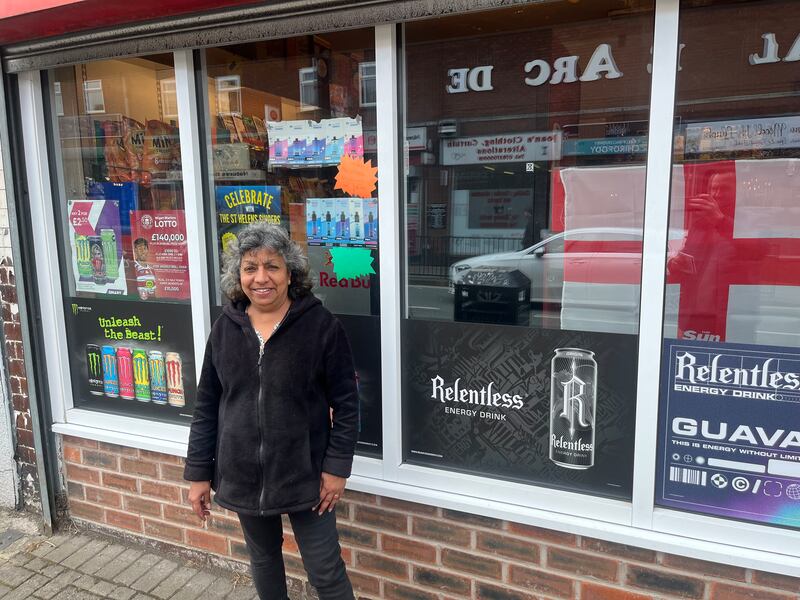
Broadhurst is an immigrant, married to an Englishman. Her family were Gujarati Indians who moved to Tanzania, where she was born, in 1947. She and her family moved legally to Britain 50 years ago. “It was my father’s dream,” she said. He died six months later.
“We immigrated legally. We didn’t break the rules like they do today. They’re coming in now and we have to look after them. The bills go up and up and up and we have to pay,” she said, chatting in her Sephtons shop in Ashton.
“I think I will vote Reform. They can’t do any worse than the other parties.”

Many locals are second- or third-generation descendants of Irish workers who moved over to work in mining or glassmaking. Irish descendants are said to be big backers of Reform. The oldest Irish club in Britain, the Brian Boru, is in Ashton. Its chairman, Tom Moran, a local primary schoolteacher, says the club welcomes people from all political factions. It is more focused on providing community services.
“And we have the best pint of Guinness east of the river Liffey,” he said.
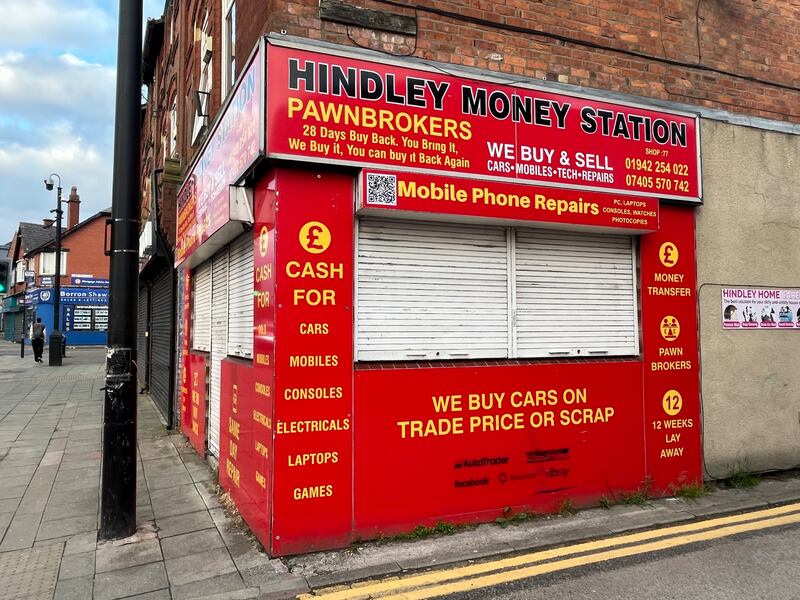
Westminster-based journalists scoured Ashton’s main street this week, interviewing locals, as traffic for the nearby Haydock races also clogged the streets. However, the true scale of the challenge facing Burnham really only becomes apparent when you drive northwest from Ashton towards towns such as Platt Bridge and Hindley. Reform outpolls Labour by more than two-to-one in these areas. The flag mania puts Orrell in the shade. Platt Bridge, in particular, seems the most deprived part of the constituency.
Burnham is up against it, although his closest backers believe he can still pull it off. Other observers, such as Evans, a former Tory, are less sure.
“The old-fashioned political left and right no longer apply,” he said. “Labour’s traditional base has eroded here. People say they feel betrayed.”
Meanwhile, Burnham campaigns heavily, determined to be Labour’s messiah.


