
Residents of northern Israel were promised by prime minister Binyamin Netanyahu in late 2024 that Hizbullah had been “crushed” in its latest war with Israel.
But a year and a half later, Israeli forces are once again locked in conflict with the Lebanese militant group across the border. Despite a fresh US-imposed ceasefire last month, the two sides exchange fire each day, taking a heavy toll on the communities of southern Lebanon and marring daily life in Israel’s north.
The fighting – reignited when Hizbullah began firing in March in response to US-Israeli attacks on Iran – has settled into a grinding guerrilla war, playing out largely in an Israel Defense Forces-declared “security zone” in Lebanon’s south from which most civilians have fled.
Hizbullah and Beirut have borne the overwhelming brunt of this war: more than 2,700 people have been killed in Lebanon and dozens of villages destroyed, while Israeli troops currently control about 5 per cent of the country.
READ MORE


But the conflict has been far from cost-free for Israel.
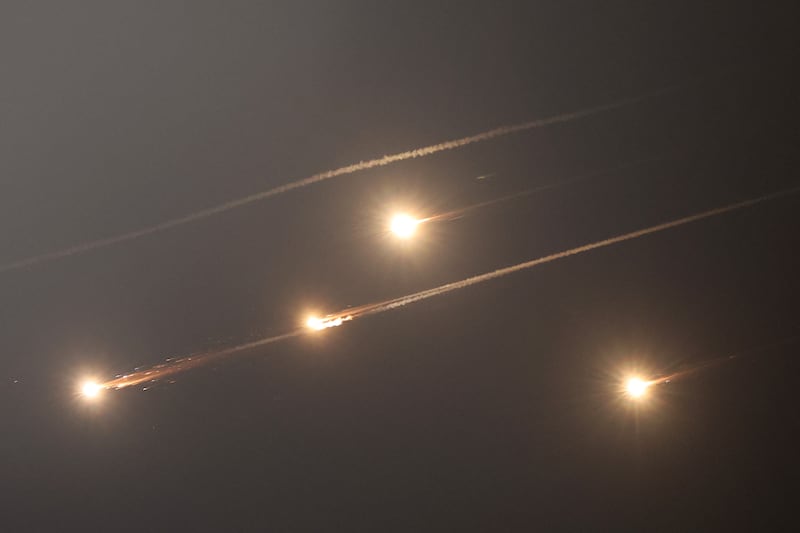
Hizbullah has proven proficient at targeting IDF soldiers in the “security zone”, increasingly via explosive drones, including first-person-view drones inspired by those used in Ukraine, and has maintained sporadic rocket fire into Israel. Three Israeli civilians and 17 soldiers have been killed and dozens more troops wounded.
Israeli military officers even admitted that the Shia militant group’s lingering military capabilities defied their earlier perception that the group had suffered an abject defeat.
“There’s a gap between how we finished [the 2024 war] ... what we understood and thought, and suddenly we still find Hizbullah,” said Rafi Milo, the general in charge of the IDF’s northern command, in a leaked conversation last month with residents in his area of responsibility.
Milo admitted that stand-off fire including rockets, missiles and drones on northern Israeli towns and villages was still a concern but insisted such attacks were “not in very very large amounts, certainly compared to before the [2024] war”.
Before the latest conflict, Hizbullah had remained quiet for more than a year after a US-brokered ceasefire took effect in late 2024, despite near-daily Israeli strikes across Lebanon that killed many of its operatives and the presence of Israeli military outposts in the country’s south.
But the militant group used the 15-month interwar period to rebuild and reorganise, according to three people familiar with the group’s operations and Lebanese and regional security and intelligence officials.
Hizbullah knew a renewed confrontation was inevitable and “the longer we waited, the better the outcome would be”, said one of the people familiar with its operations.
Electronic communications were dropped in favour of human couriers because of Israeli intelligence penetration, the people said.
New and unpredictable weapons-smuggling routes were created, with some even bringing armaments from within an ostensibly hostile postrevolutionary Syria. Elaborate military command systems were also devolved back to atomised militant cell structures.
“Hizbullah returned to what it used to be – a guerrilla force that tries to strike when it can, using hit-and-run tactics. It’s trying to go back to its old capabilities,” said one Israeli military official.
Iranian military advisers – who had always played a role behind the scenes – took on more prominence within the movement in the aftermath of the 2024 war with Israel, according to the people familiar with the matter and Israeli intelligence officials.
With entire Hizbullah cadres decimated, the “structural vacuum”, as one of the people called it, was filled by Islamic Revolutionary Guard Corps officers until Hizbullah could eventually replace them with its own men.
According to an Israeli security official, in “the last two years Iran tightened its control over Hizbullah”, primarily in the group’s rocket and missile array.
At the same time, Hizbullah’s attention was caught by the effectiveness of crude first-person-view (FPV) drones on the battlefields of Ukraine.
The Lebanese group increased domestic production last year, including producing thousands of the devices, in preparation for more conflict with Israel, said two people familiar with the situation, including one Hizbullah official.
Given those developments and Israeli underestimates of its remaining capacity, “Hizbullah was in prime position to stage its comeback,” one of the people said.
In recent weeks, IDF soldiers operating in the “security zone” have come under regular attack from Hizbullah explosive drones, particularly those controlled by trailing fibre-optic cables that can bypass Israeli electronic jamming.

In the past month videos of first-person view attacks have become a staple of Hizbullah’s social media output. The group’s official channel on Telegram, a social messaging platform, posted more than 50 videos of FPV attacks in the first week in May, about three times as many as at the start of April.
Set to dramatic music, the often-repeated videos commonly show drones approaching Israeli vehicles or soldiers.
The postings, however, suggest the capabilities remain relatively basic compared with the forces fighting in Ukraine. The Hizbullah videos often show direct approaches to often stationary and unmanned vehicles by a single assault drone.
For all that, the Lebanese group remains a diminished force after the heavy losses it suffered in the 2024 war with Israel.
The audacious attack nicknamed “Operation Grim Beeper”, in which exploding pagers and other electronic devices were remotely detonated, killed or maimed hundreds of operatives.
The group’s venerated leader Hassan Nasrallah and other senior commanders were assassinated and most of the group’s vast missile arsenal was destroyed.
According to Israeli intelligence estimates, only 10 per cent of Hizbullah’s pre-2024 arsenal of 150,000 projectiles is intact and only a negligible number of the more dangerous longer-range and precision-guided missiles.
About 100 rockets have been landing on Israeli cities each day but that remains far below the 1,500 that Israeli war games in 2022 estimated the group could fire daily.
Among Israel’s particular targets has been Hizbullah’s Radwan commando force tasked with cross-border operations into Israel and defending southern Lebanon.
Hundreds of the fighters were moved southward at the outset of the current fighting and have attempted to engage Israeli forces, according to people familiar with Hizbullah’s operations and Israeli military officials.
But many members of the elite force, which totalled 3,000 commandos in 2023, had now been pushed back north of the Litani river, said Israeli officials.

IDF ground operations have sought to locate and destroy Hizbullah military assets and caches, while razing entire Lebanese villages. Israeli air strikes continue to pound the area, seldom straying farther north to Beirut or the Bekaa Valley.
On Wednesday an Israeli air strike in Beirut attempted to kill the new chief of the Radwan force, the first such attack on the Lebanese capital in almost a month.
In early April two people familiar with the group’s operations said more than 1,000 Hizbullah fighters had been killed in the fighting. Israeli military figures estimate the figure at more than 2,000.
Israel has “scaled back” the fighting, in Donald Trump’s words, at the US president’s request. But the results have angered northern Israeli residents who were promised a decisive victory. Concerns are also growing among Israeli military analysts of a looming quagmire.
Even Netanyahu has had to acknowledge publicly that the wider goal of defeating Hizbullah, let alone disarming the group, has not yet been achieved – and will take time.
“I do not delude myself that this will come easily, nor do I think, and I say this honestly – the job is not done,” the veteran premier told the IDF high command last week.
The limitations imposed by Trump – seen as part of his larger negotiations with Iran – have frustrated Israeli military planners, who had viewed Hizbullah’s decision to enter the regional conflict as an opportunity to launch an offensive they had long planned.

Some senior Israeli politicians went further after the group began firing rockets on March 2nd, vowing that the country’s decades-old nemesis to the north would be taken care of “once and for all”.
Israeli analysts point out that, as with other wars the country has fought in recent years such as in Gaza and Iran, military achievements by the IDF have not translated into wider strategic victories or enduring diplomatic settlements.
“Operationally [against Hizbullah] the successes are not bad at all,” said Assaf Orion, a retired Israeli brigadier now at the Washington Institute think tank.
He highlighted the evisceration of the group’s missile arsenal and the inability of its operatives to stop IDF ground incursions into Lebanon’s south.
But he noted that Hizbullah could still strike northern Israeli towns and villages, while the group is still strong enough to deter the Lebanese government from trying to disarm it by force.
For Israel, choosing a “security zone” model in Lebanon, he said, “promises continued friction and doesn’t stop the fire on our communities”.
He added: “For Israel the ultimate goal of the war was to return our citizens in the north home securely. Are they secure?”
– Copyright The Financial Times Limited 2026


