
Main points
- US president Donald Trump said he was sticking with a naval blockade of Iranian ports amid concerns the vital Strait of Hormuz could remain closed for months
- The Trump administration says hostilities in Iran have ‘terminated’, ahead of an approaching congressional war powers deadline
- A senior UAE official said Tehran could not be trusted over any unilateral arrangements it makes for the Strait of Hormuz
- Italy and Spain have joined a growing list of countries that Trump is threatening with pulling US troops from
Trump says he is ‘not satisfied’ with Iran deal
US president Donald Trump expressed displeasure with the current state of negotiations with Iran, blaming disjointed leadership in Tehran for preventing a deal to end the nine-week conflict that’s triggered a global energy crisis.
“They want to make a deal but I’m not satisfied with it,” Trump told reporters at the White House Friday.
“We just had a conversation with Iran. Let’s see what happens. But I would say that I am not happy.”
Trump didn’t elaborate on the Iranian participants in the latest talks, or when they occurred. He added that “they’ve made strides, but I’m not sure if they ever get there.”
Iran delivered a new proposal to the US and Trump vowed to maintain a naval blockade, as the two sides pursue behind-the-scenes diplomacy to turn a fragile ceasefire into a lasting peace. It wasn’t immediately clear whether Trump’s remarks referred to that proposal.
Tehran relayed its latest position to Washington via Pakistan, which mediated a first round of direct negotiations last month, Iran’s state-run Islamic Republic News Agency said on Friday.
Trump touted what he called an “incredible” blockade of the Strait of Hormuz and said the US wasn’t ready to end the war.
“The strait is totally shut down, it’s flawless. It’s 100 per cent shut down,” he said.
The fate of the Strait of Hormuz - through which about a fifth of the world’s oil and liquefied natural gas flowed before the war - lies at the heart of the current stalemate. Both Iran and the US have signaled they are waiting for the other to move first before they agree to ease restrictions on traffic.

Trump says US to raise tariff rate on EU cars and trucks to 25 per cent
US president Donald Trump has said he was raising tariffs on cars and trucks from the European Union to 25 per cent, claiming that the bloc had failed to fully comply with a trade agreement negotiated with the US.
“I am pleased to announce that, based on the fact the European Union is not complying with our fully agreed to Trade Deal, next week I will be increasing Tariffs charged to the European Union for Cars and Trucks coming into the United States,” Trump said Friday in a social media post. “The Tariff will be increased to 25%.”
Trump said the levies would not apply to automobiles built in US facilities. “It is fully understood and agreed that, if they produce Cars and Trucks in U.S.A. Plants, there will be NO TARIFF,” the president said.
Trump’s decision renews a contentious trade fight with a major economic bloc even as the Iran war and the resultant spike in energy prices place fresh strains on the global economy.
Under their trade deal, the EU had agreed to erase levies on US industrial goods in exchange for a 15 per cent tariff ceiling on most EU products. The bloc had accepted the lopsided deal in the hopes of keeping Trump engaged in Ukraine and avoiding a full rupture in trade relations.
Trump did not specify how he believed the EU had failed to honour their trade pact on Friday, but the agreement had faced challenges, complicating negotiations over implementation. While the two sides reached their agreement in July, EU lawmakers are yet to fully ratify the pact as they seek further amendments.

Trump signs executive order broadening US sanctions against Cuban government
US president Donald Trump has signed an executive order broadening US sanctions against the Cuban government, two White House officials told Reuters, as he seeks to put more pressure on Havana after ousting Venezuela’s leader from power.
The fresh sanctions target people, entities and affiliates that support the Cuban government’s security apparatus or are complicit in corruption or serious human rights violations, the officials said, as well as agents, officials or supporters of the government.
It was not immediately clear what people or entities were hit with sanctions under the order. The order authorises secondary sanctions for conducting or facilitating transactions with those targeted under the order, the officials said.
The new sanctions were the latest broadside by the Trump administration against Cuba, which the president has repeatedly declared is near a state of collapse.
White House declines to comment on new Iran proposal
The White House said on Friday it will not detail private diplomatic conversations when asked about Iran’s new proposal to the United States that was submitted to Pakistani mediators.
“We do not detail private diplomatic conversations. President Trump has been clear that Iran can never possess a nuclear weapon, and negotiations continue to ensure the short- and long-term national security of the United States,” spokeswoman Anna Kelly told Reuters.
Renault UK boss: ‘Seismic shift’ in electric car interest
Renault’s UK boss has said the Iran war oil price surge has started a “seismic shift upwards” in interest in electric vehicles.
Adam Wood, managing director for the French carmaker in the UK, said that buyers were realising that it was much cheaper to charge electric cars than to fill up with petrol.
Oil prices remained above $111 (€94) per barrel on Friday, with little sign that the US and Iran would reach an agreement to reopen the Strait of Hormuz, a key export route for a fifth of the world’s oil.
Renault said the effect of the oil price surge was translating to sales.
It said enquiries about electric vehicles were up 42 per cent on its website, and that electric vehicles accounted for almost 50 per cent of sales in April.
The Renault 5 was the bestselling electric car in Britain during the month.
Wood said: “Interest in electric vehicles has undergone a seismic shift upwards following the spike in oil prices at the end of February.” - Guardian
Iran grain flows slump as US blockade cuts access to key port
Crop shipments to Iran through the Strait of Hormuz have fallen more than 40 per cent from March, with a prolonged US blockade threatening to worsen the country’s already high food inflation.
Ships loaded with grains or oilseeds bound for Iran’s Bandar Imam Khomeini port — the key gateway for such imports — are lingering at sea and not entering the Persian Gulf, according to ship tracker Kpler. The last ship to arrive at the port transited the Strait of Hormuz on April 28th.
At least six cargoes destined for the port are waiting in the Arabian Sea, with more vessels en route from Brazil, according to the data.
Currently, only two vessels with grain cargoes are docked at BIK, according to ship-tracking data compiled by Bloomberg. The New Pioneer arrived on Thursday, with soybean meal from Argentina. The Espada X is offloading Ukrainian corn.
Iran had sought to redirect some grain shipments to the Shahid Beheshti port in Chabahar, in the Gulf of Oman, early on in the conflict, but volumes there are limited because of the lack of infrastructure and silo facilities.
It’s also unlikely to fully offset the loss of flows into BIK because it’s located in Iran’s far southeast, away from the country’s key population centers and main livestock-producing regions, making distribution more complex and costly.
“Logistically, it’s not great. Iran needs animal feed — corn and soybeans — to feed the likes of cows and chickens, which are mostly concentrated in the northwest, near BIK,” said Madeleine Overgaard, dry market data manager at Kpler. Overall, “the US blockade does seem to have slowed down the grains entry to the Mideast gulf.” - Bloomberg
Iran crisis hampering aid to refugees as supply chain costs soar, UN warns
The cost of sending some aid to Sudan - the world’s largest displacement crisis - has more than doubled since the Iran war disrupted shipping, pushing up transport costs and delaying deliveries, the UN refugee agency said on Friday.
Heightened insecurity around key Gulf shipping routes, including the Strait of Hormuz, along with port congestion, rising fuel prices and higher insurance premiums have hampered aid deliveries, particularly to Africa, the agency said.
“People in dire need are receiving things that are ready later than what’s needed,” UNHCR spokesperson Carlotta Wolf told reporters in Geneva.
Aid shipments that previously travelled from Dubai through the Strait of Hormuz are being rerouted, with supplies moved overland and shipped via Aqaba in Jordan for deliveries to Chad and via Oman for shipments to Port Sudan, she said.
These shorter routes are being prioritised because shipping goods via the Cape of Good Hope into Sudan would add about 25 days to delivery times, she added.
Transport costs for moving 2,018 metric tons of relief items from Dubai to Sudan and neighbouring Chad via these routes have more than doubled, rising to $1.87 million (€1.59 million) from $927,000 (€789,155), Wolf said.
The UN routinely describes the humanitarian crisis caused by Sudan’s war as the world’s largest. - Reuters
Iraq starts work on Basra to Haditha oil pipeline, state news agency says
Iraq has commenced work on an oil pipeline linking Basra to Haditha with a planned capacity of 2.5 million barrels per day, the state news agency said on Friday citing the oil ministry, as the OPEC producer seeks to expand export routes.
About $1.5 billion has been allocated for the project, although its pace will depend on securing further budget allocations, the ministry said.
The 700-kilometre pipeline will transport crude for export through multiple routes, including Syria’s Baniyas, Turkey’s Ceyhan and Jordan’s Aqaba, while also supplying refineries along its path, a ministry spokesperson said.
On Sunday, prime minister Mohammed Shia al-Sudani chaired a meeting to follow up on the Basra to Haditha pipeline project, approved in 2024, and said it had been conceived as a proactive step anticipating current regional conditions and guarding against potential disruption to existing export routes.
Crude exports through the Kirkuk–Ceyhan oil pipeline had resumed in March, after Baghdad and the Kurdistan Regional Government agreed on restarting flows.
Baghdad is also working to revamp a disused pipeline that would allow oil to be pumped directly to Turkey’s Ceyhan port without passing through the Kurdistan region.
The closure of the Strait of Hormuz due to the Iran war has curtailed oil exports from Saudi Arabia, the United Arab Emirates, Kuwait and Iraq, sending prices higher. - Reuters
Iran sent its latest proposal for negotiations with the United States to Pakistani mediators on Thursday, state news agency IRNA reported on Friday. - Reuters
Analysis: How long can Iran survive the US blockade?
When the US and Israel launched their war on Iran earlier this year, it was on a country seriously weakened by economic mismanagement, decades of US sanctions, rising inflation, currency depreciation and popular dissent, writes Michael Jansen.
The war has, undoubtedly, aggravated Iran’s dire economic problems in recent weeks.
Yet, the Islamic Republic looks able to survive a standoff in the Gulf for now, despite a US blockade that has cut off energy exports from Iran’s Gulf ports.
Despite heavy damage to infrastructure and industries and a squeeze on oil exports, Iran has plenty of internal supplies, steady trade with its neighbours and, so far, has suffered limited losses caused by the blockade.
For the full article, read here.
Energy markets remain on edge
Financial and energy markets remained on edge because of concerns about the impasse over negotiations and worries that there could be a prolonged closure of the Strait of Hormuz.
Global oil benchmark Brent crude futures rose again on Friday, up slightly at over $111 (€94) a barrel and poised for a 5.7 per cent gain over the week after hitting $126 (€107) a barrel on Thursday, the highest level since March 2022. – Reuters
UAE says Iran cannot be trusted over Hormuz strait
A senior United Arab Emirates official said on Friday Tehran could not be trusted over any unilateral arrangements it makes for the Strait of Hormuz, in a sign of deep mistrust on all sides as efforts to end the Iran war remained at an impasse.
Two months into the conflict, the vital sea channel is still largely closed because of an Iranian blockade and the US navy is blocking exports of Iranian crude oil. The blockade has choked off 20 per cent of the world’s oil and gas supplies, pushing up global energy prices and increasing concerns that there will be an economic downturn.
A ceasefire has been in place since April 8th but reports that Donald Trump was to be briefed on plans for new military strikes to compel Iran to negotiate pushed global oil prices up to a four-year high at one point on Thursday.
Iran has activated air defences and plans a wide response if attacked, having assessed that there will be a short, intensive US strike, possibly followed by an Israeli attack, two senior Iranian sources told Reuters on condition of anonymity.
Washington has not said what its next steps are. Trump said on Tuesday he was unhappy with the latest proposal from Iran, and mediator Pakistan has not set a date for new talks on ending a war that has killed thousands, mainly in Iran and Lebanon.
After US and Israeli airstrikes on February 28th, Iran fired at US bases, infrastructure and US-linked companies in Gulf states, while the Iran-backed Lebanese group Hezbollah launched missiles at Israel, which responded with strikes on Lebanon.
Underlining the concerns of the Gulf states, UAE presidential adviser Anwar Gargash said the “collective international will and provisions of international law” were the primary guarantors of freedom of navigation through the strait.
“And, of course, no unilateral Iranian arrangements can be trusted or relied upon following its treacherous aggression against all its neighbors,” Gargash wrote. Trump faces a formal US deadline on Friday to end the war or make the case to Congress for extending it under the 1973 War Powers Resolution.
The date looks set to pass without altering the course of the war after a senior administration official said that, for the purposes of the resolution, hostilities had terminated due to the April ceasefire between Tehran and Washington. – Reuters
Italian defence minister surprised by Trump’s comments
Italy’s defence minister Guido Crosetto rejected accusations that Rome has not helped the US, especially in relation to maritime security in the strait of Hormuz.
“I don’t understand the reasons,” he told the ANSA news agency.
In reference to Trump’s accusations that Europeans have crossed the Strait of Hormuz, he said this isn’t true and “we also made ourselves available for a mission to protect shipping”.
“This was greatly appreciated by the American military,” he added.
La Repubblica reported there are seven US bases in Italy, with up to 15,000 troops, which for example provide Italy with air defence systems that would take a decade to replace.

So far, there has been no public reaction from the Spanish government.
But this is not the first time they face similar threats from Trump.
Last week, Reuters published an internal Pentagon memo that suggested the US considered suspending Spain from Nato.
It’s not entirely clear how this was expected to happen, as there is no obvious procedure to go through and that would allow the US to make that decision without the other allies.
There are 3,200 US troops in Spain, mainly at the Rota naval base and the Morónairbase.
‘Spain has been horrible’: Trump threatens to withdraw troops from Spain and Italy
Italy and Spain have joined a growing list of countries that Donald Trump is threatening to pull US troops from as part of a broader review of the US military presence in Europe.
Responding to a question from a reporter, Trump said he would “probably” consider such a move, linking it to the two countries’ criticism of the US campaign in Iran.
“Look, why shouldn’t I? Italy has not been of any help to us and Spain has been horrible, absolutely horrible.”
Both countries have been vocally critical of Trump’s war in the Middle East, with the US president repeatedly taking aim at their leadership for refusing to join the conflict.

Italy’s Giorgia Meloni, previously a close ally, fell out with the US president over Rome’s unwillingness to join the conflict – she “lacked courage,” Trump said – as well as her criticism of Trump’s “unacceptable” comments about Pope Leo.
She also denied the use of an airbase in Sicily to US military planes carrying weapons for the war in Iran after the US did not follow the required authorisation procedure. - Guardian
Iran warns Trump’s blockade will keep pushing up oil prices
US president Donald Trump vowed to maintain a naval blockade on Iran and was briefed by commanders on further military options, according to a report, underscoring the fragility of the ceasefire between the warring countries.
Trump reiterated that the blockade of Iranian ports is depriving the Islamic Republic of much-needed oil revenue, claiming the pressure would force Tehran back to the negotiating table.
“Good luck blockading a country with those borders,” Iran’s speaker of parliament, Mohammad Bagher Ghalibaf, said on X, referring to his country’s large size.
He and other Iranian officials say the blockade, which they insist must be lifted for the sides to go to new talks and for the Strait of Hormuz to be reopened, will further push up oil prices.
The US is pitching allies on a joint naval force to secure the Strait of Hormuz. New Zealand said it had received the proposal but would only support a US-led coalition if a sustainable ceasefire was in place.
The effort, called the “Maritime Freedom Construct,” was spelled out in a US state department cable to US embassies on Tuesday that called on diplomats to press foreign governments into signing up, the Wall Street Journal reported.
On Thursday, Iran’s new supreme leader, Ayatollah Mojtaba Khamenei, cast doubt on the likelihood of a deal. He gave a rare statement in which he vowed not to give up the country’s nuclear or missile technologies. He also signalled Tehran would keep control of the Hormuz strait. - Bloomberg
Oil prices hit wartime high as Iran vows to keep control of Hormuz strait
Iran’s new supreme leader, Ayatollah Mojtaba Khamenei, has vowed to “prevent the enemy’s abuses” of the Strait of Hormuz and safeguard the country’s nuclear capabilities, after talks with the US reached a stalemate, writes Bita Ghaffari.
Oil prices swung wildly on Thursday amid signs that the key waterway could remain closed for an extended period, after US president Donald Trump told oil executives that the blockade on the strait could continue for “months”.
Brent crude climbed to its highest level since 2022 – $126 (€107) – before dropping more than $13 as traders fretted they had overreacted to the latest twist in the Iran conflict.
About 20 per cent of the world’s oil and liquefied natural gas usually passes through the strait and the conflict has sent global energy prices soaring.
To read the full article, click here.

Hegseth ‘dangerously exaggerated’ US military triumph in Iran, senior Democrat claims
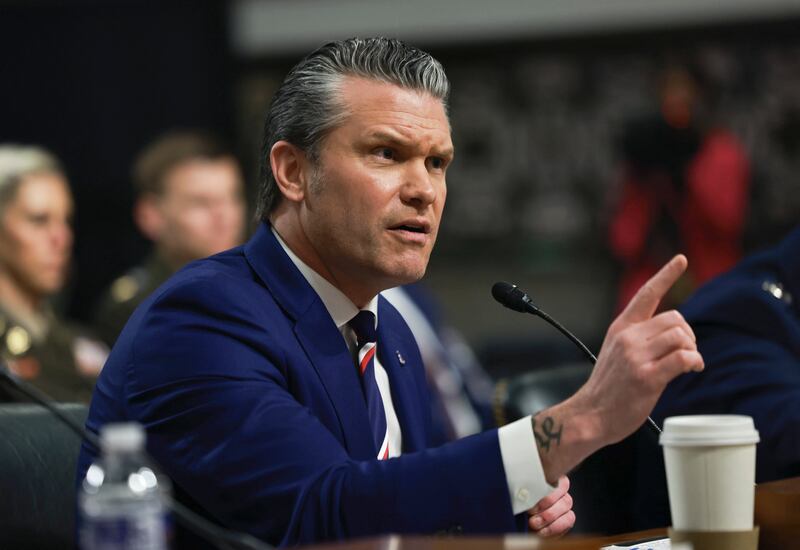
Pete Hegseth has failed to give Donald Trump an accurate picture of the war on Iran while resorting to “dangerously exaggerated” statements to create an inaccurate picture of a US military triumph, a senior Democrat told a Capitol Hill hearing on Thursday.
Jack Reed, the top-ranking Democrat on the Senate armed services committee, told Hegseth, the defence secretary, that far from victory, US citizens were having to bear the cost of a war they did not support in the form of increased fuel prices.
“American families are bearing the cost of a war they wanted nothing to do with and have gained nothing from and yet, secretary Hegseth, you declared victory a month ago,” said Reed, a senator from Rhode Island.
The comments came at the opening of the second successive day of congressional testimony from Hegseth and Dan Caine, the chairman of the US armed forces’ joint chiefs of staff, who are testifying over the Pentagon’s record $1.45 trillion military budget submission.
Read the full article, here.
Charles and Camilla tell US ‘thank you for the warmth of your welcome’
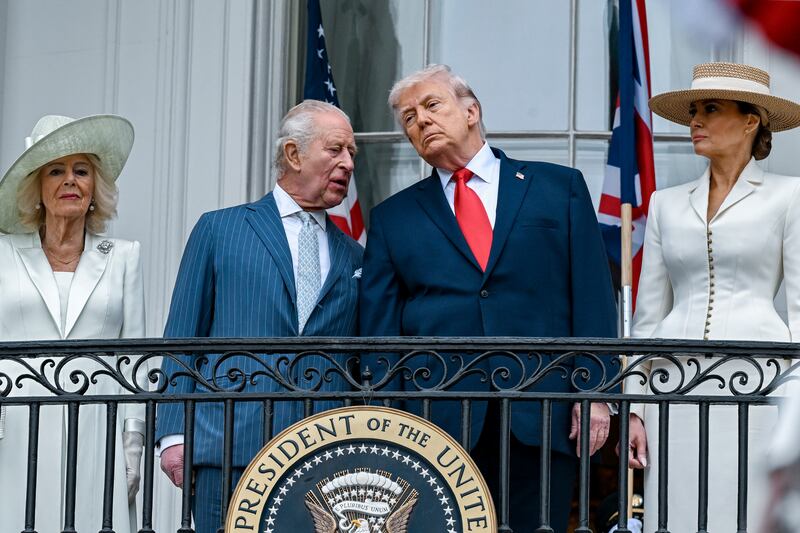
British king Charles and queen Camilla said they have left a piece of their heart behind in the United States in a message to the nation’s people.
Their four-day state visit to the US ended on Thursday with an overwhelmingly positive response from US president Donald Trump, who lifted tariffs on Scottish whisky.
In a message posted to social media, the couple said: “Farewell and thank you for the warmth of your welcome and the kind support you gave us throughout our first visit to the US as King and Queen, in this, your special anniversary year.
“We leave a piece of our [heart emoji] behind and take a little of yours back home with us. Until the next time… God Bless America.” - PA
Iran war may cause food shortages in Africa, world’s largest fertiliser firm says
The Iran war could have “dramatic consequences”, causing food shortages and price rises in some of Africa’s poorest and most vulnerable communities, the head of the world’s largest fertiliser company has said.
Svein Tore Holsether, the chief executive of Yara International, said world leaders needed to guard against soaring prices and shortages of fertiliser causing a de facto global auction that would leave the poorest countries, particularly in Africa, scrambling for supplies they could ill afford.
“The most important thing we can do now is raise the alarm on what we are seeing right now – that there is a risk of a global auction on fertiliser that means it becomes unaffordable for those most vulnerable,” he said.
“Africa is actually quite well positioned to be a major food producer, not only for self-sufficiency, but even for exports to the rest of the world, but the reality is that they are massive food importers.
“But we need to be aware in this part of the world of the potential consequences that if we get to a global auction on food, there will not be a famine in Europe – but we need to be aware of who we are taking the food away from.” - Guardian
‘Let them play’: Trump gives blessing for Iran to play in World Cup
Donald Trump has given his blessing to Iran competing in the US during this summer’s World Cup, stating: “Let them play.”
Iran’s participation in the finals has been uncertain since the US and Israel launched air strikes on the country on February 28th.
FIFA president Gianni Infantino has repeatedly insisted Iran would play as scheduled, with all three of their group games taking place in the US, and confirmed again at Fifa’s Congress on Thursday that this would be the case.
Trump was asked about Infantino’s comments in a media briefing later on Thursday, and said: “Well if Gianni said it, I’m okay.
“Did Gianni say it? Gianni Infantino – that’s a piece of work.”
Asked what would happen if Iran won, Trump replied: “If they win we’ll have to worry about that. I’m going to have to worry about that one.
“You know what, let them play. Gianni is fantastic, he’s a friend of mine, he talked about it, I said, ‘you do whatever you want’.
“You can have them, you don’t have to have them, they probably have a good team. Do they have a good team, do you have any idea?”
The reporter who posed the initial question said he had no idea.
Trump replied: “It would be hard to believe actually. But let them play, right?”
Iran would face the US in the last 32 in Dallas if both teams finished second in their respective groups.
Trump has previously said it would be “inappropriate” for Iran to play “for their own life and safety”. - Reuters
US president hails ‘incredible’ blockade as oil prices surge
US president Donald Trump said he was sticking with a naval blockade of Iranian ports amid concerns the vital Strait of Hormuz would not reopen anytime soon.
“Their economy is crashing, the blockade is incredible,” Trump told reporters at the White House. “Their economy is a disaster. So we’ll see how long they hold out.”
Oil prices steadied after surging on Thursday with little sign that Washington and Tehran were moving closer to an accord, as the US doubled down on a blockade and strident comments from Iran’s new leader.

Brent futures initially rose to $126 a barrel — their highest level since the conflict began — before ending the session near $114. Early Friday, Brent for July delivery was trading at about $111 a barrel.
Traders are factoring in the possibility of a return to hostilities and a prolonged shutdown of the strait, which is crucial for global oil and gas flows but has been effectively shut since the US and Israel started the war on February 28th.
Pump prices across parts of the US are also rising sharply, with the national average at fresh highs and retail petrol in California soaring above $6 a gallon. That’s increasingly becoming a concern for Trump’s Republican party heading into the midterm elections.
Trump administration says hostilities in Iran ‘terminated’
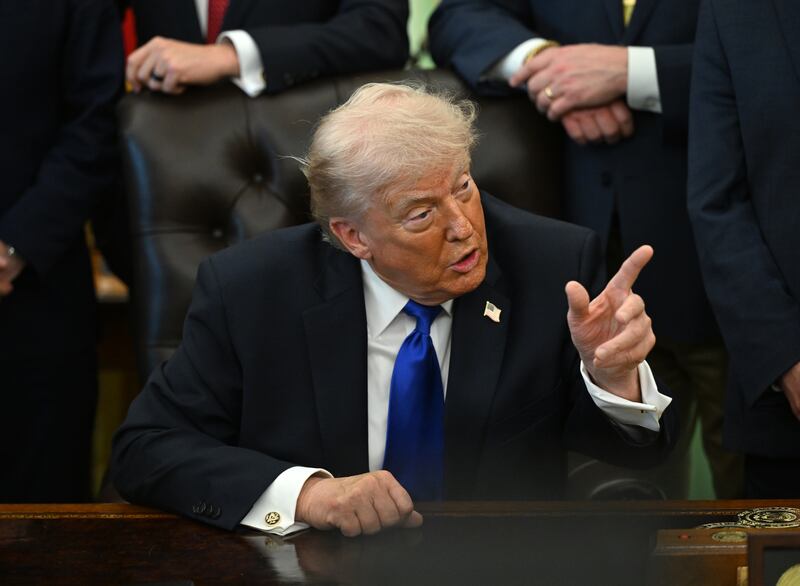
A US-Iran ceasefire that began in early April has “terminated” hostilities between the two sides for the purposes of an approaching congressional war powers deadline, a senior official of Donald Trump’s administration said on Thursday.
The US president faced a deadline on Friday to end the Iran war or make the case to Congress for extending it, but the date was most likely to pass without altering the course of the war.
“For War Powers Resolution purposes, the hostilities that began on Saturday, February 28, have terminated," said the official, describing the administration’s thinking.
There has been no exchange of fire between the US armed forces and Iran since a ceasefire began more than three weeks ago, the official added.
Earlier, analysts and congressional aides had said they expected Trump to notify Congress that he planned a 30-day extension or to disregard the deadline, with the administration arguing the ceasefire marked an end to the conflict.
The 1973 law allows the president 60 days to wage military action before ending it, seeking authorisation from Congress or asking for a 30-day extension on grounds of “unavoidable military necessity” for the safety of the armed forces.
The Iran war began with airstrikes launched by Israel and the US on February 28th. Trump formally notified Congress of the conflict 48 hours later, triggering a 60-day deadline of May 1st.
Defence secretary Pete Hegseth told a Senate hearing on Thursday he understood that the 60-day clock stopped during the truce. Opposition Democrats disputed that, saying there was no such legal provision.
The US constitution says only Congress, not the president, can declare war, but the curb does not apply for operations the administration casts as short-term or countering an immediate threat.
Trump’s Republican Party holds a narrow majority in both chambers of Congress.


