A 10-day ceasefire has been announced between Lebanon and Israel. US president Donald Trump said on Thursday that Israeli prime minister Binyamin Netanyahu and Lebanese president Joseph Aoun agreed to the pause in hostilities, which would begin at midnight local time, with the goal of achieving “lasting peace”.
People across the country were on edge this week waiting for news as contradictory reports suggested a ceasefire was imminent; that it was unlikely; or that it might happen, but it was unclear when.
An Israeli drone was still buzzing above the capital, Beirut, on Thursday evening when the news came through.
A Hizbullah spokesperson said any ceasefire “must be comprehensive across all Lebanese territory and must not allow the Israeli enemy any freedom of movement”.
READ MORE


“Regarding Israeli presence, the existence of Israeli occupation on our land grants Lebanon and its people the right to resist it, and this matter will be determined based on how developments unfold,” the statement added.
According to the Lebanese ministry of health figures, almost 2,200 people have been killed by Israeli attacks in Lebanon since March 2nd, when Iranian-backed militant group Hizbullah fired rockets at Israel. It followed 15 months of near-daily Israeli attacks after the November 2024 ceasefire.
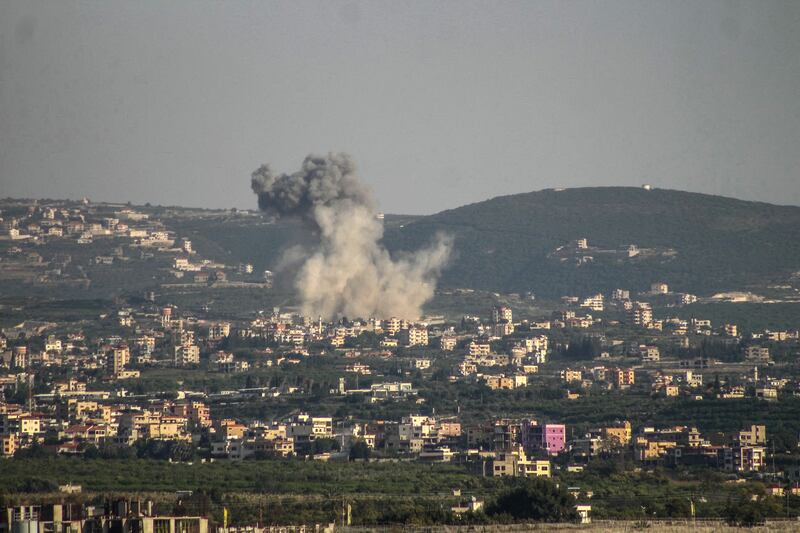

Over the past 30 months, the Israeli military has regularly been accused of targeting civilians in Lebanon, though representatives say it abides by international law and its war is against Hizbullah. Those killed in Lebanon since March 2nd include 260 women and 172 children. Hizbullah rockets have killed two civilians in Israel, officials told Reuters news agency.
On Thursday funerals were held for Lebanese paramedics killed in what is being reported as a “triple” or “quadruple tap” strike in the Nabatieh region. Three first responder teams were targeted in a row on Wednesday, according to colleagues who shared footage of the strikes’ aftermath.
One of those killed, Fadel Serhan (43), was the father of a young daughter and passionate about saving lives, friends and family said. He was buried on Thursday in a temporary cemetery in the city of Saida, as his home village, Choukin, was unsafe to return to. Ali Ghandour (41), who introduced himself as Serhan’s best friend, called the attacks an “assassination”.
“Of course they will get away with it,” he said about the Israeli military, who did not respond to a request for comment.
At least 93 medics have been killed by Israeli strikes since March 2nd, according to Lebanon’s health ministry.
Some 1.2 million people were displaced by mid April, Lebanese officials said. It is not clear if they will all be able to return home. Israeli officials – who have the stated aim of making Israel’s north safe for their citizens – previously said they planned to occupy southern Lebanon up to the Litani river.
On Wednesday night, at the area of Beirut’s Waterfront known as Biel, adults from an extended family sat on couches under a tarpaulin strung up between a tree and two piles of pallets, smoking and drinking coffee. Three children played in the street beside them, a girl with a toy guitar; a boy constructing a train set. Their tents were to the back.

The men and women frequently checked their phones, hopeful for good news. Some others had already left for home, believing the ceasefire was imminent, they said.
Two of those still there lived in Beirut’s southern suburbs and the others had homes in Baalbek, eastern Lebanon. At least one home was damaged by recent air strikes, the owner said, pulling out his phone to show a gaping hole in the roof caused by shrapnel.
If there was a ceasefire they would return immediately, most agreed. But one man said he was worried about what happened the last time – a situation he described as a “fake ceasefire”, where Israel continued attacking. That, he said, they could not bear again.