Main Points
- US to resume strikes at Iran following recovery mission
- At least 11 people killed in Israeli airstrikes in Lebanon including a 4-year-old child
- A US service member who has been missing since Iran shot down a fighter jet has been rescued, Donald Trump said.
- Trump put Iran on a 48-hour countdown to make a peace deal before “all Hell will reign (sic) down”.
- Sinn Féin and Independent Ireland called on the Taoiseach to cut short the Dáil’s Easter recess due to the growing energy crisis
Key Reads
- Lebanese president defends diplomatic outreach to Israel
- Four ways the Iran war may affect your money, bills and airfares
- Ipsos B&A survey: Irish public ‘emotionally checking out’ after succession of crises
- ‘The fear doesn’t go away’: the merchant seamen stuck in the Gulf
Israeli airstrikes on Lebanon kill at least 11 people on Sunday, according to media reports.
An Israeli airstrike on Kfarhata, a village in south Lebanon, killed seven people on Sunday, including a 4-year-old child, Lebanon’s health ministry said in a statement.
Another Israeli attack on the Jnah neighbourhood in Beirut killed four people and injured 39 others, the ministry added.
The strike on Kfarhata followed an overnight evacuation order by the Israeli military instructing residents to leave the village.
As Lebanese Christians, who make up roughly a third of the population, marked Easter Sunday, the country experienced one of its most violent days since fighting with Israel erupted early last month. - The Guardian
UK downed ‘multiple Iranian drones’ in Middle East, says Defense Ministry
The Royal Airforce downed multiple Iranian drones across the Middle East, according to the UK Ministry of Defence (MOD).
It said Eurofighter Typhoons, F-35 fighter jets and Royal Navy aircraft conducted defensive missions over the territory of the UK’s allies in the region.
The MOD said its “force protection measures in region continue to be at the highest levels” aimed at protecting “UK personnel” in the region.
Update on UK operations in the Middle East, 5 April 2026. pic.twitter.com/D3wqHH1BDR
— Ministry of Defence 🇬🇧 (@DefenceHQ) April 5, 2026
Iranian strike on Haifa in Israel wounds 25 people, local media report
The strike, on Sunday, seriously wounded an 82-year-old man and lightly injured 24 others – including a 10-month-old baby, local media have reported.
Three or four people were still believed to be missing.
The missing people are believed to be a couple in their 60s and their son. A foreign worker may have also been in their apartment with them.
The Israeli emergency service Magen David Adom said a number people were wounded when the building sustained a direct hit.
A military spokesperson told Agence France-Presse the building was hit by the “direct impact of a missile” minutes after a military warning was issued in the early evening. – The Guardian
Trump social media statements labelled ‘unhinged’ by top Democrats
US president Donald Trump has been rebuked by US politicians for his recent social media posts, including republican former ally Marjorie Taylor Greene.
Taylor Greene called on the administration to “intervene in Trump’s madness”, adding the president “has gone insane, and all of you are complicit”.
Top Senate Democrat Chuck Schumer wrote “the President of the United States is ranting like an unhinged madman on social media”.
Schumer added: “He’s threatening possible war crimes and alienating allies. This is who he is, but this is not who we are. Our country deserves so much better.” – The Guardian
Iran will only open Strait of Hormuz if it is compensated for war damages, says Tehran spokesperson
Iran will open the Strait of Hormuz only after receiving compensation for war damages, paid via a “new legal regime” based on transit fees, an Iranian state spokesperson has said.
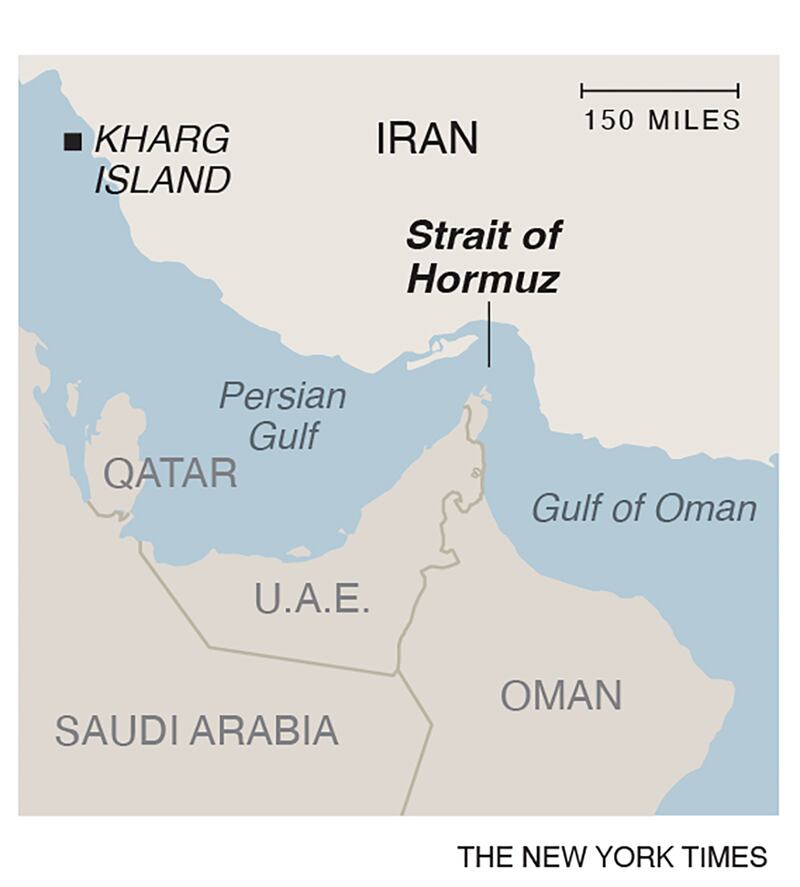
“The Strait of Hormuz will reopen only when, under a new legal regime, the damages from the imposed war are fully compensated from a portion of the transit toll revenues,” said Mehdi Tabatabaei, deputy for communications at the Iranian president’s office. – The Guardian
Gulf waters at ‘critical’ risk status for merchant vessels says UK maritime security authority
The UK Maritime Trade Operations Centre (UKMTO) has warned of possible attacks against merchant shipping vessels at a major UAE port.
It said the Arabian Gulf as well as waters around the Strait of Hormuz are at ‘critical’ level – its highest risk parameter.
Waters around another key shipping lane, the Bab el-Mandeb Strait which is nearly 2,000km from Iran, is a ‘moderate’ risk for vessels.
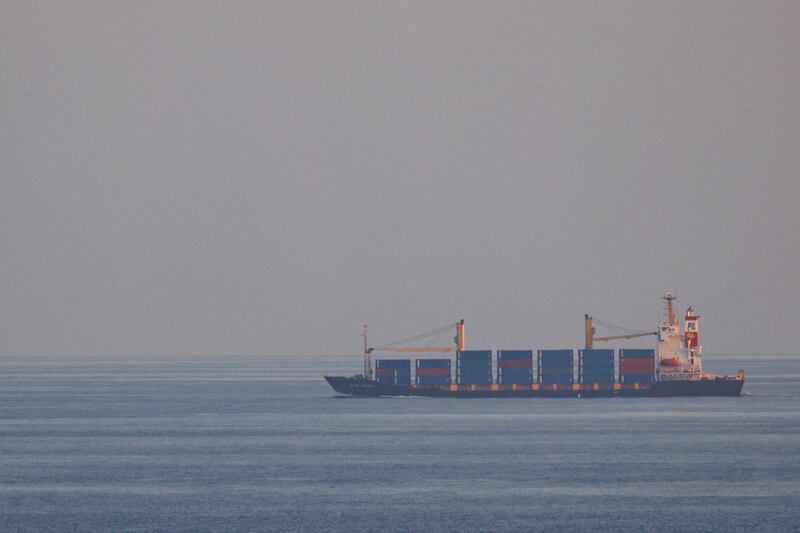
The maritime security sector body said it received a report of an incident with “multiple splashes from unknown projectiles” landing in close proximity to a container ship at Khor Fakkan Port in the United Arab Emirates. The vessel was loading stock at the time.
The UKMTO warned merchant ships to travel “with caution” in the area and said authorities are investigating the incident.
Damage to energy infrastructure “expensive” to repair, Opec+ says
Oil producing countries have today expressed concern about attacks on energy assets, saying they were expensive and time-consuming to repair.
Member countries of the Opec+ Joint Ministerial Monitoring Committee warned in a statement that the extent of the damage will have an impact on supply.
Opec+ agreed on Sunday to raise its oil output quotas by 206,000 barrels per day for May, a modest rise that will largely exist on paper as its key members are unable to raise production due to the U.S.-Israeli war with Iran.
The quota increase of 206,000 bpd represents less than 2 per cent of the supply disrupted by the Hormuz closure.
Some experts have labelled the increase as “academic” as long as disruptions in the strait persist.
“In reality it adds very few barrels to the market,” Jorge Leon, a former OPEC official who now works as head of geopolitical analysis at Rystad Energy told Reuters.
“When the Strait of Hormuz is closed additional barrels from Opec+ become largely irrelevant.” – Reuters
Kuwait’s oil infrastructure struck by Iranian drone before Opec+ supply talks
Iranian drones struck Kuwait’s oil infrastructure on Sunday, causing “severe material damage” that threatened to further disrupt oil supplies already hit by the US and Israel’s war with Tehran.
It came hours before members of the Opec+ group that represents major global oil suppliers gathered to discuss how to bolster output despite Iran’s effective closure of the crucial strait of Hormuz shipping route.
The IRGC said it attacked petrochemical plants in Kuwait, as well as the United Arab Emirates and Bahrain, with the Kuwait Petroleum Corporation reporting damage and fires at its subsidiaries.
The company said fires had earlier broken out at its Shuwaikh oil sector complex, which houses the oil ministry and KPC headquarters, after a separate drone attack. – The Guardian
Iran threatens escalation of retaliatory strikes if US attacks oil infrastructure
Iran’s military joint command has warned of stepping up retaliatory attacks on regional oil and civilian infrastructure if the US and Israel attack such targets in the Islamic Republic, according to state television.
A spokesman said in comments published by Iran’s state news agency, IRNA: “We once again repeat: if you commit aggression again and strike civilian facilities, our responses will be more forceful.”
US president Donald Trump insinuated he will attack power plants and civilian infrastructure should Iran not submit to his demands of reopening the Strait of Hormuz. Additional reporting: Associated Press
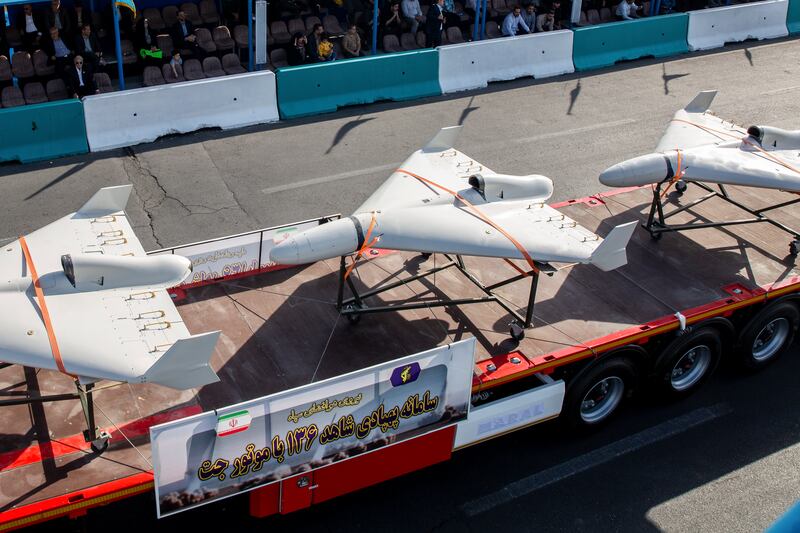
UAE attacked by 2,191 drones since onset of conflict
Air defence systems in the United Arab Emirates (UAE) intercepted nine ballistic missiles, a cruise missile and 50 drones on Sunday, according to the United Arab Emirates’ ministry of defence.
In a statement, the UAE defence ministry said the interceptions on Sunday bring the total number of drones engaged by its air defences to 2,191.
This comes in addition to 507 ballistic missiles and 24 cruise missiles. It said Iranian attacks have injured 217 people, with three military personnel and 10 civilians killed.
US to resume strikes at Iran following recovery mission
US strikes into Iran will resume on Sunday, the country’s Central Command said, as it aims to “dismantle the Iranian regime’s ability to project power beyond its borders”.
CENTCOM said that air strikes would continue following the recovery of two US airman downed during a combat mission over Iran.
Mohammad Bagher Ghalibaf, the speaker of the Iranian parliament, speaks out on social media following US President Donald Trump’s latest threats.

At least 11 people killed in Israeli airstrikes in Lebanon
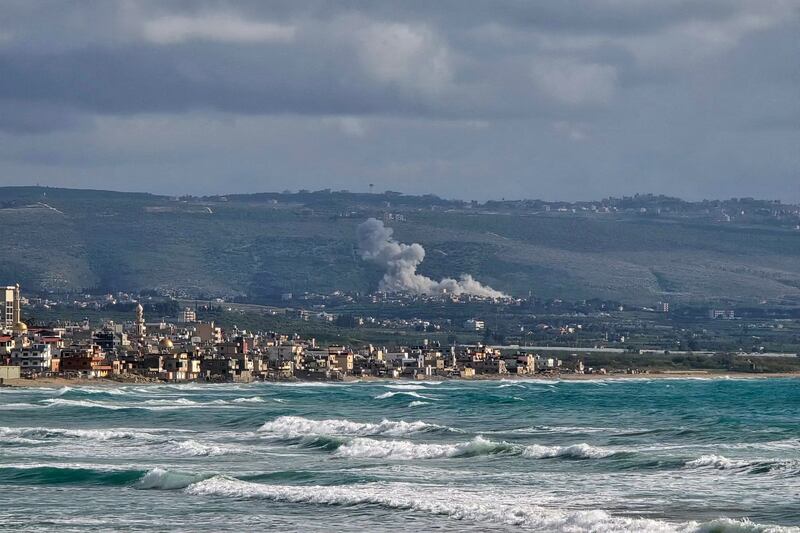
An Israeli airstrike on Kfarhata, a village in south Lebanon, killed seven people on Sunday, including a 4-year-old child, Lebanon’s health ministry said in a statement.
Another Israeli attack on the Jnah neighbourhood in Beirut killed four people and injured 39 others, the ministry added.
The strike on Kfarhata followed an overnight evacuation order by the Israeli military instructing residents to leave the village.
As Lebanese Christians, who make up roughly a third of the population, marked Easter Sunday, the country experienced one of its most violent days since fighting with Israel erupted early last month.
Throughout the day, Beirut echoed with the sounds of strikes and the screech of low-flying planes overhead. The southern suburbs of the capital were hit by eight airstrikes, state media reported.
Earlier on Sunday, the Lebanese army said a soldier had been killed in an Israeli strike in southern Lebanon.
On Saturday, the Israeli military issued an evacuation warning targeting Lebanon’s Masnaa border crossing with Syria, the main entry point connecting the two countries, alleging it was being used by the Lebanese Hezbollah armed group for military purposes.
Lebanon was drawn into the Middle East conflict when Iranian-backed Hezbollah began to launch rockets at Israel on March 2 in support of Tehran.
Israel has launched strikes on Lebanon and invaded the south in what has become the most violent spillover of the U.S.-Israeli war on Iran.
By late March, more than 400 Hezbollah fighters had been killed, sources told Reuters. At least 10 Israeli troops have been killed in southern Lebanon in the same period, the Israeli military has said.
The Lebanese health ministry said 1,461 people had been killed in Israeli attacks in Lebanon as of Sunday, raising the death toll since the start of the war by 39 in around 24 hours. More than one million people have been displaced.
Israel said it intends to control a “security zone” as deep as 30 km (20 miles) into Lebanese territory. It has issued evacuation orders covering around 15% of Lebanese territory.
But tens of thousands of Lebanese have remained in their homes in the south, including around 9,000 Lebanese Christians living in a cluster of border towns, who told Reuters they were determined to stay.
-Reuters
Russia expressed hope on Sunday that efforts to de-escalate the Iran conflict would bear fruit and said the United States would contribute by “abandoning the language of ultimatums and returning the situation to a negotiating track”.
The Russian Foreign Ministry statement was issued after a conversation between Russian Foreign Minister Sergei Lavrov and Iranian Foreign Minister Abbas Araqchi.
- Reuters
Mark Weiss reports:
With Israel extending its military entrenchment in Lebanon by the day, Lebanese president Joseph Aoun has again urged negotiations, arguing that diplomacy is the only way to halt escalating air strikes and a growing ground incursion in south Lebanon.
On Sunday, he defended his outreach to Israel, saying it was the only way to prevent Lebanon from turning into another Gaza. “It may be that Israel wants to operate in southern Lebanon as it does in Gaza, but our duty is not to drag it into doing what it does in Gaza,” he said. “Negotiations are not surrender. Gaza is destroyed, and more than 70,000 have been killed, and only afterwards do they negotiate. We have no choice but to negotiate to stop the tragedy in Lebanon.”
His full report is here
The New York Times reports:
An advisor to Iran’s new Supreme Leader, Mojtaba Khamenei, has threatened to orchestrate the closure of another strategic waterway, a move that could increase disruption to global trade and oil and gas suppllies caused by the war.
The advisor, Ali Akbar Velayati, warned in a social media post on Sunday that Iran could target the strait of Bab al-Mandab, a narrow shipping route at the southern end of the Red Sea.
Iran has effectively closed the Strait of Hormuz, a vital transit route for gas and oil from the Persian Gulf, spurring a sharp rise in global energy prices.
According to Fox News, US President Donald Trump said he believes he could reach a deal with Iran by Monday.
In the same interview with the broadcaster, he said if Iran did not make a deal, he was “considering blowing everything up” and taking control of its oil.

Political correspondent Ellen Coyne reports:
The current energy crisis is the “worst the world has ever seen,” but “this is not 2008”, according to Tánaiste Simon Harris.
Coalition leaders will meet this week to consider further measures to try to mitigate the global fuel crisis caused by the ongoing US-Israel war on Iran.
The Government is bracing for a months-long cost-of-living crisis, which would become worse if the conflict were to continue into the winter months of this year.
The meeting at the most senior levels of the Irish Government this week will come as the European Commission also examines more targeted measures to respond to the ongoing energy crisis. The bloc of member states will consider emergency measures similar to those implemented in 2022 in the wake of the Russian invasion of Ukraine.
Her full report can be read here.
Throughout the war, US President Donald Trump has repeated threats to Iran unless it opens the Strait of Hormuz by April 6.
Here’s a timeline of the threats he has issued:
On March 21, in a post on his social media platform Truth Social, Trump said he would “hit and obliterate” power plants, “starting with the biggest ones first”, if Iran didn’t reopen the waterway within 48 hours
Two days later, Trump posted again that the US and Iran had held “very good and productive” conversations about a “complete and total resolution of hostilities in the Middle East”.
As a result, he said, he was postponing for five days a plan to hit Iran’s energy grid.
On March 27th, he postponed the attack for a further 10 days, bringing the deadline to April 6th.
On Saturday, the US president confirmed the April 6 deadline, adding that Iran had 48 hours before he unleashed “all hell”.
His most recent post on Truth Social, on Sunday, reiterated this threat in an expletive-laden message.
An Israeli airstrike on a three-storey building in the southern outskirts of Beirut, Lebanon, killed at least four people and injured at least 39 others, according to Lebanon’s official news agency.
In an intense bombardment, Israeli warplanes had carried out seven raids on targets in the area by about 3:30 p.m. local time.
The deadly strike on the building took place in a densely populated neighborhood, Al-Mqdad, close to the Rafik Hariri University Hospital, the news agency said.
Earlier Sunday, the Israeli military said it was attacking Hezbollah “infrastructure sites” in the Lebanese capital after warning residents there to evacuate several areas on the southern outskirts of the city.
- The New York Times
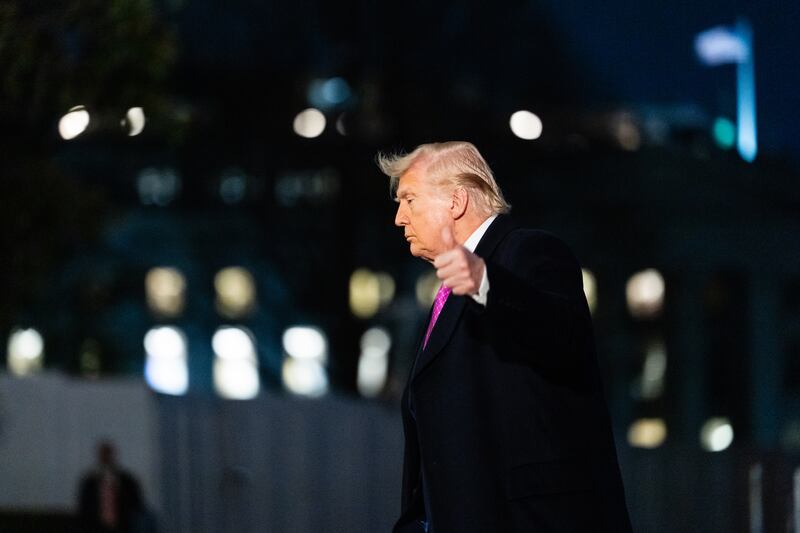
US President Donald Trump tells Iran it will be ‘living in hell’ if Strait of Hormuz not reopened
US President Donald Trump has continued to demand the re-opening of the Strait of Hormuz, stating Iran will be “living in Hell” if it does not.
The Strait of Hormuz, the sea passage for one-fifth of the world’s oil shipments, has been blocked by Iran since the US-Israeli attacks began.
In a post on Truth Social, the US President said: “Tuesday will be Power Plant Day, and Bridge Day, all wrapped up in one, in Iran. There will be nothing like it!!!”
“Open the Fuckin’ Strait, you crazy bastards, or you’ll be living in Hell - JUST WATCH! Praise be to Allah. President DONALD J. TRUMP.”
The deputy foreign ministers of Oman and Iran met on Saturday to discuss options to ensure “the smooth flow of transit” through the Strait of Hormuz - the sea passage for one-fifth of the world’s oil shipments.
In a statement on X, formerly Twitter, the foreign ministry of Oman said the meeting was attended by “specialists from both sides”.
“The meeting discussed possible options for ensuring the smooth flow of transit through the Strait of Hormuz amid the circumstances currently prevailing in the region,” the statement said.
“During the meeting, experts from both sides presented a number of visions and proposals that will be studied.”
US President Donald Trump has described the second US airman that was rescued as being “seriously wounded” and “really brave”.
“We have rescued the seriously wounded, and really brave, F-15 Crew Member/Officer, from deep inside the mountains of Iran,” he said in a new message on his Truth Social platform.
“The Iranian Military was looking hard, in big numbers, and getting close. He is a highly respected Colonel.
“This type of raid is seldom attempted because of the danger to ‘man and equipment.’ It just doesn’t happen! The second raid came after the first one, where we rescued the pilot in broad daylight, also unusual, spending seven hours over Iran.
“An AMAZING show of bravery and talent by all! I will be having a News Conference, with the Military, at the Oval Office, on Monday, at 1:00 P.M. God Bless our great MILITARY WARRIORS! President DONALD J. TRUMP”
Our reporter Ellen O’Riordan is writing about findings of an Ipsos B&A survey which has found that after years of overlapping crises, Irish people have “run out of shock” and are “emotionally checking out”.
The war in Iran and accompanying fuel price hikes are just the latest big world events to affect the lives of ordinary people, and 74 per cent of adults now expect the global economy to worsen over the next year. That is up 10 percentage points on the proportion of respondents who said the same two years ago.
Instead of panicking, the public has accepted chaos is no longer temporary and they are increasingly choosing to tune out, the researchers said. Once-shocking headlines – a pandemic, an energy crisis, geopolitical chaos – have begun to feel routine.
Focus-group research, which was conducted in the weeks before the United States and Israel began their air campaign against Iran, found there has been a significant shift away from “cautious optimism”, where people pushed through in the hope of light at the end of the next few months. This has made way for a form of “resigned resilience” that geopolitical and financial turbulence is here to stay.
Read her full article here
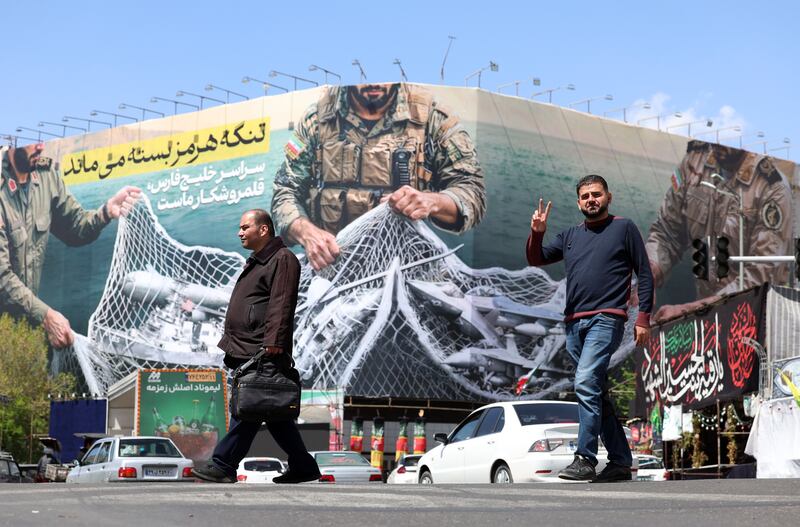
The Trump administration has asked satellite imagery providers to voluntarily withhold images of designated areas of interest due to the ongoing conflict in the Middle East, prompting Planet Labs PBC to restrict access to data from the region.
Bloomberg reports the San Francisco-based commercial satellite provider said on Sunday that the measures would apply retroactively from March 9 and are expected to remain in place until the conflict ends.
“These are extraordinary circumstances, and we are doing all we can to balance the needs of all our stakeholders,” the company said in a statement. “We will continue to monitor the situation and make adjustments as possible to minimize the impact on data availability to our customers.”
There was no immediate response from the Pentagon to a request for comment from Bloomberg News outside business hours on Sunday.
Planet Labs, which has contracts with Nato and the US Navy, among others, is moving to a “managed access” model, extending publication delays for new imagery.
It will release images of the designated areas only on a case-by-case basis, including in cases of “urgent, mission-critical requirements” or when deemed to be in the public interest.
The decision underscores the growing strategic role of commercial satellite operators in modern conflicts, where high-resolution imagery can influence military planning as quickly as it informs financial markets and the public.
The move follows tighter restrictions introduced last month, when Planet Labs increased commercial imagery delays from four days to two weeks, citing concerns that the data could be used to target Nato members.
Back then, the company had said the temporary hold on imagery wasn’t the result of any government requirement.
Several “flying objects” were destroyed during the US mission to find a stranded airman in Iran, the Revolutionary Guards said on Sunday according to Tasnim news agency.
“During a joint operation (Aerospace, Ground Force, Popular Units, Basij and Police command), enemy flying objects were destroyed,” the group said after Iran’s police command announced an American C-130 aircraft had been downed in the south of Isfahan.
The spokesperson of Khatam al-Anbiya Central Headquarters, the unified command of the Iranian armed forces, said the downed aircraft included a C-130 military transport plane as well as two Black Hawk helicopters.
Earlier on Sunday, Iran’s army also said they had downed an Israeli drone in the same province. – Reuters
‘One of the most complex missions in history of US special operations’
The officer rescued by US Special Operations forces in a risky Saturday night mission that took commandos deep into enemy territory, current and former US officials briefed on the operation told the New York Times.
The rescue followed a life-or-death race between US and Iranian forces that stretched over two days to reach the injured airman, the officials said. In the end, US commandos extracted the officer in a massive operation that involved hundreds of special operations troops.
The two crew members of the F-15E Strike Eagle, the first lost to enemy fire in the month-long war, had both ejected from the cockpit Friday after Iran’s military struck their plane. The jet’s pilot was quickly rescued, but its weapons systems officer could not be found.
Finding the downed airman, who had been hiding with little more than a pistol as defence, had been the US military’s highest priority over the past 48 hours.
The mission to save the crew member employed hundreds of special forces troops, dozens of US warplanes, helicopters, and cyber, space and other intelligence capabilities.
US attack aircraft dropped bombs and opened fire on Iranian convoys to keep them away from the area where the airman was hiding. As US forces converged on the downed airman, a firefight erupted, two former senior military officials briefed on the operation said.
The airman was equipped with a beacon and a secure communication device for co-ordinating with forces mounting the rescue.
A senior US military official described the mission to rescue the airman as one of the most challenging and complex in the history of US special operations. – New York Times
Trump announced the success of the “daring” mission on social media platform Truth Social:
US rescues second crew member from downed fighter jet in Iran
A US service member who has been missing since Iran shot down a fighter jet has been rescued, Donald Trump said.
In a post on Truth Social, the US president said the service member is injured but “will be just fine” and that the US had been monitoring his location.
It comes after a frantic search-and-rescue operation. The crew member had been missing since Friday, when Iran downed a US F-15E Strike Eagle. A second crew member was rescued earlier.
Trump said the US did not confirm the rescue of the first aviator from the F-15 fighter jet that was shot down in Iran on Friday “because we did not want to jeopardise our second rescue operation”.
In his social media post early on Sunday, Trump said the second aviator “was behind enemy lines in the treacherous mountains of Iran, being hunted down by our enemies, who were getting closer and closer by the hour”. – AP


