
What happened today: Thursday
- Missile and drone strikes continued across the Gulf region, with oil and gas infrastructure becoming primary targets as the US-Israeli war on Iran neared the end of its third week
- Israeli prime minister Binyamin Netanyahu said “we are winning, and Iran is being decimated”, adding it is no longer has the capacity to enrich uranium or make ballistic missiles after 20 days of attacks
- US president Donald Trump said “I’m not putting troops anywhere” when asked whether if he was planning to send soldiers to Iran and that the US needed more funding for a “lot of reasons” when asked about thePentagon seeking $200 billion for the conflict
- More than 3,000 people have been killed in Iran since the US-Israeli war began, human rights group Hrana estimates, with 1,001 killed in Lebanon in Israeli attacks according to health authorities there since March 2nd
- Iran halted gas supplies to Iraq and threatened to attack oil facilities in Saudi Arabia, the UAE and Qatar, after attacks on the huge Iranian South Pars gasfield, carried out by Israel in co-ordination with Washington
Key Reads
- Iran left the ‘gas capital of the world’ up in flames. What happens now?
- Why gasfield attacks are a significant escalation in Middle East war
That is all for this evening.
Follow along tomorrow for more rolling coverage.
Goodnight.
Trump tells Israel not to repeat strikes on Iranian energy as crisis deepens
US president Donald Trump told Israel not to repeat its attacks on Iranian natural gas infrastructure as tit-for-tat strikes on energy plants sent energy prices spiralling, sharply escalating the US-Israeli war on Iran.
Trump’s comment came as energy prices jumped on Thursday after Iran responded to an Israeli attack on a major gasfield by hitting Qatar’s Ras Laffan Industrial City, which processes around a fifth of the world’s liquefied natural gas, causing damage that will take years to repair.
Saudi Arabia’s main port on the Red Sea, where it has been able to divert some exports to avoid Iran’s closure of the Gulf’s exit point, the Strait of Hormuz, was also attacked. – Reuters
US says it has destroyed Iranian missile plant
US central command said earlier that it has destroyed the Iranian regime’s surface-to-surface missile plant in Karaj, Iran.
The plant was used to “assemble ballistic missiles that threatened Americans, neighbouring countries, and commercial shipping”, Centcom said.
Russia issues fresh call for an end to hostilities in Gulf
Russia issued a fresh call on Thursday for an end to hostilities in the Gulf, starting with a halt to US and Israeli attacks
“We call for the fastest possible cessation of hostilities, which resulted from the unprovoked aggression of the US and Israel,” the foreign ministry said in a statement on its website.
“Russia, alongside China, Turkey and other like-minded parties, is ready to help with a settlement to the conflict and the search to resolve differences by diplomatic-political means.
“Let us stress that the first step on this path must be quick agreement by the United States and Israel to halt their military adventure.”
Russia, it said, stood for developing collective security in the Gulf “aimed at establishing a durable peace in the region and co-operation between all coastal countries”.
Russia has a “strategic partnership” with Iran, but that agreement falls short of a mutual defence treaty. Moscow, keen to maintain good ties with Washington, has called for de-escalation and offered to act as a mediator. – Reuters
Islamic Republic targeted Saudi Arabia, Qatar and UAE with drone and missile attacks

Iran stepped up its assault on key oil and gas infrastructure across the Middle East, defying US president Donald Trump’s calls for restraint and triggering a fresh surge in energy prices that have highlighted the cost of the ever-widening conflict.
The Islamic Republic targeted sites in countries including Saudi Arabia, Qatar and the United Arab Emirates with a wave of drone and missile attacks on Thursday, a retaliation for Israel’s assault on Iran’s giant South Pars gasfield the previous day.
The sharp escalation, with the bombing of more energy facilities from both sides, threatened to draw in both Gulf and European powers and exposed tensions between the US and Israel. – Bloomberg
‘Significant decline’ to Brent crude oil prices, writes Cliff Taylor
After serious nerves during European trading, share prices revived in the US late in the day, ending just slightly lower and oil prices fell back, writes Cliff Taylor.
The change of mood seems to have been largely driven by Israeli president Binyamin Netanyahu saying that Iran can no longer enrich uranium and that the war “is ending a lot faster that people think.”
Brent crude oil prices fell back to $107 a barrel from $119 earlier, a significant decline. Talk in the US of releasing more official oil reserves also seems to have helped.
Share and bonds had taken a sharp tumble earlier due to Iranian attacks on a major Qatari LNG facility but by last night the US S&P 500 share index ended just 0.3 per cent lower.
We have been here before of course, with financial and energy markets reacting well to comments last week by US president Donald Trump that the war would be over soon, before subsequently retreating on doubts that this would happen, even if the US wanted it to.
All that we can safely forecast is that more volatility lies ahead.
France’s foreign minister will travel to Israel on Friday in an unscheduled visit
The foreign ministry said in a statement that Jean-Noel Barrot would discuss with Israeli authorities regional security and humanitarian aid issues and attempts to de-escalate the conflicts in the Middle East.
Israel has so far rebuffed an offer of direct talks from Beirut as too little, too late by a government that shares its goal of wanting Iran-backed Hizbullah disarmed but fears that acting against it could risk civil war, sources familiar with the situation have said.
President Joseph Aoun, who met Barrot on Thursday, has expressed a willingness to begin direct negotiations with Israel, which has carried out air strikes in Lebanon since Hizbullah fired on Israel on March 2nd. Hizbullah has rejected the move and fought on. – Reuters
‘Israel acted alone’ in striking Iranian gasfield, Netanyahu says
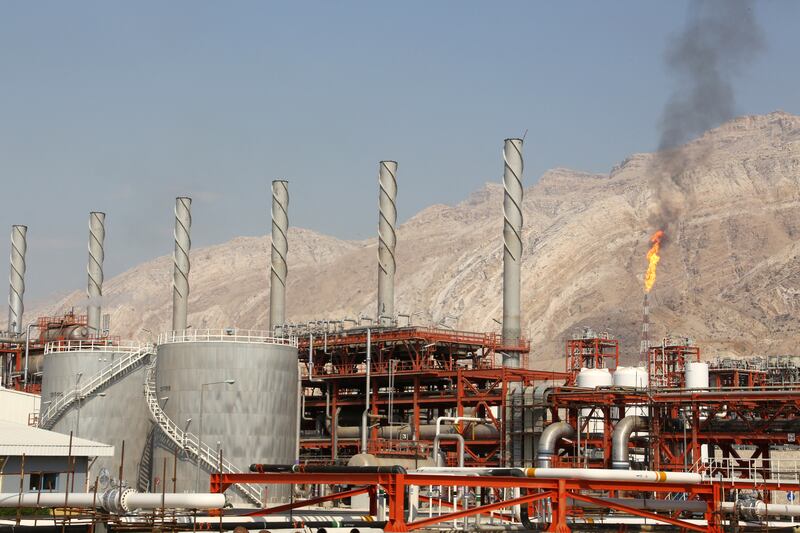
Taking questions from reporters at the press conference in Jerusalem, Netanyahu was asked if he had told Donald Trump about Israel’s strike on Iran’s South Pars gasfield.
Netanyahu did not address whether Trump was made aware of the plan ahead of time.
He said only: Israel acted alone against the gas compound. President Trump asked us to hold off on future attacks, and we’re holding out.
Trump has distanced himself from Israel’s attack on the gasfield. He claimed on Wednesday that Washington “knew nothing” about it and confirmed today that he told Netanyahu to stop attacking Iran’s energy facilities.
Israel previously claimed that the strike was co-ordinated with the US. Reports of that, citing Israeli officials, have swirled today – contradicting Trump’s claim – along with other reports that the US was “aware” of the strike.
When he spoke on this in the Oval Office earlier, Trump was not specific about when exactly he had spoken to the Israeli PM. – Guardian
‘It takes money to kill bad guys’, says US secretary of defence
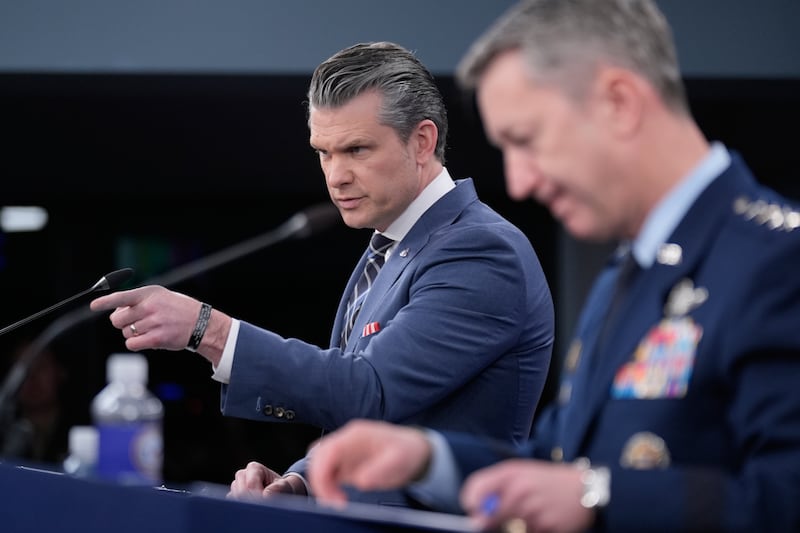
The US military’s request for $200 billion in additional funding for the Iran war was met with stiff opposition in the US congress on Thursday, as Democrats and even some Republicans questioned the need for the money after large defence appropriations last year.
A US official confirmed a Washington Post report that the department of defence has asked the White House to approve a more than $200 billion request to congress to fund the war in Iran.
Trump has not yet sent a request for the Senate and House of Representatives to approve the huge sum and his administration made clear the number could change.
“I think that number could move, obviously. It takes money to kill bad guys,” secretary of defence Pete Hegseth told a news conference on Thursday.
“So we’re going back to congress and folks there to ensure that we’re properly funded for what’s been done, for what we may have to do in the future,” he said. – Reuters
France to double humanitarian aid to Lebanon to value of €17m, says foreign ministry
France’s foreign minister Jean-Noel Barrot made the announcement on his social media account as he visited Beirut, as part of efforts to get a ceasefire between Israel and Hizbullah.
Jean-Yves Le Drian, France’s special envoy for Lebanon, had said earlier this week that it was unreasonable to expect the Lebanese government to disarm Iran-backed Hizbullah while the country is being bombed by Israel.
Israel has rebuffed an offer of direct talks from Beirut as too little, too late by a government that shares its goal of wanting Hizbullah disarmed but fears that acting against it could risk civil war, sources familiar with the situation said. – Reuters
War on Iran will take ‘as long as is necessary’, says Netanyahu

Israeli prime minister Binyamin Netanyahu said the Middle East has changed “beyond recognition”, with Israel “stronger than ever” and Iran “weaker than ever”.
He said they are wiping out Iranian industry in a way “that we didn’t do before”, but “there’s still more work to do, and we’re going to do it”.
He had earlier said that the war would take “as long as is necessary”.
Despite the nearly three week war, it was still too soon to tell whether Iranians will take to the streets to try to overthrow their government, Netanyahu said.
“It’s up to the Iranian people to show that, to choose the moment and to rise to the moment,” he said.
While the war so far has been conducted via air attacks, Netanyahu said there has to be a ground component as well and “there are many possibilities for this ground component.” He did not elaborate.
Netanyahu also denied he dragged the US into the conflict.
“Does anyone really think that someone can tell president Trump what to do?” he said. – Reuters
Saudi Arabia intercepts two drones and one missile
In an update on X, Saudi Arabia’s defence ministry said it had intercepted and destroyed two drones in the country’s eastern region.
Earlier on Thursday, a drone crashed into the kingdom’s Samref refinery in the eastern port city of Yanbu. A ballistic missile heading towards the port was also destroyed. – The Guardian
Iran no longer has capacity to enrich uranium or make ballistic missiles, says Netanyahu
Israeli prime minister Binyamin Netanyahu said Iran no longer has the capacity to enrich uranium or make ballistic missiles after 20 days of US-Israeli air attacks, during a news conference on Thursday.
“We are winning, and Iran is being decimated,” Netanyahu said, noting that Iran’s missile and drone arsenal is being massively degraded and will be destroyed.
“What we’re destroying now are the factories that produce the components to make these missiles and to make the nuclear weapons that they’re trying to produce,” Netanyahu said.
Netanyahu did not provide evidence for his claim that Iran no longer had the capacity to enrich uranium. – Reuters
Iran said it would show ‘zero restraint’ if energy infrastructure targeted again
The warning, delivered by the Iranian foreign minister, Abbas Araghchi, follows Israel’s attack on the Iran’s massive South Pars gasfield – which it shares with Qatar – which triggered Iranian retaliatory strikes on Qatar’s Ras Laffan gas complex and other Gulf neighbours, sending stock markets tumbling globally and triggering sharp increases in gas prices.
Ras Laffan supplies about 20 per cent of the world’s natural gas. Israel also confirmed on Thursday that the Bazan Group refinery in Haifa had been hit and damaged in a claimed Iranian strike.
“Our response to Israel’s attack on our infrastructure employed FRACTION of our power. The ONLY reason for restraint was respect for requested de-escalation,” said Araghchi in a post on X.
“ZERO restraint if our infrastructures are struck again.” – The Guardian
Lebanon’s president repeats calls for ceasefire and negotiations with Israel

Lebanese president, Joseph Aoun, on Thursday said “the necessity of a ceasefire and to provide the necessary guarantees for its success by the parties concerned,” according to a statement carried by Agence France-Presse.
Welcoming France’s Jean-Noel Barrot, Aoun also emphasised “what is important is to stop the escalation” between Hizbullah and Israel.
Barrot is on a short visit to Lebanon that “reflects France’s support and solidarity with the Lebanese people, who have been dragged into a war they did not choose,” the French foreign ministry said.
Barrot also met prime minister Nawaf Salam and speaker of parliament Nabih Berri.
French president Emmanuel Macron spoke on Friday with the Lebanese president, prime minister and parliament speaker, and the next day called on Israel to agree to direct talks with the Lebanese government. Macron expressed France’s readiness to facilitate the talks by hosting them in Paris. – The Guardian
Today’s sharp fall in equity and bond markets are significant, writes Cliff Taylor
Investors had reckoned up to now that the conflict would be relatively short-lived.
Now they fear it will be more prolonged and that even if the US action ends, disruption to energy shipments and infrastructure may continue.
Central to today’s events was the Iranian attack on key Qatari LNG infrastructure. Qatar is responsible for around one fifth of global LNG and experts fear the damage could take months to repair.
In turn this has pushed up natural gas prices – central to Ireland’s electricity supply – while oil prices have also jumped.
Thomas Pugh, chief economist at RSM, reckons Irish inflation could – based on current energy prices – head back over three per cent in the short term and could go to four per cent if gas prices stay high long enough to feed through to electricity.
This will increase pressure on the Government to introduce supports. And investors and pension fund holders will worry about a rerun of 2022, when both equity and bond prices fell.
For more from Cliff Taylor on this subject, read Smart Money here.
Iranian attack damages Israeli oil refinery in Haifa
An Iranian missile attack hit Israel’s oil refineries in the northern port city of Haifa but did not cause “significant damage”, Israel’s energy ministry said on Thursday.
Energy minister Eli Cohen said power was briefly disrupted, with electricity restored to most of those who were affected, Reuters reported.
“The damage to the power grid in the north is localised and not significant,” Cohen said.
“Also, in the barrage towards the north, there was no significant damage to Israeli infrastructure sites.”
Iran’s Islamic Revolutionary Guard Corps said it had targeted refineries in Haifa, Israel’s third-largest city, and in Ashdod, in the country’s south, “along with a range of security targets and military support centres of the Zionist regime”, which it said “were hit by pinpoint missiles”.
There was no immediate word on whether the Ashdod refinery was hit. – The Guardian
Iran will ‘boycott America, but not the World Cup’, president of country’s football federation says
Iran are due to play all three of their group matches in the US, but the country’s football federation chief, Mehdi Taj, said in quotes reported by the Fars news agency on Wednesday: “We will boycott America, but we will not boycott the World Cup.”
That followed on from quotes attributed to Taj posted on the X account of the Iranian embassy in Mexico on Tuesday, in which he claimed to be “negotiating” with Fifa to move Iran’s matches to Mexico. – PA
UN secretary general says ‘it’s time for diplomacy to prevail over war’
António Guterres, the secretary general of the United Nations said, in a post on X, “I have two clear messages.”
“First, to the United States and Israel: It’s high time to end this war that is risking to get out of control, causing immense suffering on civilians, with dramatic effects on the global economy and potentially tragic consequences, especially for the least developed countries.”
Secondly, he issued a message to Iran saying, “stop attacking your neighbours, they were never parties to the conflict. The security council has condemned these attacks, has ordered them to stop, as it has order to open the Strait of Hormuz.
“The prolonged closure of the Strait of Hormuz causes enormous pain for so many people around the world who have nothing to do with this conflict.
“It’s time for the force of the law to prevail over the law of the force. It’s time for diplomacy to prevail over war,” he added.
What has happened so far today?
- Missile and drone strikes have continued across the Gulf region, with oil and gas infrastructure becoming primary targets as the US-Israeli war on Iran nears the end of its third week.
- The US and Israel appear at odds over the extent of co-ordination between Tel Aviv and Washington on a strike by Israel on the world’s largest gasfield, the South Pars site, in Iran. US president Donald Trump said he told Israeli prime minister Binyamin Netanyahu to not attack the energy fields and that Netanyahu had agreed not to do so.
- In the latest exchange of strikes between Israel and Iran, a missile strike landed inside the oil refinery complex in Haifa, a key node in Israel’s energy infrastructure.
- Israeli attacks in Lebanon have killed 1,001 people since March 2nd, according to the country’s health ministry. This comes amid Israel’s ongoing invasion of Lebanon, with intense clashes between its forces and Iran-backed Hizbullah militants in the south. More than 800,000 people have been displaced.
- More than 3,000 people have been killed in Iran since the US-Israeli attacks began, the US-based Iran human rights group HRANA estimates.
- Iran’s attacks on Qatar have damaged facilities that produce 17 per cent of QatarEnergy’s liquefied natural gas export capacity and it will take three to five years to repair them, the chief of the state-run company said.
- In a joint statement, Britain, France, Germany, Italy, the Netherlands and Japan condemned Iran’s attacks on commercial vessels and oil and gas facilities in the Gulf, saying they were ready “to contribute to appropriate efforts to ensure safe passage through the Strait of Hormuz”.
- Trump has said “I’m not putting troops anywhere” when asked whether he was planning to send soldiers to the Middle East region amid the Iran war. He also said the US needed more funding for a “lot of reasons” when asked about a media report that Pentagon was seeking $200 billion for the conflict.
- Taoiseach Micheál Martin has said a coming package of Government support to soften the impact of steep energy costs will be designed to avoid inadvertently hurting the wider economy by pushing up inflation.
- European natural gas prices rose as much as 35 per cent on Thursday after attacks to energy infrastructure in the Gulf intensified overnight.

The Lebanese state electricity company said on Thursday that Israeli attacks in southern Lebanon earlier that day had put a main power substation out of service, a sign of expanding Israeli attacks on Lebanese infrastructure.
In a statement carried by Lebanon’s state media, the electricity authority said the attack damaged various parts of the station in Bint Jbeil, impacting power provision in the city and surrounding towns.
There was no immediate comment from the Israeli military. – Reuters
Only Trump ‘can achieve peace across the world’, says Japanese PM

Japanese prime minister Sanae Takaichi sought to reaffirm her alliance with Donald Trump after the US president this week complained that Japan was among the nations that did not join his call to help protect the Strait of Hormuz.
Takaichi, who met Trump at the White House, told the president that Japan has opposed Iran’s development of its nuclear programme and appealed to his desire to be seen as a peacemaker, despite launching a war of choice with Iran, by telling him through an interpreter: “Even against that backdrop, I firmly believe that it is only you, Donald, who can achieve peace across the world.”
The agenda of Taikaichi’s meeting has swung in the wake of the Iran war. The meeting at the White House, followed by a dinner on Thursday night, was supposed to give Japan’s new prime minister a prime opportunity to have Trump’s ear before he embarked on a trip to China.
But now, the war in Iran and Trump’s unsuccessful call for Japan and other nations to help protect the vital Strait of Hormuz means the China trip has been delayed.
Trump had repeatedly complained on camera and online that US allies, including Japan, rejected his request to help safeguard the critical waterway for oil and gas transport.
The prime minister acknowledged before she left Japan that she expected her meeting with Trump will be “very difficult”.
But on Thursday, the two leaders had warm words for each other in public. Before Takaichi praised Trump, he called her a “popular powerful woman”.
He told reporters that they would be discussing in their meeting Japan’s level of support for the US in the Iran war, saying: “They are really stepping up to the plate.”
He did not offer details.
During their meeting, Takaichi and Trump are expected to announce a $40 billion nuclear reactor deal, according to a White House official, who was not authorised to speak publicly and spoke on the condition of anonymity to share details before the announcement. – AP
Netanyahu agreed not to target Iran energy field, says Trump
US president Donald Trump said on Thursday he had told Binyamin Netanyahu not to attack Iranian energy fields, adding that the Israeli prime minister had agreed not to.
“I told him, ‘Don’t do that’, and he won’t do that,” he told reporters in the Oval Office.
On Wednesday Trump said the US “knew nothing about” the attack by Israel on the South Pars gasfield, the largest in the world, which it shares with Qatar.
On Thursday, the president said “I’m not putting troops anywhere” when asked whether he was planning to send soldiers to the Middle East region amid the Iran war.
Trump also said the US needed more funding for a “lot of reasons” when asked about a media report that Pentagon was seeking $200 billion for the conflict. – Reuters
Missile hits key Israeli energy site
In the latest exchange of fire between Israel and Iran, a missile strike landed inside the oil refinery complex in Haifa, a key node in Israel’s energy infrastructure.
Emergency services said there were no immediate reports of casualties.
During the large-scale barrages of June 2025, Iranian missiles caused damage to facilities linked to the Haifa refinery.
Earlier, the Israeli military said it had struck a number of Iranian naval vessels at a port in the Caspian Sea, including missile ships and patrol boats.
In a statement, the Israel Defense Forces said a port command centre was also hit in the operation on Wednesday.
US defence secretary Pete Hegseth said earlier today that destroying Iran’s naval capabilities was one of the US’s top stated objectives in its military campaign. – The Guardian
Pentagon seeking $200bn in Iran war funding
As previously reported late on Wednesday night, the Pentagon has asked for $200 billion in funding for the war in Iran, according to a military official and an administration official, a significant sum adding to the costs of an already divisive campaign.
The request has been sent to the White House, the military official said, which will review it before any request for funds is formally submitted to US Congress. The officials spoke on condition of anonymity to discuss the proposal. The request was reported earlier by The Washington Post.
“Obviously, it takes money to kill bad guys,” defence secretary Pete Hegseth said when asked about the request during a news conference on Thursday, adding: “As far as the $200 billion, I think that number could move.”
It was not immediately clear how long the Pentagon intended for the $200 billion for the Iran war to last, or what operations it would cover.
Last week, Pentagon officials told lawmakers that the first six days of the war against Iran had cost more than $11.3 billion. Since then, Trump has threatened to escalate the fighting, including floating the idea of putting American troops on the ground even as he has alternated the threats with suggestions that the United States might conclude its military campaign soon.
But the $200 billion figure suggests that the US military is preparing for an extended engagement in Iran. – The New York Times
More than 1,000 killed in Israeli attacks in Lebanon
Israeli attacks have killed 1,001 people in Lebanon since war erupted between Israel and Hizbullah, the Iran-backed militia group, on March 2nd, the Lebanese health ministry said.
The death toll included 79 women, 118 children and 40 health workers, with 2,584 other people wounded, the ministry said in a statement. – The Guardian

The world’s biggest network of climate organisations has condemned the US-Israeli attack on Iran as “an illegal act of aggression” that “meets the criteria for ecocide”.
“An immediate and permanent ceasefire is the only path forward,” said the Climate Action Network, an umbrella group for more than 1,900 civil society organisations in over 130 countries, in a statement on Thursday, adding that such “unilateral attacks” by “imperialist interests” are a threat to countries across the global south.
The killings of more than 160 schoolgirls at a primary school in Minab, southern Iran, at the very beginning of the US-Israeli surprise attack on the country, was a symbol of the “normalisation of civilian death” encouraged by the genocide in Gaza, the statement said.
“The attacks on Iran’s oil storage facilities have unleashed massive health and environmental harm. Burning fuel depots poison air, land, water and lungs that will linger in the atmosphere long after the bombing stops. This meets the criteria for ecocide,” the statement added.
UK, France, Germany and other allies say they are ready to join efforts to ‘ensure safe passage’ in Strait of Hormuz
In a joint statement, Britain, France, Germany, Italy, the Netherlands and Japan condemned Iran’s attacks on commercial vessels and oil and gas facilities in the Gulf, while expressing “deep concern” over the escalating conflict, saying they were ready “to contribute to appropriate efforts to ensure safe passage through the Strait of Hormuz”.
“We condemn in the strongest terms recent attacks by Iran on unarmed commercial vessels in the Gulf, attacks on civilian infrastructure including oil and gas installations, and the de facto closure of the Strait of Hormuz by Iranian forces,” the statement said.
“We express our deep concern about the escalating conflict. We call on Iran to cease immediately its threats, laying of mines, drone and missile attacks and other attempts to block the strait to commercial shipping, and to comply with UN Security Council Resolution 2817”.
The statement said they were ready to “contribute to appropriate efforts to ensure safe passage through the strait. We welcome the commitment of nations who are engaging in preparatory planning.”
“We welcome the International Energy Agency decision to authorise a co-ordinated release of strategic petroleum reserves. We will take other steps to stabilise energy markets, including working with certain producing nations to increase output. We will also work to provide support for the most affected nations, including through the United Nations and the IFIs [international financial institutions].”
Middle East war could slow world trade growth further, says World Trade Organisation
Growth in world trade in goods will slow down markedly to 1.9 per cent this year from 4.6 per cent in 2025 and could decelerate even more if the Middle East war continues to push energy prices higher and disrupt global transport, a World Trade Organisation (WTO) report said on Thursday.
Although global trade remains resilient, buoyed by trade in AI-related products, the growth forecast is under pressure from the expanding US-Israeli war on Iran, WTO director generaleneral Ngozi Okonjo-Iweala said.
If crude oil and liquefied natural gas prices remain high throughout 2026 due to the conflict, global trade in goods could slow further to 1.4 per cent, WTO economists said.
Israel says attack on Iranian gasfield was co-ordinated with US
Israel’s attack on an Iranian gas field on Wednesday was co-ordinated with the US, three Israeli officials said on Thursday, despite Trump saying he knew nothing about it.
Israel has not publicly acknowledged responsibility for the South Pars attack. On Wednesday night, Trump said in a social media post that Washington “knew nothing about this particular attack” and that Israel would not attack the gasfield further unless Iran again attacked Qatar.
The three Israeli officials, who spoke to Reuters on condition of anonymity, said that Israel was not surprised by Trump’s comments.
They described the dynamic as similar to one that played out after Israel struck fuel depots in Iran several weeks ago. After those attacks, Pentagon chief Pete Hegseth said that in “that particular case those weren’t our strikes”.
Since the Israeli attack on South Pars, Iranian attacks have caused extensive damage to the world’s largest gas plant in Qatar, targeted a refinery in Saudi Arabia and forced the United Arab Emirates to shut gas facilities.
Nearly a fifth of Qatar’s liquefied natural gas facilities damaged in Iranian attacks
Iran’s attacks on Qatar have damaged facilities that produce 17 per cent of the company’s liquefied natural gas export capacity and it will take three to five years to repair them, QatarEnergy chief executive Saad al-Kaabi told Reuters in an interview on Thursday.
“I never in my wildest dreams would have thought that Qatar would be – Qatar and the region – in such an attack, especially from a brotherly Muslim country in the month of Ramadan, attacking us in this way,” he said.
Social Democrats hit out at Government as fuel and home-heating oil prices shoot up
The Government has faced more criticism from Opposition TDs, with the Social Democrats deputy leader Cian O’Callaghan saying it had been “missing in action” as fuel prices are rocketing and home-heating oil has shot up by 80 per cent, Marie O’Halloran reports.
“These are not abstract fluctuations on international markets. These are astronomical price increases that ordinary people are being forced to pay today,” he said.
They represent a “tipping point” for many because, before the latest prices shocks, 300,000 households were in arrears on their electricity bills.
Disabled people are making choices between “eating and heating” and parents of young children are going into huge debt just to keep a roof over their heads.
“And that was before Trump and Israel launched their illegal war on Iran, causing carnage across the whole region and causing economic chaos across the globe,” he said.
O’Callaghan asked: “Where is the recognition of the huge pressure that people are all over the country facing right now? Where is the urgency?”
Tánaiste Simon Harris reiterated the Government’s planned “appropriate intervention” on Tuesday.
“When this Government acts next week, I believe we’ll be amongst the first to actually act,” he said. He said many countries are “still pondering what to do” and the UK’s support of £55 million is the equivalent of €5 million for Ireland’s population.
Trying to work out the best strategy “isn’t straightforward, because we can’t predict with any sense of certainty, how long this will go, how deep this will go” and even if the conflict ends, “what the economic hangover from that will be as well”.
Harris rejected criticisms of being missing in action and said: “I’ve certainly been very hands-on.” He had been at meetings in the Eurogroup with European finance ministers and in meetings with the European Commission, and with Britain’s chancellor of the exchequer.
He had also held meetings with the Taoiseach and Government colleagues, “and my own economic team in the Department of Finance, as we seek to get this right”, he said.
Risk of higher inflation and lower economic growth due to Middle East war, ECB says
The European Central Bank has said that the Middle East war “has made the outlook significantly more uncertain” with a risk of higher inflation and lower economic growth.
It announced it was holding interest rates and predicting inflation would hit 2.6 per cent this year.
“It will have a material impact on near-term inflation through higher energy prices. Its medium-term implications will depend both on the intensity and duration of the conflict and on how energy prices affect consumer prices and the economy.”
Trump administration has ‘lost control of its own foreign policy’, says Oman
A negotiated deal between the US and Iran to avert war “appeared really possible”, Oman’s foreign minister, who mediated talks between the two sides has said, in a piece for The Economist.
Badr Albusaidi called the war a “catastrophe” and said Trump’s administration had “lost control of its own foreign policy”.
Albusaidi claimed the US and Iran had been “on the verge of a real deal” on Iran’s nuclear programme twice over the last nine months, including in June last year when the process ended with Israeli-US attacks on the Islamic republic.
He mediated a second round of indirect negotiations that resumed in Oman on February 6th, with the final round held in Geneva on February 26th.
“It was a shock but not a surprise when on February 28th – just a few hours after the latest and most substantive talks – Israel and America again launched an unlawful military strike against the peace that had briefly appeared really possible,” Albusaidi wrote.
Albusaidi blamed “Israel’s leadership” for persuading Trump that “an unconditional surrender would swiftly follow the initial assault and the assassination of the supreme leader” Ali Khamenei, who was killed in the opening salvo of the war.
“The American administration’s greatest miscalculation, of course, was allowing itself to be drawn into this war in the first place,” he wrote.

Iran arrests 97 people accused of working with Israel
Iran’s intelligence ministry has arrested 97 people for being “soldiers of Israel”, state media reported on Thursday, in the latest round of a security sweep that has seen hundreds detained over alleged linked to Israel and the US since the start of the war.
Earlier on Thursday, state media quoted the police commander of Alborz province as saying that 41 people were arrested for sending videos to foreign-based opposition media channels.
‘We will finish this’, says US defence secretary on Iran war
US defence secretary Pete Hegseth has opened a press conference on the Iran war, saying he spoke to the families of six US service members who died when a military refuelling aircraft crashed over Iraq last week.
“They said: finish this. Honour their sacrifice. Do not waver. Do not stop until the job is done. My response, along with that of the president, was simple: of course we will finish this. We will honour their sacrifice,” he said.
Hegseth said the US-Israeli strikes against Iran has “struck over 7,000 targets”.
“To date, we’ve struck over 7,000 targets across Iran and its military infrastructure. That is not incremental. That is overwhelming force applied with precision.”
He added that Iran’s ability to manufacture new ballistic missiles has “probably taken the hardest hit” and was “down 90 per cent since the start of the conflict”.
Hegseth declined to say when or how the war with Iran could end, other than saying the US was “very much on track”.
“It will be at the president’s choosing ultimately, where we say, hey, we’ve achieved what we need to on behalf of the American people to ensure our security. So no, no time set on that. But we’re very much on track,” he said.
Energy crisis raised in the Dáil as government is accused of being ‘slow to act’
The Government was accused of being “slow to act, reluctant to intervene and telling people to wait while the bills spiral” as the US-Israeli war against Iran continues for a fourth week, our Parliamentary Correspondent Marie O’Halloran reports.
Sinn Féin finance spokesman Pearse Doherty told Tánaiste Simon Harris “You waited, you dithered” and fuel prices “aren’t standing still – they are skyrocketing”.
Raising the energy crisis in the Dáil, he said: “Today alone, the price of diesel has increased by eight cent a litre, and it is projected to rise a further 12 cent tomorrow night, before VAT is even applied.”
Home-heating oil has increased by €100 a fill today with a projected increase of €120 expected tomorrow night.
Doherty said there is a multibillion surplus and banks could pay the 12.5 per cent tax rate they should pay on their €3.6 billion profits, instead of an effective rate of 1 per cent.
“This is not about necessity. It is about political choice,” he claimed.
The Tánaiste reiterated the Government’s plan for an “appropriate intervention” to be agreed by Cabinet next Tuesday.
He said there is “significant international volatility” and pointed to the Italian government looking at measures “just for 20 days”.
Harris said a number of measures had been taken and last week an additional 50,000 people received the fuel allowance, which rose to €38 a week or €1,064 a year. He said 470,000 households qualify.
The Tánaiste hit out at the Sinn Féin spokesman’s claim the State took in an additional €38 million in one week alone because of the fuel costs. Revenue estimates the cost is €3 million weekly. The €38 million is “an annual cost, not a weekly cost”. He said “accuracy is important”.
France and Germany call for de-escalation
French president Emmanuel Macron has repeated his public call from last night after his phone calls with Trump and the Emir of Qatar to de-escalate and prevent energy sites from being destroyed. He also condemned the latest Iranian attacks on Gulf energy sites as “reckless escalation”.
He warned that if Middle Eastern energy “production capacities themselves are destroyed, this war will have a much more lasting impact”, calling for “direct talks between the Americans and Iranians on this matter”.
Germany’s chancellor Friedrich Merz, meanwhile, also called for de-escalation in the Middle East, welcoming what he said were signals by Trump that combat action in Iran could come to an end, which could allow Europe to contribute to securing peace in the region.
Message from the Editor

Cabinet expected to approve bundle of supports next week to soften the impact of steep energy costs
Taoiseach Micheál Martin has said a coming package of Government support to soften the impact of steep energy costs will be designed to avoid inadvertently hurting the wider economy by pushing up inflation, Jack Power reporters from Brussels.
Cabinet is expected to approve a targeted bundle of State supports next week, to respond to the surge in the price of oil and gas caused by the US and Israel’s war in Iran.
Martin said there were social protection “instruments” that would enable help to be directed towards more vulnerable households. “Obviously we will look at the full gamut of areas where we can give some support to people,” he said.
“Our immediate priority is to try and alleviate pressures on people, on families in particular, and then to make sure that we can do it in a way that doesn’t do any damage to the economy or doesn’t create any secondary effects in terms of inflation,” he said.
Martin was speaking in Brussels on his way into a summit of EU leaders that will be dominated by the continuing fallout of the Iran war. Tehran’s decision to effectively close off the Strait of Hormuz, a key shipping route in the Gulf that a fifth of the world’s oil and gas passes through, has seen global energy prices shoot up.
European gas prices jump 35% after attacks on Gulf energy infrastructure
European natural gas prices rose as much as 35 per cent today after attacks to energy infrastructure in the Gulf intensified overnight.
European gas prices have increased by more than 60 per cent since the US-Israeli war on Iran began on February 28th, Reuters news agency reported.
The price of Brent crude – the global benchmark – also increased to $112 a barrel today. It settled yesterday at $107.38 a barrel, according to reports, bringing the cost of crude oil up more than 48 per cent since the war began. It has not dropped below the $100 threshold since March 13th.
What can EU leaders do about rising energy prices?
In a letter to leaders, European Commission president Ursula von der Leyen said the “seismic” shock of the war was already having “profound” knock-on effects in Europe. Everyone is hoping the surge in the price of oil and gas is short-term.
“We have been here before, whether with Ukraine, the pandemic or the energy crises,” von der Leyen, the head of the EU’s executive arm, wrote in the March 16th letter.
So what’s the plan? Irish Times Europe Correspondent Jack Power examines the issue in this piece.

Oil refinery targeted in Kuwait
An oil refinery in Kuwait was targeted in a drone strike this morning, sparking a “limited” fire, according to state media.
The fire at the Mina Al-Ahmadi refinery was contained and there were no reports of injuries, the Kuwait News Agency reported, citing the Kuwait Petroleum Corporation.
It is one of the largest oil refineries in the Middle East, with a petroleum production capacity of 730,000 barrels per day.
More than 3,000 killed in Iran and 900 killed in Lebanon
More than 3,000 people have been killed in Iran since the US-Israeli attacks began, the US-based Iran human rights group HRANA estimates.
Authorities in Lebanon say 900 have been killed there and 800,000 forced to flee their homes. Iranian attacks have killed people in Iraq and across the Gulf states, and at least 13 US military service members have been killed in the war.

EU leaders seek to curb energy prices as gas prices increase by more than 60 per cent
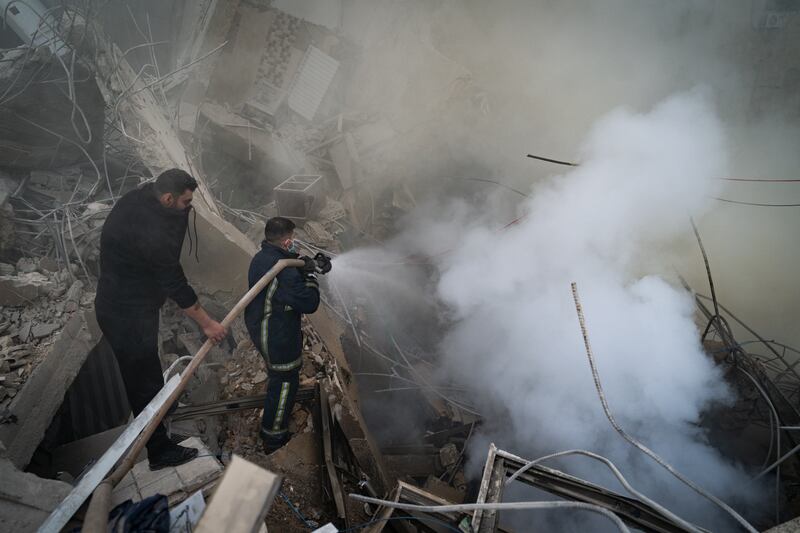
European Union leaders will seek ways to curb the jump in energy prices triggered by the Iran war when they meet on Thursday but they have few easy options.
European gas prices have increased by more than 60 per cent since the war on Iran began on February 28th.
Foreign ministers of 12 Muslim-majority countries call for immediate halt to Iran’s strikes
The foreign ministers of 12 Muslim-majority countries meeting in Riyadh denounced Iran’s strikes on Gulf neighbours, calling for an immediate halt.
Iran’s targeting of residential areas and civilian infrastructure, such as oil facilities, airports and desalination plants, could not be justified under any circumstances, the ministers said in a statement.
“This pressure from Iran will backfire politically and morally and certainly we reserve the right to take military actions, if deemed necessary,” Saudi foreign minister Prince Faisal bin Farhan told a press conference after the diplomats met.
Interceptors were seen fired from near the Riyadh hotel where the conference was held around the time the ministers gathered for the consultative meeting on the Iran war.
Trump considers sending more troops to the Middle East
With no sign of de-escalation, Trump is considering sending thousands more US troops to the Middle East, a US official and three other people familiar with the planning told Reuters.
Those troops could be used to restore the safe passage of oil tankers through the narrow Strait of Hormuz, a chokepoint for a fifth of the world’s oil trade.
Trump this week asked US allies to help reopen the strait, but his request has so far been rebuffed. Iran’s closure of the strait has spiked energy prices and fuelled fears of a rise in inflation globally.
Trump threaten to ‘blow up’ South Pars gasfield if Iran retaliates
Donald Trump has threatened to “massively blow up” the entire South Pars gasfield if Iran carries out any more retaliatory attacks on Qatar’s LNG gas facilities.
The US president also said in a post on his Truth Social platform that the US “knew nothing” about Israel’s Wednesday attack at the South Pars field, which Iran shares with Qatar, and neither did Doha. Trump said “no more attacks will be made by Israel” on the field – unless Iran “decides to attack a very innocent, in this case, Qatar”.
Trump added: “In which instance the United States of America, with or without the help or consent of Israel, will massively blow up the entirety of the South Pars Gas Field at an amount of strength and power that Iran has never seen or witnessed before.”
Israel reportedly struck the giant South Pars gasfield on Wednesday, marking a major escalation of the war, hours after Israeli forces killed the regime’s intelligence minister and launched some of the most intense air strikes in Beirut for decades.
The UAE government has described Iran’s retaliatory strikes a “dangerous escalation” in the war. – The Guardian


