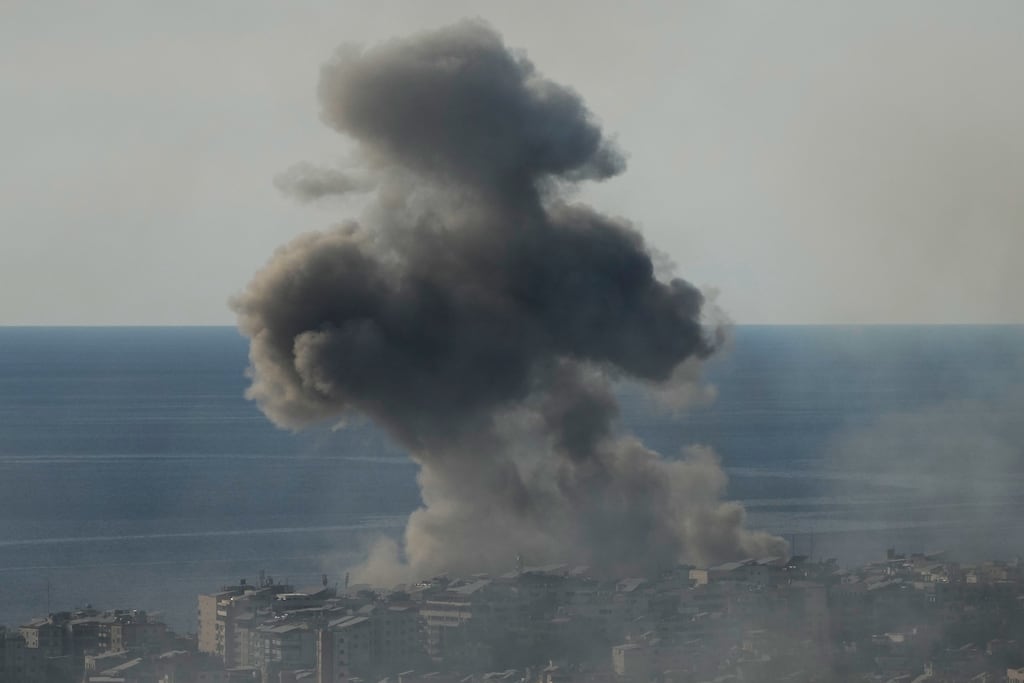
Israel renewed its assault on southern Lebanon early on Sunday, targeting commanders of the Lebanese branch of Iran’s Revolutionary Guards’ Quds Force, after Israeli prime minister Binyamin Netanyahu promised “many surprises” for the next phase of the conflict.
The Israeli military said it would “not allow Iranian terrorist elements to establish themselves in Lebanese territory”.
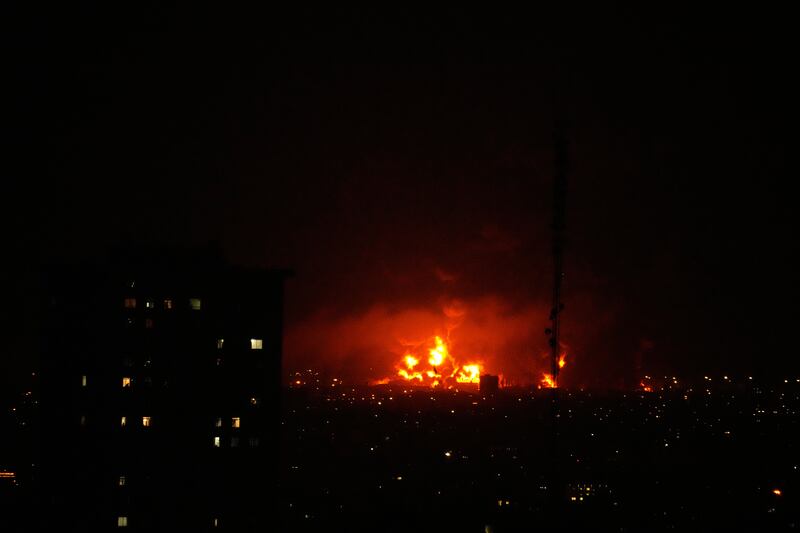
The latest strikes in Lebanon followed an Israeli attack on Saturday on an oil storage facility in Tehran.
It appeared to be the first time a civil industrial facility has been targeted in the war. State media blamed “an attack from the US and the Zionist regime” at the site that supplies the capital and neighbouring provinces in the north.
Elsewhere, Kuwait authorities said two border guards were killed when a swarm of missiles and drones hit the Gulf country. The Interior Ministry said only that the guards were killed “while performing their national duty”.
An Iranian drone attack caused “material damage” to a desalination plant, Bahrain said on Sunday morning.
Hundreds of desalination plants sit along the Gulf coast, and the Arab countries in the region rely heavily on the facilities for drinking water. Bahrain’s water authority said the attack had no impact on water supplies.
Israel struck southern Lebanon and Beirut again early on Sunday and killed 12 more people, the Lebanese health ministry said.
The deaths come on top of at least 47 others killed on Saturday in Israeli strikes.
Iranian president Masoud Pezeshkian apologised on Saturday for attacks on “neighbouring countries”, even as his country’s missiles and drones flew toward Gulf Arab states and hardliners asserted that Tehran’s war strategy would not change.
A rift between politicians looking to de-escalate the war and others committed to battling the US and Israel could complicate any diplomatic efforts.
Conflicting Iranian statements came from two of the three members of the leadership council overseeing Iran since supreme leader Ayatollah Ali Khamenei was killed in the war’s opening air strikes.

Pezeshkian, a member of the council, dismissed US president Donald Trump’s call for Tehran to surrender unconditionally, saying: “That’s a dream that they should take to their grave.”
Trump said Iran would be “hit very hard” and more “areas and groups of people” would become targets, without elaborating.
The conflict has rattled global markets and left Iran’s leadership weakened by hundreds of Israeli and American air strikes.
“We’re not looking to settle,” Trump told reporters on Saturday aboard Air Force One. “They’d like to settle. We’re not looking to settle.”
He described the ongoing US operations in Iran as an “excursion” and said issues such as rising gas prices and the safety of Americans would improve once the conflict ends.
Pezeshkian’s message underlined the limited powers exercised by the theocracy’s leaders over the paramilitary Revolutionary Guard, which controls the hundreds of ballistic missiles targeting Israel and other countries. It answered only to Khamenei and appears to be picking its own targets.
The president’s statement said Iran’s leadership council had been in touch with the armed forces and “from now on, they should not attack neighbouring countries or fire missiles at them, unless we are attacked by those countries. I think we should solve this through diplomacy”.
US strikes have not come from the Gulf Arab governments under attack, but from US bases and vessels in the region.
The fighting has killed at least 1,230 people in Iran, more than 290 in Lebanon and 11 in Israel, according to officials in those countries. Six US troops have been killed. – PA