Washington has called for talks with Iran over its nuclear programme and regional outreach.
To lend muscle to its demands, the Trump administration has deployed the USS Abraham Lincoln and a strike group and boosted air assets in the Gulf.
A senior Iranian official told Reuters that Iran was “preparing itself for a military confrontation, while at the same time making use of diplomatic channels”.
Having accepted Turkey’s offer to mediate, Iranian foreign minister Abbas Araghchi was in Ankara on Friday for talks on averting a US attack by proffering concessions to its nuclear programme.
READ MORE


US administration officials have insisted there should be a ban on uranium enrichment in Iran. They want Iran to transfer its highly enriched uranium stockpile to a third country, limit its missile arsenal, and end support for allies in Lebanon, Iraq, and Yemen. Tehran has signalled its readiness for talks without saying it would accept US demands.
As Iran’s government has faced mass protests over the country’s devalued currency and collapsed economy, US president Donald Trump appears to have seen an opportunity to make a “deal”, his preferred option.
Following protracted negotiations, Iran and six powers – the US Obama administration, UK, France, Germany, Russia and China – signed a nuclear deal known as the Joint Comprehensive Plan of Action (JCPOA) in 2015.
In exchange for sanctions relief on Tehran, the 15-year deal limited Iranian uranium enrichment to 3.67 per cent purity for use in nuclear power plants, specified certain centrifuges for processing, and fixed at 300kg Iran’s stockpile of low-enriched uranium.
Iran also agreed to constant monitoring and regular inspections by the International Atomic Energy Agency (IAEA), the global nuclear watchdog. The JCPOA was reinforced by a United Nations Security Council resolution.
[ What does the US want from Iran?Opens in new window ]
According to the IAEA, Iran was complying with the JCPOA when, encouraged by Israeli prime minister Binyamin Netanyahu, Trump withdrew the US from the deal in May 2018 and reimposed sanctions. He threatened to sanction other signatory countries ready to carry out the terms of the JCPOA.
Iran waited a year for sanctions relief before gradually breaching the terms of the JCPOA. The IAEA subsequently reported that Iran had introduced state-of-the art centrifuges, enriched uranium to 60 per cent (approaching the 90 per cent enrichment needed for weapons), and increased its stockpile to 440kg.
While Iran has rejected accusations that it seeks nuclear weapons, its activities have decreased the time it would need to weaponise uranium.
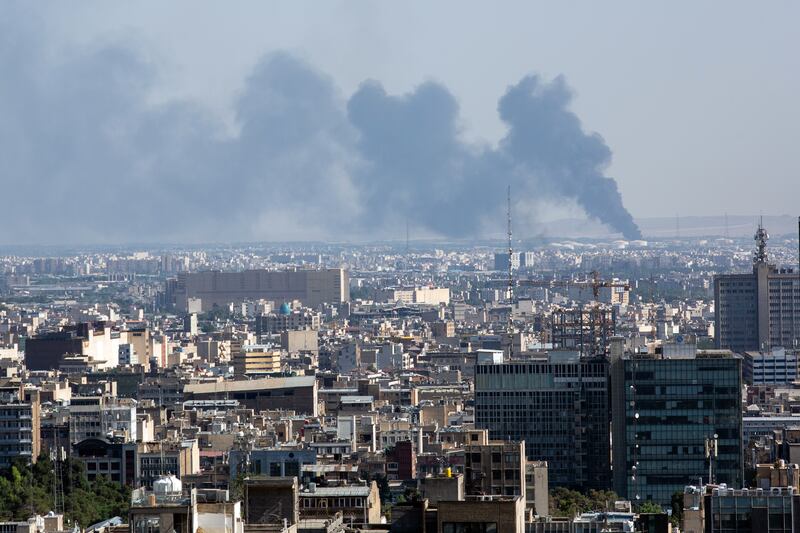
At the end of the war between Iran and Israel in June 2025, the US and Israel mounted joint bombing operations which seriously damaged Iran’s main nuclear sites at Natanz, Isfahan, and Fordow. Iran has repaired buildings at Isfahan, begun construction of a site deep underground at Fordow, and rebuilt missile manufacturing plants. The IAEA has not verified Iran’s stocks of enriched uranium since last December.
[ Trump warns Iran ‘time is running out’ for deal to avert US military actionOpens in new window ]